


Project Details
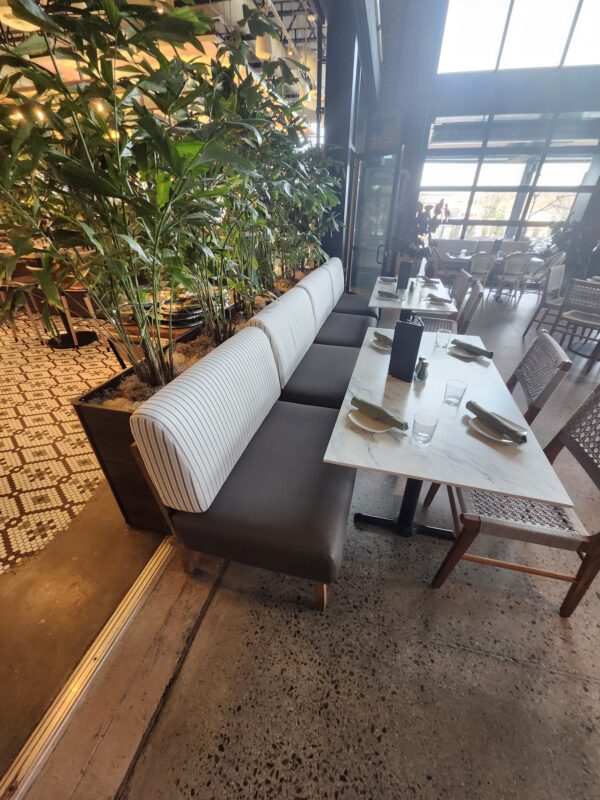
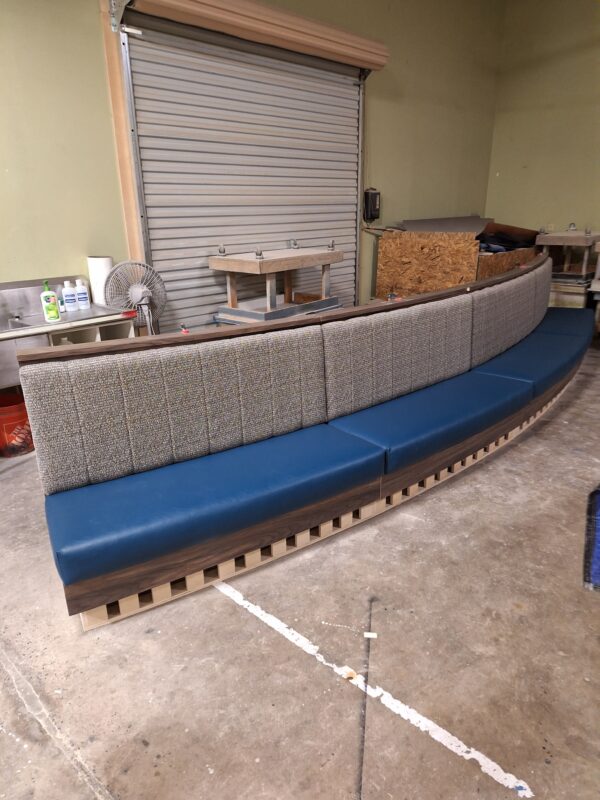
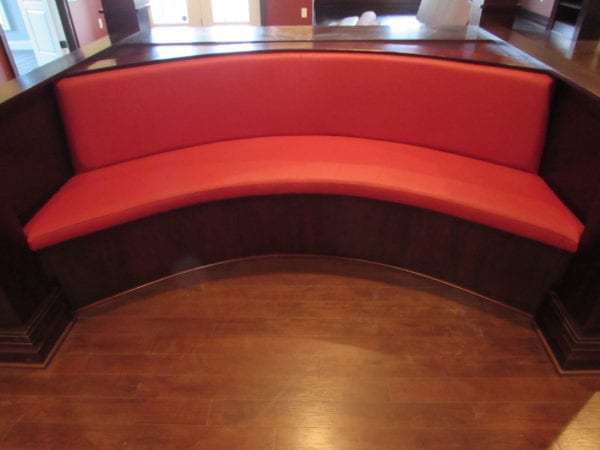
Luther Acres in lititz cafeteria renovation upholstery project.
- Project: Restaurant Booths
- Category: Restaurant & Commercial
Our Task
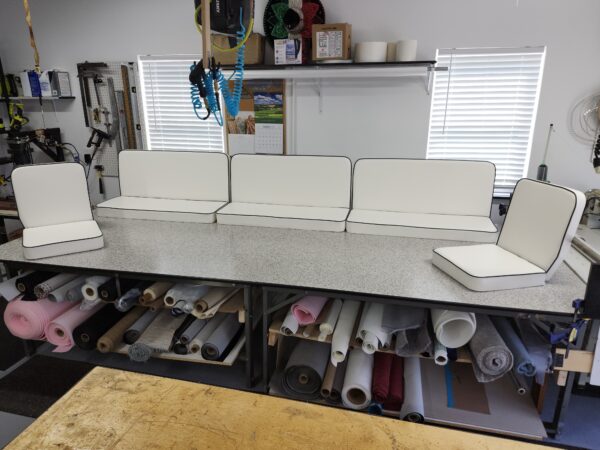
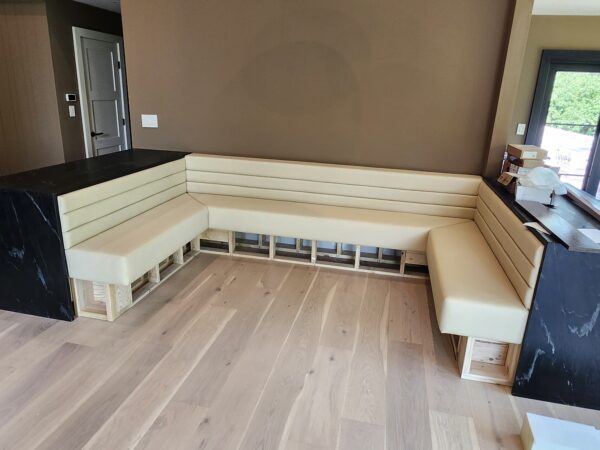
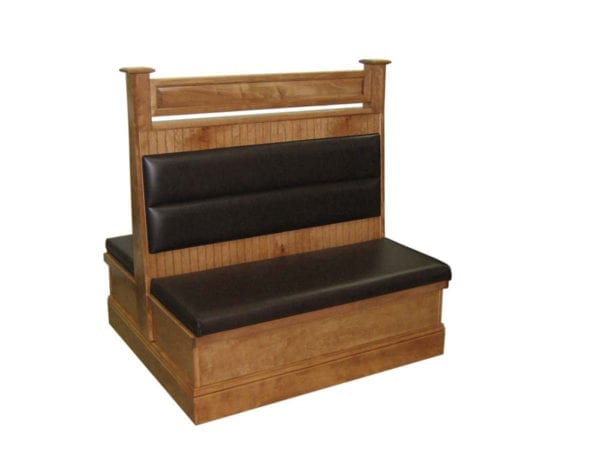
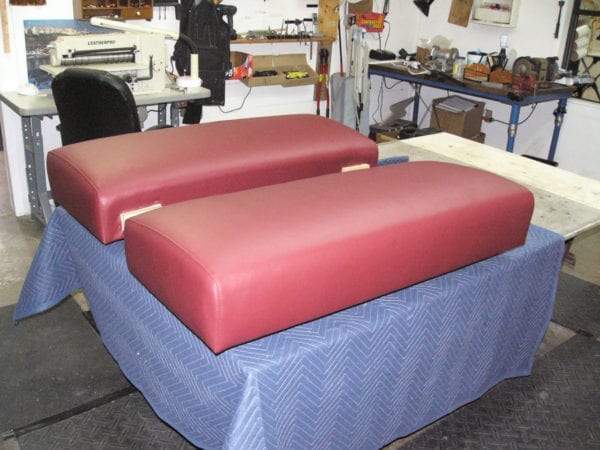
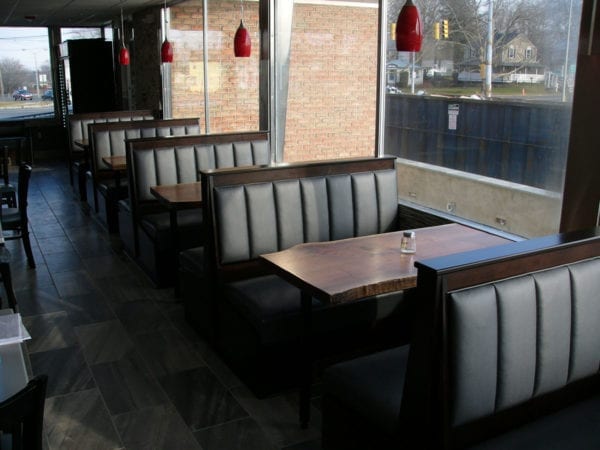
upholstery new booth with combination fabric and vinyl upholstery.



Luther Acres in lititz cafeteria renovation upholstery project.
upholstery new booth with combination fabric and vinyl upholstery.
Most weeks, the jobs that roll through our door are one piece at a time. A wingback here, a rocker there, maybe a boat bench in the spring. Then a call comes in like the cafeteria renovation at Luther Acres in Lititz, and suddenly the job is not a chair. It is a room. Dozens of seats that all have to match each other, survive daily meal service, and come together on somebody else’s construction schedule instead of ours.
Facilities hold onto their existing seating for the same reason families hold onto grandma’s rocker: the frames are usually better than what replacement money buys. Commercial dining chairs from a good manufacturer have solid joinery and steel or hardwood bones that are built to be recovered again and again. Throwing them out because the covering wore through is like scrapping a truck because the seat cracked. Recovering them is the smarter play, and it is a big part of what our restaurant and commercial upholstery service exists to do.
The craft on a commercial job is the same craft we use on a single chair. The math is different. When you recover one ottoman, nobody notices if the welt cord sits a hair differently than it did on the chair you did last month. When you recover an entire dining hall, every seat gets compared to the one next to it, every day, by people who eat there three times a day. Consistency is the whole game.
That starts with material. Hides and roll goods both vary between lots, so we order everything for a project like this from the same dye lot and inspect it before a single blade touches it. Then we build a sample. One finished seat goes back to the client for approval before we commit the rest of the material. It is a lot easier to adjust a seam line or a foam profile on chair number one than on chair number forty.
Scheduling matters just as much. A cafeteria cannot simply close for a month, so work like this moves in phases. Batches of seating come to the shop while the rest stays in service, and the room keeps feeding people the entire time. It takes some choreography, but it beats a dining hall full of folding chairs.
A residential sofa has a quiet life compared to a cafeteria chair. Commercial seating gets sat in, slid across the floor, grabbed by the back rail, bumped by carts, splashed with coffee, and wiped down with cleaning chemicals every single day. Multiply that by years and the damage pattern is predictable.
Seams give out first, especially at the front edge of the seat where thighs slide across them. Corners scuff and split. Foam compresses until the seat feels like a board with a rumor of padding on it. Sunlight through big dining room windows fades one side of the room faster than the other, which is why half a facility’s chairs often look older than the rest. Underneath it all, joints work themselves loose from the constant scooting in and out. A proper renovation deals with all of it, not just the visible cover.
This is the conversation we spend the most time on with facility managers, and there is no single right answer. Genuine leather with a pigmented finish is the durability champion. The pigment layer takes abuse, wipes clean, and resists staining far better than the delicate aniline leathers you would put on a living room chair. It also ages with some dignity instead of just wearing out.
Modern polyurethane faux leather has earned a real place in commercial dining, too. The good grades handle daily cleaning beautifully, come in consistent colors by the roll, and carry commercial abrasion ratings. We wrote up the case for it in our post on faux leather as an upholstery material, and for high-traffic seating it is often the honest recommendation. The one product we steer everyone away from is bonded leather. It is leather dust glued to a fabric backing, and under commercial use it peels and flakes within a few years. No amount of conditioning saves it.
Healthcare-adjacent dining rooms add one more wrinkle: the covering has to tolerate sanitizing cleaners without the finish breaking down. That narrows the field to materials rated for those chemicals. You can browse the kinds of options we work with on our fabrics and leather page, and we bring physical samples to the table so decision makers can feel the difference instead of guessing from a photo.
Every seat that comes in gets the same sequence, just repeated with production discipline. First is teardown. Old covers come off, and we keep the best one from each style as a pattern reference. Teardown always tells the truth about a chair. It shows us which frames need joints reglued, which seat boards have cracked, and which foam is past saving.
Frames get tightened and repaired before anything soft goes back on. Foam for commercial dining is its own specification, by the way. We use higher density material than residential furniture gets, because a seat that hosts three services a day needs foam that springs back thousands of times without taking a set. Softness and durability are separate qualities in foam, and a good commercial seat can be comfortable and still firm enough to last. While the seats are apart we also swap tired floor glides, since a chair that drags instead of slides chews up both the floor and the joints holding the chair together. Then the new foam gets cut to a consistent profile so every seat in the room sits the same. Covers are cut in batches, sewn with double-stitched seams at the stress points, and fitted with the same tension chair after chair. It is honest production work, and it uses every skill we sharpen on the fancy jobs. The careful pattern work that went into the antique swivel chair we restored is the same pattern work that keeps forty cafeteria seats identical. And the weather-resistant sewing we did on the cushion set for a client’s antique outdoor furniture is the same seam discipline that keeps a commercial seat closed through years of cleaning.
Commercial work also overlaps with restoration more than people expect. Some facilities have a few special pieces, a lobby chair or a donated antique, that deserve gentler handling than the production run. We sort those out at the start. If you are curious how those decisions get made, our rundown of the different types of furniture restoration services covers where recovering ends and true restoration begins. Plenty of the leather techniques involved are on display across our leather work gallery if you want to see the range.
The renovation is the expensive part. Keeping it looking new is mostly habit. For leather seating, that means cleaning with products made for finished leather rather than whatever sanitizer is in the janitor closet, because harsh chemicals slowly strip the finish that protects the hide. A leather conditioner applied a couple of times a year keeps the material flexible instead of letting it dry toward cracking. The Leather Conservation Centre publishes sensible guidance on caring for leather over the long haul, and the short version is the same thing we tell every client: keep it clean, keep it fed, keep it out of harsh sun.
For faux leather and vinyl, the routine is simpler. Mild soap and water handles nearly everything, and quick attention to spills prevents nearly all staining. The one thing every material hates is heat, so seating parked against radiators or in an unshaded south window will age fastest. Rotating chairs around the room once or twice a year evens out both sun and wear, the same way you rotate tires.
Yes, and this is standard practice for us. We take seating in batches sized so the room keeps operating, turn each batch around, and swap in the next. The schedule gets worked out with your facility team before anything leaves the building.
Pigmented leather and commercial-grade polyurethane faux leather are the two front-runners, and the right pick depends on your cleaning protocols and budget priorities. Both wipe down easily and hold their finish for years under proper care. The material to avoid is bonded leather, which fails quickly under commercial use.
That is exactly what the sample process is for. We work from your designer’s palette or bring swatches to you, then finish one complete chair for approval before running the full batch. Nothing gets produced in quantity until the sample is signed off.
If your dining hall, fellowship room, or cafe seating is looking tired, do not price out all new furniture before you find out what recovering the good frames you already own would run. Every project is quoted individually after we look at the actual pieces. Send us photos through our free online estimate form or call the shop at 717-383-6917 and tell us what you are working with. We have done rooms big and small, and we would be glad to walk yours with you.
 Get a Free Quote!