


Project Details
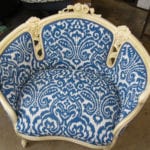
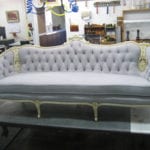
This antique fainting sofa is actually a convertible double bed as well!
- Project: Upholstery for Antiques
- Category: Antique Restoration
Our Task
We restored this beauty into new condition by completing new upholstery.



This antique fainting sofa is actually a convertible double bed as well!
We restored this beauty into new condition by completing new upholstery.
As anyone who has shopped for furniture knows, there are many different styles to choose from. While some people prefer contemporary pieces, others prefer more traditional designs. Victorian-style furniture is a popular choice for those who want a classic look in their home. However, finding Victorian-style furniture can be difficult, and restoring an old piece can be even harder. At our shop, we specialize in Victorian-style furniture restoration. We can take an old, damaged piece and return it to its former glory. We also offer upholstery services to help make your furniture look new again. So if you’re looking for a unique style of furniture, or if you need help restoring an old piece, come see us at our shop. We’ll be happy to help you find the perfect piece for your home.
Nobody is neutral about a fainting sofa. With its one raised end, its long open seat, and its unapologetically theatrical curves, it is the piece guests always ask about first. And when one comes into our shop, it almost never arrives alone. It arrives with a story: the great aunt who kept it under a window for forty years, the parlor it anchored, the kids who were chased off it every Sunday.
That is exactly why these sofas are worth restoring properly. You can buy a new chaise in an afternoon. You cannot buy the object your family has been photographed on for four generations. Our job is to make sure the next four generations get their turn.
The fainting sofa, sometimes called a fainting couch, descends from the classical Greek and Roman reclining couch by way of the French chaise longue. It reached peak popularity in Victorian America in the second half of the nineteenth century, when tight corsetry gave the name a certain practical logic. Whether many women actually fainted onto them is debatable. What is certain is that a half reclined couch was fashionable, comfortable, and a way to show off both the sitter and the upholsterer’s skill.
Most surviving examples have a scrolled or raised headrest at one end, a low or absent back along part of the length, and carved show wood in walnut or mahogany. Some follow Rococo Revival curves, others the straighter Eastlake taste. Many were made in small city workshops rather than factories, which means no two are quite identical, and yours may have quirks that are original rather than damage.
Strip a period fainting sofa to the bone and you find a long hardwood frame joined with dowels or mortise and tenon joints, glued with hide glue, and stiffened by corner blocks. Because the seat is long and mostly unsupported by a full back, the bottom rails do serious work, and the webbing across them matters more than on an ordinary chair.
On top of the jute webbing sit rows of coil springs, hand tied to each other and to the rails so the whole seat moves as one surface. Above the springs: burlap, a thick body of curled horsehair or hair mixed with grasses, a smoothing layer of cotton batting, then muslin, then the show cloth. The raised end is usually built up over a wooden scroll with its own stuffing and, on fancier examples, tufting that pulls the fabric into diamonds. That tufting is hand work, every button anchored through the full depth of the padding.
One more construction note worth knowing: the show wood on these sofas, the carved crest and legs you can see, was finished with shellac in the period, a finish that is beautiful, repairable, and sensitive to alcohol and water. A white ring on a fainting sofa arm is almost always in the shellac, not the wood, which makes it far easier to correct than most owners assume.
Length is the enemy. A six foot seat concentrates decades of sitting into the middle, so the center webbing lets go first and the sofa develops the classic hammock dip. Once the springs drop, the twine ties snap one by one and the seat starts to creak and clank. Meanwhile the raised end takes a different kind of abuse: people perch on it, lean on it, and use it as a handle to shove the sofa across the floor, which loosens the joints where the scroll meets the rails.
Fabric and stuffing tell their own story. Sun through a parlor window fades one side of the couch and not the other. Tufting buttons pop and the diamonds collapse. And because these pieces so often wait in basements and attics between owners, we see moisture damage regularly: water stains, mildew smell, rusted spring wire. Even a piece that sat through a wet basement is rarely hopeless. We covered what is and is not saveable in our post on whether flood damaged furniture can be restored, and the answer is more optimistic than most owners expect.
Every project starts with a slow walk around the piece. We check the frame for cracks and old repairs, press the seat to feel what the springs are doing, and look underneath for original webbing, stamps, and tack patterns. Then the teardown begins, and on a piece like this it is archaeology. Layers come off in order, tack by tack, and we photograph and save anything that documents how the maker worked.
Frame repairs come next: joints opened, old glue cleaned off, fresh hide glue worked in, clamps overnight. This is also where the preservation judgment gets made. Original finish with honest wear stays. Original horsehair that is clean and dry gets carded back to loft and reused. What we will not do is sand a hundred and forty years of patina off a frame to make it look new, because that history is the point. The full sequence, from webbing to springs to stuffing to muslin to cloth, is the same eight step logic we followed on the magnificent Victorian piece from the 1800s we restored, scaled up to sofa length. If you want to understand where this work sits among the different types of furniture restoration services, we wrote a plain language guide to exactly that.
The finish line is detail work: tufting retied button by button, welt cord sewn and applied in unbroken runs, gimp or decorative nails along the show wood, and a fresh dust cover underneath. This is the complete antique restoration treatment, and on a fainting sofa there are no shortcuts that stay hidden for long.
Fabric choice makes or breaks a fainting sofa. The frame is dramatic, so the cloth has to either play along or get out of the way. Period appropriate options include cotton or silk velvets, damask, and fine wool, in the saturated colors the Victorians loved. A solid velvet in deep teal, plum, or moss lets carved show wood shine and makes diamond tufting read beautifully in the light. Large prints fight the curves and usually lose.
Durability deserves honest talk. If the sofa is going into a reading corner and will be used daily, modern performance velvets give you the period look with far better resistance to abrasion and spills. We stock books from all the major mills, and you can browse the range on our fabrics and leather page before you visit. Cushion work gets the same attention as the body of the piece. The cushion we made for an Uhuru Design wool chair shows the level of pattern matching and edge work we consider normal, and a fainting sofa bolster deserves nothing less.
A freshly restored fainting sofa should serve for decades, but the environment it lives in decides how gracefully it ages. Museums obsess over light and humidity for good reason, and the research arm of the Smithsonian Museum Conservation Institute has documented how much damage ordinary sunlight and dry air do to textiles and glued wood joints. At home, the version of that science looks like this:
Ten minutes of care a month protects hundreds of hours of hand work. That trade is worth taking.
Mostly it was marketing and fashion. Tight corsets made reclining welcome, and the Victorians loved furniture with a sense of occasion, but the fainting sofa was primarily a status piece for receiving guests. The name stuck because it is irresistible, and honestly, we are not complaining.
Almost never. Wobble usually means the hide glue in a few joints has crystallized and let go, which is a routine repair, not a death sentence. The dangerous move is squirting modern glue into a loose joint at home, because it does not bond to old hide glue and makes proper repair harder.
Sometimes. If the cloth is stable and the piece will see light use, we can conserve it, reinforce weak areas, and rebuild only the foundation underneath. If the fabric is shattering or heavily stained, we document it, save a panel for your records, and match the spirit of the original in new cloth.
If there is a fainting sofa in your family waiting for its next century, we would genuinely like to see it. Send photos through our quote page or call the shop at 717-383-6917. Every piece is quoted individually after inspection, and we will walk you through exactly what yours needs before any work begins.
 Get a Free Quote!