


Project Details
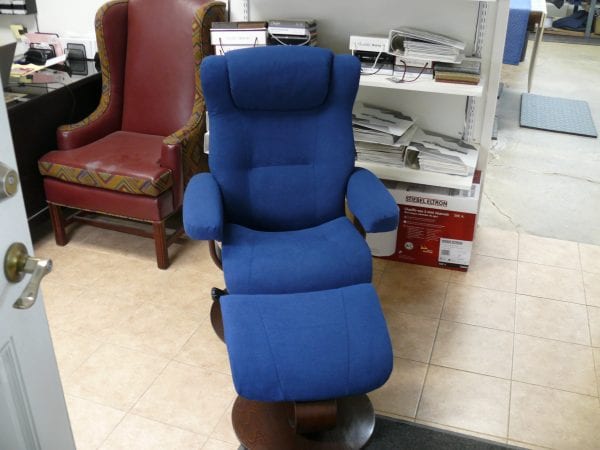
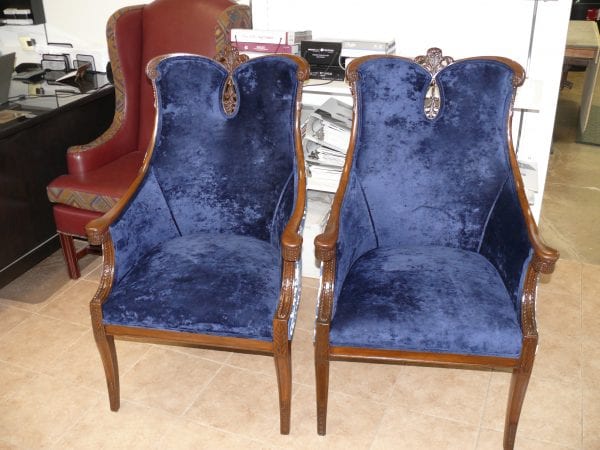
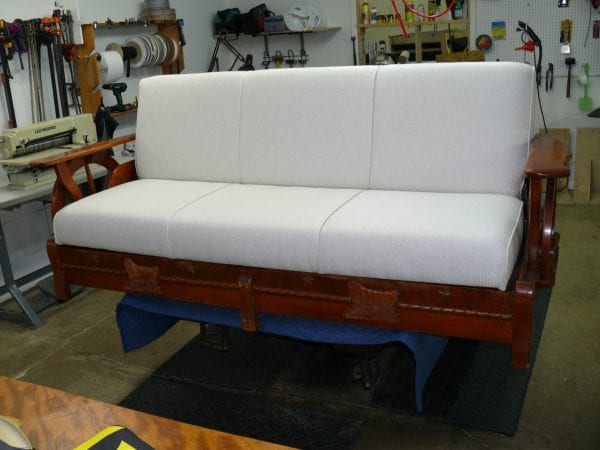
The modern Uburu chair was in need of new cushion.
- Project: Reupholstery and Repair
- Category: Furniture Upholstery
Our Task
We provided completely new cushion made with 100% wool fabric.



The modern Uburu chair was in need of new cushion.
We provided completely new cushion made with 100% wool fabric.
Wool was upholstering seats before upholstery was even a trade. Centuries before synthetic fibers existed, wool cloth covered benches in drafty halls and chairs in merchant parlors, and it earned that job honestly: it wears slowly, resists fire better than almost any fiber, and looks richer at year ten than at year one. So when a wool covered chair from Uhuru Design comes through our shop needing a cushion, we see an old friend in modern clothes.
Uhuru builds furniture in Brooklyn with a reputation for reclaimed materials and unapologetic craftsmanship, and pairing that ethos with wool upholstery makes perfect sense to us. A cushion for a chair like this has to meet two standards at once: the designer’s exact intent and the fiber’s particular personality. That second part is what this article is really about, because wool rewards the people who understand it.
Pick almost any era of furniture history and wool is there. Medieval and early modern interiors used wool hangings and cushions for warmth as much as decoration. By the seventeenth and eighteenth centuries, wool moreen and worsted damasks were standard covers on everyday quality seating, with silk reserved for showing off. The scholarship on this is genuinely rich, and the Furniture History Society publishes exactly the kind of research that documents which cloths covered which chairs across the centuries.
Why did wool win for so long? The fiber itself is a small marvel. Each strand has a natural crimp that acts like a spring, so wool cloth recovers from compression instead of matting flat. The surface scales shed water and soil, lanolin gives mild stain resistance, and the fiber chars rather than melts, which is why wool passes fire codes that plastics need chemical help to meet. Modern mills spin it into everything from dense felts to open boucles, and the good ones rival any synthetic for durability.
Not all upholstery wool is equal, and the differences are worth knowing. Worsted spun wools, combed so the fibers lie parallel, weave into smooth, dense cloths that take crisp tailoring. Woolen spun yarns keep their loft and make the soft, fuzzy textures people love to touch. Felted and boiled wools trade drape for durability and a clean modern face. When we evaluate a cloth for seating, we look past the hand feel to the numbers: a genuine upholstery wool carries an abrasion rating, measured in Martindale or Wyzenbeek rub counts, and for a chair that gets daily use we want scores comfortably into the heavy duty range. A beautiful wool meant for drapery will not survive a decade of actual sitting, and part of our job is saying so before the cloth is on the cushion.
A cushion is a partnership between cover and fill, and wool has opinions about its partners. Because wool cloth has natural stretch and recovery, it wants an insert with stable, well defined geometry underneath, otherwise the cover slowly bags at the corners. Because the weave breathes, the fill can breathe too, which opens the door to natural materials that would feel clammy under vinyl.
Wool also moves with humidity, relaxing slightly on damp days and tightening on dry ones. A cover sewn drum tight in January can feel loose in July, so we cut and sew with that seasonal breathing in mind. And since many wool upholstery cloths are woven in subtle twills or checks, the pattern has to land straight and stay straight, which is a cutting table discipline as much as a sewing one. This is the level of fuss we bring to our cushion services generally, but wool is the fiber that most rewards it.
The core decision is feel. For a modern studio chair we usually start with a high resilience foam core cut oversize by a controlled amount, so it fills the cover under slight compression and keeps edges crisp. Owners who want a softer, more traditional sit can have the core wrapped in a feather and down jacket, sewn in channels so the fill stays where it belongs. For clients chasing a fully natural cushion, we can build up latex or fiber cores that match wool’s breathability from the inside out.
Then the cover gets patterned to the chair itself, not to a generic rectangle. We template the seat platform, account for how the cloth behaves on the bias, sew with a heavier needle and thread than cotton would need, and finish seams so the wool’s edge cannot creep. A zipper goes where the designer would have hidden it. When the insert goes in, the cushion should sit on the chair like it grew there, and that is the standard whether the frame left a Brooklyn studio last year or, like the antique Victorian style chair we restored, a workshop before your great grandparents met.
Working repeatedly with pieces from a single design studio is an education in how material changes method. Wool wants ease and recovery built into the pattern. Leather wants precision and no forgiveness at all, as we were reminded on the leather GÄRDESGÅRD chair cushion we built for the same studio. The measurements might be identical between the two chairs, but the cutting allowances, the thread, the needle, even the order of assembly all shift with the material.
That flexibility is the whole point of a real workshop. On any given week our benches hold modern designer pieces next to hundred year old frames in for full antique restoration, and the craft moves between them freely. The range of what that can involve is wider than most people expect, which is why we wrote an overview of the different types of furniture restoration services to help owners place their own piece on the map. Wherever a piece lands on that map, it gets quoted individually after inspection, since no two arrive with the same needs.
Wool care is mostly about letting the fiber do its job. Vacuum the cushion weekly with a brush attachment to lift grit out of the weave before it can abrade the fibers. Rotate and flip the cushion so compression and light exposure spread evenly. Keep the chair out of strong direct sun, because while wool holds dye well, no natural fiber shrugs off ultraviolet forever.
Pilling sometimes worries new wool owners, so let us set expectations. In the first months of use, loose surface fibers can work themselves into little balls, especially on woolen spun textures. This is not the cloth failing. It is the short fibers leaving so the strong ones can get on with their career. A battery fabric shaver removes them safely; pulling them by hand does not. After that early shedding, a quality wool settles down and simply wears, slowly and gracefully, for decades.
Spills are where wool surprises people. The fiber’s natural resistance buys you time, so blot promptly with a dry white cloth and most accidents never become stains. Skip supermarket foam cleaners, which can leave residue that attracts soil, and have the piece professionally cleaned every few years with a method rated for wool. One more honest note: moths are real. A cushion that gets used, vacuumed, and aired is rarely troubled, since moths prefer undisturbed wool in dark storage. The chair in your living room is far safer than the blanket in your closet.
If you enjoy understanding the mechanics of upholstered seating more broadly, our walkthrough on how to completely recover a dining chair shows the same principles of foundation, fill, and cover at a scale you can see all at once.
No, and this is wool’s best trick. The fiber manages moisture and temperature in both directions, insulating in winter and wicking in summer, which is why it works in desert robes as well as ski sweaters. A breathable fill underneath keeps the whole cushion comfortable in August in a way vinyl never will be.
Please do not. Upholstery wools are typically not pre shrunk the way garment wools are, and hot water plus agitation can felt the cloth into a smaller, denser version of itself that will never fit the insert again. Vacuuming, prompt blotting, and periodic professional cleaning are the correct routine.
It depends on the sit you want. High resilience foam gives a crisp, modern feel that suits studio furniture. A down and feather wrap over foam adds softness and a relaxed crown. All natural builds with latex or fiber suit owners who want the cushion to breathe like the cover does. We will let you press on samples of each before anything gets cut.
If you own a wool upholstered piece that needs a cushion built to its maker’s standard, or any chair whose seat has lost its shape, send photos through our quote page or call the shop at 717-383-6917. We will talk fiber, fill, and fit, and build you a cushion the chair deserves.
 Get a Free Quote!