



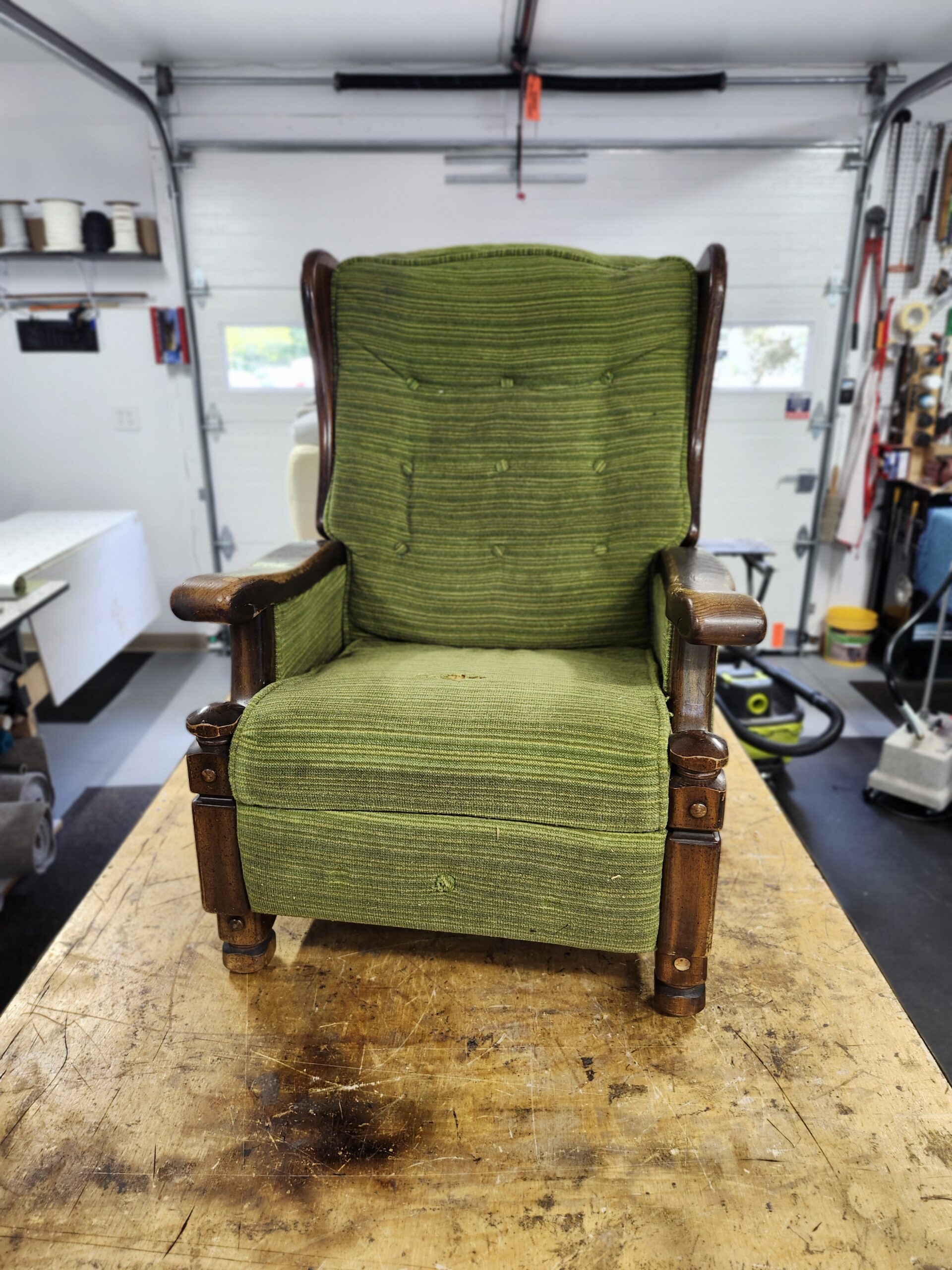
Some chairs come to the shop because they are broken. This one came because somebody could not bring themselves to throw it out. A wood armed wing recliner, green ribbed fabric worn to a shine on the arms, a hole opened in the middle of the seat where years of the same person sitting in the same spot finally won. Buttons still tight in the back. Wood still solid. And underneath, bolted to the steel linkage, a small foil tag that told us more about the chair than the owner knew.
If you searched for vintage recliner reupholstery Reading PA and found this page, you probably have a chair with a similar story sitting in a similar corner. Our furniture upholstery service takes on a lot of these, and they are some of the most satisfying jobs on the floor, because the customer is never really buying fabric. They are buying back the chair they already know how to sit in.
Vintage Recliner Reupholstery Reading PA: What Rolled In
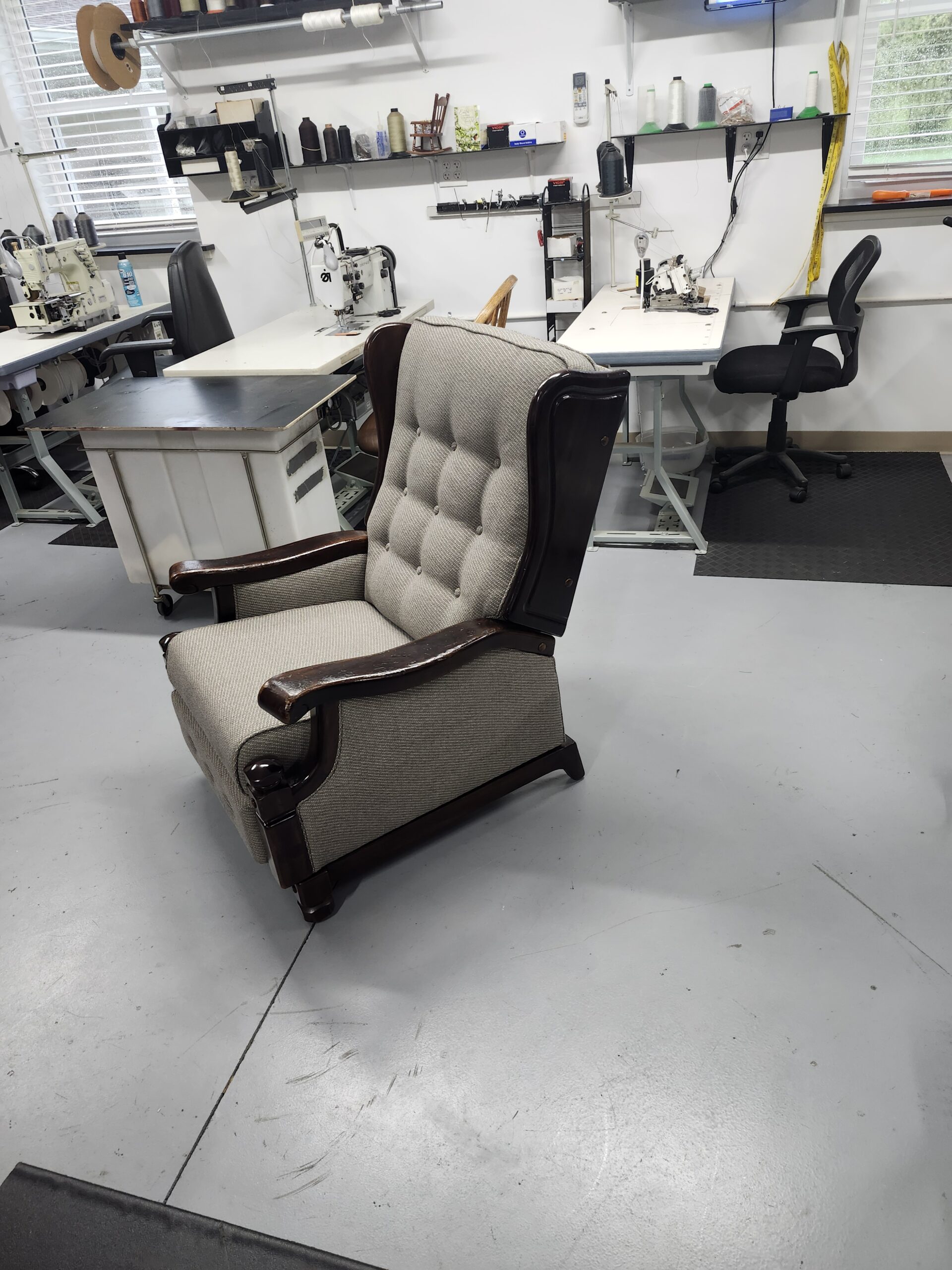
The shape tells you the era before the tag does. Exposed wood arms that flare out and end in turned posts. A tall back with wings that curl forward at ear height. Button tufting laid out across the back and repeated along the front rail of the seat. A recliner built at a time when a recliner was still furniture first and a machine second, so the maker gave it wood you were meant to look at.
The green fabric was a fine ribbed weave, and it had done its job for decades. The arms had gone glossy where hands rest. The seat had a hole in the middle and a second thin spot working on becoming one. The back had lost its crown, that gentle dome a tufted back is supposed to hold, which is a foam problem rather than a fabric problem and a good sign that this was going to be a full rebuild rather than a recover.
The wood was the argument for doing the work. Solid, tight at every joint, no cracks in the arms, nothing wobbling in the base. When the frame under a piece is still honest, reupholstery stops being sentimental and starts being sensible. We laid out that whole argument in our piece on restoring versus replacing, and this chair is the exhibit we would have used if we had written it later.
Inside the Rebuild: Wood, Springs, Foam, Buttons
The Strip Down
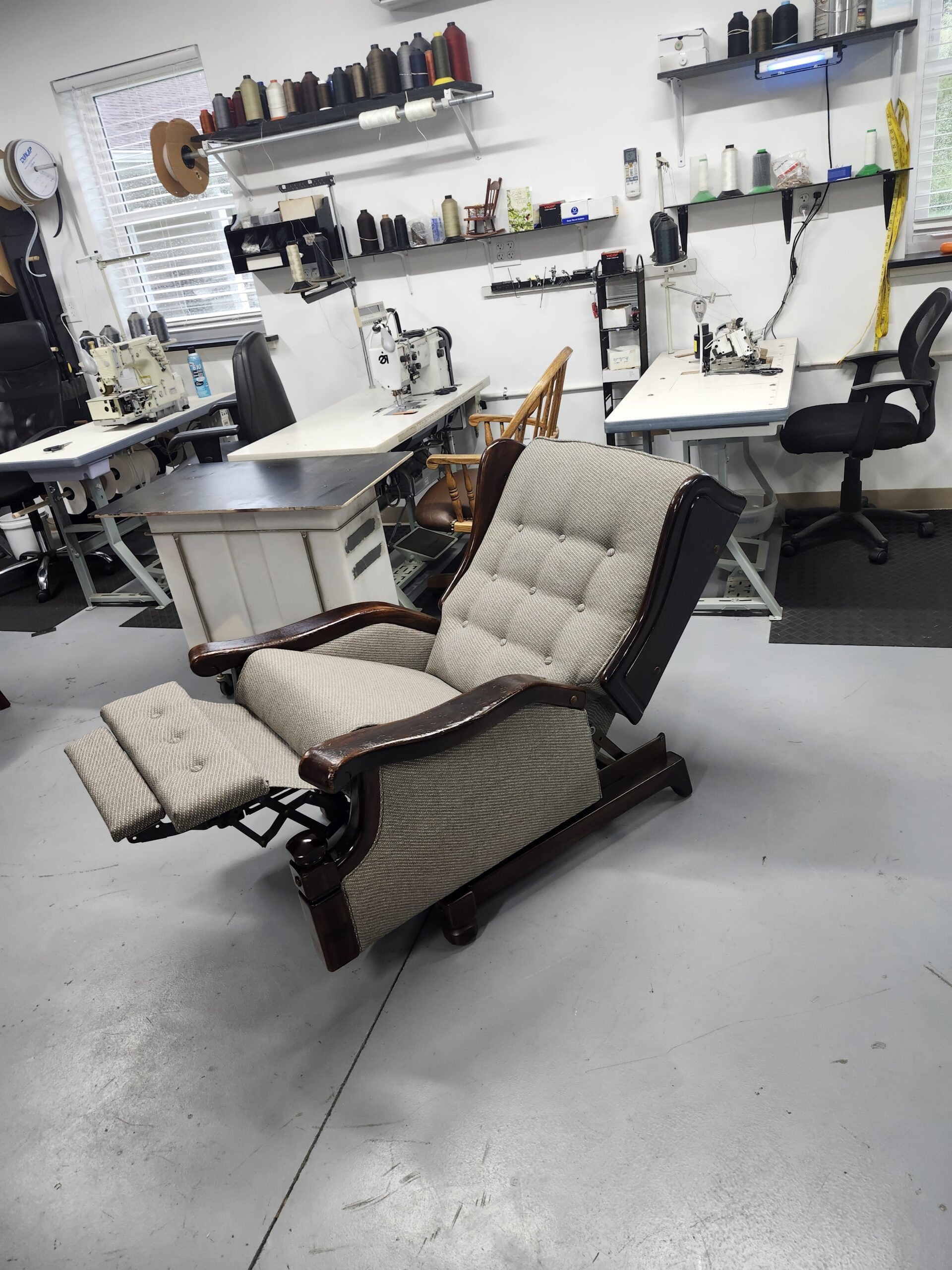
Everything comes off. Cover, batting, foam, burlap, and every staple and tack holding them there, pulled one at a time until the frame is bare and you can read what the factory actually did. On a recliner this stage takes longer than it does on a stationary chair, because the seat, the back, the footrest and the outside panels all mount to a steel mechanism that has to come apart in the right order and go back together in the same one. We photograph and label as we go. The chair that leaves has to fold the way the chair that arrived did.
Stripping also settles the questions you cannot answer through fabric. How much of the padding is gone. Whether the springs have taken a set. Whether anyone has been in here before with a staple gun and a bad idea. On this one the frame was clean, the joints were tight, and the news was all good.
Springs and the Foundation
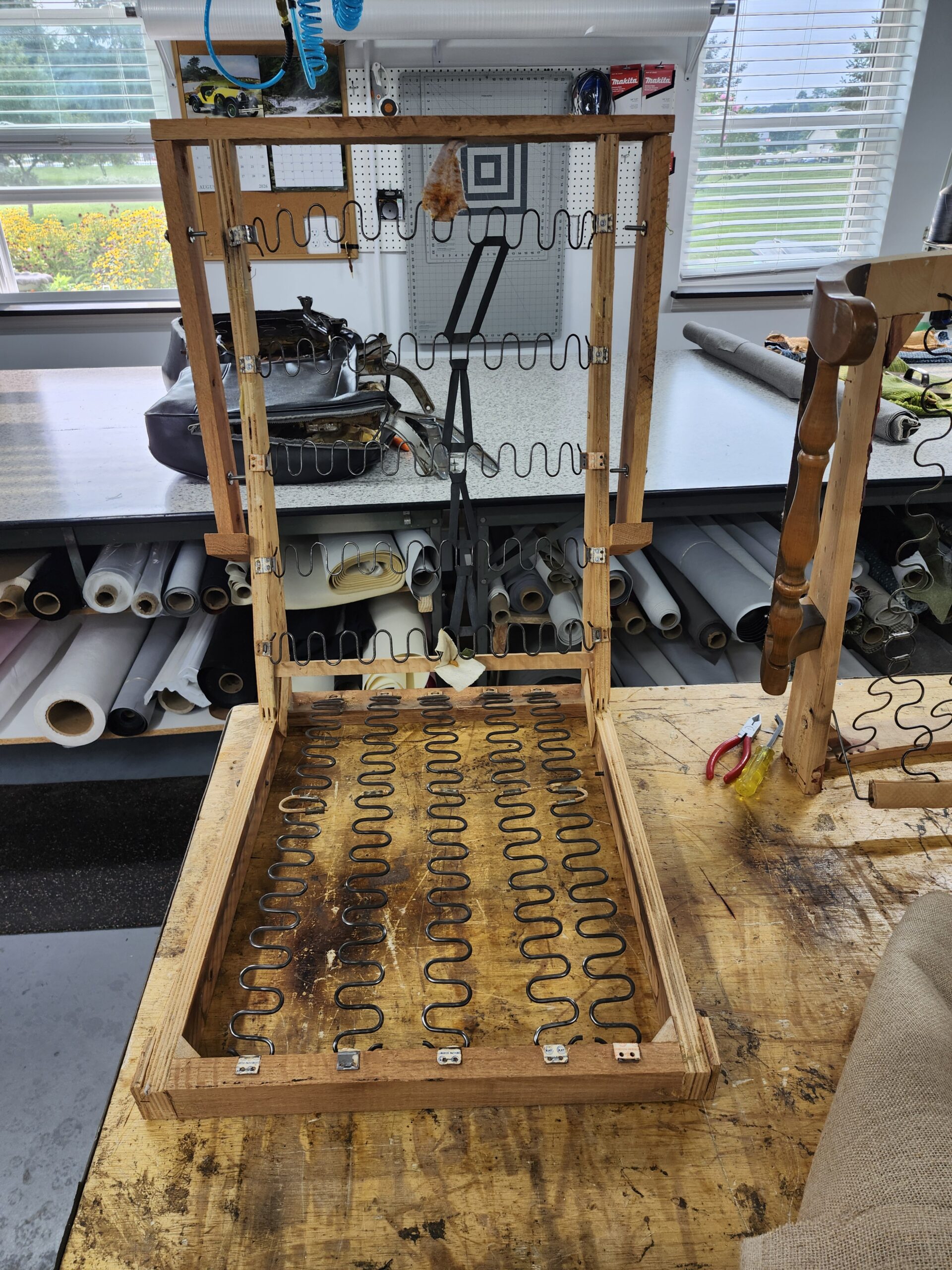
The photograph above is the part nobody sees and everybody feels. Sinuous springs, the flat zigzag wire that runs front to back under the seat and side to side up the back, clipped into fresh fasteners and tensioned so the deck sits level. Old springs go soft and take on a permanent sag, and once they do, no amount of new foam on top will fix the way the seat swallows you. Replacing them is the difference between a chair that looks new and a chair that feels new.
Over the springs go burlap and a foundation layer so nothing telegraphs the wire through the finished seat, then high density foam cut to the deck, firmer in the seat where weight concentrates and softer through the back where you want the chair to receive you. Polyester batting wraps the foam and rounds every edge, which is what gives a tufted back that soft crown instead of a flat panel with dents in it.
The Wall-Away Linkage
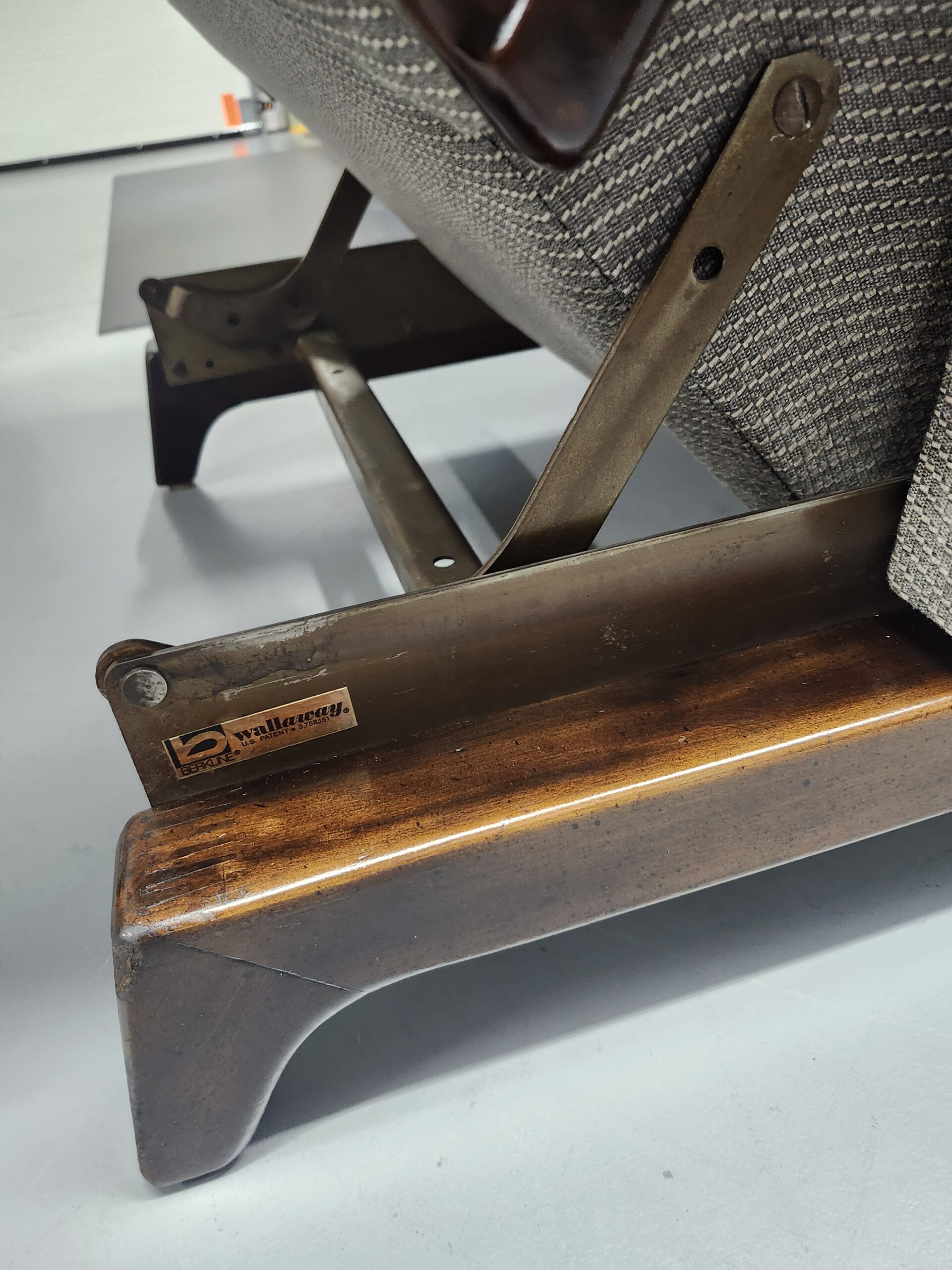
The tag under the seat reads BERKLINE, wallaway, U.S. Patent 3,758,151. That number belongs to a reclining chair patent granted in 1973, and it explains why this style of chair can live a few inches from a wall and still open fully: the seat glides forward as the back goes down, instead of the back swinging into the drywall. Half a century later, the mechanism on this chair still cycled smoothly. We cleaned it, checked every pivot and fastener, and left the geometry exactly as designed.
This matters for anyone weighing a rebuild. Mechanisms from this era were overbuilt steel, and they usually outlast the fabric two or three times over. Modern replacement hardware exists, but on a working original there is no reason to touch it. Upholstery goes back on around the linkage, never through it, so the footrest still deploys with the same shove it always did.
Buttons and the Wing Back
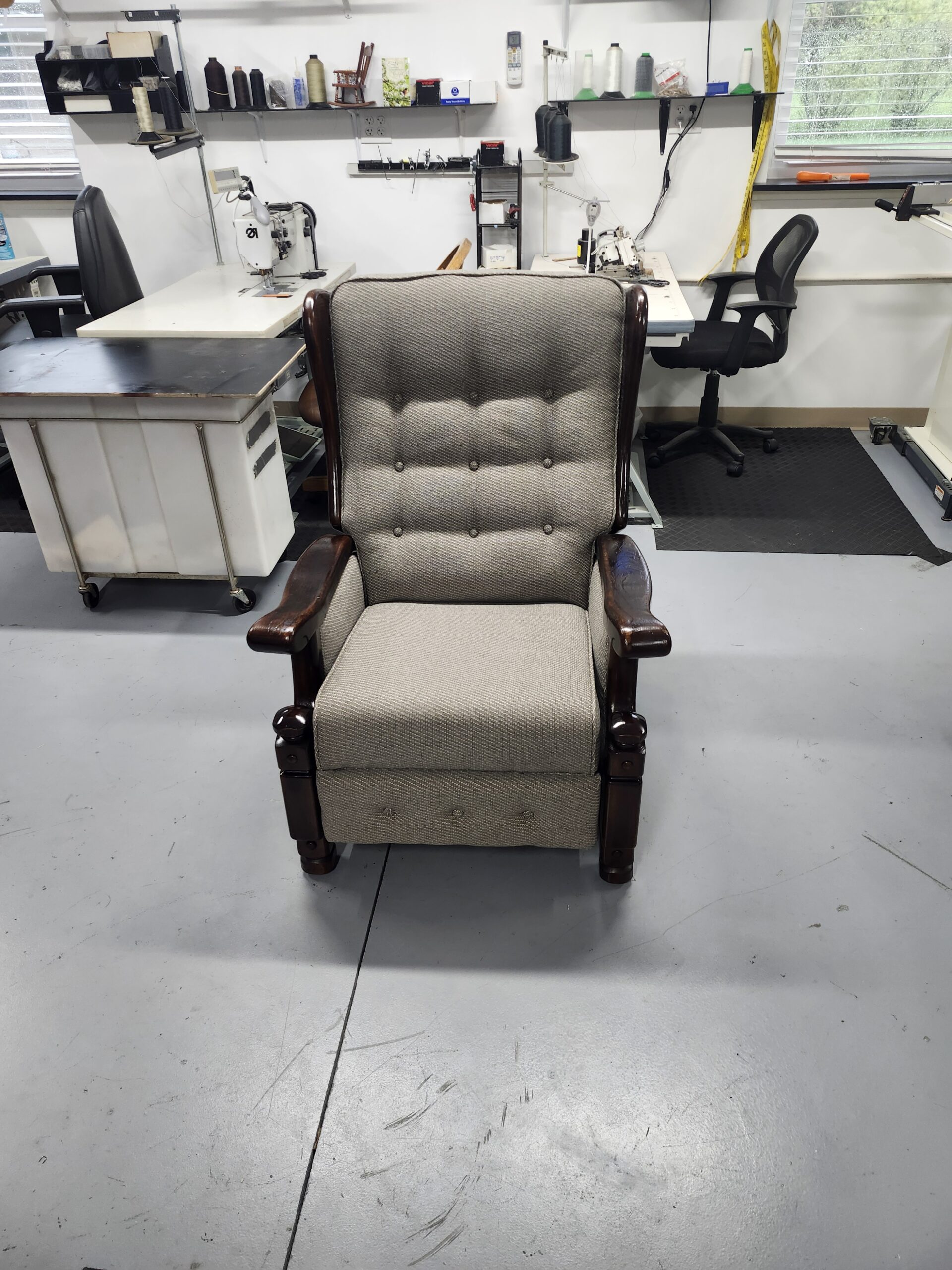
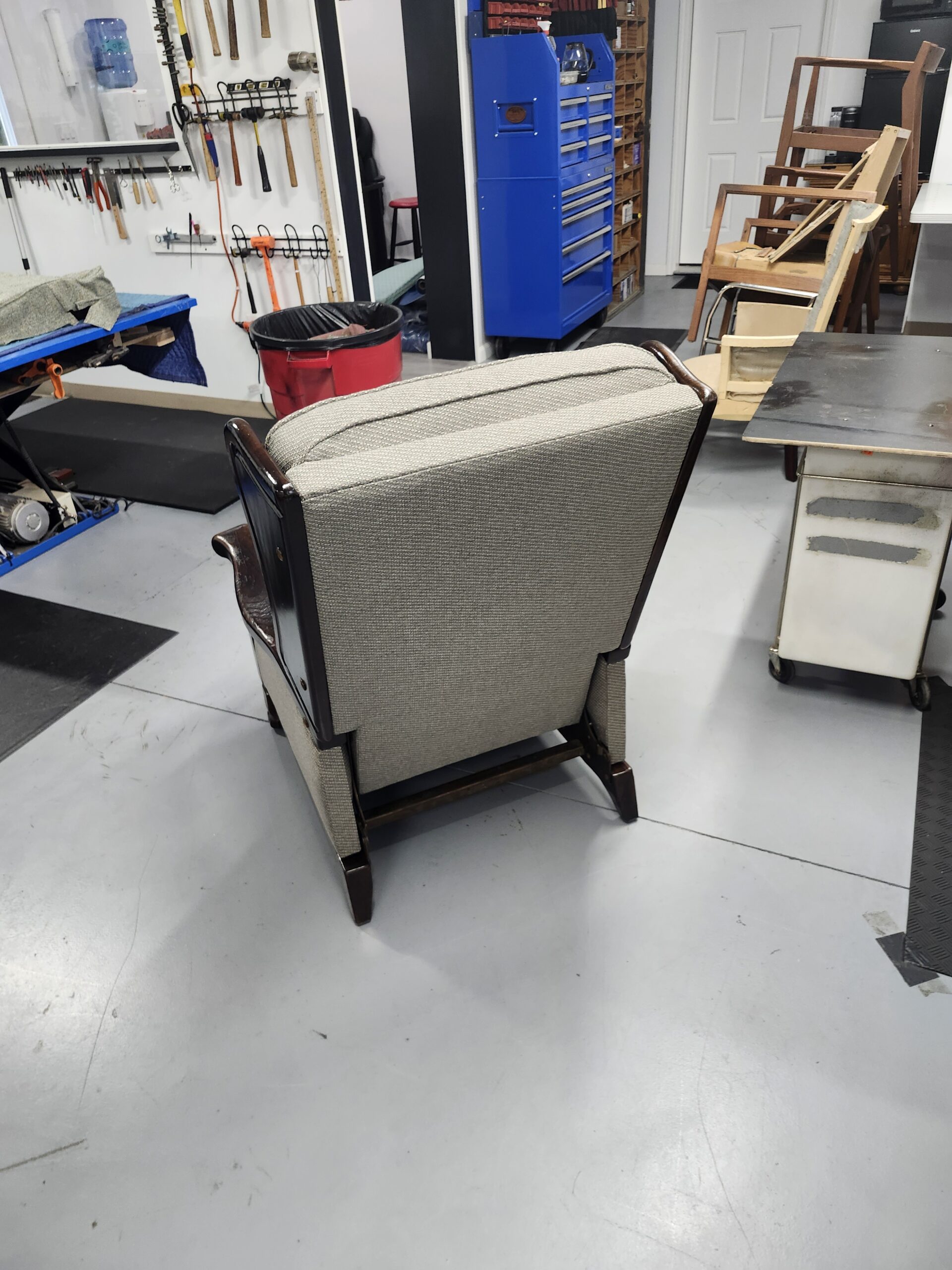
The new cover is a taupe tweed, a tight woven check that reads as flecked oatmeal from across the room and shows its texture up close. It is a practical choice for a chair in daily use: the weave hides the ordinary business of living, and the neutral tone lets the dark wood do the talking instead of fighting it, which the green never quite managed.
Tufting is where a recliner back is won or lost. Every button is pulled through the foam and tied off at a marked station on the frame, and the fabric between them has to be worked so the folds fall in the same direction and the same depth across the whole field. Rush that and you get puckers that catch the light and never stop annoying the owner. The button layout on this back was copied from the original, station for station, because the chair was designed around it.
The Wood
The arms, wings and base came back to a deep polished brown. Decades of hand oil and dulled finish came off, the shine on the arm tops went with it, and the grain came back up. This is the step that convinces people. Fresh fabric on tired wood always looks like a chair wearing someone else's clothes.
Shop note: if your recliner still reclines, do not let anyone talk you into scrapping it over torn fabric. The mechanism is the expensive engineering in that chair, and the frame is the part nobody builds like that anymore. Cover and foam are consumables. Those we replace.
"Nobody keeps a recliner for fifty years because it is pretty. They keep it because it fits. Our job is to give it back without changing the fit."Alex Levchuk, Alex Upholstery Shop
| Spec | Detail |
|---|---|
| PIECE | Wood arm wing recliner, button tufted back, exposed turned front posts |
| MECHANISM | Berkline Wallaway linkage, tag citing U.S. Patent 3,758,151, cleaned and retained |
| CONDITION IN | Green ribbed cover worn through at the seat, collapsed back crown, gloss wear on the arms |
| SCOPE | Full strip to frame, new springs, new foam and batting, new cover, wood refinished |
| FOUNDATION | Fresh sinuous springs in seat deck and back, burlap and foundation layer over |
| PADDING | High density foam graded firm through the seat, softer up the back, polyester batting wrap |
| COVER | Taupe tweed check, button tufting copied station for station from the original |
| SEWING | Walking foot Consew machines, seams tensioned to follow the frame |
Options for Vintage Recliner Reupholstery in Reading PA and Berks County
Reading sits about half an hour east of us on 422, and Berks County keeps sending us exactly this kind of chair. Solid old furniture is thick on the ground there, in the row homes off Penn Street, in the farmhouses out toward Kutztown, in estates that get cleared and turn up something worth more than the truck it came in. We are based in Myerstown and we regularly serve Reading and the rest of Berks County, and most jobs start with photos rather than a drive.
On a recliner rebuild the decisions are yours:
- Cover material: tweeds and textured wovens like this one, performance fabrics for households with pets or grandchildren, leather and top grain hides, or a period correct look if you want the chair to stay in its decade
- Rebuild depth: full strip with new springs and foam, a padding refresh under a new cover, or cover only where the foundation is still sound
- Tufting: keep the original button layout, switch to a smooth back, or move to channels
- Wood: refinish the exposed arms, wings and base, or leave the patina exactly as it is
- Comfort spec: we can build the seat firmer or softer than the original, which is the one upgrade nobody expects and everybody notices
- Matching pieces: ottomans, companion chairs and sofas built to the same fabric and the same feel
Every chair is different once the cover comes off, so we do not quote from a menu. Each job is priced individually after we inspect the piece in person or from your photos, and the answer comes from the person who will do the work.
Frequently Asked Questions
If the frame is solid and the mechanism still cycles, almost always. Those are the two parts that are expensive to build and hard to replace, and on chairs from the 1970s and 1980s they were built heavier than most of what is sold today. Fabric, foam and springs are consumables. We tell people honestly when a chair is not worth it, and that is usually a cracked frame or a seized mechanism, not a torn cover.
Yes. A recliner is disassembled in a set order and reassembled the same way, and the new cover is fitted around the linkage rather than over it, with clearance at every pivot. We cycle the chair through its full range before it leaves the shop. Footrest, back angle and the wall clearance a wall-away design is built for all work exactly as they did before.
It depends on what the strip down shows. Sinuous springs that have taken a permanent set sit low and stay low, and new foam over sagging wire feels wrong within months. When we find that, we replace them, which is what happened here. Where the springs still hold their arc, we re-clip and retension them and keep the originals.
We map the button stations off the old cover and the frame before anything comes off, so the new layout lands where the maker put it. You can also change it. A smooth back or a channeled back on the same frame is a real option, and we will show you what each one does to the look before we cut anything.
A full strip and rebuild like this one usually runs a few weeks once the fabric is in hand, and fabric lead time is often the longest part. You get a realistic timeline with your quote. If you need the chair for a specific date, tell us up front and we will tell you straight whether it fits.
More Work from the Shop
Other chairs that came in tired and left ready for another few decades.
Still Sitting in the Chair You Cannot Replace?
Send a few photos and the rough dimensions and you will get a straight answer from Alex, the same person who will strip it, spring it and sew it. Start with a free online estimate. Serving Reading PA, Berks and Lebanon Counties, and all of Central Pennsylvania.