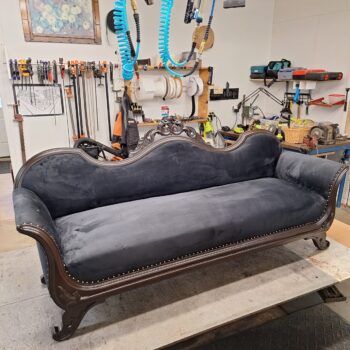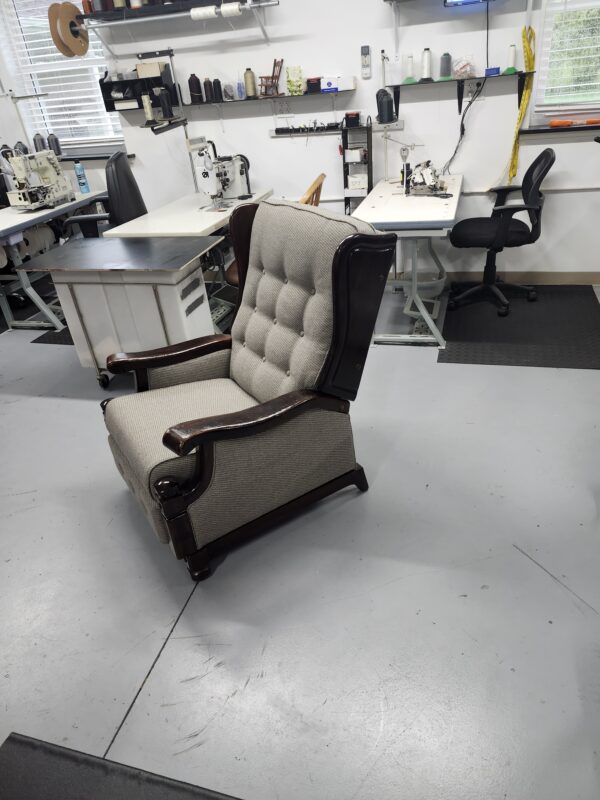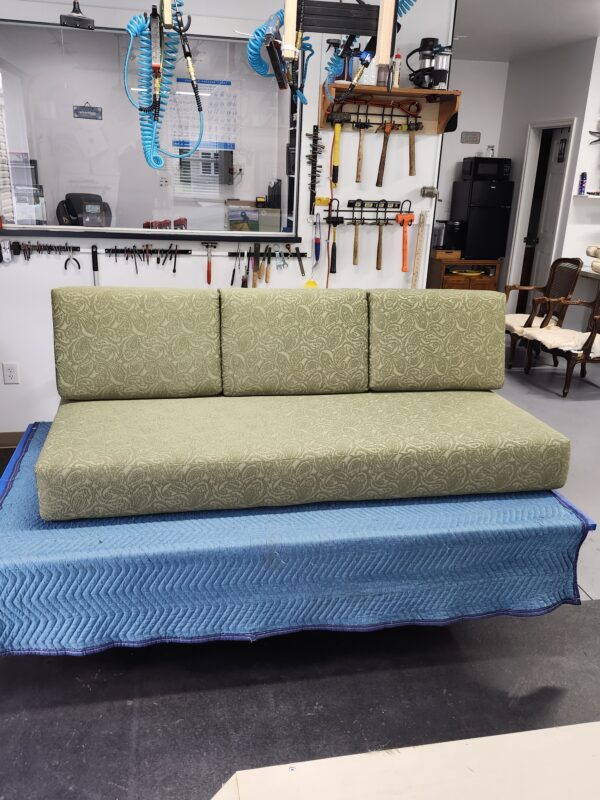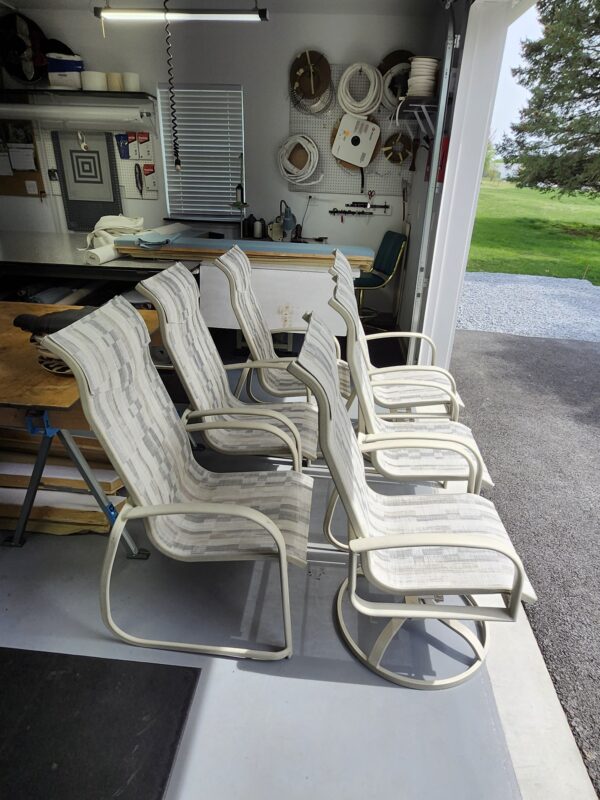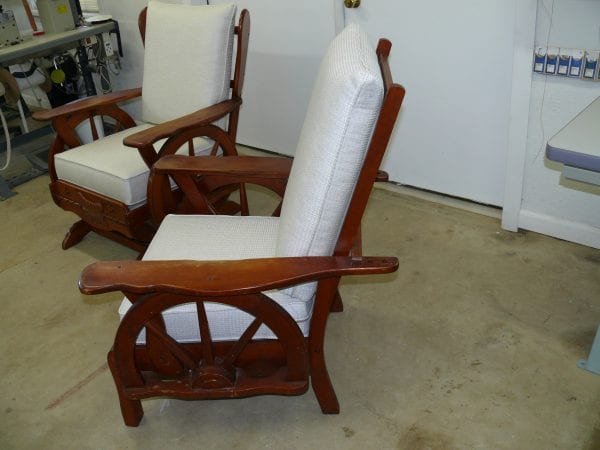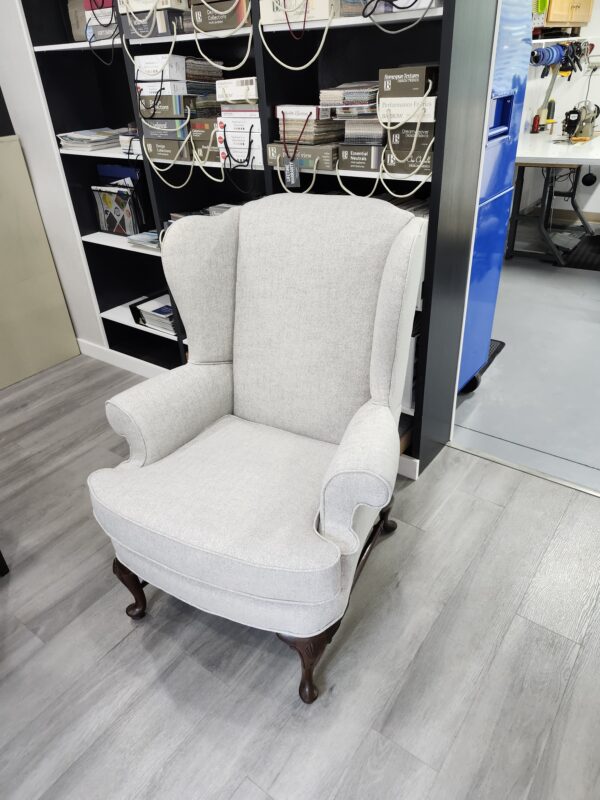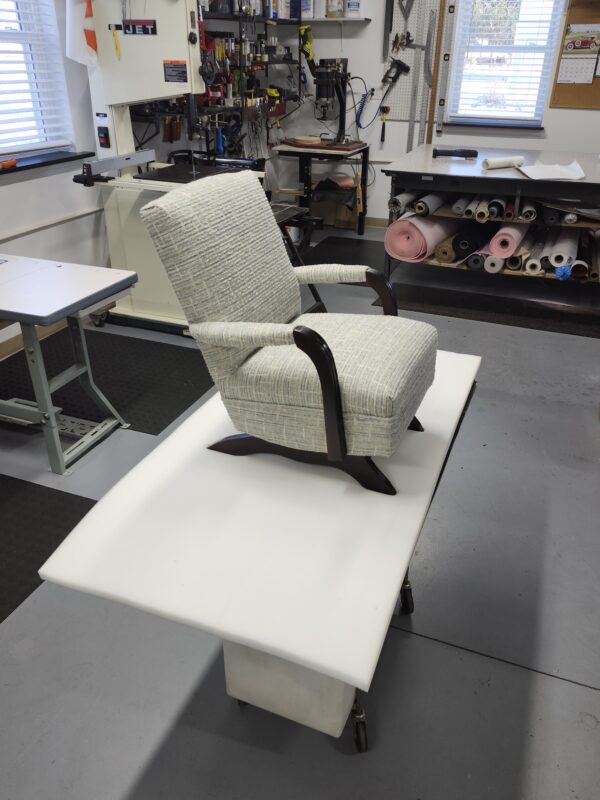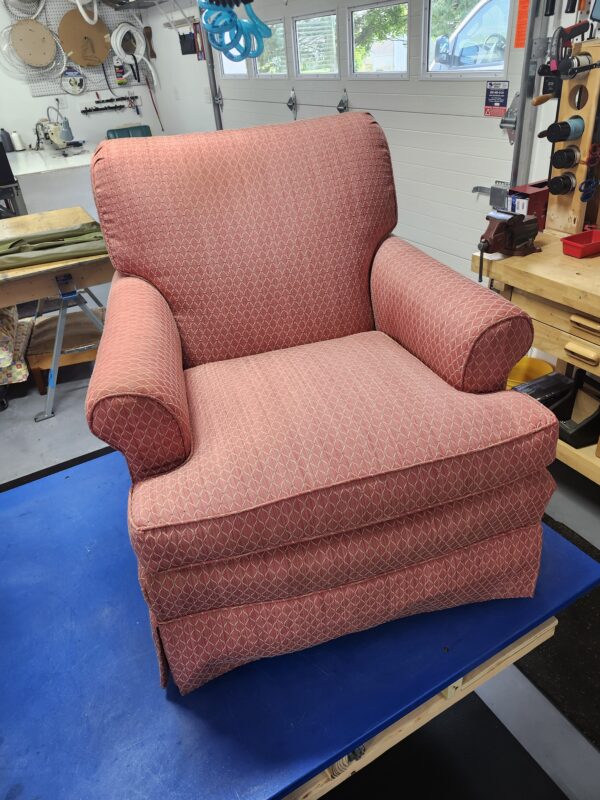



complete restore antique ottoman
- Project: Reupholstery
- Category: Furniture Upholstery
Our Task
complete restore antique ottoman
Alexupholsteryshop.com



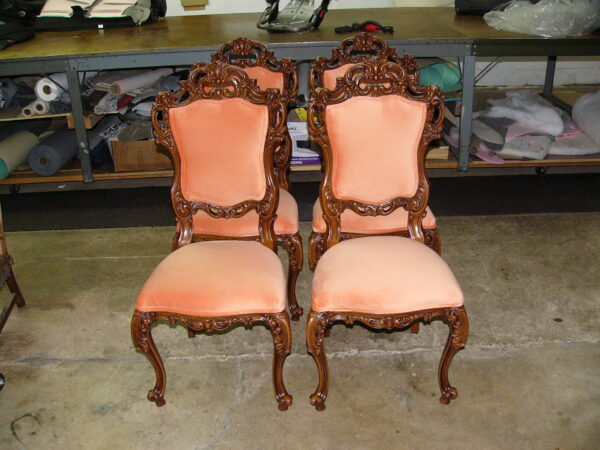
A pair of chairs is a promise. Two matching pieces flanking a window or facing a sofa tell you the room was composed, not accumulated. Which is why nothing bothers the eye quite like a pair that has drifted apart, one chair faded and slumped, the other still holding its shape because nobody ever sat in it. Mid century pairs are especially prone to this, since they were built in the first great age of foam, and foam ages on its own schedule.
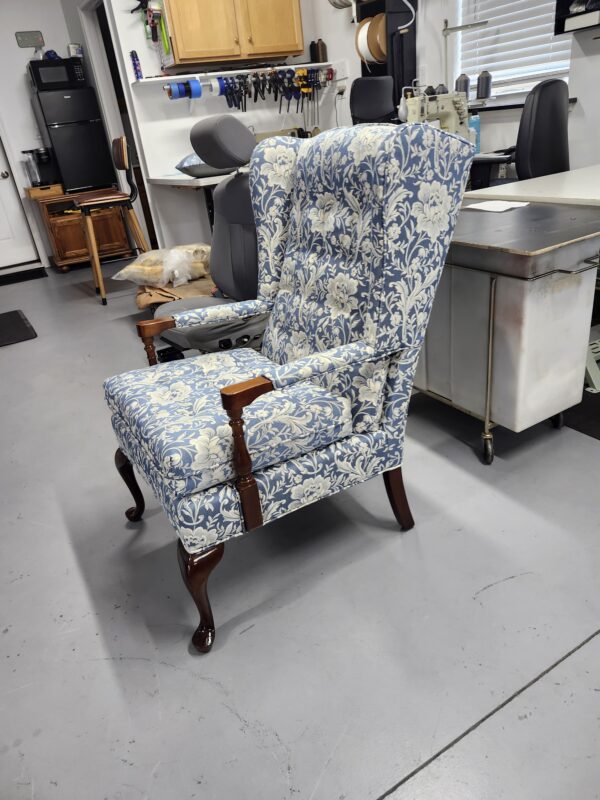
When a pair of vintage chairs comes into our shop, blue or otherwise, the assignment is really twofold. Bring each chair back to health, and bring both chairs back to identical. The second part is the harder discipline, and it is where a shop’s habits show. Matching two chairs takes measurement, patience, and a refusal to call anything close enough.
To understand a mid century chair, follow the stuffing. For two centuries before these chairs were made, a seat was an agricultural product. Curled horsehair, hog hair, dried moss, and cotton batting were layered over hand tied coil springs, shaped and stitched by hand into the profile the maker wanted. It was slow, skilled work, and it produced seats that could be rebuilt almost indefinitely. Museums that study American craftsmanship, most notably the Winterthur Museum with its deep collection of early furniture, preserve exactly that tradition of stitched and stuffed upholstery.
Then chemistry crashed the party. Latex foam arrived first, whipped rubber sap molded into cushions, followed by polyurethane foam in the postwar boom. Suddenly a factory could produce in minutes a seat that once took a craftsman a day. Designers loved it, because foam allowed the thin, clean profiles that define the era. The catch surfaced decades later. Where good horsehair essentially lasts forever, early foams oxidize. They yellow, harden, crumble to powder, or collapse into pancakes. Nearly every mid century chair we open contains foam at the end of its life, and that is not a flaw in the chair. It is simply a consumable part that has run out.
Two identical chairs never live identical lives. One sits by the window and takes the afternoon sun, so its fabric fades a shade or two lighter each decade while its twin keeps its color in the shadow. One becomes the favorite reading chair and its cushion compresses, its front edge wears, its joints loosen from ten thousand sittings. The other stays showroom firm. Ten years of this and the pair no longer matches in color, in profile, or in feel, even though both chairs are original.
Sunlight is usually the biggest offender, and blue fabrics feel it acutely, since many blue dyes are less lightfast than their darker cousins. Fading is also uneven across a single chair, deepest on the top surfaces and the side facing the glass. By the time an owner notices, no cleaning in the world will bring the color back, because the dye itself is gone. The good news is that a pair in this condition is a perfect restoration candidate. The frames are typically fine, and everything that has aged unevenly, the foam, the fabric, the webbing, is exactly the material a rebuild replaces anyway. We made the broader argument for this in our piece on why restoration beats replacement, and pairs are the strongest case of all, since finding a matching vintage pair on the open market is close to impossible.
Restoring a pair through our antique restoration service means treating both chairs as one project from the first minute. We tear them down side by side, compare their frames, and note where the harder used chair needs joint work its twin does not. Structure is corrected individually, but everything soft is rebuilt in parallel, from the same rolls and batches, so no difference can creep in. To keep a pair truly matched, we control the variables one by one:
Consistency at that level depends on equipment as much as on care. Straight, repeatable seams across four arms and two backs come from industrial walking foot machines, and identical cushions come from cutting tools that do not wander. Curious clients can see the whole lineup on our machinery page, which doubles as an honest answer to the question of why shop work looks different from kitchen table work.
Cushion construction gets the same twin treatment. Each new core is high resilience foam wrapped in polyester batting, sometimes over a muslin liner, so the cushion fills its cover with a soft crown instead of hard corners. We measure the finished crown on both chairs against each other, because a quarter inch of difference between two seat cushions is invisible on a ruler and obvious from across the room. Zippers, if the design uses them, land on the same edge of both cushions, facing the same way. Obsessive, yes. That is what matching means.
The preservation judgment still applies, even on younger pieces. Original show wood finishes stay if they are sound, since refinishing erases the patina that marks a chair as genuinely of its era. Labels and stamps are protected. Only the worn out layers are renewed, which is exactly how these chairs were designed to be maintained in the first place.
Blue has been a favorite upholstery color for as long as upholstery has existed, from indigo dyed wools to the saturated teals and peacocks the mid century loved. It flatters wood tones from pale beech to dark walnut, reads as both calm and confident, and photographs beautifully. If your pair was blue, there is a strong argument for keeping it blue, just smarter blue this time.
Modern textiles have quietly solved the old problems. Solution dyed fibers lock color into the strand itself, so the window side chair and the shaded chair will still match in fifteen years. Performance weaves shrug off spills that would have marked the originals for life. Texture is the style key for the period. Boucles, flat weaves, and tight wools suit these frames, while shiny or heavily patterned cloth fights them. The same logic guided fabric choices on the Victorian style sofa we restored and reupholstered, where period character and modern durability had to shake hands, just in a much older idiom.
Once the pair comes home, the job is keeping them aging at the same rate. The single best habit costs nothing. Swap the two chairs’ positions once or twice a year, so neither one hogs the sunlight or the sitting time. Rotate and flip cushions if the design allows. Vacuum both chairs on the same day each month, and address spills by blotting immediately.
Keep both pieces a respectful distance from radiators and vents, since heat cycles are hard on foam and glue alike. If the room has strong sun, sheer curtains during peak hours will add years to any fabric ever made. Owners who want to understand what is actually under their hands as they care for a chair can read our plain language walkthrough of what reupholstering a chair involves, which makes every one of these habits make sense.
Yes, completely, because matching comes from recovering both chairs together in fabric from one bolt. We never recover just the faded one to match its twin, since chasing an aged color with new cloth is a losing game. Rebuilt as a set, the pair leaves the shop more closely matched than the factory managed.
That is a genuine choice, and we build to your preference. Most owners ask for the original firm, supportive feel, which suits the upright geometry of these chairs. We can adjust density and wrap within the same profile, so comfort changes without the silhouette changing.
Not at all. Deliberately splitting a pair into two coordinated colors is a legitimate design move, and we have done it to lovely effect. The only version we discourage is accidental mismatch, where one chair is redone now and its twin some years later in a fabric that almost matches. Almost is the one thing a pair cannot survive.
If your twins have stopped matching, or a single survivor deserves better than its crumbling foam, we are ready when you are. Start with a free online estimate or call the shop at 717-383-6917. Every project is quoted individually after we inspect the pieces, and pairs get planned as pairs from day one. For proof that we treat sets as a single mission, have a look at the antique rocking chair and loveseat we restored together.
 Get a Free Quote!