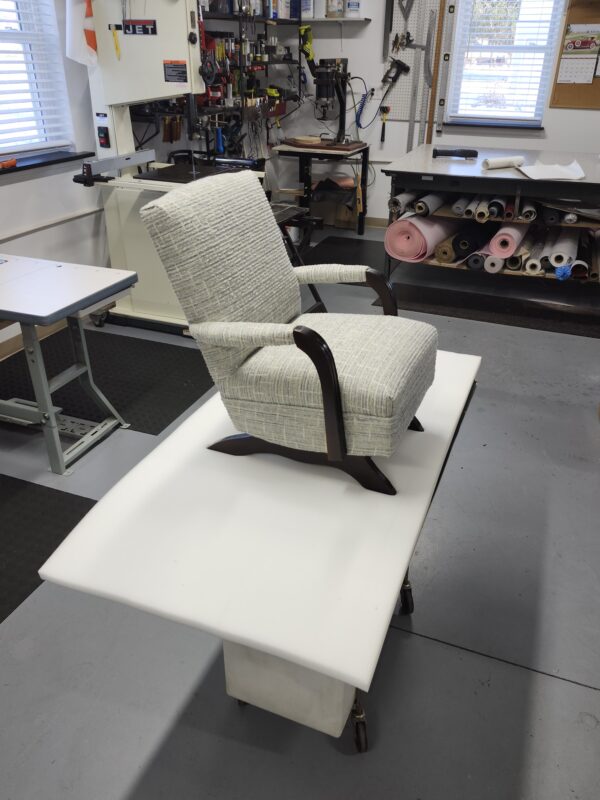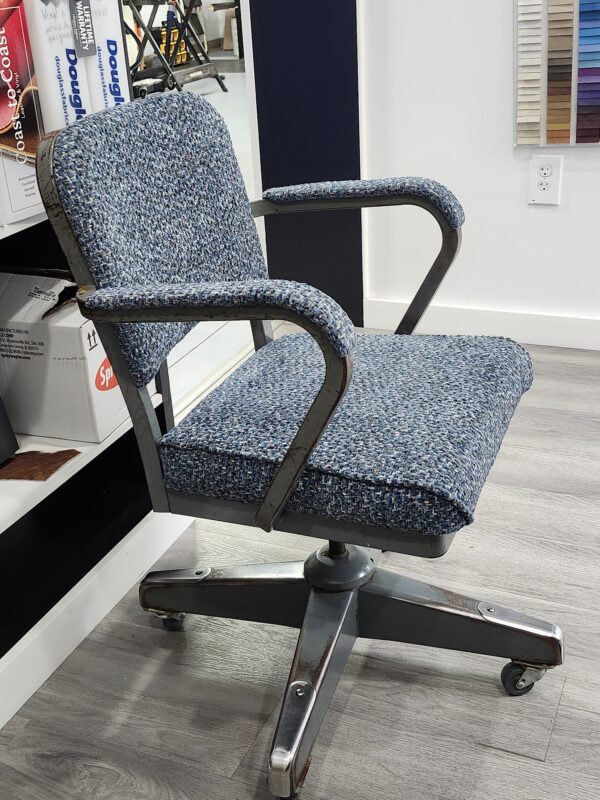



complete restore antique ottoman
- Project: Reupholstery
- Category: Furniture Upholstery
Our Task
complete restore antique ottoman
Alexupholsteryshop.com



The ottoman is one of the few pieces of furniture that carries its passport in its name. The form arrived in Europe from the Ottoman Empire in the late eighteenth century as a low, cushioned platform, and by the Victorian era it had settled into parlors across America as a footstool, a fireside seat, and a showpiece for needlework and fine fabric. An antique ottoman that has survived a century or more is a small object with a long memory.
Owners tend to underestimate them. Because an ottoman is compact, people assume there is not much to it. Then we open one up in the shop and find coil springs, hand tied twine, layered horsehair, and tacking work done by a craftsman who clearly expected the piece to outlive him. It usually has. Our job is to make sure it keeps going.
The stuffing is where an antique ottoman hides its pedigree, so let us start there. A quality nineteenth or early twentieth century ottoman is built up in layers over a hardwood frame. Jute webbing is stretched across the bottom rails and tacked tight. On better pieces, small coil springs sit on that webbing, each one stitched down and then tied across the top with lashing twine so the whole field of springs compresses evenly. Burlap covers the springs, and then comes the material that defines the era: curled horsehair.
Horsehair was the premium stuffing of its day for good reason. Each strand is springy, it breathes, it resists packing down, and a well stuffed hair pad can still have life in it after a hundred years. Around the edges, upholsterers rolled and stitched the hair into a firm border, the edge roll, which gives the ottoman its crisp shoulder and protects the fabric from the frame beneath. Over the hair goes a layer of cotton batting to soften the surface, then muslin, then the show fabric, often finished in the period with buttons, cording, or a fringe skirt brushing the floor.
Cheaper ottomans of the era used excelsior, which is shredded wood fiber, or dried moss and grasses. These materials pack hard and crumble with age, and finding them tells us something about how the piece was originally positioned in the market. Groups that study the trade, including the Furniture History Society, have documented how much a piece’s stuffing and foundation reveal about its date and origin, sometimes more reliably than the visible woodwork does.
An ottoman lives a harder life than a chair seat. Feet land on it with force, people sit on it though it was not always meant for sitting, and children treat any low upholstered object as a trampoline. The webbing is usually the first casualty. Jute dries out and tears at the tacks, and once the webbing sags, the springs drop with it and the whole top loses its shape.
The spring twine goes next. Old lashing cord dries, frays, and snaps, and untied springs lean sideways instead of compressing straight down. You can hear this stage: an ottoman that creaks and clunks is telling you its ties have let go. The hair pad itself often survives, but the cotton over it mats down, buttons pull through, and the edge roll splits so the once sharp silhouette goes soft and round.
Fabric damage is the part owners see. A century of shoe heels, sun, and the occasional serving tray will wear through any textile ever woven. But it is worth saying plainly: worn fabric is the least serious problem an antique ottoman can have. It is the foundation underneath that decides whether the piece is a simple recover or a full rebuild.
When an antique ottoman comes into our antique restoration queue, we begin with a careful assessment, and cost is settled there too, since every piece is quoted individually once we have seen its condition. Then we strip it layer by layer, and we treat teardown as archaeology. Tack patterns, stuffing materials, and old repairs all get noted, because they tell us how the piece was built and how faithfully we can rebuild it.
The frame is checked and reglued where joints have loosened. New jute webbing goes on in the traditional woven pattern, stretched hard and tacked in the original manner. If the coil springs still hold their temper, and they usually do, we retie them by hand with new twine in the same style the original maker used. This is the preservation judgment at the heart of every antique job: springs, hair, and sound frame parts are original material, and keeping them keeps the piece honest. We wash and card reusable horsehair, top it with fresh cotton, and stitch a new edge roll where the old one has failed. Only material that has genuinely died gets replaced. We wrote about this balance in our piece on how heritage furniture is restored while maintaining its quality, and ottomans are where that philosophy gets tested in miniature.
The techniques involved are the same ones used on larger seating. If you have ever wondered what actually happens between fabric off and fabric on, our walkthrough of how to reupholster a chair shows the sequence, and an ottoman follows it step for step, just closer to the floor. We put the same foundation work into the white channel back chair we restored, and the same respect for original material into the antique wicker rocking chair we brought back. Small piece or large, the layers are the layers.
Fabric choice on a Victorian era ottoman is a genuine pleasure because the period gives you so much to work with. Historically these pieces wore wool damasks, cut velvets, needlepoint, and haircloth, often with decorative nails, gimp, or bullion fringe. If your goal is a faithful period look, a dense wool or a patterned velvet with a fringe skirt lands squarely in the tradition.
If the ottoman is going to live as a working footrest, we lean practical. A tightly woven wool blend or a quality performance velvet gives you the period texture with far better resistance to abrasion and stains. Darker mid tones hide shoe scuffs better than pale solids. Buttons and cording can be reproduced in the new fabric so the detailing stays true even when the textile is modern.
One honest note: if your ottoman’s top is a separate stuffed cushion rather than fixed upholstery, that cushion deserves the same attention as the base. Rebuilding cores and covers is its own craft, and our cushion services page covers how we handle those.
A restored antique ottoman asks for very little. Keep it out of strong sun, which fades dyes and weakens fibers faster than feet ever will. Keep it a respectful distance from radiators and vents, because heat cycles dry out both the wood and the hair stuffing. Vacuum the fabric gently every month or so with a brush attachment, and blot spills immediately rather than rubbing them in.
Rotate the piece a quarter turn a few times a year so light and use fall evenly. If it rides on casters, check them occasionally; original casters are charming but their fixing screws loosen, and a wobbling caster splits old leg wood. And if you hear a new creak or feel a corner going soft, bring it in sooner rather than later. In upholstery, early is always cheaper than late, and with antiques it is also kinder to the original material.
Look underneath. Hand tacked jute webbing, square cut nails or old tacks, coil springs tied with twine, and horsehair stuffing all point to real age. A stapled plywood base with foam says twentieth century reproduction. We are happy to look at photos of the underside and give you our read.
Usually not. Healthy horsehair is a better material than most modern replacements: it breathes, it lasts, and it is part of the ottoman’s originality. We replace it only when it is contaminated or broken down, and even then we prefer new natural fillings on a period piece.
Not at all, and historically it would not have matched anyway. Victorian rooms mixed upholstered pieces freely, and an antique ottoman in its own fabric reads as a deliberate accent. Choose a fabric that converses with the room rather than copying it.
If there is a low, tired, secretly wonderful ottoman in your house, we would love to see it. Send a few photos through our free online estimates page or call 717-383-6917 and we will tell you what is under that old fabric and what it will take to bring it back.
 Get a Free Quote!