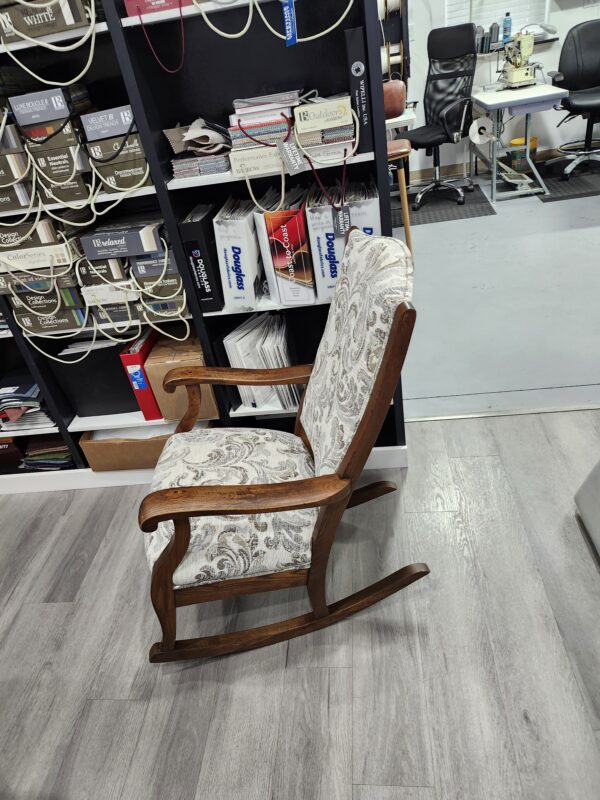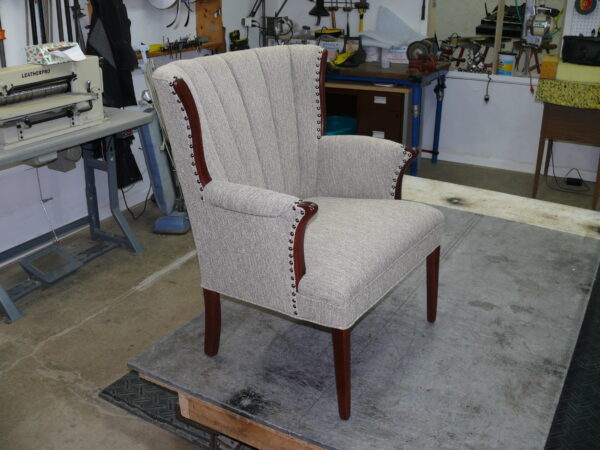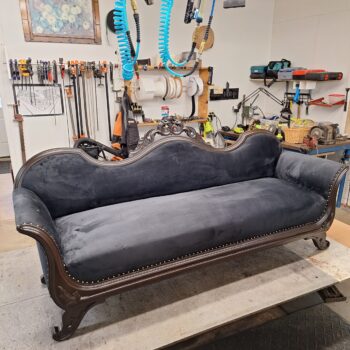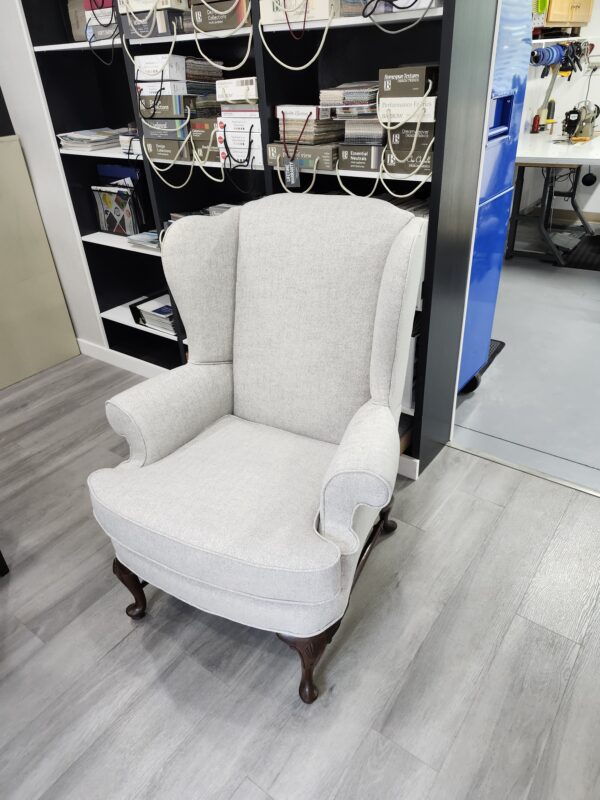



Project Details Antique Chair with Nail Trim
- Project: Upholstery New Furniture
- Category: Furniture Upholstery



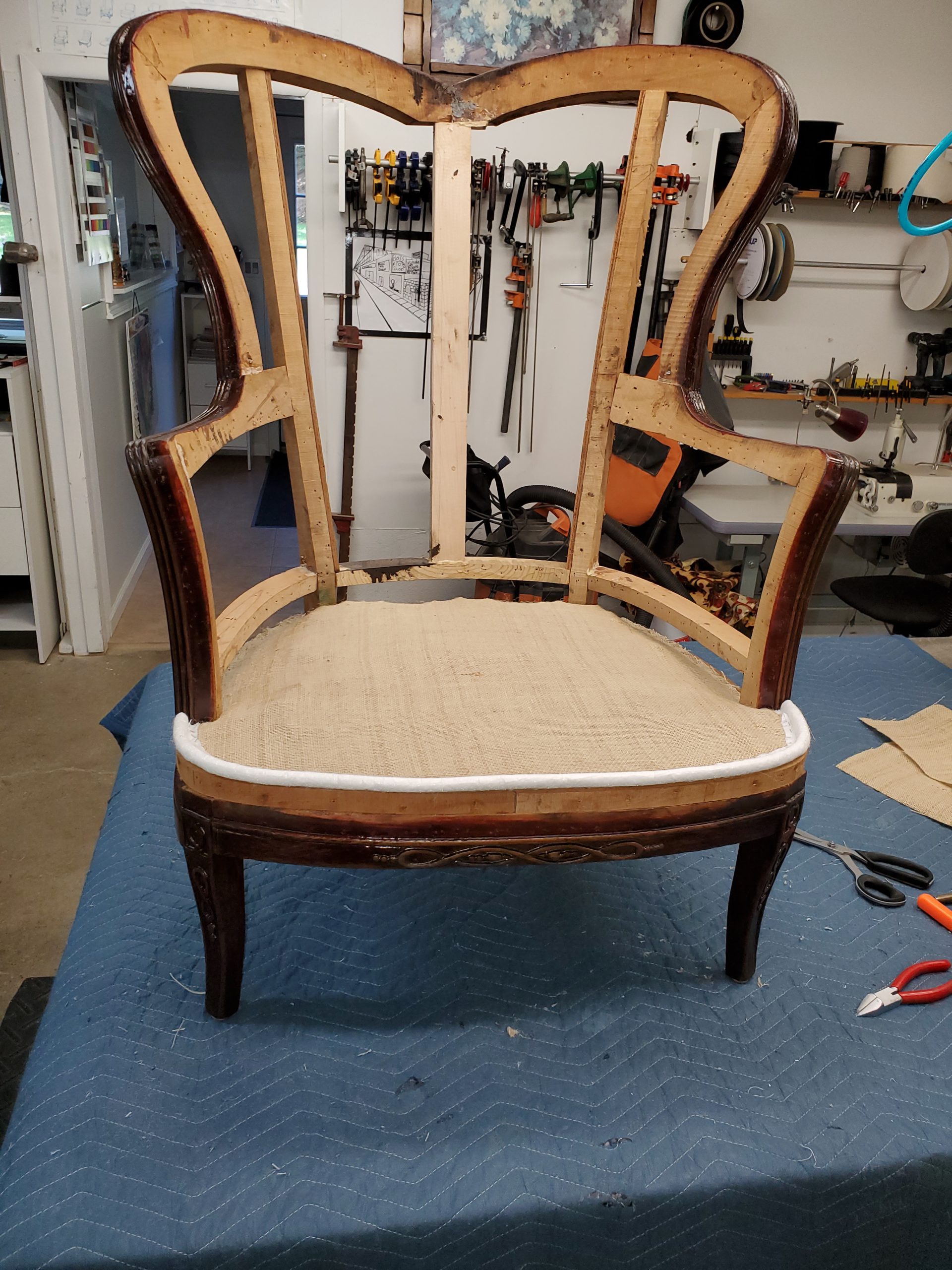


There is a particular glint that stops people in a room: rows of brass nailheads marching along the arm of an old leather chair, each one catching the lamp light a little differently. Nail trim is the oldest decoration in our trade, and when an antique chair wearing it arrives at the shop, we know we are holding a piece of upholstery history in the most literal way possible.
Owners rarely talk about these chairs the way they talk about furniture. They talk about the grandfather who read in it, the office it came from, the estate sale where it almost got away. Our work is to honor all of that while quietly rebuilding everything the decades have worn out.
Decorative nails were not born decorative. Centuries ago, before staples and tack strips existed, dome headed nails were simply how a hide got fastened to a chair frame, and craftsmen realized the fastening could be beautiful. Rows of brass domes became a signature of quality, from Renaissance thrones to Georgian libraries to the leather club chairs of the early twentieth century. Upholsterers of the old school bought them by the pound, and apprentices learned spacing with a notched stick long before anyone trusted them with a hammer.
By the era most of our antique nail trim chairs come from, the nails had become deliberate ornament, spaced by eye and set one hammer tap at a time. A chair might carry several hundred of them. Look closely at an original and you can read the individual craftsman in the spacing, tiny variations no machine would produce. That handmade rhythm is part of what we protect when one of these comes in for restoration.
The trim itself has dialects. Some chairs space their nails a finger width apart along a plain leather edge. Others run them shoulder to shoulder in a solid brass line, and later pieces sometimes tuck a strip of gimp or a leather welt beneath the heads. Matching the original dialect matters, because close set nails on a chair that wore spaced ones reads wrong even to people who could never say why.
A chair like this is usually built the old way from the floor up. The frame is dense hardwood, joined with dowels or mortise and tenon, glued with hide glue that can be gently reversed and renewed, which is a gift to restorers a century later. Webbing stretched across the seat carries coil springs, hand tied so they compress evenly, topped with burlap, traditional stuffing, and cotton batting shaped into the profile the maker intended.
The leather over all of that was cut from full hides, stretched by hand, and finished at the edges with those nails, sometimes over a welt or a fabric border. Every layer was meant to be serviceable. These chairs were built by people who assumed a future upholsterer would take them apart, and we do exactly that, in the order they intended. It is a completely different discipline from modern production seating, and it is why the different types of restoration service we offer start with identifying how a piece was originally built.
Age reaches these chairs in a predictable order. The leather dries first, since decades of central heating pull the oils out of a hide until it stiffens, then cracks along the arms and seat where flexing concentrates. Old finishes darken unevenly. Seams let go as the original linen thread rots even where the leather remains strong.
Below the surface, webbing sags and eventually tears loose, letting springs drop and the seat go hollow. Stuffing compacts and shifts. And around the rails there is the problem specific to nail trim: every nail made a hole, and past reupholstery jobs added more holes beside them. After two or three recoverings, the tacking rails can be so chewed that fresh nails have nothing solid to bite. We repair those rails with fitted hardwood inlays rather than filler, because several hundred nails are only as secure as the wood beneath them.
Assessment comes first, and with antiques it is a conservation conversation as much as a repair plan. If the original leather is tired but intact, cleaning, conditioning, and careful re dyeing may serve the chair better than replacement, and we will say so. When the hide is past saving, we document everything before teardown: nail spacing, border widths, seam placement, the exact line the trim follows around each curve.
Teardown is done nail by nail with lifting tools, not pry bars. Original nails get sorted and kept, because period brass with honest patina is often reusable and always worth matching. The frame gets its joints checked and reglued with hide glue, the rails repaired, the springs retied eight ways where the old ties have failed, and the stuffing rebuilt to the original profile, keeping every layer of period material that is still doing its job. Then the new hide goes on, stretched and set in stages so it takes the chair’s shape without stress points, and finally the nails go back, spaced by eye and set one at a time, several afternoons of tapping that no shortcut can replace.
This kind of leather craft scales in both directions at our shop. The same hands do intimate work like a leather chair and ottoman set we restored and big commercial projects like the cafeteria renovation seating we handled for a local retirement community. The scale changes. The standards do not.
For a chair of this age, we favor full aniline or semi aniline top grain, the kinds of hide that develop patina instead of just wearing out. Pigment heavy modern finishes can look plasticky against old wood, while an aniline hide will darken and burnish over the years exactly the way the original did. Provenance matters to us too, and we look to tanneries certified through the Leather Working Group, whose audits cover the tanning practices that determine how a hide ages, not just how it looks on day one.
Honest aside: for a chair that will live hard, in a busy office or a house full of kids, today’s faux leather materials are better than their reputation, and we will walk you through where they make sense and where only real hide will do. The nails get equal attention. Reproduction nailheads come in dozens of head sizes and finishes, from bright brass to oiled bronze to hand hammered pewter, and choosing one is much easier with samples in hand. Come handle the fabrics and leathers we keep in the shop and hold the options against your chair’s wood.
Keep the chair out of direct sun, which fades leather and bleaches wood in a season or two of afternoons. Keep it a few feet from radiators and heat vents, since dry heat is what stiffened the original hide in the first place. Dust it with a soft cloth, condition the leather lightly once or twice a year, and wipe the nailheads dry rather than using brass polish, which strips the patina and can stain surrounding leather.
Seasonal humidity swings deserve a thought as well. Hardwood frames take on and release moisture through the year, joints flex a little with each cycle, and a room kept within sensible humidity bounds slows that breathing to a crawl. A small humidifier running in winter does more good for an antique than any polish in a bottle.
Once a year, tip the chair and look underneath. Sagging webbing announces itself down there long before the seat feels wrong up top, and catching it early keeps the repair small. Antiques reward that kind of modest, regular attention more than any product ever will.
Often, yes. Solid brass nails from the period usually survive careful removal, and their patina is something money cannot buy new. We reuse the originals where they are sound and blend in matched reproductions where they are not, so the trim reads as one continuous line.
Not without help, and pretending otherwise is how trim ends up loose in a year. Where rails are chewed up, we inlay new hardwood so every nail sets into solid material. It is invisible when finished and it is the difference between decoration and craftsmanship.
For museum grade rarities, original surfaces matter enormously, and we will tell you honestly if your chair is one and recommend a conservation minded approach. For most antiques, a sensitive restoration that preserves the frame, the springs, and the original construction methods makes the chair both more usable and easier to pass down, which is the value most families actually care about.
If a nail trimmed chair in your house is cracking, sagging, or shedding brass, our furniture upholstery service was practically invented for it. Look through our leather work gallery to see what these pieces become, then send photos via free online estimates or call 717-383-6917. We would love to meet your chair.
 Get a Free Quote!