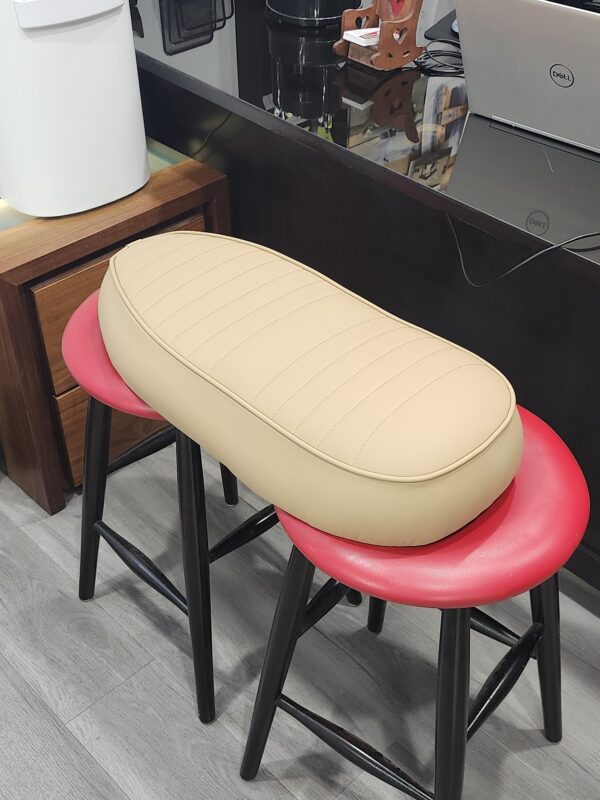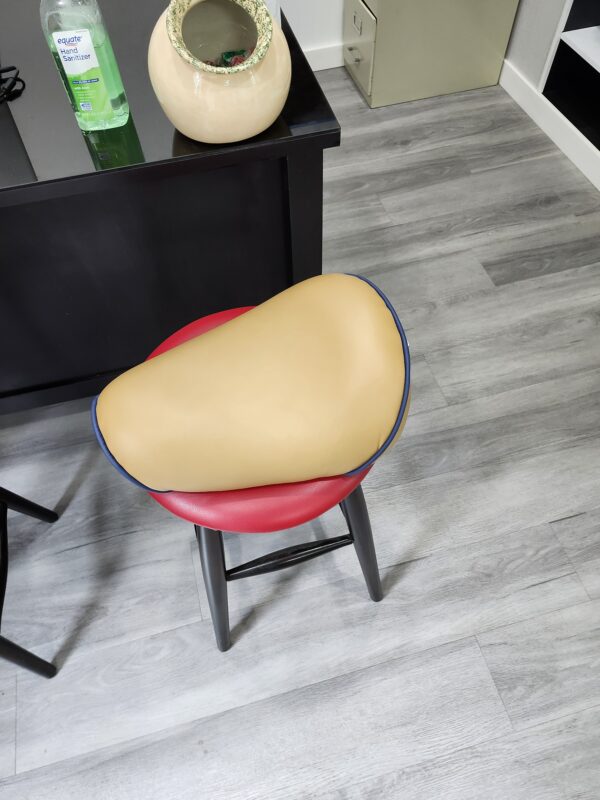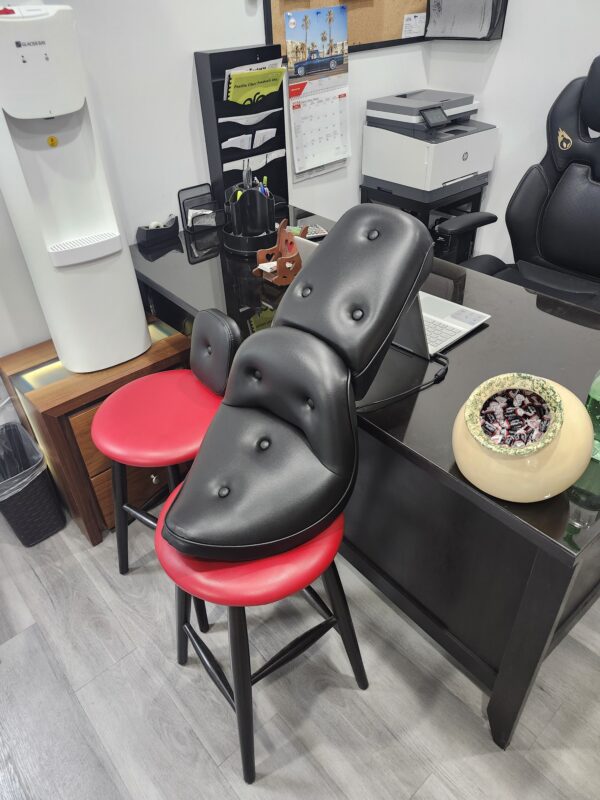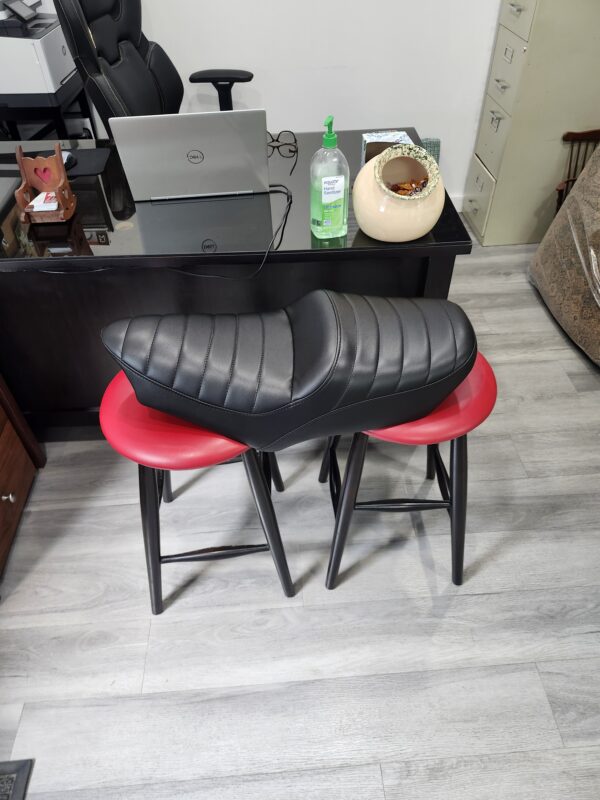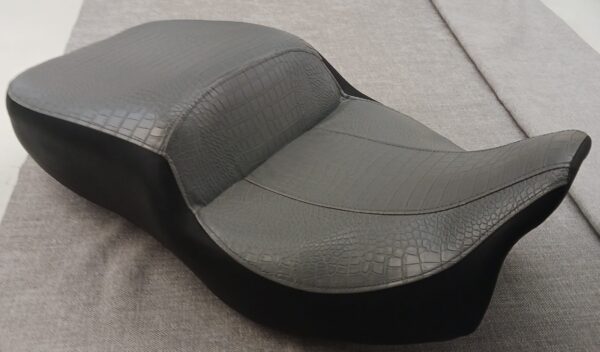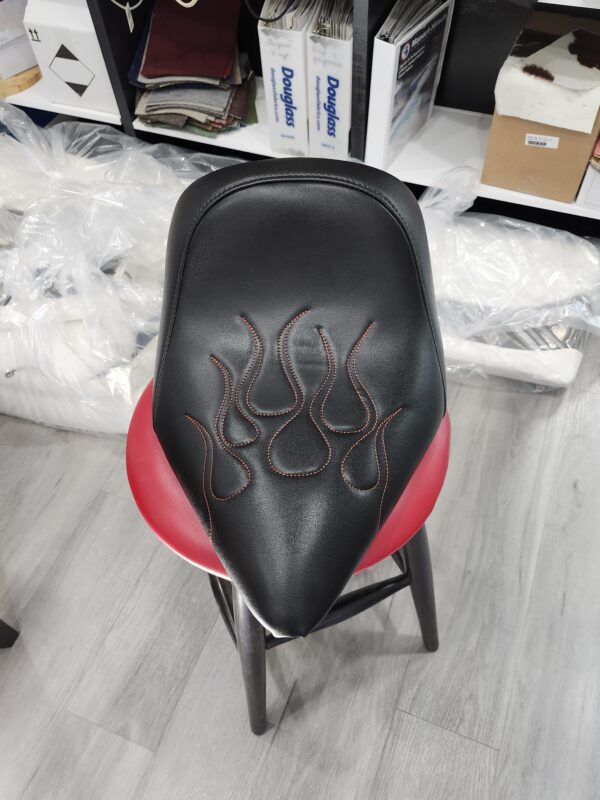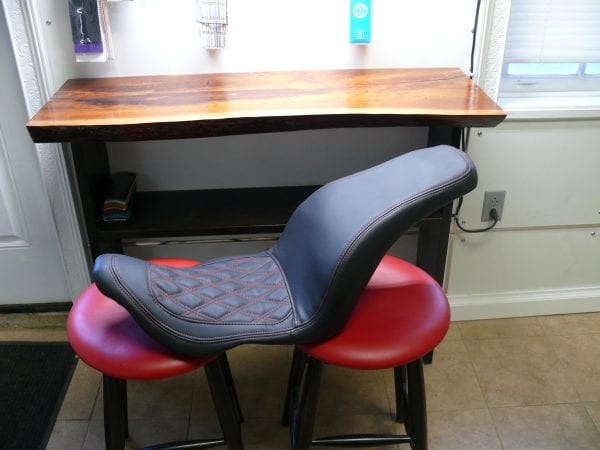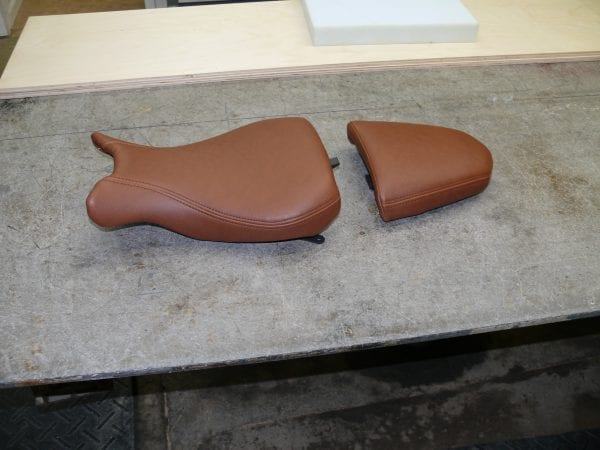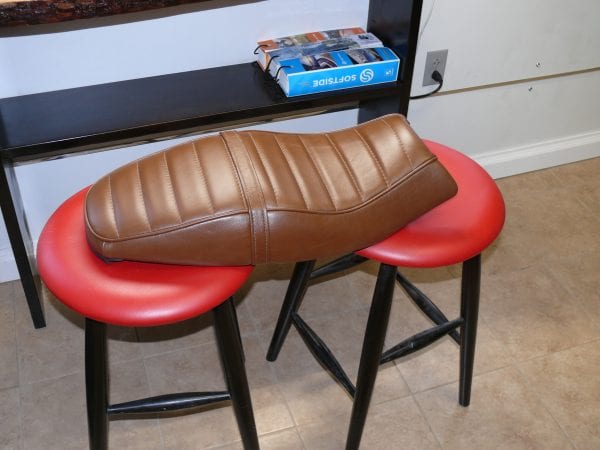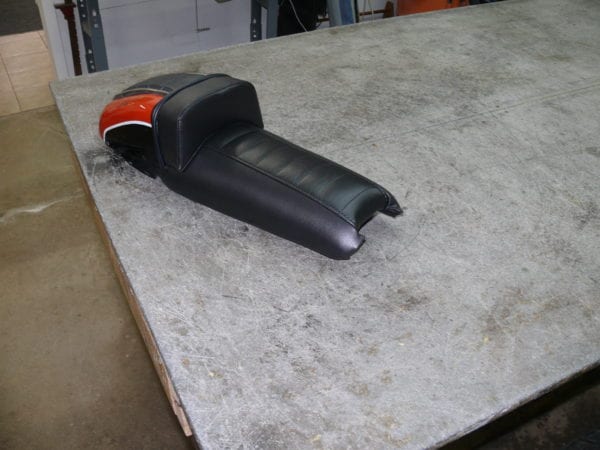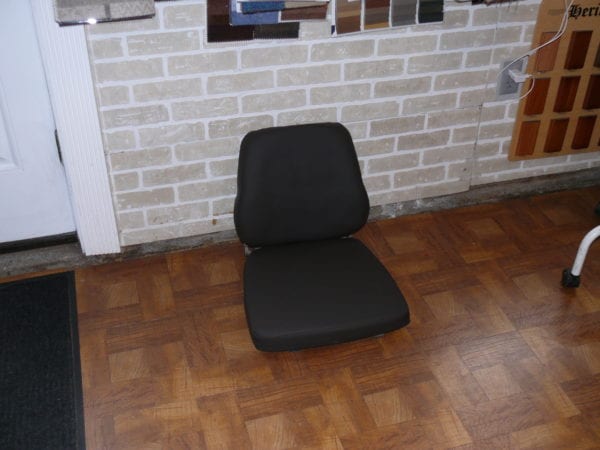



Project Details Upholstery ford 1956 truck bench seat
- Project:
- Category: antique and classic car
- Our Task update design for
ford 1956 truck bench seat



Around here the golf cart has quietly become the second family car. It runs kids to the pool, carries tools across the property, and handles mailbox duty in all four seasons. And just like the family car, everybody notices when the seats look rough. Cracked vinyl and a sun bleached bench can make a perfectly good cart feel ten years older than it really is.
These golf cart seats came to us about as tired as they come, and the rebuild is a nice window into how much engineering hides inside a cushion most people never think about. Seat work like this is a regular part of our auto upholstery service, and carts have quirks of their own that are worth understanding before you hand yours to anybody with a staple gun.
Strip a cart seat down and you find a simple team. There is a seat board, usually plywood or molded plastic, that gives the cushion its shape and holds the staples. There is a foam bun that provides all the comfort. And there is the vinyl cover that takes the weather, the friction, and the sunscreen. Hinges and brackets tie the whole assembly to the cart body, with the backrest usually built as its own separate cushion on the same plan.
Unlike a car seat, there is normally no steel spring assembly inside, no frame wires, no zig zag springs. That simplicity is good news and bad news. Good, because there is less to break. Bad, because the foam does every bit of the comfort work alone, and when it goes flat there is nothing underneath to disguise the loss.
It is also worth remembering what these benches actually carry. Two adults, a cooler, a wet dog, and somebody’s father in law climbing in sideways, several times a day all season long. The load is real, and the sliding entries wear the outer edges of the cushion long before the middle shows any age at all.
Owners always point at the cracked vinyl, but half the time the foam underneath is the bigger problem. Open cell foam ages even in perfect conditions, and cart foam does not live in perfect conditions. Every rainstorm that sneaks past a worn seam soaks in. Wet foam breaks down chemically, loses its spring, and starts to crumble like stale cake.
You can test yours in ten seconds. Press a palm into the middle of the cushion. Healthy foam pushes back briskly and levels out the moment you let go. Tired foam takes a beat to recover, or holds a faint dent shaped like your hand. If the bench also smells musty after rain, water is already living inside it.
When we rebuild a seat we replace suspect foam with new material of the proper density, firm enough to support an adult across a bumpy fairway crossing, soft enough that the ride stays friendly. Fresh foam changes the feel of a cart more than any other single piece of the job, and it is the part nobody sees in the photos.
The craft part starts with the pattern. We take the old cover apart at its seams and use the pieces as the starting map, then correct for the stretch and shrink that years of sun have baked into them. Get a pattern wrong by a quarter inch and the finished cover shows loose spots by the first hot afternoon, because vinyl relaxes as it warms.
Sewing outdoor vinyl in multiple layers takes real equipment. Our walking foot machines feed the top and bottom plies together so pleats stay straight and seam lines stay even, and you can see the gear we run on our machinery page. They are the same machines that stitched the pleated inserts on the 1970 Chevy Monte Carlo seats we rebuilt and the interior work on a 1978 Camaro we upholstered for a customer. A golf cart gets the same needle and the same standard.
This is also why mail order universal covers disappoint so often. They are cut to fit every cart approximately and no cart exactly, so they wrinkle at the corners, drum tight across the middle, and work themselves loose within a season. A cover patterned to your actual bench, with seams placed for your actual cushion, simply sits differently, and keeps sitting that way year after year.
Fastening is where corners usually get cut, so we do not cut them. We use stainless staples, spaced close, with the vinyl pulled to even tension all the way around the board. Plain steel staples rust in a season outdoors, stain the cover from underneath, and let go one by one until a corner flaps in the breeze on the back nine.
Before any new cover goes on, the foundation gets a hard look. Plywood seat boards wick water at every staple hole and rot from the edges inward. We repair boards that are mostly sound, seal them against the next storm, or replace them outright once they have gone punky. A cover stretched over crumbling wood cannot hold tension for long, because the staples have nothing left to bite.
Hardware gets the same attention. A cart seat flips up over the battery bay a few hundred times a year, and on electric carts the vapor coming off charging batteries quietly corrodes brackets and hinge pins from below. We clean up surface rust, replace hardware that has gone weak, and make sure the rebuilt bench sits square and swings smoothly. These are small details, and they decide whether the seat still feels tight five years from now.
For material we stay in the marine vinyl and premium faux leather families, both engineered for sun and water. We wrote up our take on faux leather as an upholstery material if you want the deeper story, but the short version is that modern synthetics deliver the look of hide with far better outdoor manners, and they wipe clean after a muddy round without complaint.
Stitching choices matter more outdoors than they ever do in a living room. We double stitch the seams that take entry wear, keep needle sizes sensible so we are not perforating the vinyl into a future tear line, and place seams away from the low spots where water sits after a storm. Small decisions, but they are the reason two identical looking benches can age at completely different speeds.
Style is wide open. Factory plain, diamond stitching, contrast piping, two tone panels that pick up the body color, we have sewn all of it onto cart benches. The Historic Vehicle Association keeps a national register of vehicles that matter to American history, and while we will not promise your cart a spot on it, the instinct behind that work is the same one that brings people to our counter: good machines deserve to be kept alive and kept honest.
New covers do not ask for much, but they do ask. Here is the routine we hand every cart customer on pickup day:
Dust and grit act like fine sandpaper on the topcoat every time someone slides across the bench, so the quick wipe matters more than people think. Our guide to protecting vinyl seats from dirt and dust covers the full routine, and every bit of it applies to a cart just as well as to a car.
We inspect it and tell you the truth either way. If the foam is dry, springy, and holding its shape, we reuse it gladly. If it is crumbling or has been waterlogged, new foam goes in, because stapling fresh vinyl over dead foam is a short lived kind of pretty.
Usually, yes. Corners and staple lines rot first, and we can sister in new material or cut a complete replacement board when the original is too far gone. Either way, your new cover gets a foundation that will actually hold a staple for the long haul.
That is one of our favorite requests. We pull vinyl swatches against the actual paint in daylight, and with two tone panels and piping we can pick up both the body and the accent colors. The cart ends up looking like it rolled out of a factory that never existed.
If your cart seats are flat, faded, or splitting at the seams, we would be glad to rebuild them properly. Send photos through our quote page or call 717-383-6917 and we will lay out exactly what your seats need. Every job is quoted individually once we see the cart, and every bench leaves here ready for years of sun, spikes, and Saturday rounds.
 Get a Free Quote!