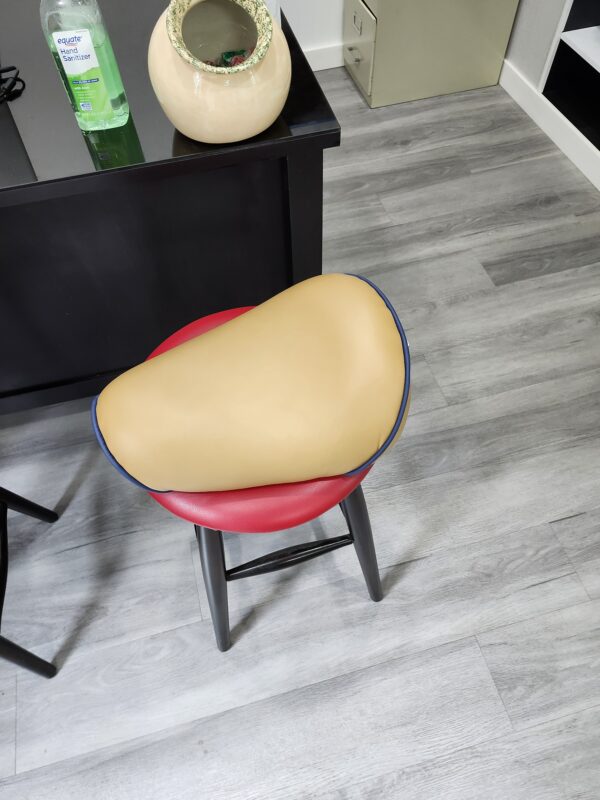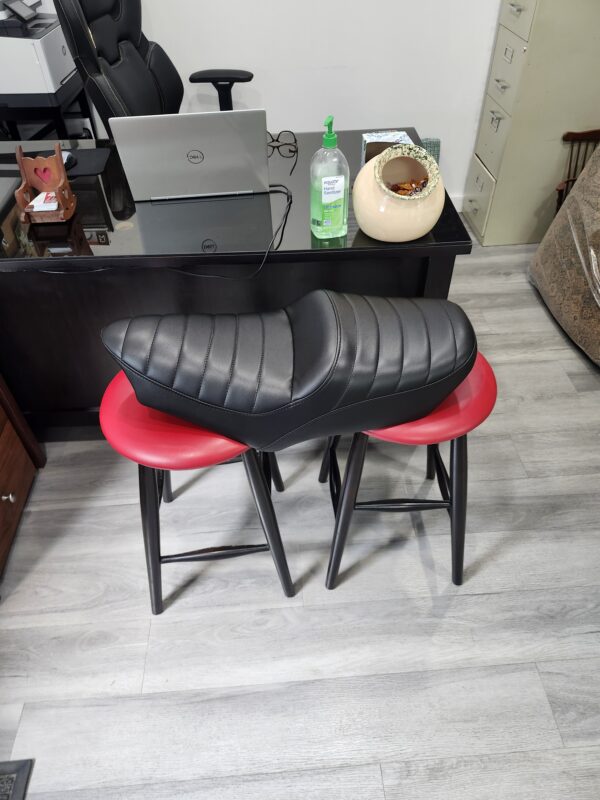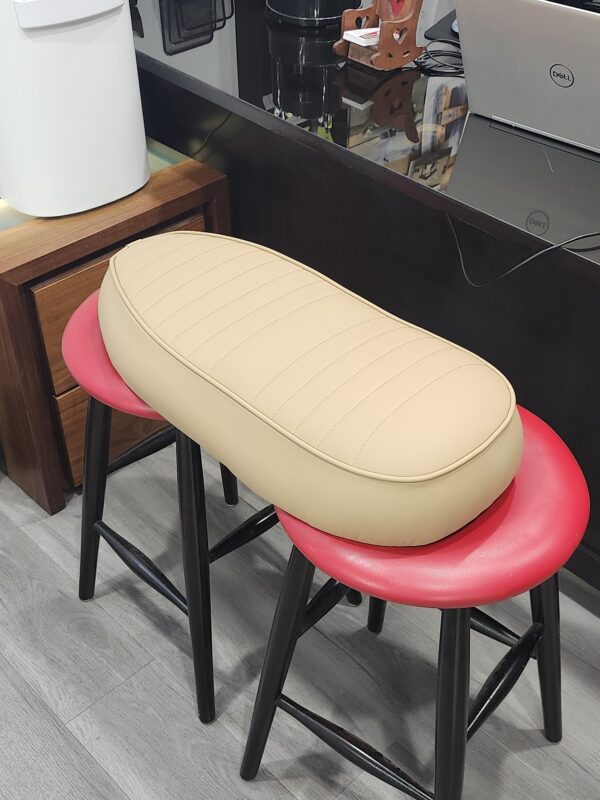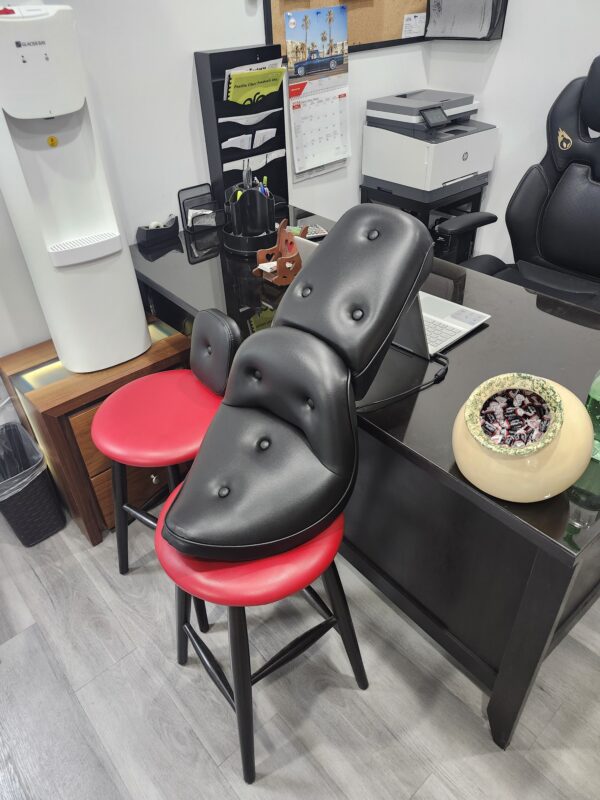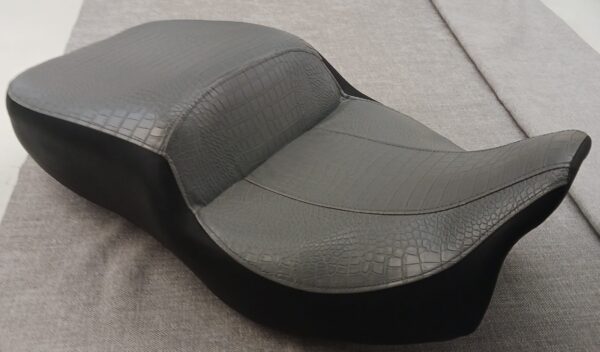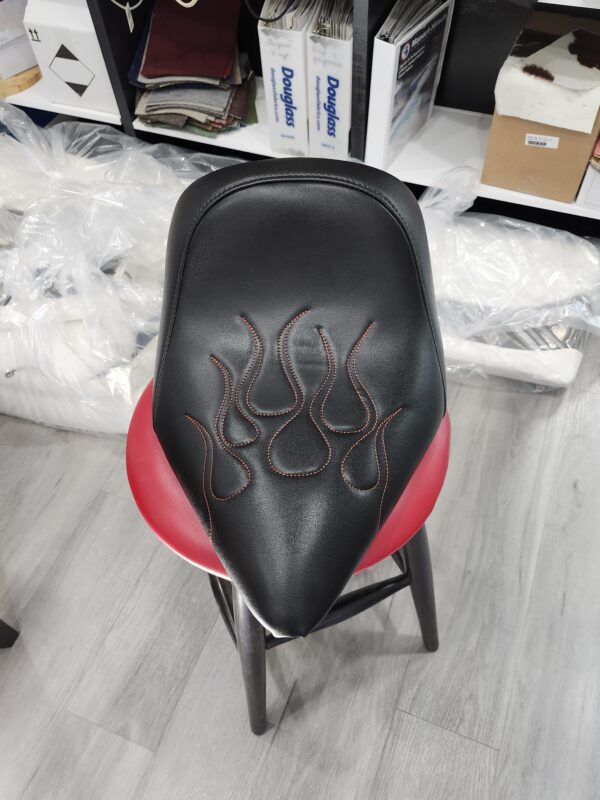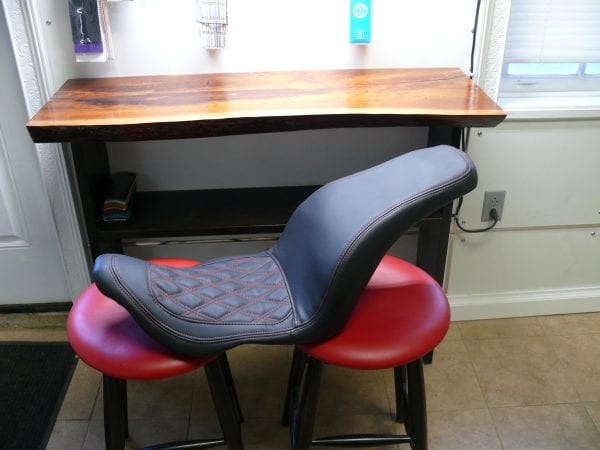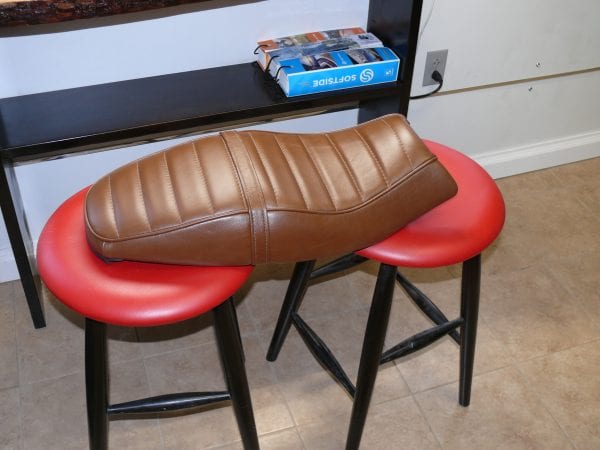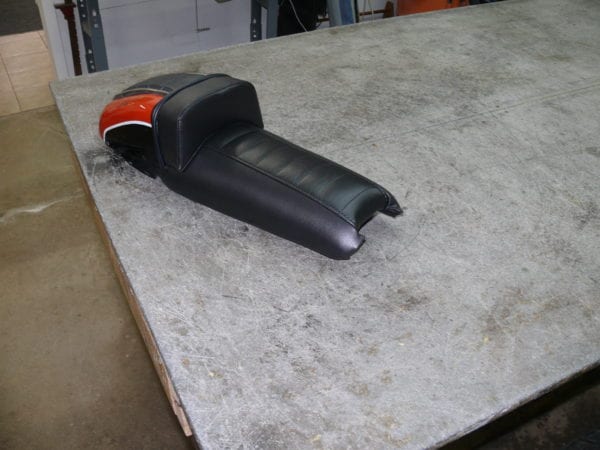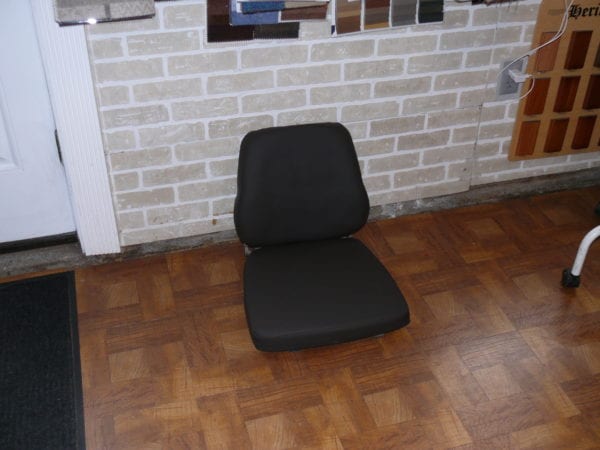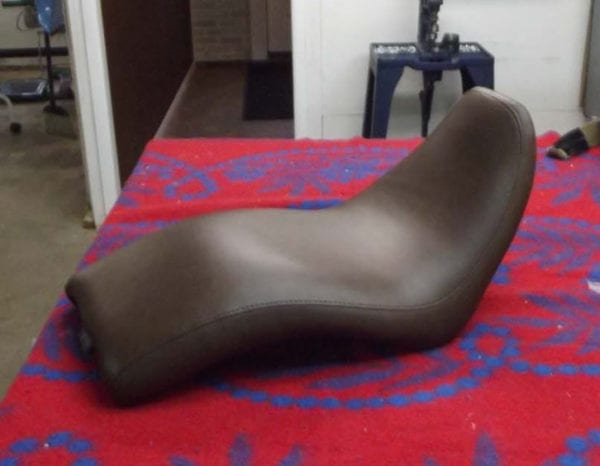



Project Details. reupholstery seat.
- Project: Upholstery motorcycle seat.
- Category: Motorcycle Upholstery
Our Task
Upholstery motorcycle seat.



Upholstery motorcycle seat.
Ask a rider why they will not just buy a new seat and you will get a look, not an answer. A saddle that has covered years of miles under the same person is shaped like that person, faded into colors no factory ever offered, and tied to every trip the bike has taken. Restoring a seat like that is not about making it new. It is about making it sound, so the next decade of riding does not have to happen on somebody else’s idea of a seat.
Restoration is also, quietly, the practical choice. Plenty of older bikes have no replacement seat worth ordering, and plenty of replacement seats are built cheaper than what came on the machine in the first place. When a tired brown saddle arrives at our counter, our first instinct is to figure out how much of it deserves to survive, because usually it is more than the owner expects.
A motorcycle seat carries three kinds of value at once. There is the fit, that broken in shape money cannot order from a catalog. There is the look, especially in brown leather, where sun and friction have built a patina that finishing chemists spend careers failing to fake. And there is the originality, because on a vintage machine the factory seat is part of the bike’s documentation, the same way original paint is.
Restoration lets us keep whichever of those matter and quietly renew the rest. Sound leather stays and gets fed back to health. Dead foam goes, because sentiment does not apply to crumbled polyurethane. A rusty pan gets rescued before it ruins everything bolted to it. The result is a seat that reads original at a glance and rides like it just left the upholstery bench, which it did.
This judgment is the same one we apply across the shop, from a leather Flexsteel sofa we brought back to marine work like leather seats for a 21 foot Polar center console. Different vehicles, same question: what here is worth preserving, and what is just old?
Seats fail from the bottom up and from the top down at the same time. Down below, the pan collects water at its low points and rusts, mounting tabs fatigue, and the staples or clips holding the cover let go one by one. In the middle, foam does what foam does after enough years and enough weather: it hardens, crumbles at the edges, and stops springing back, which is why an old seat feels thin even when it looks plump.
Up top, leather dries as its oils migrate out, then stiffens, then cracks, usually starting where the rider’s weight flexes it most. Brown hides show an early warning that black ones hide, a lightening and dulling along the high wear lines as the finish thins. Stitching often dies before the leather around it does, since thread takes ultraviolet light badly, and a split seam invites rain straight into the foam.
Hardware tells its own story. Rusted staples bleed stains into the hide from below, seized mounting bolts warn us to go gently on the pan, and aftermarket screws sitting where clips belong mean somebody has been inside this seat before us, which always earns a slower and more careful teardown.
Every seat that comes in gets read this way before anyone talks about work, and every job is quoted individually after that inspection, because two seats that look alike from three feet away can need entirely different rescues.
Leather that is dirty, dry, and faded but structurally sound is a conditioning and color job. We clean it properly, feed it with conditioners until it moves like leather again, and re dye worn areas to blend with the patina rather than erase it. Done well, this keeps the original hide on the bike, which is always our preference when the material can honestly serve.
Cracked leather calls for harder honesty. Fine surface crazing can be stabilized and disguised, but cracks that penetrate the hide are permanent, since the fiber structure underneath has broken. Filling deep cracks on a seat that flexes under a rider is a repair that fails on schedule. When cracking crosses that line, we recover the seat in new leather matched to the old one in color, grain, and stitch layout, and we keep the original cover as the pattern so nothing about the character gets lost in translation.
Color work on brown hides is its own small art, because brown is never one pigment. We build the tone in thin translucent passes, letting the underlying variation show through, which is exactly what makes an aged saddle look deep instead of painted.
The layered logic here will look familiar to anyone who has read our walkthrough on how to reupholster a chair. Assess the cover, assess the padding, assess the frame, and repair at the level where the problem actually lives instead of papering over it.
Whatever happens to the cover, the pan and foam get the same discipline. Rust comes off the pan down to clean metal, repairs get welded where tabs have cracked, and the whole thing gets coated so water finds no second chance. New foam gets shaped to the original profile unless the rider asks for comfort changes, in which case we carve the improvements in while the seat is open. Every fastener that comes off gets replaced with stainless or better, cheap insurance on a machine that lives outdoors. It is the cheapest moment there will ever be to fix what the highway taught you about the old shape.
Covers go back on with stainless staples or new clips, pulled tense in the right order so the hide lies smooth over every curve without stress points. The sewing runs through our walking foot machines, which handle saddle weight leather without flinching, and you can see the machinery we run if you like knowing what your seat was built on. The heavy sewing capability matters more than it sounds, because thick hide seamed on light equipment gives you skipped stitches that surface a season later, always in the rain, always far from home.
Motorcycle work like this runs through our motorcycle upholstery service all year, rain or shine, and vehicle owners can get a sense of the underlying labor in our post on what goes into reupholstering a car seat. A saddle is smaller than a bucket seat, but it skips none of the steps.
Restored leather stays healthy on a simple schedule, and the seat will forgive you if you keep it. The Leather Conservation Centre, which studies hide deterioration professionally, points to the same handful of enemies we see at the bench: ultraviolet light, heat, moisture cycling, and dirt left to grind into the grain.
The rider’s version of their advice fits on an index card:
That short list prevents nearly everything we get paid to fix. We will still be here for the rest.
Not necessarily, and the answer lives in your seat, not in a general rule. Shallow surface cracking can often be stabilized, recolored, and ridden for years with good care. Deep cracks through the hide mean recovering is the honest fix, and we will show you exactly which kind you have before recommending anything.
Yes, color and texture matching is a normal part of the job. We match new hide or fresh dye to saddlebags, grips, a backrest pad, or the aged tone of the seat itself so nothing on the machine looks like a transplant. Bring the bike or the pieces so we match against the real thing instead of a phone photo.
If the foam truly is healthy, absolutely, and it keeps the shape you have already broken in. We evaluate it honestly once the cover is off, because foam that feels passable under old stiff leather often turns out to be crumbling at the edges. If it is on the way out, replacing it while the seat is open saves doing the whole job twice.
If your saddle has earned a restoration instead of a landfill, start with our free online estimates page or call 717-383-6917. Send photos of the cover, the underside of the pan, and any cracking up close, and we will tell you plainly what deserves saving. The rest of our hides, on two wheels and off, are in our leather work gallery.
 Get a Free Quote!