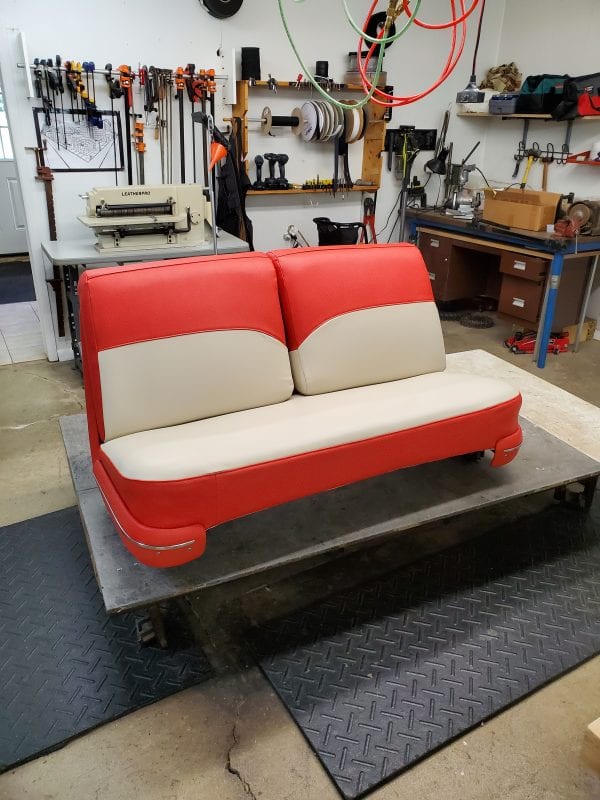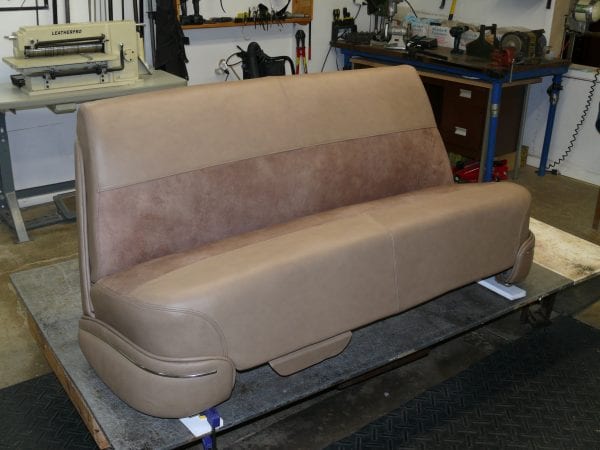



Project Details Upholstery bucket & bench seat for Chevy monte carlo 1970
- Project: Classic Auto
- Category: Auto Upholstery



Chevrolet built the first Monte Carlo for 1970, and it was a new idea wearing familiar bones. Long hood, formal roof, Chevelle underneath, and a cabin that aimed closer to Cadillac than to the drag strip. People called it the gentleman’s muscle car, and the interior is most of the reason the nickname stuck.
When one of these comes into the shop, the seats usually tell the car’s whole biography. Fifty five years of summer heat, one careful owner or six careless ones, maybe a repaint somewhere in the eighties. The sheet metal can be gorgeous while the cabin quietly lets the car down. That is fixable, and it is some of our favorite work on the auto upholstery side of the shop.
The 1970 Monte Carlo came standard with a full width bench trimmed in cloth and vinyl or all vinyl, with Strato bucket seats and a console on the option sheet for buyers who wanted a sportier flavor. The seat faces carried clean vertical pleating, the door panels were deeply sculpted, and the dash wore its famous simulated elm burl trim across the passenger side.
Bench cars make up most of the survivors we see, which surprises people who assume every car of the era had buckets. Either way, the construction under the covers is classic GM practice: stamped steel frames, sinuous wire springs, molded foam buns, and hog rings holding the covers down through listing wires sewn into the upholstery. It is honest, repairable construction, and it is a big part of why these cars respond so well to restoration.
The period palette suited the car’s split personality. Blacks and dark greens for the buyers who wanted a little menace, saddles and golds for the ones who wanted a club chair with a big block in front of it. Bench cars carried a fold down center armrest that every kid in the back seat coveted, and the optional buckets brought their own low console between them. Even the cloth inserts were chosen to feel a class above the Chevelle next door on the showroom floor.
The driver’s outboard bolster goes first. Every entry and exit drags weight across that one seam, and once the thread gives up, the split spreads with every trip. Foam is next. GM foam of this vintage dries out and crumbles, and we routinely open seats to find yellow powder where the bolster used to be, with the cover doing all the structural work the foam abandoned.
Sun handles the slower damage. Dash pads split, package trays bake brittle, and headliners let go of their bows one sag at a time. Door panels warp when moisture creeps behind them, since the backing boards of the day were essentially compressed cardboard. None of this reflects badly on any owner. It is simply what half a century does to organic materials living inside a greenhouse made of glass and steel.
Down low, the carpet fades in a window shaped stripe and wears through at the driver’s heel point, and the hard shell seat backs collect fifty years of scuffs from every passenger who ever climbed toward the rear. Kick panels loosen, sill plates chew at the carpet edge, and the underside of the package tray usually looks factory fresh, which tells you exactly where the sun never managed to reach.
The good news hides underneath. The frames and spring bases in these seats were built to outlast everything around them, and they almost always do. Straighten a bent listing wire here, renew a burlap deck there, and the skeleton is ready for another fifty years of service.
We start by pulling the seats and stripping them to bare frames, documenting every clip, wire, and hog ring location as we go. Frames get inspected for cracked welds and fatigued springs. Most need nothing more than cleaning and a coat of protection, which speaks well of the original engineering.
New foam goes on next, either quality reproduction buns shaped for these seats or hand built padding where the reproduction parts fall short of the original contours. Then come the covers, fitted and rung down with even tension so the pleats sit straight and the corners pull tight. The fundamentals are old ones. Springs, then padding, then cover, the same sequence we walk through in our guide to reupholstering a chair, just executed with hog rings instead of tacks.
Door panels and headliners ride the same wave through the shop. Panels get new backing boards cut to the original profiles with the sculpted sections rebuilt rather than flattened, and headliners go in with their bows in the correct order and the seams running true, which sounds obvious right up until you have seen one installed backward by a previous shop.
The same bench serves every era in this shop. We might have a 1927 Ford coupe we brought back in one corner and the Chevrolet 350 truck front seat we recovered in the next. Different decades, same discipline: get the foundation right before anything pretty happens.
First generation Monte Carlos enjoy solid reproduction support, thanks to the enormous specialty market that grew up around GM’s A body family. The trade association SEMA represents that whole world of reproduction and specialty equipment makers, and frankly it is a big part of what keeps cars like this restorable at all.
Reproduction skins make sense when you want factory correct patterns and your car wears a common trim combination. Custom sewing earns its keep when reproductions do not exist for your color, when you want better foam and bolstering than 1970 offered, or when you simply want the pleats a little sharper than the factory managed on a Tuesday afternoon. We stock a wall of options either way, and you can browse the range on our fabrics and leather page before deciding anything.
Our advice runs conservative for original survivors and freer for drivers. A numbers matching show car deserves its correct trim, stitch for stitch. A weekend cruiser deserves whatever makes its owner grin at every stoplight, and we can build either one.
Color matching is its own small craft either way. We match against the protected material found under seat frames and behind panels, where the sun never touched, rather than against the faded surfaces everyone has been staring at for decades. The difference between close and correct shows up the day the seats go back in the car, and it never stops showing up after that.
Vinyl interiors of this era reward simple routines. Keep a windshield shade in the car through summer, crack the windows when parking allows it, and clean the seats with mild soap rather than glossy dressings that attract dust. We laid out the full method in our vinyl upholstery cleaning guide, and it applies to every soft surface in a Monte Carlo cabin.
Watch humidity too. A car stored on bare concrete in a damp garage wicks moisture up into carpet, panels, and seat padding, and you will smell the result before you see it. A vapor barrier under the tires and a little airflow protect an interior better than any spray on any shelf.
Drivers and garage queens want different schedules too. A car that sees weekly summer road time earns a monthly wipe down and a seasonal look at the seams, while a car that hibernates needs airflow and a moisture check more than it needs cleaning. Either way, sun discipline is the whole ballgame with vinyl from this era.
The common trim combinations are covered well, and quality has improved a great deal over the years. Rarer cloth patterns and unusual colors can be hit or miss. When a reproduction misses, we sew the correct pattern ourselves from period appropriate material, matched against whatever original evidence your car still carries.
Yes, and it is a common request, since the driver’s side always wears out first. We match material, color, and pleat spacing to the surviving seats, and where needed we tone the new work so the repaired seat does not glow next to its neighbors.
Mechanically it is very doable, and correct Strato buckets or good reproductions can be trimmed to match the rest of your interior exactly. Just do us one favor and keep the bench. Original seats matter to the next caretaker, and benches get harder to find every single year.
If your Monte Carlo’s cabin is not keeping up with its paint, start with our free online estimates page or call 717-383-6917. Every interior is quoted individually after we look it over, and we will give you an honest read on what to restore, what to preserve, and what to simply enjoy exactly as it sits.
 Get a Free Quote!