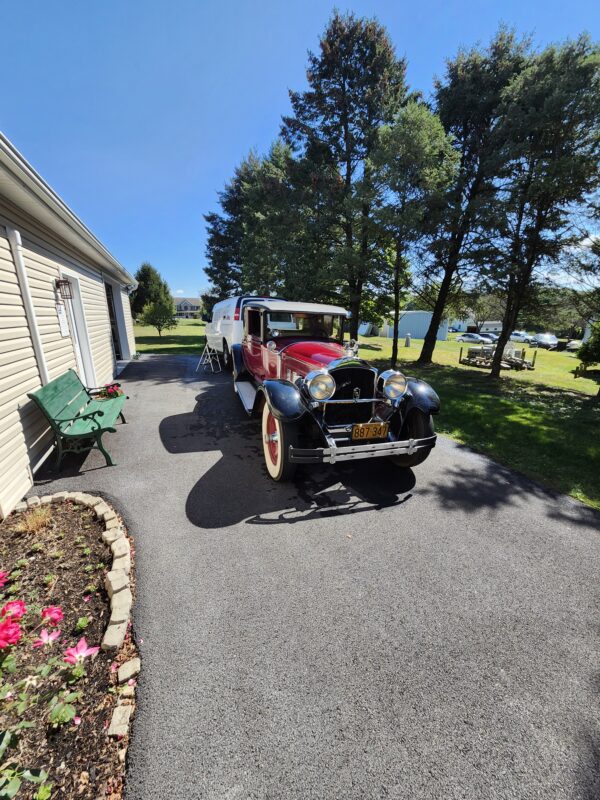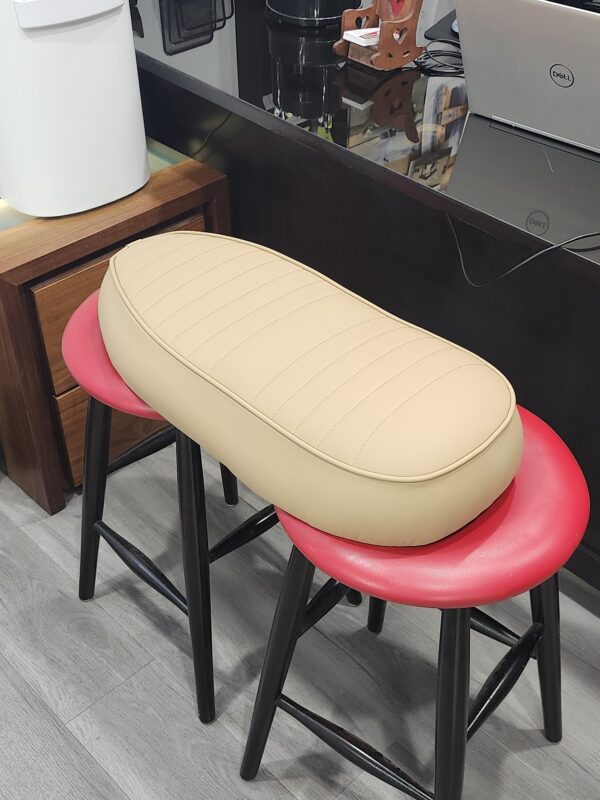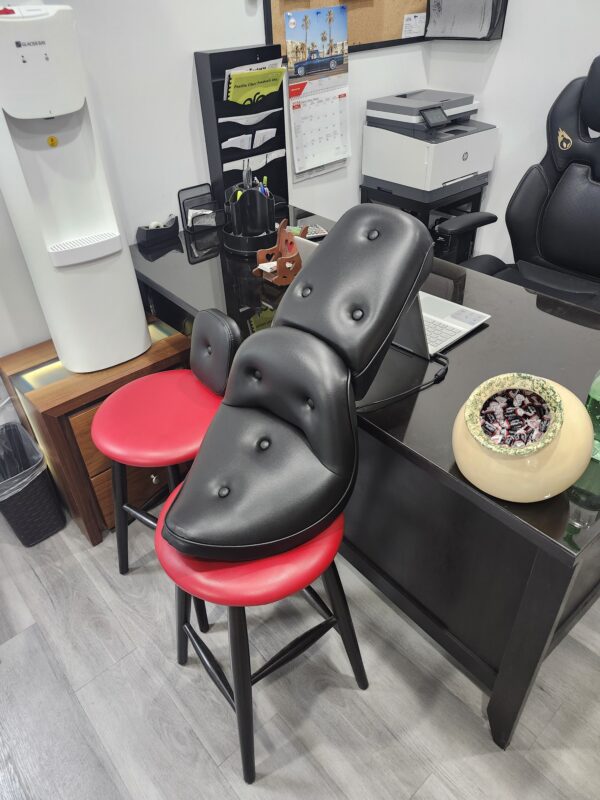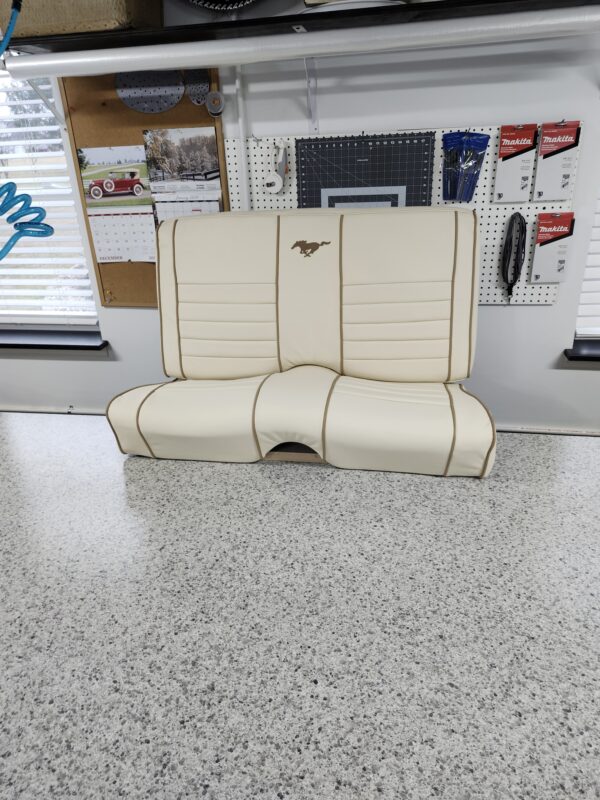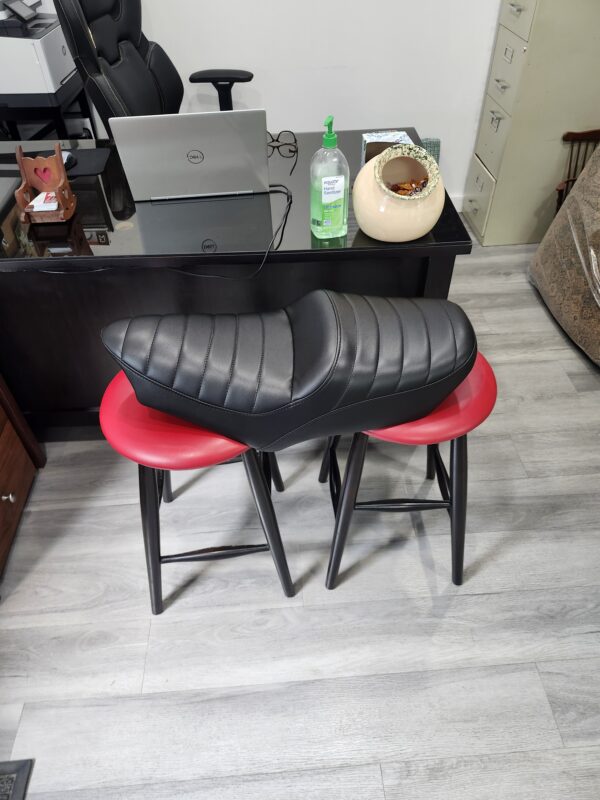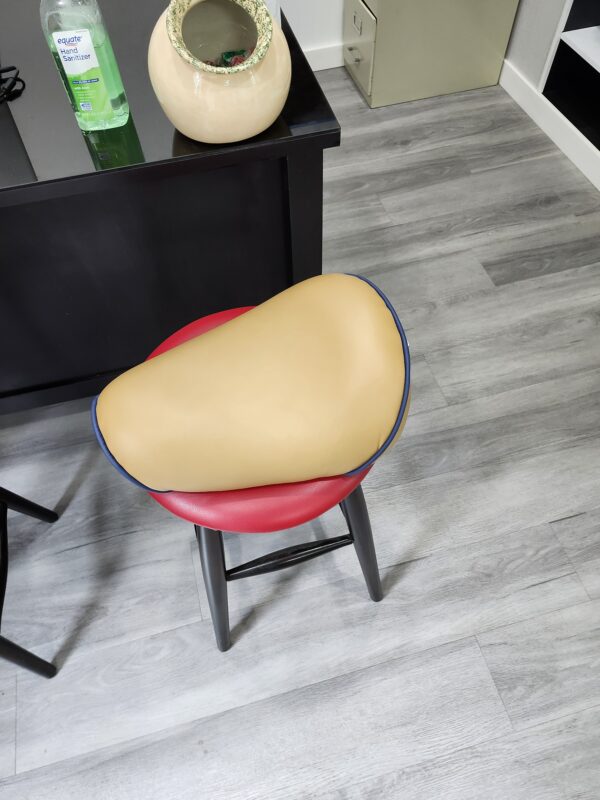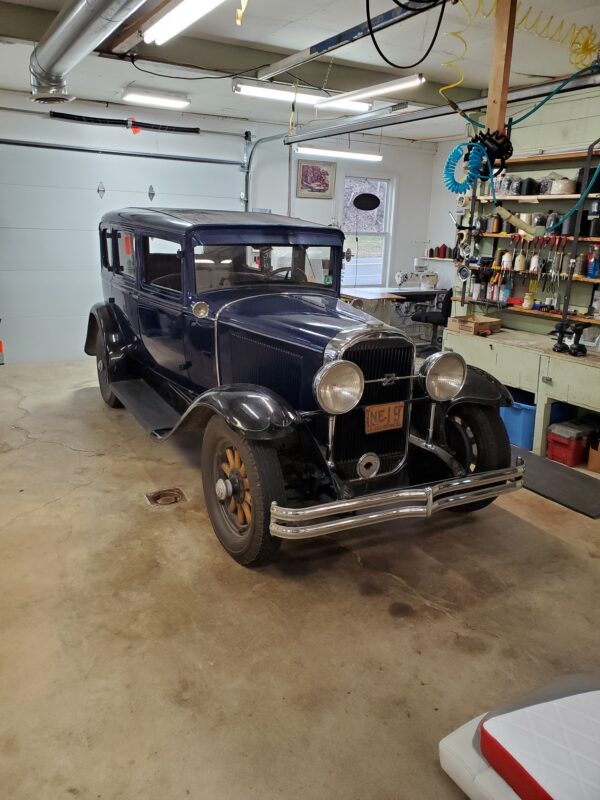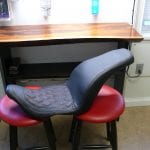



Project Details Upholstery bench seat for Chevrolet Bel Air 1955
- Project:
- Category: antique and classic car
- Our Task Upholstery seats leather & vinyl



Few cars announce their year the way a 1955 Chevrolet Bel Air does. This was the first year of the Tri Five body, the small block V8, and an interior that finally looked as good as the sheet metal around it. Chevrolet called it the Motoramic look, and for once the marketing department was underselling.
The owners who bring these cars to us rarely found them yesterday. Most have had their Bel Air for decades, or inherited it from the person who did, and the interior is the last piece of the puzzle. The paint shines, the engine runs, and the seats still carry 1987’s seat covers over 1955’s cotton. That is where we come in.
The Bel Air was the top trim, and Chevrolet spent the money where passengers could see it. Interiors came color keyed to the paint, with woven cloth inserts set into vinyl bolsters and facings, so the seats echoed the car’s two tone exterior. Patterned cloth centers, contrasting welts, and bright accents made the cabin feel like a rolling diner booth in the best possible way.
Underneath the flash, construction was still traditional. Seat frames were steel, sprung with coil fields tied to border wires, padded with cotton over burlap. Door panels carried bright trim spears and color breaks that lined up with the seat design. Even the headliner got attention, sewn in neat lateral bows so the whole ceiling hung smooth and taut.
This mix matters when restoration time comes. The glamour is in the surfaces, but the comfort is in the structure, and both halves have to be right for the car to feel like a 1955 again.
Cloth inserts are always the first casualty. Original weaves were handsome but not especially rugged, and seventy years of sliding in and out abrades the pattern right off the driver’s cushion. Sunlight finishes the job, fading the passenger side to a ghost of the original color while the shaded areas stay saturated. Put the two side by side and the car practically dates itself.
Vinyl bolsters harden and split next, usually along the top of the seatback where sun and skin oils work together. Below the surface, the cotton padding mats down and the burlap decking rots, letting the cushion collapse around the springs. The springs themselves usually survive, which is good news, because original Tri Five spring units are better than most replacements.
Headliners sag when their bows rust or the fabric stretches, and package trays bake to crumbs under that big rear glass. None of this is unusual and none of it is fatal. We have yet to meet a 1955 interior too far gone to bring back.
We start every Bel Air with a slow walkthrough, seat by seat and panel by panel, sorting what is original from what previous owners added. Original material, even ruined original material, is reference gold. It tells us the exact insert width, welt placement, and pleat spacing the factory used.
The trim tag on the body is our other guide. That little stamped plate records the interior combination the car wore out of the factory, and decoding it tells us which cloth, which vinyl, and which color split belong in the cabin. When a car has been repainted a new color over the decades, the tag settles the question of what the interior was actually meant to pair with, and owners get to decide whether to follow the tag or follow the paint.
Seats come out and come apart. Frames get cleaned and painted, springs re-tied where they have shifted, and fresh burlap and padding go back in layers. We keep the original feel, firm and slightly proud, rather than sinking the seat in soft modern foam. A 1955 should sit like a 1955.
Covers are sewn from patterns lifted off the originals, with the welts and color breaks landing where Chevrolet put them. Door panels and quarter trims get new boards where the old ones have warped, and the bright trim is cleaned and reinstalled. This is the deep end of our auto upholstery service, and honestly the part of the trade we enjoy most.
The preservation question comes up on every car. If a piece is original and presentable, we would rather conserve it than replace it, and we will say so even when replacement would be the bigger job for us. On this point we take our cues from the conservation world. The Smithsonian’s Museum Conservation Institute preaches minimal intervention for historic materials, and a numbers matching show car deserves the same restraint.
We recently finished a full two door 1955 Bel Air restoration in the shop, and that project is a good picture of the sequence, from bare frames to a finished cabin where every welt lines up with a body line.
Owners face a real fork in the road with materials. Reproduction houses weave cloth remarkably close to the 1955 patterns, and pairing that cloth with color matched vinyl gives you the factory experience, correct at a show and correct to sit on. The tradeoff is that reproduction cloth, like the original, asks for gentler treatment.
The alternative is an all vinyl interior in the factory colors and layout. Chevrolet themselves offered vinyl heavy trims, so the look stays honest while the durability climbs. Modern faux leathers have gotten so good that we wrote a whole piece on why faux leather has become such a strong upholstery material, and much of it applies directly to a Tri Five that gets driven.
Color matching is its own craft. The 1955 palette ran to combinations you simply do not see anymore, turquoise with ivory, coral with gray, green over green. We keep a deep library of samples in the shop, and our fabrics and leather upholstery page shows the range we can pull from when we chase an original swatch.
Whatever direction you choose, choose it for how you will use the car. Trailer queens can wear delicate cloth forever. A Bel Air that does ice cream runs every summer weekend earns tougher hide.
The habits are simple and they work. Shade the car whenever you can, because ultraviolet light is the one enemy no material resists forever. A windshield shade at shows protects the dash and seat tops during exactly the hours the car sits in full sun.
Clean little and often. Dust and grit act like sandpaper in the weave of cloth inserts, so a soft brush and a vacuum every few weeks beats any deep clean. Vinyl wants mild soap and water, nothing harsher, and we put our full routine in our guide to protecting vinyl seats from dirt and dust.
Watch the small offenders. Rivets on jeans, dog claws, and the metal edge of a child seat do more damage in a season than years of careful use. And keep the interior dry. A car cover that traps moisture will mildew cloth inserts faster than rain ever could.
Winter storage deserves a plan of its own. Put the car away clean, because soil left in cloth over a long sit sets permanently and invites pests. Leave the windows cracked a finger’s width if the storage space is dry, so air moves through the cabin instead of stagnating. Come spring, resist the urge to deep clean everything at once. A vacuum, a wipe, and a slow first drive with the windows down freshens the interior better than any bottle of product.
These rules hold for anything upholstered in vinyl, from a boulevard cruiser to the golf cart seats we upholstered for a customer who wanted his cart to match his classic. Material does not care what it is bolted to. Sun, grit, and neglect are the whole enemy list.
Done correctly, no. Judges look for correct patterns, materials, and colors, not sixty year old thread. A properly patterned reproduction interior in the right trim code typically scores far better than worn original material. If your interior is a rare survivor in good shape, we will recommend conserving it instead.
Almost always. Between reproduction suppliers and our sample library we can hit the factory combinations, and when a color has drifted out of production we blend the closest available materials and show you them side by side before a single seam is sewn.
Yes, and we encourage doing the cabin as one project. Fresh seats make a sagging headliner look worse, and colors matched in one batch always agree better than pieces done years apart. We handle seats, panels, headliner, package tray, and trim as a single coordinated job.
If your 1955 deserves an interior as sharp as its paint, send us photos and your trim details through our quote page, or call the shop at 717-383-6917. We will walk you through materials, colors, and the plan, and every car is quoted individually after we see what it needs.
 Get a Free Quote!