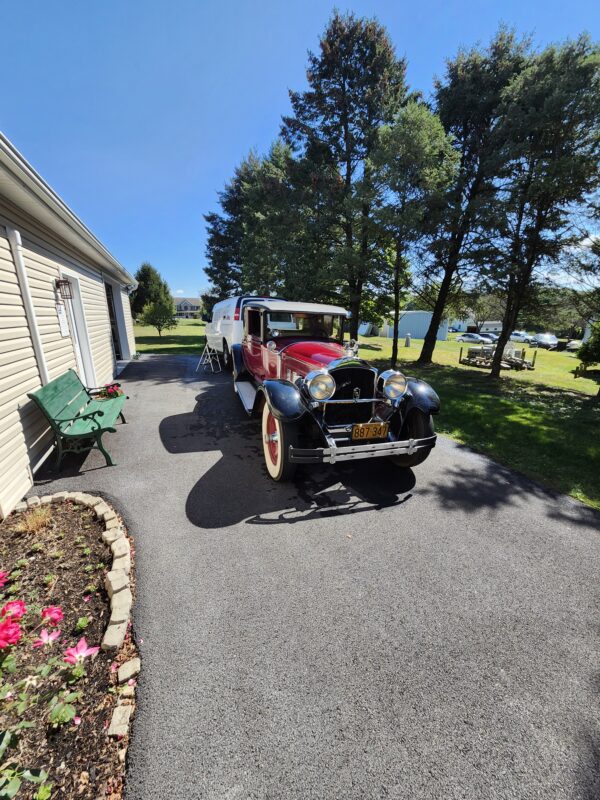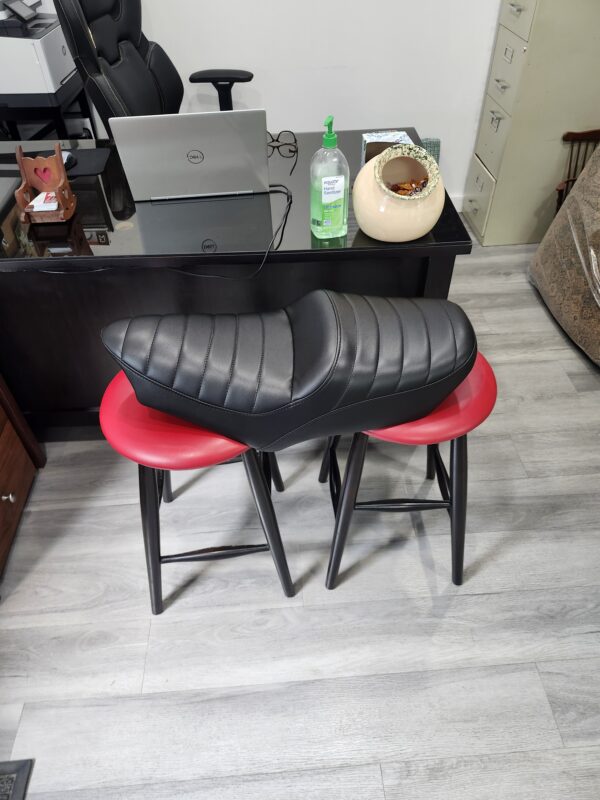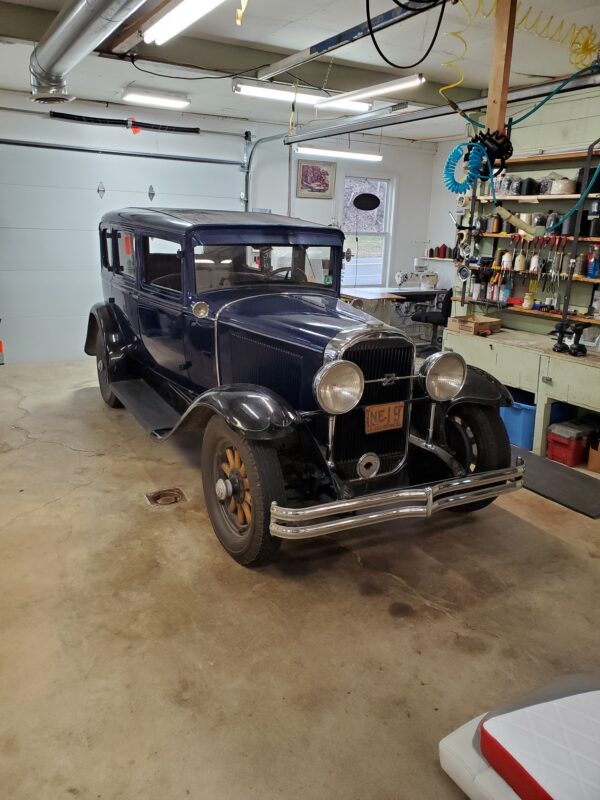



Project Details Upholstery salon for GMC Track 1950
- Project:
- Category: antique and classic car
- Our Task Upholstery GMC Track 1950 leather salon
1951



A 1950 GMC pickup was never meant to be precious. It hauled feed, lumber, and on Sunday morning the whole family, and the bench seat inside took every mile without complaint. When one of these trucks backs up to our shop door, the cab usually tells the story on its own. The cover is worn through at the driver’s edge, the springs show through the cotton like ribs, and the whole bench leans a little to the left because the fellow who owned it always climbed in from the same side.
Owners hang onto these trucks for reasons that have nothing to do with logic. Somebody learned to drive in it. Somebody rode in the middle of that bench as a kid with their boots swinging above the floorboard. Our job through our auto upholstery service is to make that seat feel the way memory says it did, firm and honest and ready for another fifty years of work.
GMC built these trucks in what collectors call the New Design era, the corporate cousin of Chevrolet’s Advance Design line that ran from 1947 into 1955. The cab was a big step up from prewar trucks. Wider, quieter, with a full width bench that could genuinely hold three adults if they liked each other.
The seat itself is beautifully simple. A stamped steel frame and pan carries a field of coil springs, each one clipped to a border wire around the edge. Over the springs went a layer of burlap, then cotton batting, then the cover, usually a sturdy vinyl or a cloth center panel with vinyl facings. No foam, no heaters, no electronics. Just steel, fiber, and thread.
The rest of the cab followed the same practical logic. Door panels were plain fiberboard with a simple bead, the floor wore a rubber mat, and most of what you touched was painted metal. That simplicity is exactly why these trucks are so satisfying to bring back. Every part of the interior can be rebuilt by hand, the same way it was built the first time.
Time attacks these benches in a predictable order. The cotton padding compresses first, packing down into a thin felt mat that quits springing back. Then the burlap dries out and tears, and the coils start working their way up through the padding. By the time an owner can feel a spring through their jeans, the layers above it are long gone.
The springs themselves fatigue too, almost always on the driver’s side. Decades of the same person dropping onto the same spot will snap coils right at the clip, and once one lets go its neighbors carry extra load and follow. The steel pan and the risers underneath collect rust, especially on trucks that lived outdoors or hauled anything wet.
Then there are the tenants. A farm truck that sat in a barn for twenty years almost always arrives with mouse work inside, tunneled cotton, shredded burlap, and seed stashes in the spring pockets. It is never a pleasant discovery, but it is a routine one, and a full teardown deals with all of it.
Here is what we tell owners to look for when they are deciding if a bench is due:
Any two of those together mean the seat is running on borrowed time, and waiting only lets the frame and springs deteriorate further.
Every truck starts with an inspection and a plan. We look at what is original, what has been redone before, and what the owner wants the truck to be. A frame-off show truck and a Saturday errand runner get different conversations, though the bones of the work are the same.
Teardown comes next, and we treat the old cover as a document. Even a rotten cover tells us where the seams ran, how wide the facings were, and how the corners were pulled. We photograph the layers as they come off, then strip the bench to bare steel.
The frame gets wire brushed, treated, and painted. Broken coils are replaced and every spring gets re-clipped to the border wire so the field works as one unit again. New burlap goes over the springs, then fresh padding. On working trucks we usually blend traditional cotton with a modern foam layer, which keeps the original firm feel but adds years of shape retention.
The new cover is patterned from the old one and sewn on our walking foot machines, the same heavy equipment you can see on our machinery page. Welts get turned tight, corners get pulled square, and hog rings snug the cover down onto the frame the same way the factory did it. It is the same discipline we brought to the 1955 Chevrolet Bel Air we upholstered, just aimed at a truck instead of a boulevard cruiser.
While the seat is out, the cab is wide open, and this is the smart time to handle the rest. Fiberboard door panels warp and delaminate over the decades, and fresh ones transform the cab. Our custom door panel upholstery and repair work shows what is possible there, from factory plain to subtly dressed up.
One judgment call comes up on almost every truck, and that is what to keep. If the original frame and most springs are sound, we save them, because that steel is better than most reproductions. If a previous owner’s cover is period correct and merely tired, we will tell you honestly if it can be cleaned and preserved instead of replaced. Originality only comes around once.
Trucks earn their materials the hard way, so we steer owners toward heavyweight vinyls with strong knit backings. Modern commercial and marine grade vinyls shrug off tools, dogs, sun, and spilled coffee in a way the 1950 factory material never could, and the good ones now come in grains and low sheen finishes that look right in an old cab.
Color is where the era speaks. These cabs looked best in working shades, tan, brown, oxblood, deep green, often with a cloth or contrasting vinyl center panel. If you want factory flavor, we can match the original two material layout. If you want one tough surface you can hose off, a single vinyl in a period color still reads correct from ten feet away.
Owners are often surprised how much of this material world still exists. The restoration aftermarket is a genuine industry, tracked and championed by SEMA, the Specialty Equipment Market Association, and that ecosystem keeps period grains, colors, and trim parts in production for trucks like this one.
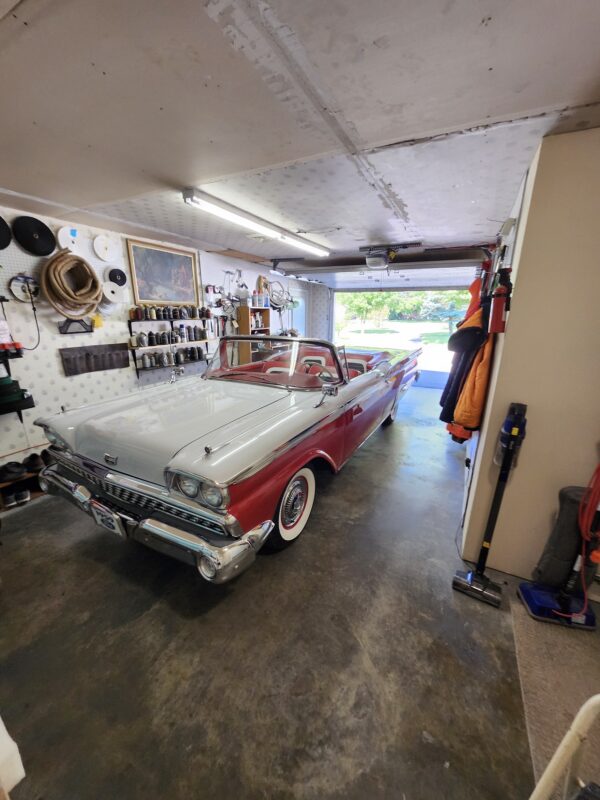
If you are weighing the decision and want to understand the labor side, we wrote up what actually goes into reupholstering a car seat, and the short version is that the sewing is the visible half of a job that is mostly structure. For a sense of how a full interior comes together panel by panel, our 1959 Ford Fairlane interior write-up walks through the whole sequence.
A rebuilt bench does not ask for much, but it appreciates a little shade. Sun is the number one enemy of any vinyl, so park nose out, use a windshield shade in summer, and crack a window if the truck sits, since heat buildup ages material almost as fast as ultraviolet does.
Cleaning should stay simple. Mild soap, warm water, a soft brush for the grain, and a towel. Skip the glossy silicone dressings, which attract dust and can migrate into stitching. Twice a year, a dedicated vinyl protectant with UV blockers is plenty.
If the truck lives in a barn, defend it from the mice that ruined the last seat. Seal the cab openings you can, skip the fabric softener sheet folklore, and check under the seat every season. Moisture matters too. A truck stored on dirt floors wicks damp up into everything, so a vapor barrier under the tires is cheap insurance for the whole interior.
Usually yes, and we prefer to. The spring steel in these benches is excellent, and a frame with surface rust cleans up fine. We replace individual broken coils and re-clip the field rather than tossing the assembly. Only badly rusted pans or heavily torched frames get replaced.
It changes the materials more than the method. The structure gets rebuilt the same way regardless, because that is where comfort and lifespan live. For a driver we lean toward heavier vinyl, an added foam layer, and thread chosen for wear rather than strict factory appearance.
Most benches spend one to two weeks with us once material is in hand, since spring repair, padding, patterning, and sewing each take their turn. Every job is quoted individually after we inspect the seat, because no two seventy five year old benches arrive in the same condition.
If your GMC or Chevy is still riding on a tired bench, send us a few photos through our free online estimate page or call the shop at 717-383-6917. We will tell you what the seat needs, what is worth saving, and how to get that cab feeling like 1950 again.
 Get a Free Quote!