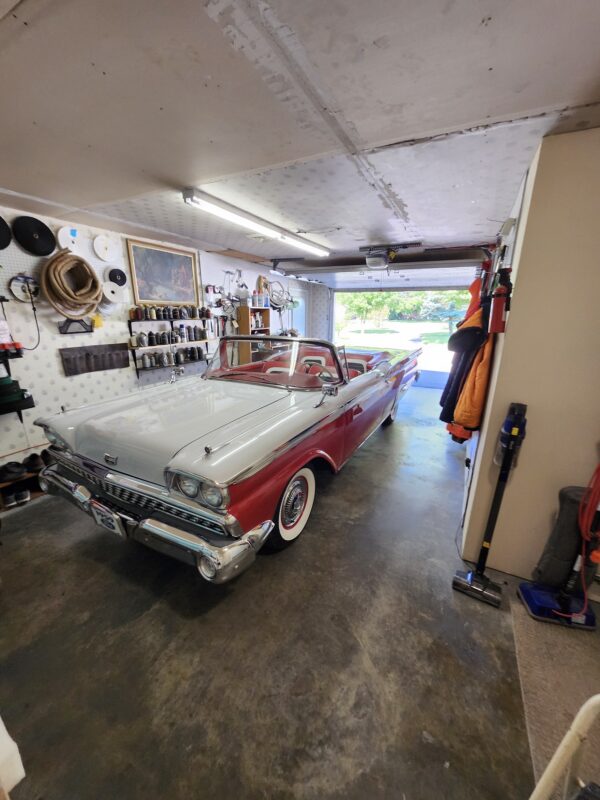



Project Details Upholstery Chevy Bel Air 1955 2 door
- Project:
- Category: antique and classic car
- Our Task Upholstery Chevy Bel Air 1955 2 door leather salon



Ask a room full of Chevy people which body style they would take home and the two door 1955 Bel Air wins before the question is finished. Longer doors, sportier roofline, and that unmistakable feeling that the car was built for going somewhere fun. When a two door comes to us for interior work, we know the owner did not settle for the sensible choice, and we trim the car accordingly.
These projects are rarely quick freshen ups. By the time a 1955 needs us, it usually needs all of us, seats, door and quarter panels, headliner, and the dozen small trim pieces that make the cabin whole. That suits us fine. A complete interior, done as one job, is where this shop does its best work.
The two door body changes the interior in ways people do not expect. The front seat backs tip forward so rear passengers can climb in, which means every seam on those seat backs is on display each time someone boards. There is no hiding a lazy corner on a two door.
The doors are longer, so the door panels are bigger canvases, with trim spears and color breaks that have to run dead straight over a larger span. Behind them sit full quarter trim panels instead of rear doors, and those quarters have to agree with the front panels in pattern, grain, and color, or the whole side of the cabin looks off.
The rear seat lives closer to the rear glass than in a sedan, which cooks the seat top and the package tray. It all adds up to a car that punishes shortcuts and rewards careful work, which is probably why we like them so much.
Before a single hog ring comes off, we study what the car still carries. Some two doors arrive with crusty but complete original trim, and that material is a blueprint. Pleat spacing, welt colors, the exact height of a color break on the door panel, all of it comes straight off the old pieces.
Other cars arrive wearing three generations of seat covers, or a 1970s shag redo, or nothing at all. Then we work from factory trim documentation and from measurements taken off original cars, and this is where the old car community earns its keep. Organizations like the Antique Automobile Club of America have spent decades documenting how these cars left the factory, and that body of knowledge keeps restorations honest.
Teardown itself is done slowly and photographed heavily. Old covers come off in one piece wherever possible, because a cover that can be laid flat is a pattern, and a pattern is the difference between an interior that looks reupholstered and one that looks factory.
People imagine upholstery as sewing, but the sewing only goes right if the patterning went right first. We deconstruct the original covers seam by seam, trace every panel onto pattern stock, and note the little asymmetries the factory built in, because a 1955 seat cushion is not actually symmetrical, and covers cut as if it were never fit properly.
From those patterns we cut the new material with the grain running the same direction the factory ran it, sew the panels with period correct seam styles, and fit the cover over rebuilt padding. Underneath, the springs have been re-tied, the burlap replaced, and the cotton refreshed, so the cushion crowns the way it did in the showroom.
The craft transfers across everything we touch. The same patterning discipline shows up when we handle a tractor seat rebuild, where the shapes are simpler but the fit still has to be exact, and it is the backbone of our whole auto upholstery service. Curious hobbyists can see the same principles scaled down in our post on how to reupholster a chair, because a chair and a car seat are closer cousins than most people think.
A two door cabin is one composition, and the seats are only the largest instrument in it. Door and quarter panels get new backing boards where the originals have warped from decades of window leaks, then fresh material with the bright spears polished and reinstalled straight. Windlace goes in around the door openings, the detail everybody forgets and every judge checks.
The seat hardware deserves attention while everything is apart. Two door seat backs pivot on hinges that wear oval after seventy years, which makes the backs flop and chatter, and seat tracks gum up until adjusting the seat takes two hands and a prayer. We clean, bush, and lubricate all of it during the rebuild, because a beautiful seat that rattles over railroad tracks is only half finished.
An open cabin is also the one affordable moment to think about quiet. A layer of modern sound deadening and insulation on the floor and doors goes in unseen, tames the boom these bodies are known for, and keeps summer heat out of the cabin. It is not factory, but it hides completely, and most owners who drive their cars thank us for suggesting it.
The headliner is its own small ceremony. The 1955 hangs on lateral bows, and getting it drum tight without a wrinkle at the quarters takes patience and a hot day, or a heat gun standing in for one. Sun visors, the package tray, kick panels, and the dash pad round out the job.
We sequence all of it so colors come from the same material lots. Vinyl dyed in different batches can disagree just enough to notice, and on a two tone interior that small disagreement multiplies. One car, one batch, one finished room.
This is the approach we took on the 1937 Chevy coupe we brought back, a very different car from a very different era, but the same rule applied. Everything in the cabin gets decided together, so everything in the cabin agrees.
Factory 1955 Bel Airs mixed woven cloth inserts with vinyl bolsters, and reproduction versions of those materials exist and look terrific. For owners who drive their cars, we often suggest keeping the factory layout but choosing modern materials in factory colors, which preserves the design while adding real durability.
Sun behavior is worth weighing on a two door specifically, because that low roof and big glass turn the cabin into a greenhouse. Lighter colors run cooler and hide fading longer. Heavier vinyls resist the constant flexing where passengers slide across to the back. We talk through all of it with samples in hand, in daylight, because material chosen under shop lights lies a little.
Thread, welt, and stitch style are the finishing decisions. Contrast welts were part of the 1955 look, and getting their color right against a two tone scheme is a small choice that carries a lot of the final impression.
Fresh vinyl asks for boring maintenance, which is the best kind. Mild soap, soft cloth, rinse, done. We keep a full routine in our guide to cleaning vinyl upholstery, and the theme is gentleness on a schedule rather than heroics once a year.
Because the front seat backs fold, teach passengers to tip them by the frame, not by grabbing a handful of upholstery. Keep the tip forward pivots lubricated so nobody yanks against a stuck seat. And in summer, a simple windshield shade keeps the seat tops and package tray out of the oven.
Owners are always welcome to come see how we work before committing. You can tour our shop, look over cars in process, and see exactly what stage by stage progress looks like from teardown to trim out.
You can, and for out of town owners it is common. Seats, panels, and trim travel fine. The tradeoff is that headliners and windlace really want the car present, so full interiors are best done with the vehicle in the shop.
Yes. Between factory trim references, club documentation, and patterns developed from original cars, we can rebuild a 1955 interior from a bare shell. It takes more research time than working from originals, but the result is just as faithful.
Bigger door panels, quarter trims instead of rear doors, and folding seat backs whose rear faces show every time someone climbs in. The materials are the same, but the two door puts more of the work on permanent display, so fit and symmetry matter even more.
If your two door is ready for its interior, start with our free online estimate or call us at 717-383-6917. Send photos of what you have, tell us what you dream about, and we will map the road between the two.
 Get a Free Quote!