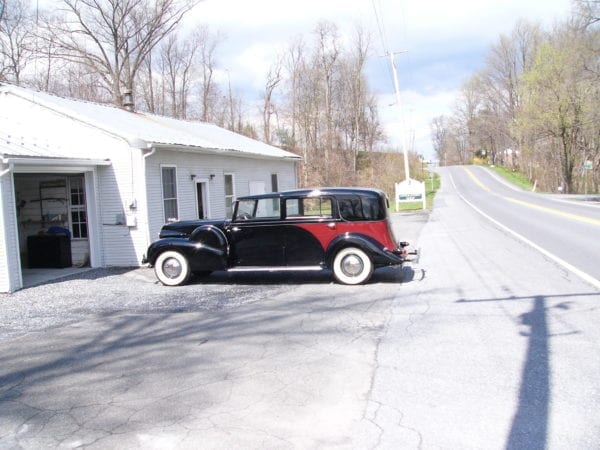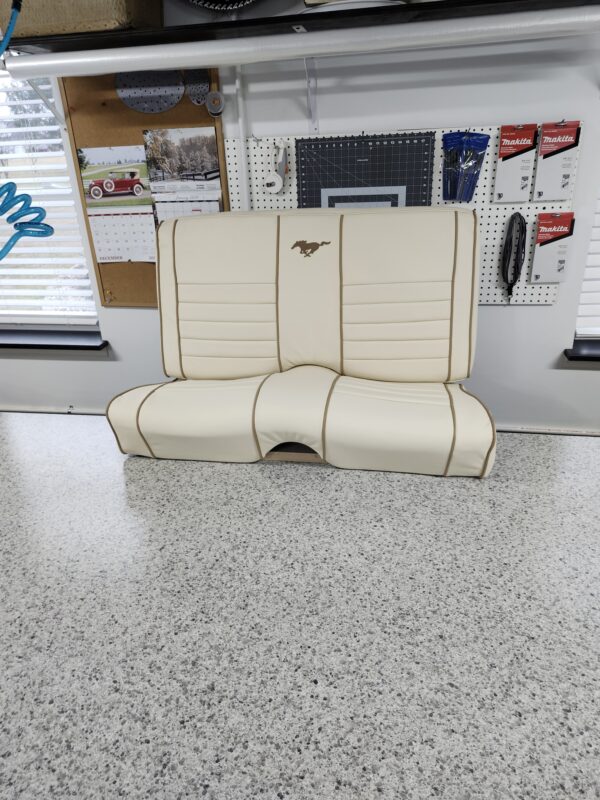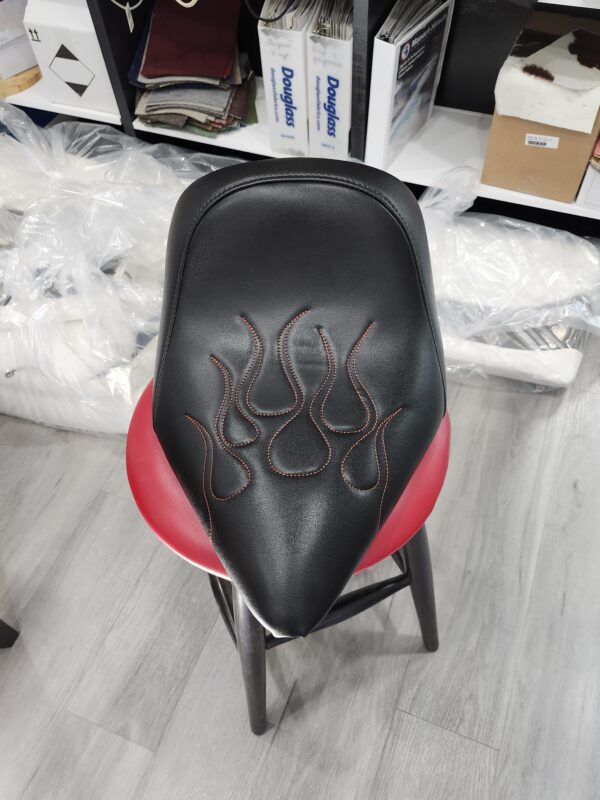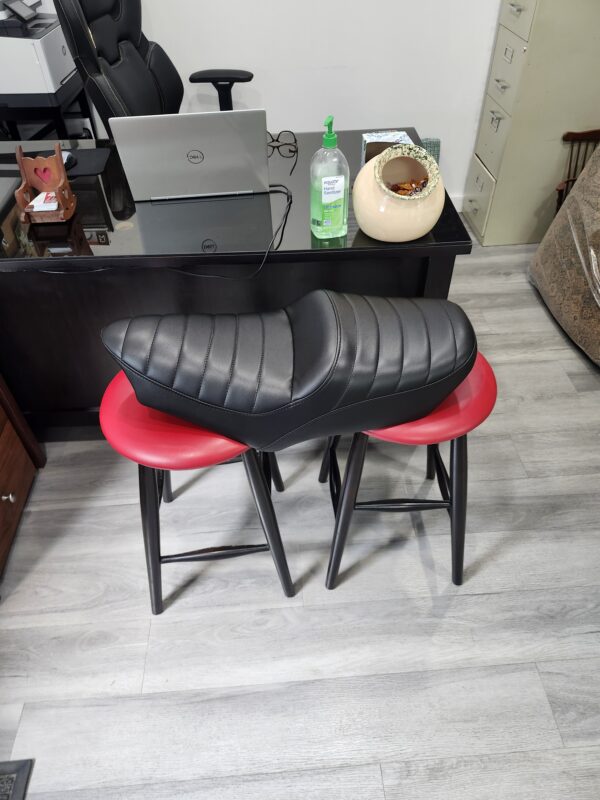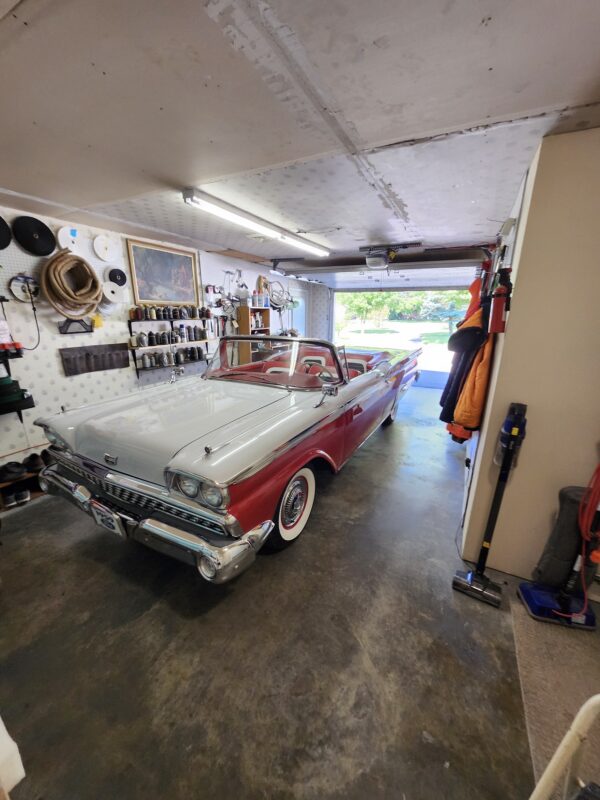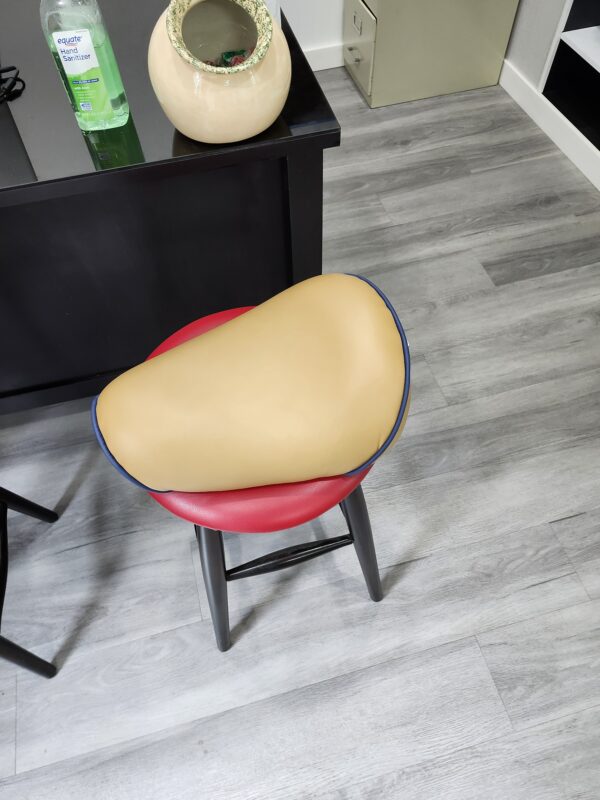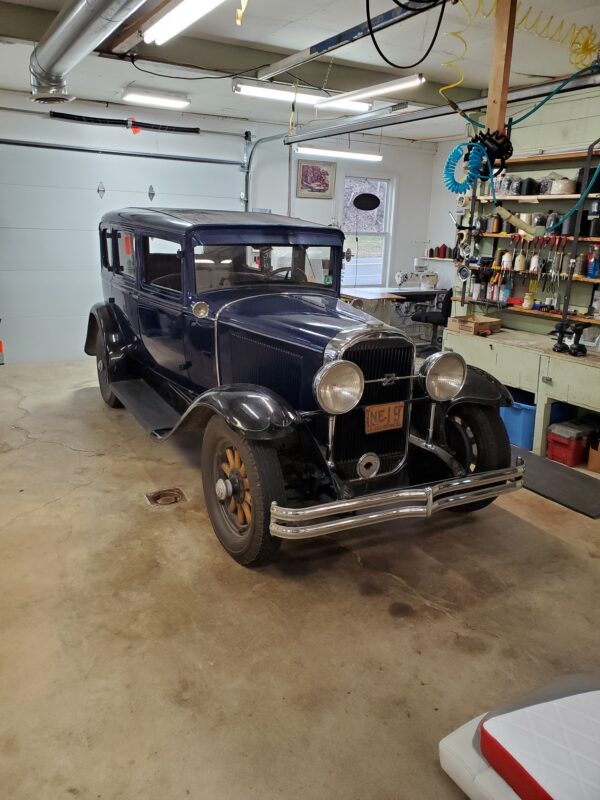



Project Details Upholstery Cadillac 1951 leather seats
- Project:
- Category: antique and classic car
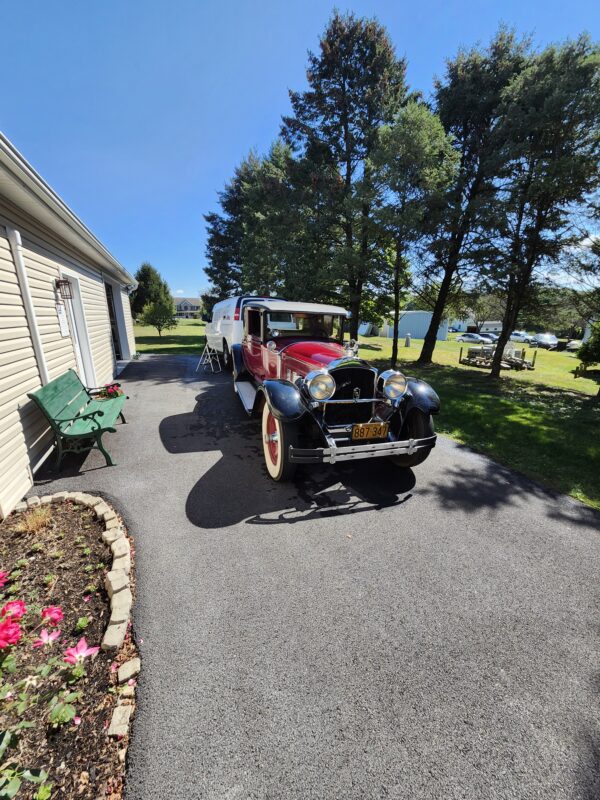
- Our Task Upholstery leather seats for Cadillac 1951



In 1951 Cadillac was selling confidence by the yard. The war was behind everybody, the tailfin was still young, and the cars wore chrome like a promise that things would keep getting better. Nineteen fifty one sat in a sweet spot too: past the warmed over prewar designs, not yet into the fin excess of the late fifties, and trimmed with a restraint the later cars forgot. Inside, that optimism took the form of broad, deep seats trimmed by people who had learned their trade before the war and never lowered their standards afterward.
Seventy five years later those interiors come to us tired but rarely ruined, and a 1951 Cadillac seat is one of the most satisfying things our auto upholstery bench ever holds. Here is what makes these cars special, what time does to them, and how we bring one back without losing what it is.
Cadillac trimmed its 1951 line in two distinct voices. Convertibles and the sportier coupes leaned on genuine leather, often in bold reds, greens, and two tone pairings that would look daring even today. The formal sedans wore wool broadcloth so fine it seemed poured over the cushions, quiet grays and taupes meant to feel like a gentlemen’s club rolling down the boulevard.
Under either surface, the construction was furniture work. Coil springs in the cushions, hand tied and anchored to heavy steel frames, topped with horsehair, cotton batting, and burlap in careful layers. Trimmers fitted each cover by hand and eased the material around every corner the way a tailor sets a sleeve. Door panels carried sewn pleats and bright moldings, windlace framed the openings, and even the headliner was wool. Nothing about it was fast, and everything about it was meant to outlive the loan.
These cars also carried one quirk restorers learn to respect: the hydraulic system that operated the power windows and seats on many of them. When those lines seep, and after seventy five years they usually have, the fluid finds its way onto door panels and carpets and leaves stains no cleaner will lift. Part of trimming one of these correctly is making sure the plumbing behind the panels is sorted before any new material goes near it.
Leather from that era survives on care and dies on neglect. Hides that saw conditioner now and then are often still supple, just worn through on the driver’s cushion and cracked along the pleats. Hides that baked dry for decades crumble like autumn leaves the moment anyone tugs a seam. Broadcloth fights moths and sunlight its whole life and usually loses first along the top of the rear seat, where the light lives all day.
Underneath, the cotton compresses, the twine ties let go one by one, and the springs begin to speak. If a seat rocks you toward the door or creaks like a ship at anchor, the hand tied system inside has come undone. The frames themselves, heavy postwar steel, are nearly always fine, waiting patiently under all that history for someone to rebuild the layers above them.
Overhead, the wool headliner collects decades of dust and cigarette ghosts, then begins to sag as its stitching and bows tire out. It is the surface everyone forgets, and the one that dates a restoration instantly when it gets skipped.
People are surprised when we say a 1951 Cadillac seat has more in common with a wingback chair than with anything in a modern showroom, but open one up and the kinship is obvious. Springs, ties, hair, cotton, cover, in that order. The sequence in our walkthrough on reupholstering a chair maps almost one to one onto a seat like this, which is why a shop that does serious furniture work holds a real advantage on postwar luxury cars.
That kinship shapes the repair philosophy too. Like good furniture, these seats were built to be rebuilt. Every layer can come off, be renewed, and go back on without shortcuts, which is a courtesy modern molded seats simply do not extend to the people who fix them. It is also why we keep furniture grade twine and burlap on the shelf right beside the automotive vinyl. The two trades never really separated in this building.
The job starts with documentation, then a careful teardown, saving the original covers as patterns and keeping every piece of trim hardware in labeled bags. Springs get retied by hand, the padding gets rebuilt in the original layered fashion, and only then does new material go on, fitted and eased the way the factory trimmers did it. Door panels, armrests, and windlace follow the same path, because a perfect seat next to a tired panel just moves the eye to the panel.
Range helps as much as reverence here. The same methods we used on the 1950 GMC truck we upholstered apply to a Cadillac cushion, and the panel work follows the same logic as the Volkswagen door panels we repaired with new upholstery. Different badges, same bones: foundation first, beauty second.
The sewing itself follows the factory’s grammar. Welt cords outline the cushions exactly where Cadillac drew them, seam allowances stay generous the way the originals were, and pleats get laid out from the car’s own evidence rather than from a generic pattern book. That grammar is the first thing a knowledgeable eye checks on any show field, and it is the last place we would ever improvise.
For leather cars we spec full grain hides in period correct colors, with grain and sheen that read as 1951 rather than as a modern crossover. Today’s tanning is superb, so the new hide will very likely outlast the original. For broadcloth cars, excellent reproduction wool exists, and it matters, because no synthetic drapes or wears quite the way real wool does across a bench that wide.
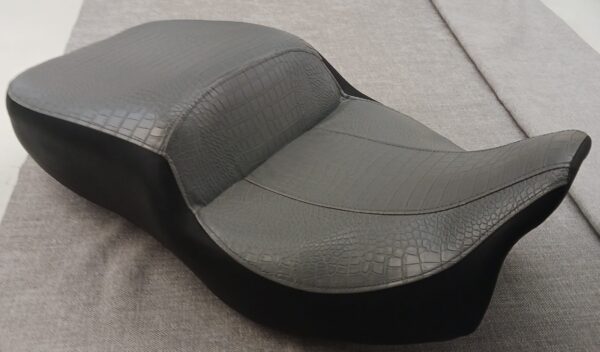
Leather craft crosses over constantly in our shop, from car benches to the saddle work in our motorcycle upholstery jobs, and handling hides every week keeps the eye honest about grain and the hand honest about tension. The preservation world takes this material seriousness further still. The Historic Vehicle Association documents America’s most significant automobiles precisely because original character, materials included, is worth recording before it disappears.
Matching is the slow part and the important one. Hides come in dye lots the way fabric does, so a two tone interior gets both colors approved together, in daylight, against the largest original sample the car can give us. An hour spent there saves a lifetime of noticing the mismatch every time the door swings open.
New leather asks for three things: moderate humidity, minimal direct sun, and a quality conditioner two or three times a year. Skip the miracle sprays entirely. Wipe dust away regularly with a barely damp cloth, because grit wears finish faster than sitting ever will, and keep the car off bare concrete so moisture cannot wick up into the cushions from below.
The vinyl and coated surfaces scattered through the cabin respond well to the routine in our vinyl upholstery cleaning guide, and a garage with a stable temperature does more for the whole interior than any product on any shelf. These cars earned their dignity. Maintaining it turns out to be pleasantly boring. Think of it as caring for a very good pair of boots that happens to weigh two tons: feed the leather occasionally, keep it out of the weather, and it will outlast its owner.
Body style is the biggest clue. Convertibles were leather, formal sedans usually wore broadcloth, and coupes went both ways depending on trim. Your body tag and any surviving original material tell the real story, and we always trim to the car’s own evidence before any catalog.
Often, yes, and when it can, we encourage it. Supple, intact hide can be cleaned, fed, and repaired, keeping decades of character no new material can imitate. We have saved front seats and replaced only the hides that failed, blending the new work to the old. Once leather cracks through or tears at the seams, though, it stops protecting the padding beneath it, and replacement becomes the responsible call.
They do. Dozens of coil springs, tied together by hand so the whole cushion moves as one piece. That construction is why a healthy Cadillac seat delivers that deep boulevard ride, and it is fully rebuildable when it finally sags. No foam wedge or seat cushion insert ever brings that feel back. Retying the springs properly does.
If a 1951 Cadillac, or any postwar luxury car, is waiting on its interior, we would love to see it. Request a quote or call 717-383-6917 with photos of the seats as they sit today. Every car is quoted individually after inspection, and we will tell you plainly what deserves preserving and what deserves new hide.
 Get a Free Quote!