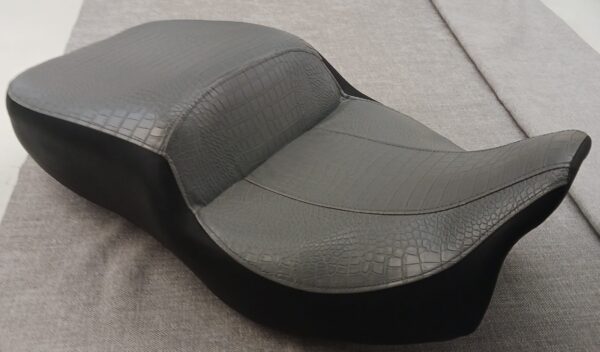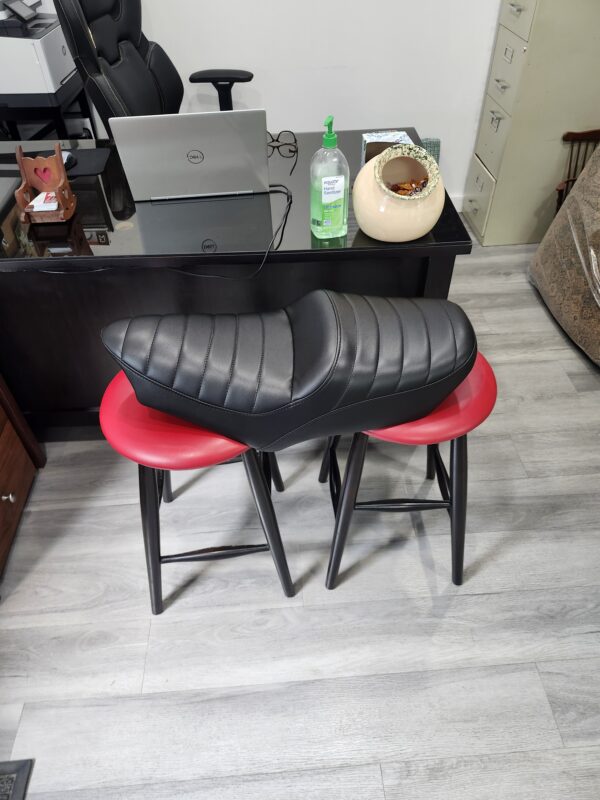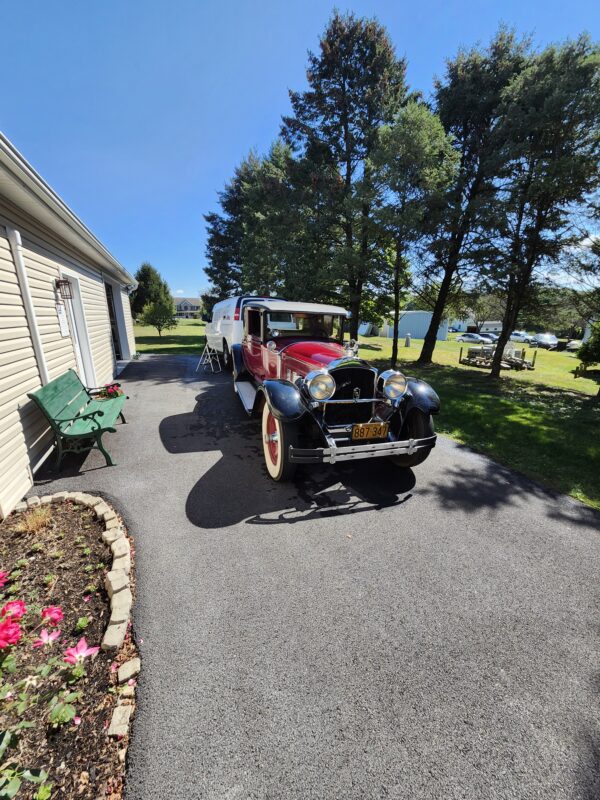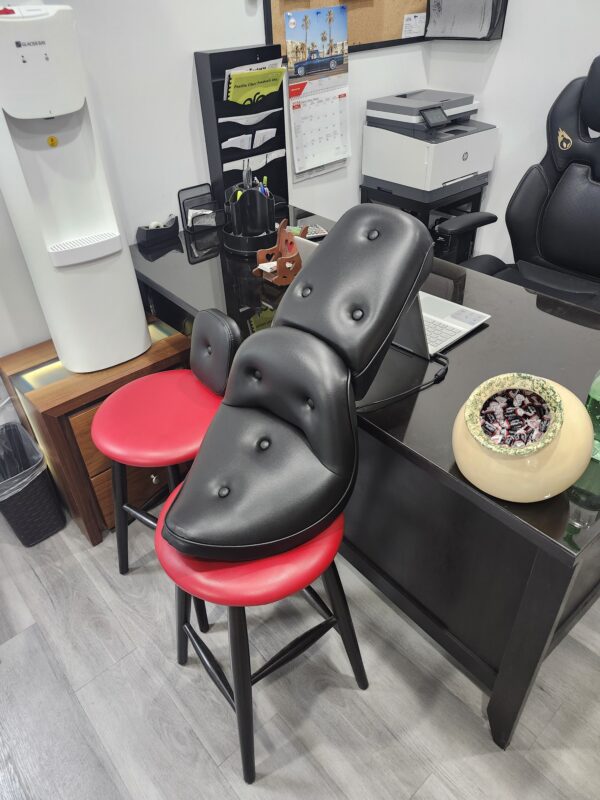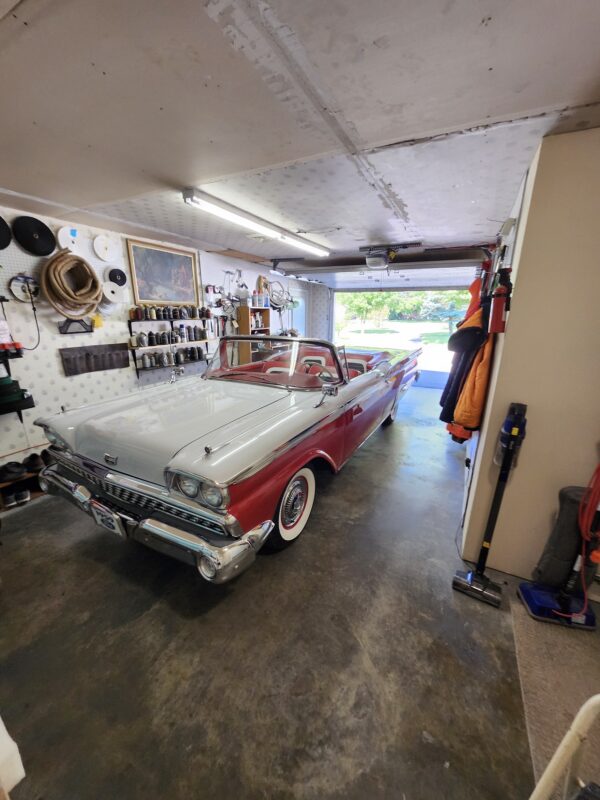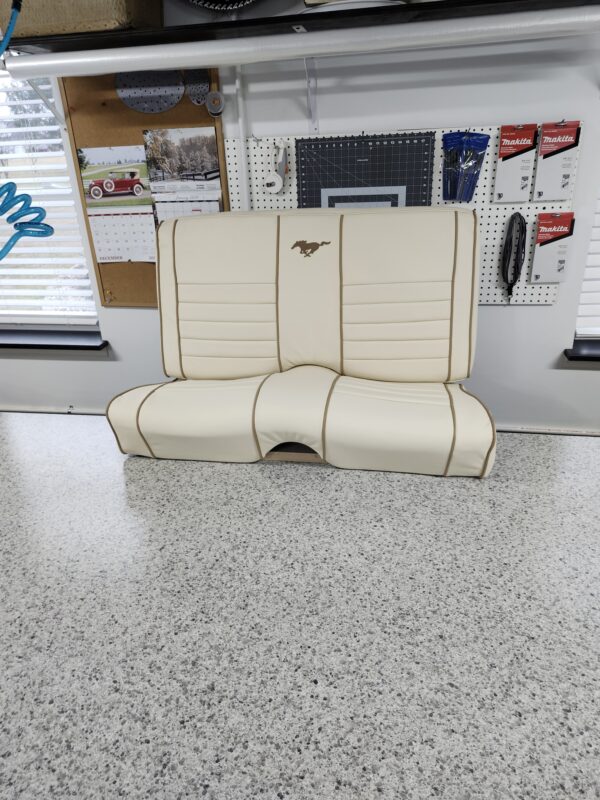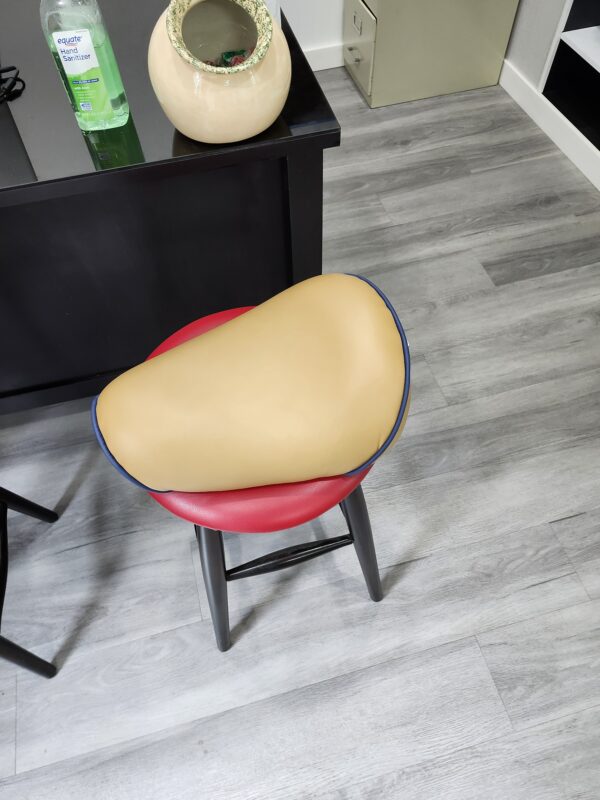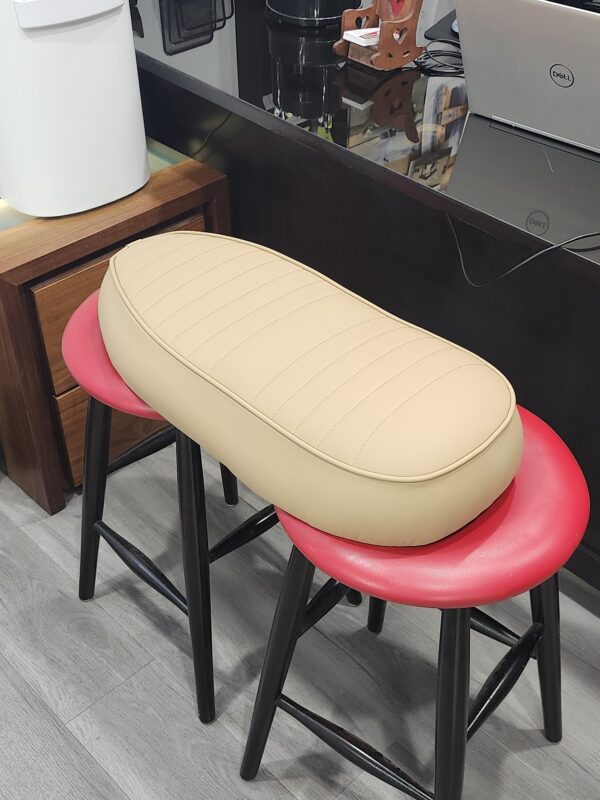



Project Details Upholstery 1966 ford thunderbird seats
- Project:
- Category: antique and classic car
- Our Task update design for
1966 ford thunderbird



By 1966 the Thunderbird had fully grown into its role as Ford’s rolling piece of the jet age. The final year of the Flair Bird gave buyers sculpted door panels, a wraparound rear seat, and a dashboard that looked borrowed from an aircraft catalog. It was never really a sports car, no matter what the brochures implied. It was a cockpit you wore, and people loved it for exactly that.
That styling is why interior work matters so much on these cars. Half the personality of a 1966 Thunderbird lives in its cabin, and when the vinyl splits and the foam sags, the whole jet age illusion collapses with it. Bringing that theater back is the kind of auto upholstery project we clear bench space for gladly.
Ford trimmed the 1966 cars in bold two tone vinyls, with leather available on upper trims, thin shell bucket seats up front, and that famous curved rear lounge seat that wraps its passengers like a corner booth at a supper club. The rear quarters flow forward to meet it, so the whole back half of the cabin feels carved from a single piece. Door panels were deeply sculpted with bright metal accents, and brushed trim ran the full width of the dash.
The front buckets deserve a closer look than they usually get. Ford gave them thin shells with finished backs, so they read as sculpture from the rear seat, and the center console flows out of the dash and between them like a bridge. It is a cabin designed to be admired from every seat in the house, which raises the stakes for anyone restoring it. There is no angle where sloppy work can hide.
The construction under all that style was solid Ford practice: steel frames, spring bases, molded foam, covers secured with hog rings to listing wires. But the materials worked harder here than in most cars. All that bright trim concentrates heat onto the vinyl beside it, and the low, wide glass area turns the cabin into a solarium on every sunny afternoon. Glamour, it turns out, comes with a tax.
The rear package shelf and the tops of the door panels cook fastest, since they live in direct sun every day the car is outside. Seat foam crumbles at the bolsters, seams split along the driver’s entry path, and the wraparound rear seat, glorious as it is, carries more seam length than any conventional bench, which means more places for time to pick at the thread.
Convertibles amplify all of it. More sun, more moisture riding along in the cabin, more thermal swing between noon and midnight. Even a pampered Bird eventually shows shrunken vinyl pulling at its hidden rings, and by that point the padding underneath has usually gone stale as well. None of this is fatal. Nearly every soft part of these interiors can be rebuilt, resewn, or refitted.
There are quieter failures too. Foam that has gone stale carries a musty note no air freshener touches, seat tracks gum up and fight every adjustment, and the padded dash top shrinks back from the glass line. Individually these are small complaints. Together they are the difference between a car that feels restored and one that merely looks it in photographs.
These cabins are full of trim that does not forgive pry bars, so disassembly moves slowly and gets photographed at every step. Covers come off with their hog ring positions mapped, foam gets judged honestly rather than optimistically, and the frames and spring bases are cleaned and repaired before anything new touches them.
Then comes the sewing, and on this car the sewing is everything. The pleats are the design, so we draft patterns from the original covers and hold the new seams to the factory lines within a needle’s width. It is the same discipline we brought to the 1951 Cadillac leather seats we restored and to a fabric and leather seat repair we handled on a far newer car. The eras change. The standard does not.
Door panels come off with plastic wedges and patience, because the clips and the bright moldings are the parts you cannot buy at any counter on a Saturday morning. Behind them we renew the moisture barriers that Ford installed and nearly every later hand tore away, which quietly protects the new panel boards for decades to come. The brightwork itself usually polishes out beautifully once it is off the car and on the bench.
Originality is a strong argument on a car this distinctive. Judges at events sanctioned by the Antique Automobile Club of America look closely at interior authenticity, so if showing matters to you, correct grain vinyl in correct colors is the move, and good reproductions exist for most combinations.
For drivers, the conversation opens up nicely. Modern faux leather has become genuinely impressive, with better UV stability and abrasion resistance than anything Ford could buy in 1966, and we covered the material honestly in our piece on faux leather as an upholstery material. Genuine leather remains the luxury answer, and since it was factory available on these cars, nobody at a cruise night will call it wrong.
Two tone cars add a matching puzzle, since both colors have to be right and the boundary between them has to land exactly where the factory drew it. We match from protected material under the seats rather than from sun struck surfaces, and we approve every candidate in daylight before a single panel gets cut. Grain matters as much as color here, because the correct grain is what makes new vinyl read as original to an experienced eye.
An open Thunderbird spends half its life as an outdoor room, and the marine world solved outdoor upholstery decades ago. UV stable topcoats, mildew resistant backings, bonded polyester thread, construction that sheds water instead of storing it. We do a steady trade in marine upholstery, and convertible owners benefit directly from that playbook when we spec their materials.
It changes the small decisions too: which thread rides on exposed seams, which foam goes where water might reach, and how closures are placed so moisture never pools where you cannot see it. Sun country cars deserve boat rules, and the Bird wears them without losing a bit of its shine. The tougher spec sews up exactly the same way on our machines, so choosing it is the rare decision with no downside at all.
Owning one of these gets easier with a short list instead of a long lecture:
Between washes, grit is the quiet enemy, grinding the topcoat a little every time someone slides across a cushion. Our guide to protecting vinyl seats from dirt and dust goes deeper on the routine, and every word of it applies to a Thunderbird cabin.
Convertible owners get one extra rule: the interior is in full sun every minute the top is down, so the shade and the wipe downs matter double. A folded towel over the seat tops on a beach day does more good than any spray protectant ever bottled, and all it takes is remembering. Call it a small tax for driving the best looking room in town.
Usually, yes. The vinyl skins can be replaced and the sculpted forms repaired or rebuilt, and the bright trim generally cleans up beautifully with patience. Warped backing boards get replaced with modern material that will not drink moisture the way the originals did.
Marine grade vinyl or a top tier synthetic, sewn with UV stable thread. It will look correct, shrug off sun and dew, and outlast anything the factory installed. Genuine leather can live outdoors too, but it demands real discipline with covers and conditioning.
We do, and it is honestly the best part of the job. The curved sections take careful patterning and patient fitting to keep the pleats flowing around the radius, and when it all comes together, the whole supper club effect returns at once.
If your Thunderbird’s cabin has lost its jet age shine, send photos through our free online estimates page or call 717-383-6917. Every interior is quoted individually after inspection, and we will map out a plan that fits how you actually use the car, show field or open road.
 Get a Free Quote!