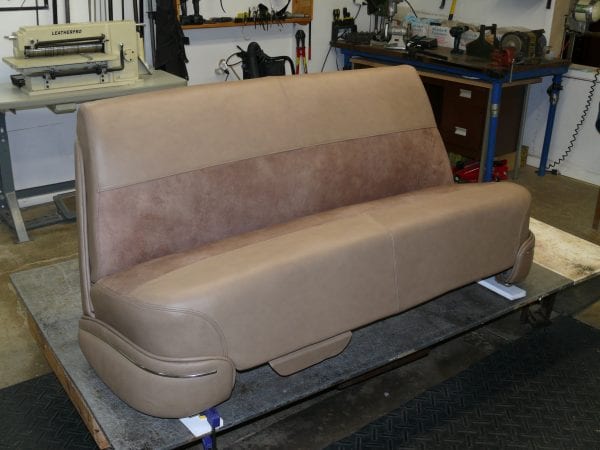



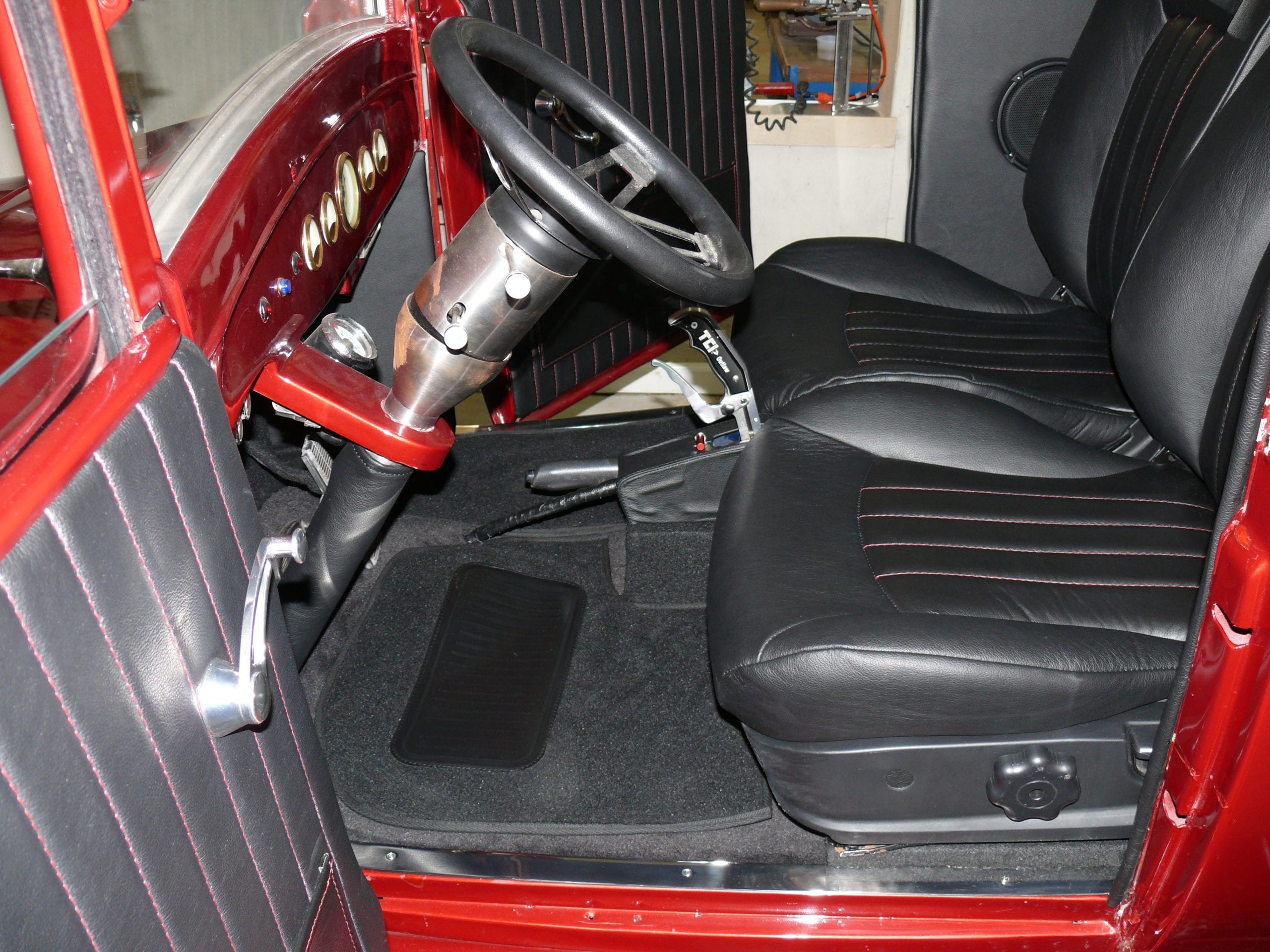
Project Details upholstery 1927 ford coupe.leather interior
- Project: Classic Auto
- Category: Auto Upholstery




A 1927 Ford coupe sits right at the hinge of automotive history. That single year saw the last of the Model T and the arrival of the Model A, and either way, the little coupe in your garage was built in a world where car interiors were still furniture. Wood framing, horsehair stuffing, hand driven tacks. A trimmer of that era would have recognized a parlor sofa faster than he would recognize a modern car seat.
Owners of these cars tend to be caretakers more than drivers, and they arrive with the same worry: how do you redo an interior this old without sanding the history off it? That question deserves a serious answer, so here is how we think about pre war Fords in our auto upholstery work.
In 1927 a Ford body still carried structural wood, and the interior hung on that wood the way upholstery hangs on a chair frame. Trimmers tacked covers to wooden tack strips, stuffed cushions with horsehair and cotton batting over coil springs, and tied those springs by hand with twine so the whole cushion moved together instead of fighting itself.
Closed cars like the coupe were usually trimmed in wool broadcloth or a similar hardwearing cloth, while leatherette, an early coated fabric, covered many open cars and commercial bodies, with genuine leather appearing where budgets allowed. Every seam was sewn by a person, every pleat laid out by eye and rule, and no two bodies came out exactly alike. That is both the charm of these interiors and the challenge of restoring them.
The coupe itself was the sensible man’s Ford. A single bench, a parcel shelf behind it, and just enough room for two people and a Saturday’s worth of errands. Door panels were cloth or leatherette tacked over wood, the headliner stretched across bows overhead, and every one of those surfaces was fitted by a person working quickly and well. Simple car, honest trim, and that honesty is exactly what deserves protecting a century later.
Horsehair itself survives remarkably well as long as it stays dry. What fails is everything around it. Cotton batting compresses down to felt, twine ties rot and let the springs wander, and the burlap foundation over the spring deck tears like old newspaper. Wool cloth loses its long war with moths and sunlight, and leatherette dries, shrinks, and flakes once its coating finally gives up.
The wood is the wild card. Tack strips that have been taking tacks since the Coolidge administration split and crumble, and body wood that ever met a leaky roof seal may be soft in places nobody can see until the trim comes off. Every pre war job starts with a frank assessment of that wood, because the finest upholstery in Pennsylvania cannot hold onto punky lumber.
Mice deserve a mention as well. A coupe that spent forty years in a barn almost always fed a few generations of them, and horsehair makes premium nesting material. Part of every assessment is figuring out how much of the stuffing is still stuffing and how much has been quietly carried off one whisker load at a time.
With a car this old, restoration is a chain of judgment calls. Original material that can be stabilized should usually stay. Horsehair can often be cleaned, teased back to loft, and returned to service. Sound springs get retied rather than replaced. Surviving details like robe rails, window laces, and garnish molding fabric are irreplaceable, and we treat them that way.
Museum conservators wrestle with this exact balance, and the Smithsonian Museum Conservation Institute publishes preservation thinking we take seriously: intervene as little as possible, and make what you do reversible where you can. A car is not a display case, though. It has to carry people, so we land somewhere practical. Keep what still serves, replace what has truly failed, and document everything that comes out of the car.
Owners often ask how the economics of this compare to ordinary seat work. We wrote about what drives the cost of reupholstering a car seat in general terms, but a pre war interior refuses to generalize. Every one is quoted individually after we inspect the wood, the springs, and whatever original trim survives.
Teardown on a 1927 Ford is closer to archaeology than demolition. We photograph everything, save every scrap of original material as a pattern and color reference, and label hardware that has not seen daylight in decades. Then the foundation work begins: repairing or replacing tack strips, retying the springs so the cushion moves as one, and rebuilding the burlap and batting layers in the same order the original trimmer laid them down.
Covers get sewn on machines built to walk through heavy cloth and hide without complaint, then fitted with tacks where tacks belong. Modern staples have their place in modern cars, but a wood framed Ford deserves period methods, and honestly, they hold better in old wood anyway. If you are curious where all this happens, you are welcome to tour our shop and watch a spring get tied by hand.
The range keeps us sharp. The same week a coupe like this sits in pieces, the next bench over might hold the 1966 Ford Thunderbird seats we restored or a vinyl truck bench we recovered for daily work duty. Jumping between 1927 and the jet age is a standing reminder that the fundamentals never changed. Only the materials did.
For a faithful restoration we reach for wool broadcloth in period colors, correct pleat layouts, and full grain leather where the body style calls for it. Modern reproduction broadcloths are excellent, and good leather today is arguably tanned better than anything Ford bought in quantity a century ago, so a faithful interior does not mean a fragile one.
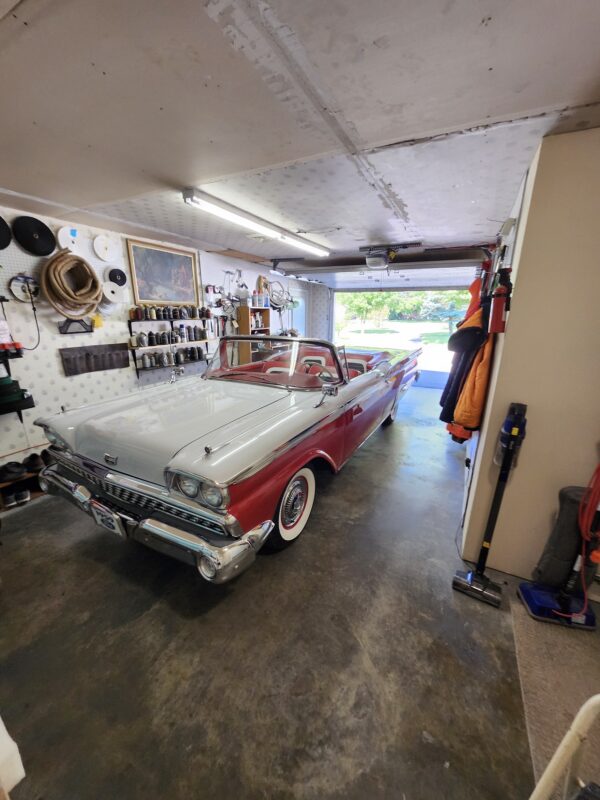
For cars that actually get driven, we sometimes blend eras quietly: period correct surfaces where the eye lands, with modern moisture barriers and better batting hidden where nobody will ever look. Thirty years from now that difference shows up as an interior that still looks right instead of one that molded from underneath. Detroit itself went through the same evolution a generation later, which our 1959 Ford Fairlane interior write up shows in detail on a car thirty two years younger than yours.
Trim details finish the argument. Period correct binding on the edges, gimp and hidem where the originals used them, and tack spacing that matches the factory hand keep the interior reading true up close, which is where these cars are always judged. Get the small things right and the whole cabin settles back into its year without a single false note.
Keep the car dry above all else. Humidity swings do more damage to wool, hair, and wood than a decade of gentle Sunday driving. Store the car off bare concrete, give the cabin some airflow, and keep direct sun off the cloth with shades or a breathable cover.
Cleaning should be gentle and rare. Vacuum wool through a brush attachment, spot clean with plain water and patience, and let any leather see a quality conditioner once or twice a year rather than monthly. Old materials prefer neglect over enthusiasm.
Drive it thoughtfully too. Wet coats and dripping umbrellas soak wool that then takes days to dry, and a window left cracked on a rainy night can undo a season of careful storage. None of this means the car cannot be used and enjoyed. It just means the interior appreciates the same courtesy the paint has been getting all along.
Closed cars like coupes were normally trimmed in cloth, with leatherette and genuine leather more common on open bodies and commercial cars. That said, bodies were trimmed by many hands across many plants, and exceptions exist. We trust the evidence found inside your car over any catalog assumption.
When they are sound, absolutely, and we prefer to. When they have split or gone soft, we splice or replace them in kind, in wood, so the interior goes back together exactly the way it was built. It is quiet work nobody will ever see, and it is the difference between a trim job and a restoration.
Keep the look and the construction method, and let us hide the practical upgrades where they cannot be seen. A driven car needs padding that tolerates use and barriers that manage moisture. A trailered show car can stay closer to untouched. Tell us honestly how the car will live, and we will build to that truth.
If a 1927 Ford, or any pre war car, is waiting on your patience, get our eyes on it early. Request a quote or call the shop at 717-383-6917, and bring photos of the interior exactly as it sits. What survives inside that car decides everything, and we would much rather help you preserve it than replace it.
 Get a Free Quote!