


Project Details
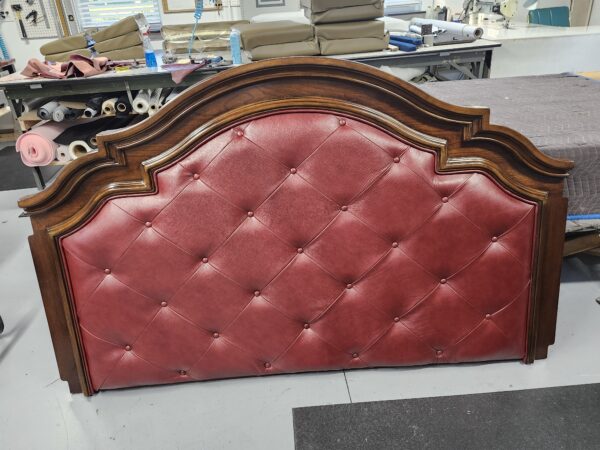
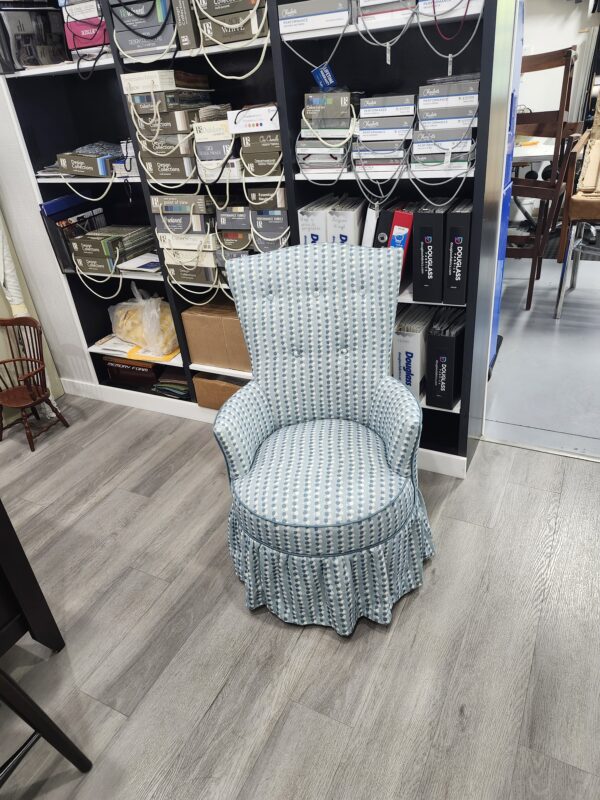
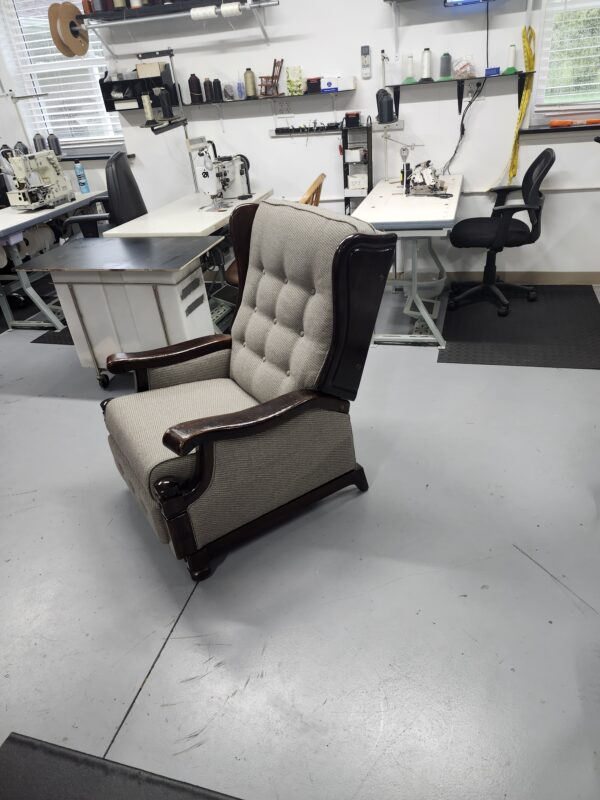
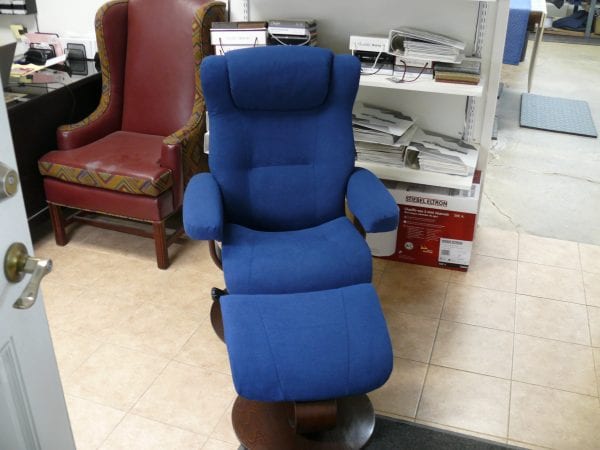
The modern Uhuru GÄRDESGÅRD lounge chair was in need of new cushion.
- Project: Reupholstery and Repair
- Category: Furniture Upholstery
Our Task
We provided completely new upholstery for this chair.


The modern Uhuru GÄRDESGÅRD lounge chair was in need of new cushion.
We provided completely new upholstery for this chair.
Not everything that rolls through our shop door is a hundred years old. Some days it is a leather lounge chair from Uhuru Design, the Brooklyn studio that made its name building furniture from salvaged wood and honest steel. The GÄRDESGÅRD leather chair is that kind of piece: a clean, confident frame that deserves cushion and cover work done at the same level of craft it was born with.
Owners of studio furniture hold onto it the way other folks hold onto their grandmother’s rocker. You bought it because a real person designed it and real hands built it. When the leather starts to flatten and crease, or the cushion loses its spring, replacing the chair feels wrong. Good news: it is also unnecessary.
A production chair from a big box store is engineered to a cost. A studio chair is engineered to an idea. Uhuru’s work leans on strong joinery, generous hardwood and steel members, and upholstery that is meant to be seen from every angle, since pieces like this rarely spend their lives pushed against a wall.
That changes how we approach the upholstery side. On a factory piece, a stapled cover hides a multitude of sins. On a designer frame, the cushion is half the design. Seam placement, welt thickness, the way leather breaks over an edge, all of it either honors the maker’s intent or argues with it. Our job is to make sure it honors it.
Our own background is old furniture. We spend most of our weeks elbow deep in antique restoration, hand tying springs and coaxing horsehair stuffing back to life. That discipline carries over. The habits you build saving a Victorian frame, respect for original construction, patience with natural materials, refusal to shortcut work that will never show, are exactly the habits a studio piece deserves.
Leather itself is remarkably durable. The cushion inside it usually gives up first. Foam cores soften and take a permanent set, so the seat develops a hollow where you sit and a proud edge where you do not. Fiber wraps migrate toward the corners and clump. Once the core collapses, the leather cover starts folding in the same places every single day, and those fold lines become permanent creases and, eventually, cracks.
The hide has its own enemies too. Skin oils slowly darken the seat and arm areas. Sunlight fades the color and dries the leather until it loses its strength. Low winter humidity pulls moisture out of a hide the same way it pulls moisture out of wood. By the time an owner calls us, the complaint is usually that the chair looks tired and sits worse, which is really two separate problems wearing one coat.
Knowing which problem you have matters, because the remedies are different. Finish wear, light surface scratching, and dryness respond to cleaning, conditioning, and professional recoloring, all of it far short of new upholstery. Cracks that go through the hide, tears at seams, and stretched panels that no longer recover their shape are structural, and no cream in a bottle fixes structure. A quick test we teach owners: press a fingertip into the worn spot. If the surface wrinkles and rebounds, the hide still has life. If it feels papery and stays creased, the fibers themselves have given up.
Here is the encouraging part either way: a chair like this almost never needs to be rebuilt. It needs a properly engineered new cushion core and, sometimes, fresh hide cut and sewn to the original pattern. Everything that made you buy the chair is still there.
Every piece starts with an inspection on the bench. We check the frame and the suspension first, because a new cushion sitting on failed webbing is money spent in the wrong order. Then we document the original cushion in detail: dimensions, seam lines, welt profile, zipper placement, how the corners are boxed and how the leather is pulled.
If the original cover is sound, we build a new core to match its geometry. That usually means high resilience foam cut slightly proud of the cover dimensions, wrapped in Dacron, or on softer builds a down proof ticking filled with feather and down around a foam heart. The wrap is what gives a cushion its crown, that slightly domed, inviting profile a bare foam slab never manages on its own.
If the cover itself is done, we pattern a new one from the old, transfer every seam and notch, and cut fresh hide with attention to the natural behavior of the skin. Leather is not fabric. Each hide has a firm backbone line, looser belly areas, and scars and range marks that must be worked around or deliberately featured. Sewing it calls for walking foot machines, longer stitch lengths, and welt work that stays crisp around tight corners.
The same preservation judgment we apply to antiques applies here: keep everything that still serves, replace only what has failed, and make the new work as reversible as we can. It is the thinking that shaped the Uhuru MOO bench commission we upholstered, and the same thinking, at the far end of the calendar, that guided the antique fainting sofa we brought back from its Victorian slumber. Different centuries, same rules.
Leather selection is where these projects are won or lost. Aniline leather is dyed all the way through with no surface coating, so it feels wonderful and develops a rich patina, but it drinks spills and shows every scratch. Semi aniline adds a light protective finish, a sensible middle road for a chair that actually gets sat in daily. Pigmented leather carries a full finish coat, wears like iron, and suits households with kids, dogs, and coffee in constant motion.
Weight matters as much as finish. Upholstery hides run heavier than garment leather, and a seat panel wants a slightly stouter hand than a back pillow so it resists stretching into a pouch. Color comes last, not first, and we always send sample swatches home with the owner, because leather reads differently under shop lights than it does in your living room at seven in the evening.
There is also arithmetic nobody warns you about. Leather is sold by the hide, not by the yard, and a hide is an irregular shape with a healed scar here and a thin spot there. Large panels have to be nested around those flaws, which means a leather project consumes more raw material than the same chair in fabric. We map every panel on the hide before the first cut, plan seam placement where the design can absorb it, and order accordingly, so the project never stalls halfway waiting on a second hide that may not match the first.
For a piece with a strong design identity, we aim for hides that match the maker’s palette: matte, natural, more saddle shop than showroom. If you want a sense of the range of cover and cushion work we take on beyond the antique bench, our furniture upholstery service page lays out the whole scope.
Leather wants three things: moderate light, moderate humidity, and an occasional feeding. Keep the chair out of direct sun, which is the single fastest ager of any hide. Hold indoor humidity somewhere near the comfortable middle through the seasons, since bone dry winter air stiffens leather and invites cracking. Twice a year, wipe the chair down with a barely damp cloth and apply a quality leather conditioner sparingly.
The American Institute for Conservation publishes sensible guidance on caring for treasured objects, and their core advice matches what we tell clients: gentle, boring maintenance beats heroic rescue every time. Rotate and flip loose cushions monthly so wear spreads evenly, and blot spills right away instead of scrubbing them in.
If you are weighing whether professional work is worth commissioning on a piece you love, we wrote about the practical benefits of a professional furniture restoration service, and separately about how heritage furniture is restored without sacrificing quality. The short version: done right, the piece comes back better built than the day it left the maker, and it keeps its story intact.
Usually we can get close enough that only you will ever know, and often closer than that. We work from hide books across several tanneries and compare samples against your chair in natural light. Where only one panel is being redone, we sometimes recover an adjacent panel too, so the eye never catches a transition.
On studio furniture, almost always. The frame is the well made, hard to replace part, and yours is already proven. Every piece is quoted individually after inspection, so you will know exactly what you are deciding on before any work begins.
Hide sourcing sets the pace. Once the leather is in hand, patterning, cutting, sewing, and core building move through the shop quickly. We give you a realistic schedule at drop off and we keep to it.
If your leather chair, from Uhuru or anyone else, has gone flat, creased, or just quiet, send us photos through our free online estimate form. Prefer to talk it through first? Call 717-383-6917 and tell us what you are sitting on. We will tell you honestly what it needs, and just as honestly what it does not.
 Get a Free Quote!