




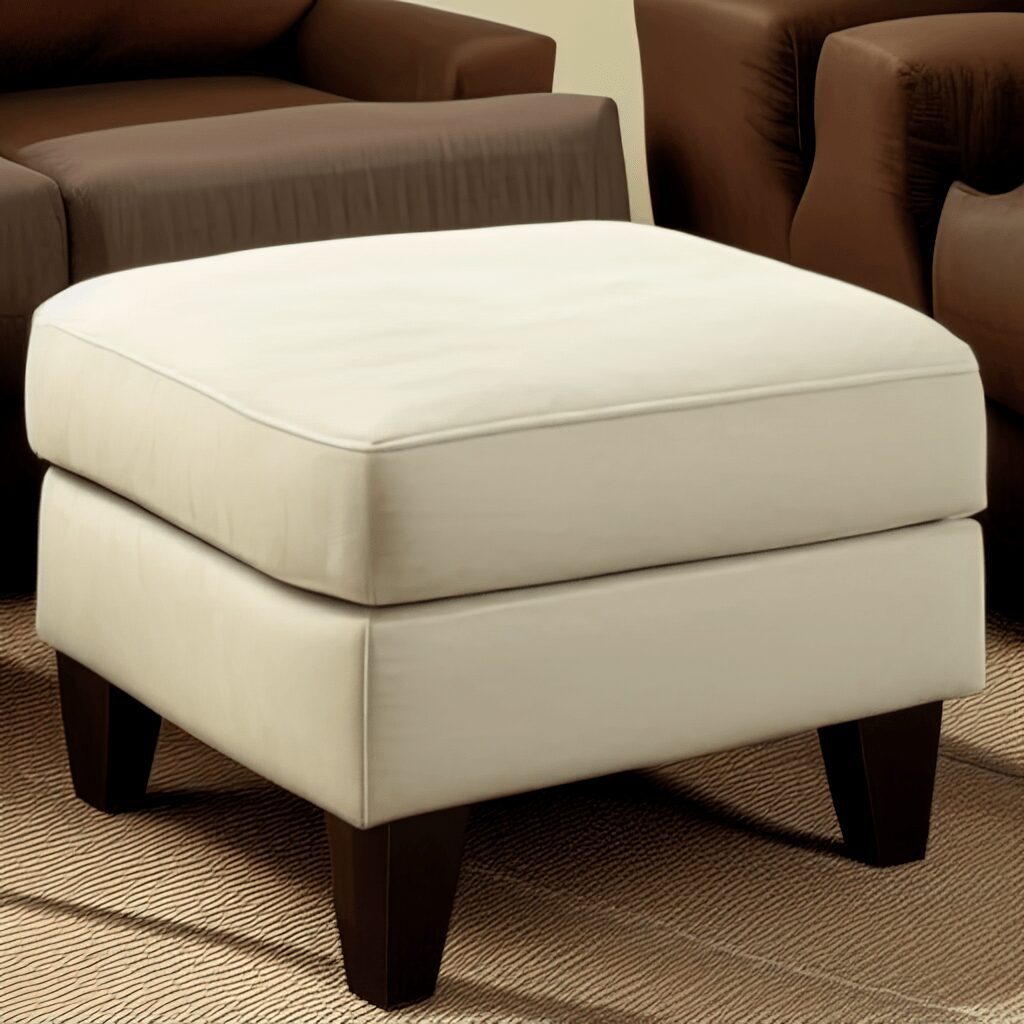
Nobody thinks much about the ottoman, and the ottoman knows it. Feet land on it in work socks, the dog claims it by noon, somebody sets a coffee tray on it every Sunday, and then the family wonders why it wore out before the sofa did. That little piece works harder than anything else in the living room.
So before we talk fabric at all, we ask customers one question: what is this ottoman’s actual job? Answer that honestly and the right upholstery almost picks itself.
Start with the job description
The true footrest takes constant rubbing from heels, socks, and jeans. That is pure abrasion duty, so it needs a tight, high-wear weave or a leather or vinyl that can take the scuffing. Delicate textures on a daily footrest are a countdown clock.
The coffee-table ottoman holds trays, mugs, and remote controls, so spills are its main enemy. A firm, flat top matters as much as the cover, and a cleanable performance fabric or leather earns its keep the first time coffee goes over.
The storage bench lives at the foot of a bed or in an entryway, gets sat on to pull boots off, and its lid edges take wear every time it opens. Edges and corners fail first, so a sturdy fabric with a tight weave, and good seams, matters more than the flat surfaces.
The pet landing pad is honest work, so let us plan for it. Claws catch loops, so skip bouclé and other loose weaves entirely. Tight microfibers, canvas-type weaves, and vinyl handle claws and hair the best, and darker or patterned covers forgive a lot between vacuumings.
Double rubs, explained like a human
Upholstery fabric carries an abrasion rating measured in double rubs. In the test, a machine drags a pad back and forth across the fabric until it shows wear, and one pass each way counts as one double rub. The number tells you how much friction the weave can absorb before it quits.
- Under 15,000: decorative duty, fine for a bedroom piece nobody puts feet on.
- 15,000 to 30,000: normal residential use, a solid choice for most living rooms.
- 30,000 to 50,000 and up: heavy family duty, the range we suggest for a daily footrest in a busy house.
- 100,000 plus: commercial territory. Past a certain point the number is mostly marketing, since other things fail long before the weave does.
One caveat from the bench: double rubs measure abrasion only. A fabric can score high and still snag on a claw, fade in a sunny window, or stain badly. Treat the rating as a filter, not a verdict.
A quick tour of the fabric families
Performance weaves and tight microfibers are our default suggestion for hardworking ottomans, since they combine high rub counts with easy cleaning. Leather and quality vinyl are the wipe-clean champions and age gracefully on footstools. Velvet looks wonderful and is tougher than its reputation, but on a daily footrest it will show pressure marks and traffic patterns.
For a sunroom or a spot by a big south window, consider a fade-rated fabric like Sunbrella, which has moved well beyond patio furniture. Central PA sun through glass is gentler than a boat deck, but give it a few summers and it will find any cheap dye.
Pattern, piping, and the details that make it look right
An ottoman is small, so pattern scale matters more than people expect. A large motif can land awkwardly, half a flower on the top and a stray stripe down one side, while small and medium patterns wrap naturally. If the fabric has a bold repeat, centering it on the top panel is the difference between custom work and homemade.
Piping, the welt cord along the seams, is the piece’s jewelry. Self-welt in the same fabric looks tailored and calm. Contrast piping sharpens the outline and ties the ottoman to another color in the room, and it is a cheap way to make a plain fabric look deliberate. Skipping the welt entirely gives a cleaner, more modern look and one less edge to wear.
Matching an ottoman to an existing sofa or chair is common work for us. Bring a cushion from the piece and we can match the fabric family, the welt style, even the leg finish, so the set reads as born together.
Do not forget what is under the fabric
Half of an ottoman’s comfort and lifespan is the foam, and it is the half nobody sees. A footrest wants a medium-firm foam that springs back, a coffee-table ottoman wants a firm, flat top so trays sit level, and a storage bench needs dense foam with clean edges or the lid looks melted within a year.
If your ottoman still looks decent but sits like a pancake, new foam alone may fix it. That is exactly what our cushion services cover, and it costs a good deal less than a full redo.
When to call a pro
Recovering an ottoman looks simple until the corners, the pattern centering, and the welt all have to line up at once. It is honestly one of the best small jobs to hand to a shop, because the material cost is modest and the difference in finish is obvious from across the room.
We recover ottomans, footstools, and storage benches through our furniture upholstery service, on commercial walking-foot machines, with fabric books you can dig through in person. Call 717-383-6917 and tell us what the piece goes through in a week, and we will point you to fabrics that can take it.
FAQ
How much fabric does an ottoman take?
Most ottomans need roughly two to four yards depending on size, skirt, and pattern repeat. Bold patterns need extra for matching. It is a small enough quantity that upgrading to a better fabric usually adds surprisingly little to the total.
Can you match my existing sofa or chair?
Yes, and we do it often. An exact fabric match depends on whether the original is still made, but a close coordinate with matching welt almost always looks intentional. Bring a cushion or good photos and we will sort through the options with you.
What is the best ottoman fabric for a house with dogs?
A tight performance weave or microfiber with a rub count over 30,000, or a quality vinyl if accidents are part of life. Avoid loops and loose weaves that claws can pull. Medium colors and small patterns hide hair between cleanings better than solids.
Have an ottoman that deserves better than it is getting? Send a photo through our free online estimate page or call 717-383-6917. Every piece is different, and we will give you a straight price before any work begins.

