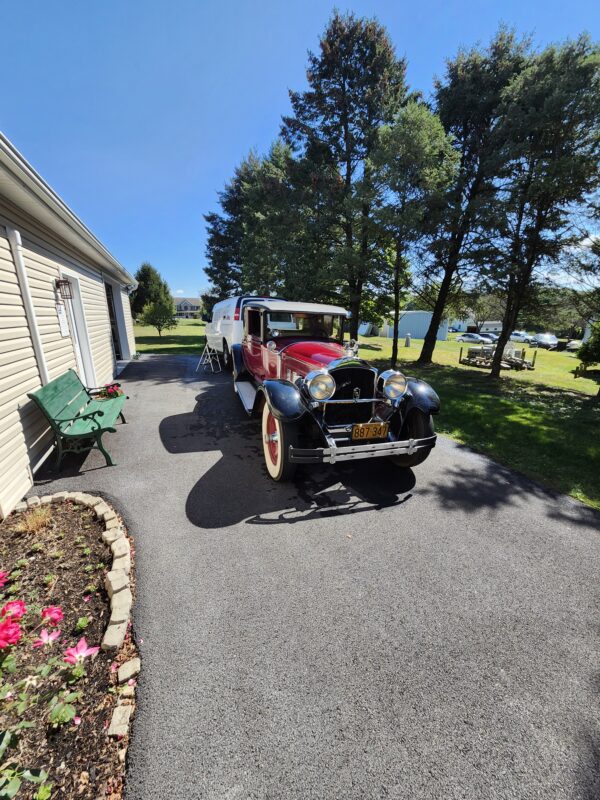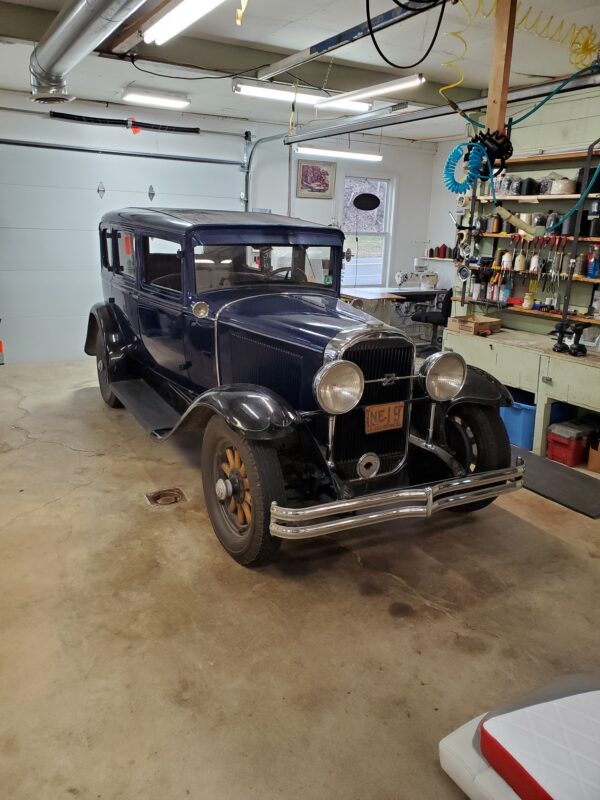



Project Details Upholstery Chevy 1937 coupe
- Project:
- Category: antique and classic car
- Our Task: Chevy 1937 coupe reupholstery. Leather interior and trunk.

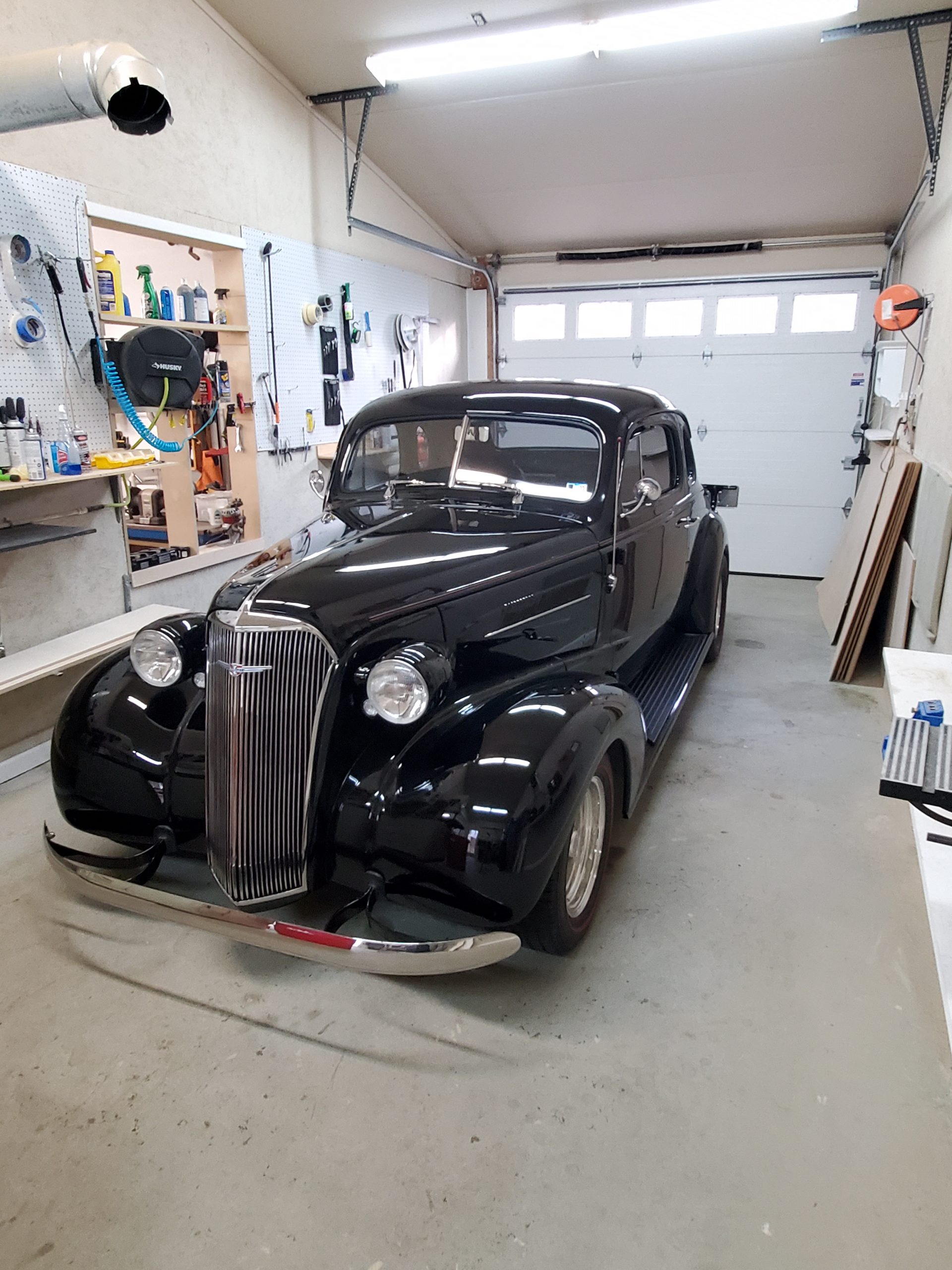


A 1937 Chevrolet coupe is old enough that nobody alive remembers it new. That changes the relationship an owner has with the car. It stops being transportation with sentimental value and becomes something closer to a family artifact that happens to start on the first crank. When one rolls into the shop, we lower our voices a little without meaning to.
These coupes survive because generations decided they should. Grandpa drove it, dad stored it, somebody’s kid finally dragged it into the light. By then the interior is usually the most tired thing on the car, and also the most original. What we do next matters, because you can repaint steel twice, but original upholstery only comes off once.
In 1937 the upholstery trade inside a car factory looked a lot like the furniture trade outside it. Chevrolet’s trimmers worked with coil springs tied to seat frames, burlap decking, and real horsehair and cotton stuffing shaped by hand. Covers went on with tacks driven into wood tack strips, not the metal clips and rings that came later.
The materials were furniture materials too. Closed cars like this coupe wore mohair, a woven pile fabric spun from angora goat hair, or wool broadcloth on more formal trims. Both were warm, durable for the era, and gave prewar cabins that upholstered parlor feel you simply cannot fake with modern shortcuts.
Even the structure was mixed media. Body framing of the era still used wood in places, and garnish moldings, tack rails, and trim foundations were often wooden as well. Working on a 1937 means being part upholsterer, part cabinetmaker, and part historian, which is exactly why we enjoy it.
Prewar interiors fail gracefully but thoroughly. Mohair wears its pile down to the backing on the driver’s cushion and door armrest first, then sunlight fades the rest a shade at a time. Wool cloth feeds moths whenever a car sits, and a coupe that spent forty years in a shed almost always shows their work.
Under the covers, the horsehair mats and shifts, the cotton compresses to felt, and the burlap decking dries until it tears under the springs. Twine ties let go one by one, so springs wander and the cushion develops hills and valleys. The wood tack strips crumble around their tacks, which is why old covers often flap loose at the edges even when the fabric itself holds.
None of this is a reason to despair. It is a ninety year old textile system doing what textiles do. The question is never whether a 1937 interior can be brought back. It is how much of the original story you want to keep while doing it.
This is the conversation we have before any teardown, and we take it seriously. There is a real difference between a restored car and a preserved one, and the preservation movement has pushed the whole hobby to think harder about it. The Historic Vehicle Association has done fine work making the case that an original, unrestored interior can be the most historically valuable part of a car.
So we sort the options honestly. If the original mohair is complete and stable, gentle cleaning and small repairs may serve the car better than replacement. If it is past saving, we document everything, keep the old covers as patterns, and reproduce the interior in correct materials and style. And if the owner is building a street rod, we say so plainly, that is a valid path too, and we build accordingly.
How do you know if what is in your coupe is original? Here is what we look for:
Staples, foam, and vinyl in a 1937 mean somebody has been there before you, which frees up the decision considerably.
Assessment comes first, with the owner present when possible. We probe the tack strips, check the springs, and lift a corner of the cover to read the stuffing. Then teardown, done with a camera in one hand, because every layer is reference material we will want later.
Frames and springs get repaired the period way, re-tied with twine in the original knot pattern rather than clipped with modern shortcuts. Rotten tack strips are remade in hardwood. Stuffing is rebuilt in traditional layers, and where owners want more comfort for touring we blend in modern padding beneath a traditional top layer, so the seat sits period but rides kinder.
Covers are cut from the old ones, sewn with the seam styles of the era, and finished with details like hidden tack rows and hand slipped corners. It is patient work on the far end of our auto upholstery service, closer in spirit to the Kai Kristiansen chair we restored than to a modern seat job, and that overlap is no accident. Prewar cars and fine furniture speak the same language.
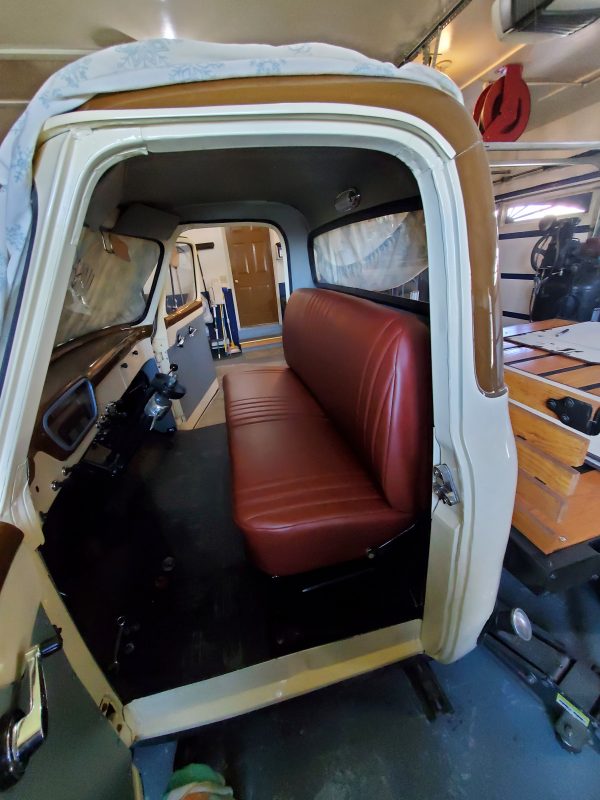
For contrast, a postwar bench like the 1950 truck bench seat we reupholstered is all steel, clips, and rings, a completely different fastening world only thirteen years newer. That is how fast the trade changed after the war.
If the goal is correct, the answer is mohair or wool broadcloth from the specialty mills that still weave them. The colors of the era were quiet, taupe, gray, brown, deep green, and the pile catches light in a way that instantly reads prewar. Paired with period welt cords and garnish moldings painted to match, the effect is complete.
If the coupe is a driver or a rod, the field opens. Modern wools give the period look with better wear. Leather suits a street rod’s character. We walk owners through samples until the material matches both the car and the life it is going to live, and every job is quoted individually after we inspect the car, since no two survivors need the same things.
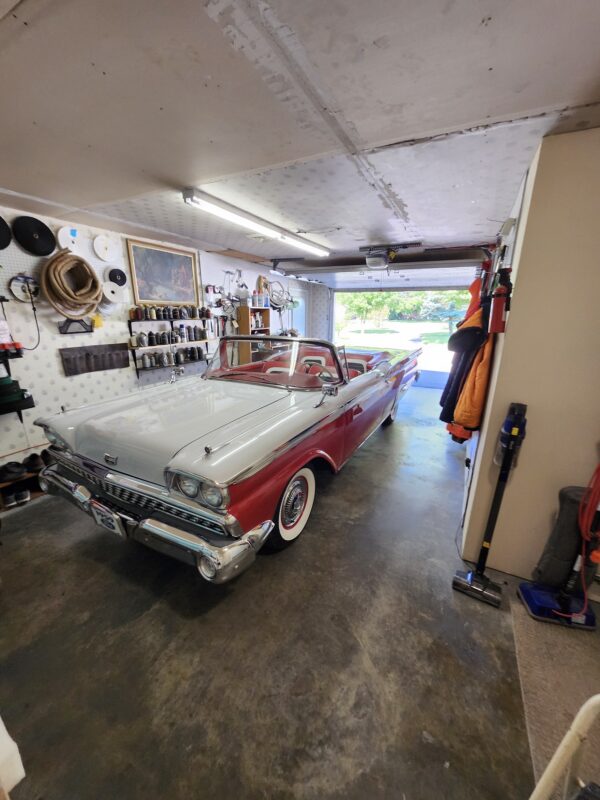
People sometimes ask why the material decision deserves this much talk, and our answer is that fabric is the interior. Springs and stuffing are the body, but the cloth is the face. For a sense of how these decisions play out across a whole car, our masterclass write-up on a 1959 Ford Fairlane interior shows the reasoning panel by panel, and our post on the real work behind reupholstering a car seat explains why the sewing you see is the smaller half of the job.
Natural fiber interiors want three things, shade, dryness, and vigilance. Sun fades wool faster than vinyl, so covered storage and window shades matter more on a prewar car. Humidity swings feed mildew and loosen old glue, so a dehumidified garage repays itself every year.
Moths are the enemy nobody watches for. Vacuum the interior seasonally, especially seams and under the seat, because moth larvae eat where fabric is undisturbed. Cedar helps, airtight winter storage helps more. And drips matter, wool spots where vinyl shrugs, so keep drinks and wet coats out of the cabin.
One more note for owners with more than one toy in the barn. The materials science flips completely on watercraft, where sun and moisture rule everything, which is why our marine upholstery service exists as its own specialty. Same shop, same care, very different rulebook.
If it is complete, uncontaminated, and structurally stable, quite possibly yes. Original trim carries history no reproduction can, and gentle conservation may serve the car best. If it is torn, moth eaten, or rodent soiled, we save it as a pattern and reproduce it faithfully.
It is cleaned, curled animal hair that springs back when compressed, the standard stuffing of the era. When original hair is clean and resilient we can wash, card, and reuse it over new burlap. When it is matted or contaminated, we replace it with new hair or a traditional style substitute.
Yes. We can re-tie the springs to modern tolerances and add a discreet padding layer beneath the traditional stuffing, which improves ride comfort while the visible cover stays completely period correct. Nobody at a show will know, but your back will.
If there is a prewar Chevrolet in your garage waiting for its interior, request a quote or call us at 717-383-6917. Bring photos, bring the car’s story, and we will help you decide what to preserve and what to renew.
 Get a Free Quote!