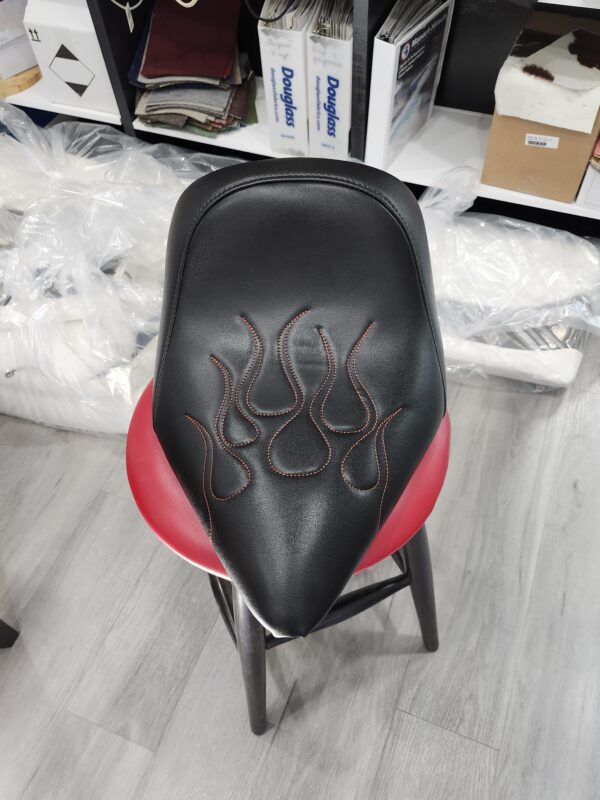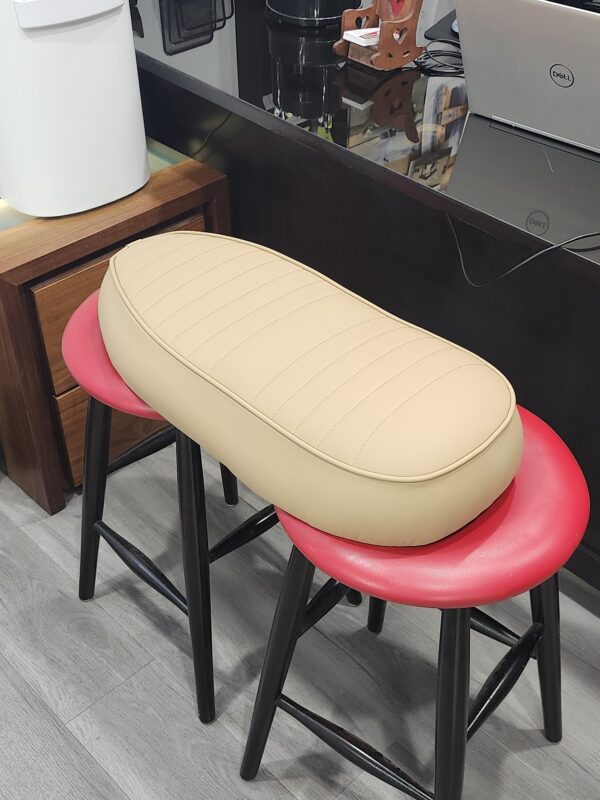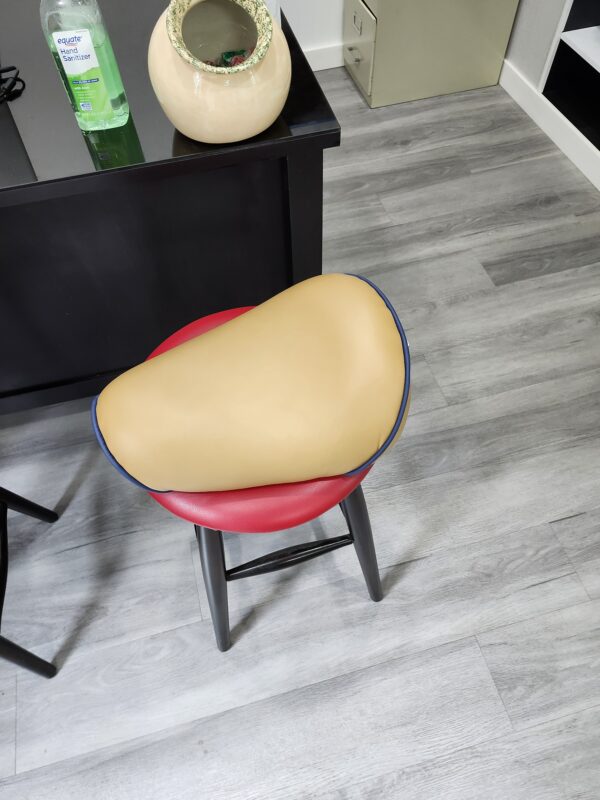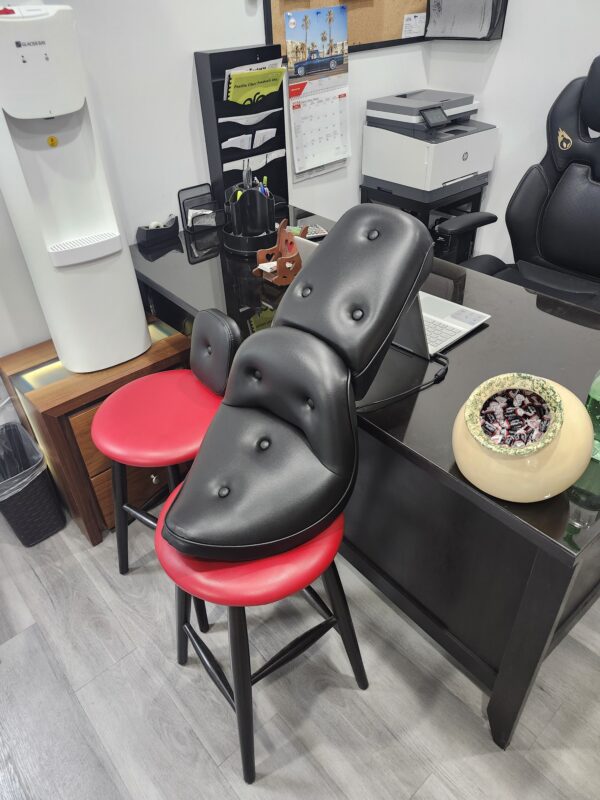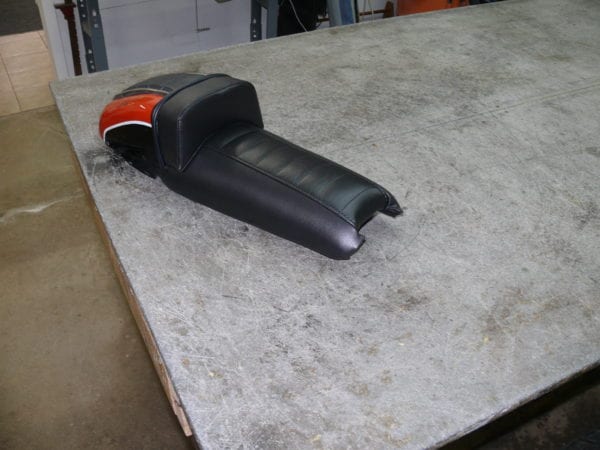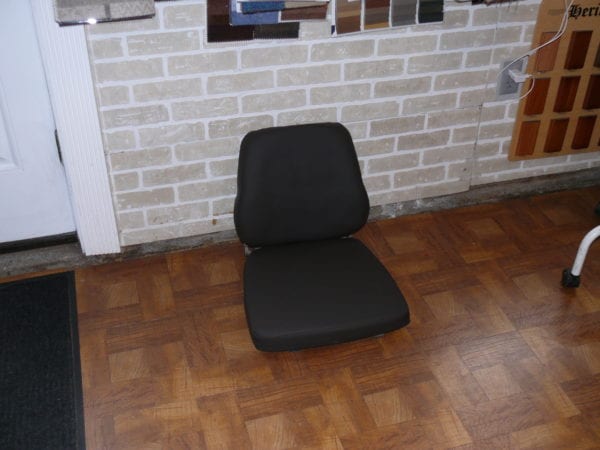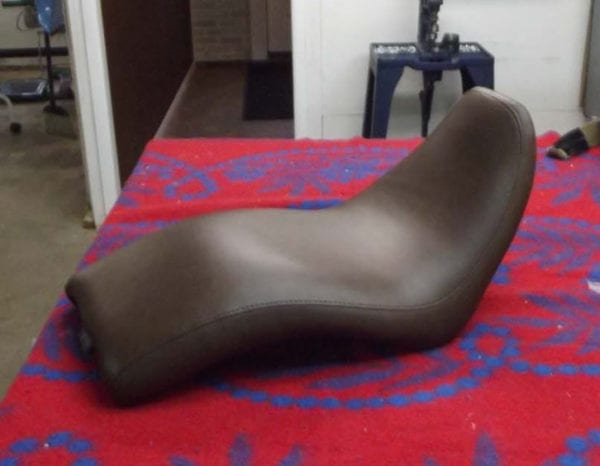



Project Details Newell luxury 2006
Reupholstery cushions.
- Project:
- Category: Auto Reupholstery
Our Task
request by the customer we update the design of cushions.

A golf cart leads a harder life than most cars ever will. It sits out through morning dew and afternoon sun, gets hosed off after muddy rounds, hauls coolers, grandkids, and the occasional bag of mulch, and almost never sees the inside of a garage. Owners baby the batteries and check the tires, and the seats just quietly take the beating until the day the vinyl splits and the foam starts drinking rainwater.
That is usually the day a cart finds our shop. This vinyl reupholstery project for a golf cart followed the pattern we see over and over: covers cracked along the seams, stitching gone brittle, and an owner tired of spreading a towel across the bench before every ride. Cart benches are a steady part of our auto upholstery work, so we figured it was worth laying out what a proper job actually involves.
A cart seat lives outdoors in a way no car seat ever has to. Ultraviolet light is the main villain. Vinyl stays flexible because of plasticizers blended into the material, and UV slowly cooks them out. The surface loses its stretch, then it chalks, then it cracks, usually right where a knee slides across the cushion on the way in.
Water finishes what the sun starts. Once stitching weakens or a seam opens, rain and irrigation spray soak straight into the foam underneath. Open cell foam holds water like a kitchen sponge, and a wet bun breaks down fast. It also keeps the underside of the cover damp, which invites mildew and rusts the staples holding everything to the seat board.
Then there is the chemistry nobody thinks about. Sunscreen, bug spray, and pool chlorine all attack the protective topcoat on vinyl, which is why seats in sunny golf communities often turn sticky or stained on the driver’s side first. Add the daily heat cycle, where a dark bench goes from cool morning to griddle by two in the afternoon, and the material expands and contracts until something finally gives.
Storage adds its own hazards. A cart wrapped tight in a plastic tarp for the winter comes out in spring with condensation trapped against every seam, which is a head start on mildew no vinyl enjoys. And a shed with a resident mouse population can turn a bench into an apartment complex by March. We have opened cushions that held more acorns than foam.
When we recover a cart bench we use marine grade vinyl, and we mean something specific by that. True marine vinyl carries UV inhibitors through the whole material rather than just the surface, so it resists fading and embrittlement for years in direct sun. It brings a mildew resistant topcoat, a cold crack rating that keeps it flexible on frosty mornings, and a stout polyester backing that keeps seams from tearing out under load.
Bargain vinyl looks identical on day one, and that is the trap. The difference shows up in season three, when the cheap cover has faded two shades and started checking along the pleats while the good material still wipes clean and stretches like new. These are the same materials we trust for our motorcycle upholstery work, because a bike saddle faces the same sun, rain, and constant friction a cart bench does.
Thread deserves its own mention. We sew outdoor seats with UV stable bonded polyester, since plenty of the failed covers we tear off have perfectly sound vinyl and completely rotted stitching. The cover died because of the cheapest component in the whole assembly, which is exactly the kind of shortcut we refuse to take.
Every cart seat starts with an inspection. We look at the covers, sure, but we also press into the foam, flex the seat boards, and check the hinge hardware, because a beautiful new cover stapled to a rotten board is money aimed at the wrong problem. The owner gets a straight report on what needs replacing and what is still healthy.
Teardown comes next, and it is done carefully, because the old cover is the best pattern we will ever have. We trace the panels, note where the factory placed its seams, and decide where we can quietly improve on them. Boards get repaired or replaced with material that shrugs off moisture. Foam gets swapped more often than owners expect, since by the time vinyl fails, the bun beneath it has usually been wet more than once.
The sewing happens on a walking foot machine that feeds thick, layered material evenly, so pleats stay straight and corners come out crisp. Then we stretch the new cover, chase out every wrinkle while the vinyl is warm and agreeable, and fasten it with stainless staples that will not bleed rust down the seat pedestal two summers from now. It is the same bench seat logic that guided the 1966 Chevy C-10 pickup bench we rebuilt, scaled down and weatherproofed for a life outdoors.
The care level does not drop because the vehicle is small. A cart gets the same patience we give full classic interiors, and if you want to see what that looks like on a much bigger canvas, our 1959 Ford Fairlane interior masterclass walks through one panel by panel.
Color is the first decision, and it is more practical than people expect. Light colors run cooler under summer sun, dark colors hide course grime, and a two tone layout with contrast piping splits the difference while giving the cart some personality. We keep sample cards at the shop so you can hold swatches against your cart body in daylight instead of guessing from a phone screen.
Texture matters too. A little grain gives shorts and rain gear something to grip on a hard corner, while a glass smooth finish looks sleek and slides like a playground. Pleated designs look sharp but add seam length, and every seam is a place water will eventually probe, so on carts that live uncovered we often steer owners toward simpler panel layouts.
Some cart owners are genuine collectors, restoring vintage machines with real history behind them. Clubs like the Antique Automobile Club of America have spent a century teaching owners that originality holds meaning, and that mindset applies to a sixty year old cart just as much as it does to a sedan. When a vintage machine comes in, we research what the maker actually offered before anyone picks a swatch.
Owners always ask what a job like this runs. Every cart is different, so we quote each one individually after we see it, but if you are curious what actually moves the number on any seat job, we broke it down in our article on what goes into reupholstering a car seat.
Marine vinyl is low maintenance, not no maintenance. Rinse the seats when you wash the cart, wipe them down with mild soap and water once a month, and skip the harsh solvents and shiny silicone dressings. Those products strip or clog the protective topcoat and shorten the life of the very material they claim to protect.
Shade is the cheapest insurance there is. A cart parked under a roof or a simple cover keeps its seats years longer than one baking in the yard. And if a seam ever starts to lift, bring it in early. A small stitching repair is a quick visit. A season of rain through an open seam means new foam too, and nobody enjoys paying for water damage twice.
Off season storage deserves a moment of planning as well. Skip the airtight plastic wrap, use a breathable cover, and prop the seat up so air can move around the cushion. Vinyl handles cold weather without complaint. It is trapped moisture that does the quiet damage between Thanksgiving and opening day at the course.
Sometimes, yes. If the vinyl is still flexible and the tear runs along a seam, we can often resew it and buy that cover real time. If the material has gone brittle or chalky, a repair just moves the failure a few inches over, and recovering is the honest recommendation.
With quality material, proper thread, and a little basic care, many years of hard use is a fair expectation. The biggest variables are direct sun and whether the cart gets any cover at all. Shade and a monthly wipe down stretch the lifespan more than any product you can buy.
We do. Rear facing flip seats, utility carts, lifted customs with extended benches, we have patterned all of them, including another set of golf cart seats we upholstered from a very different style of cart. If it has a cushion, we can rebuild it.
If your seats are cracked, faded, or drinking every rainstorm, send us a few photos through our free online estimate page or call the shop at 717-383-6917. We will tell you exactly what your bench needs and send your cart back looking like it belongs in the front row at the clubhouse.