


Project Details
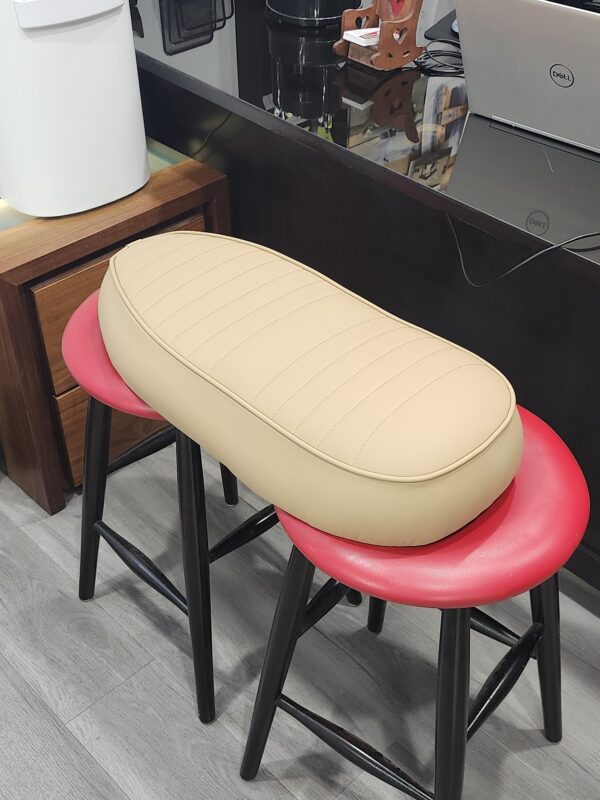
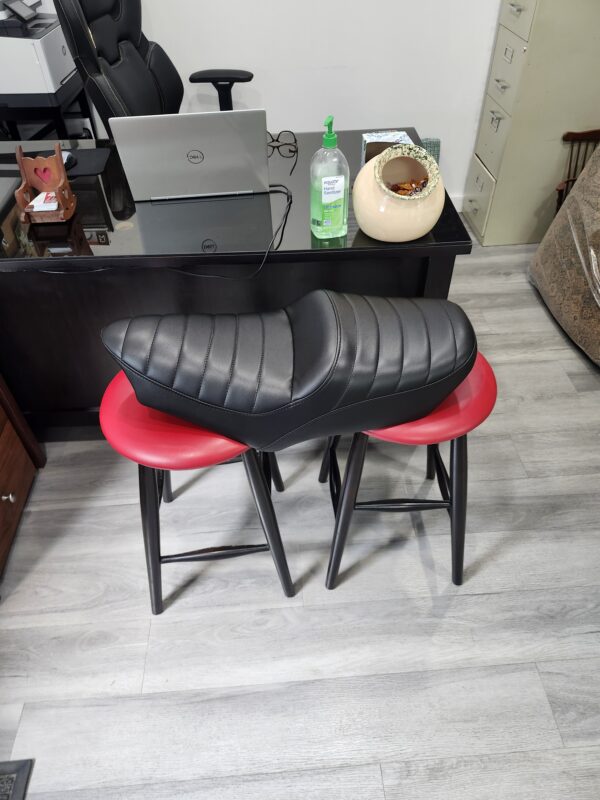
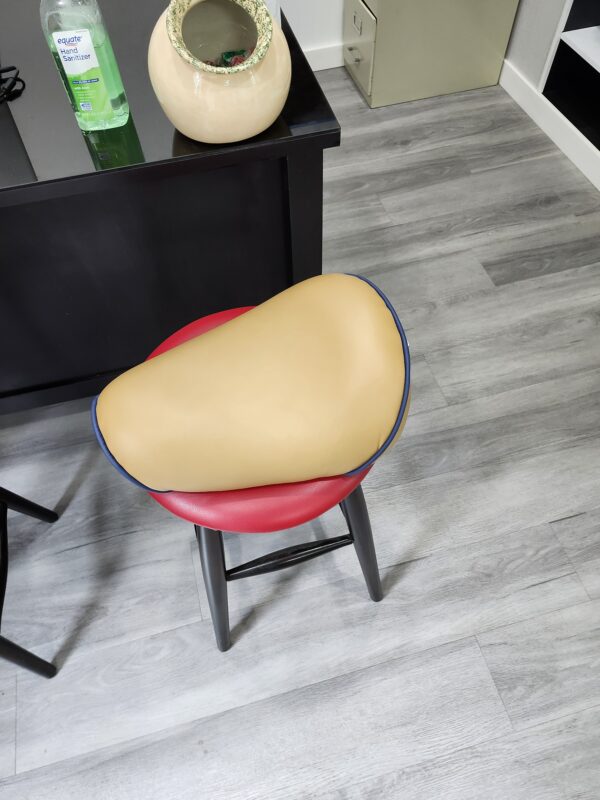
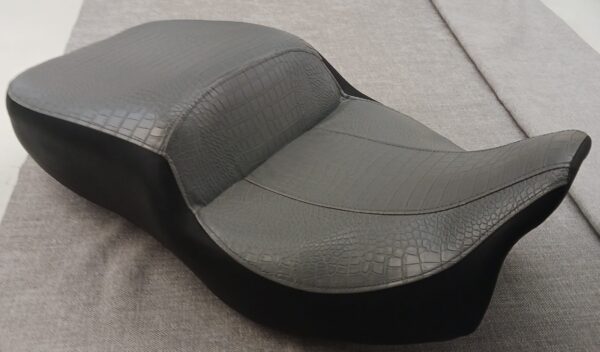
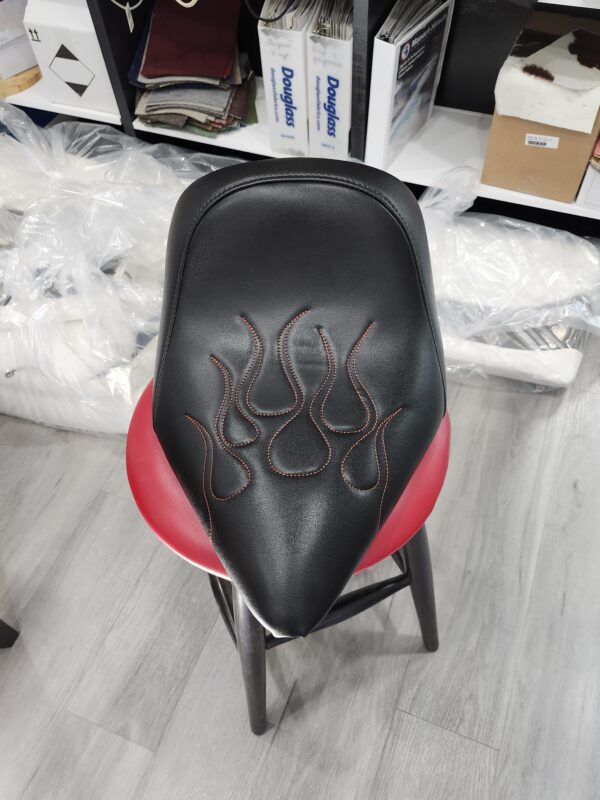
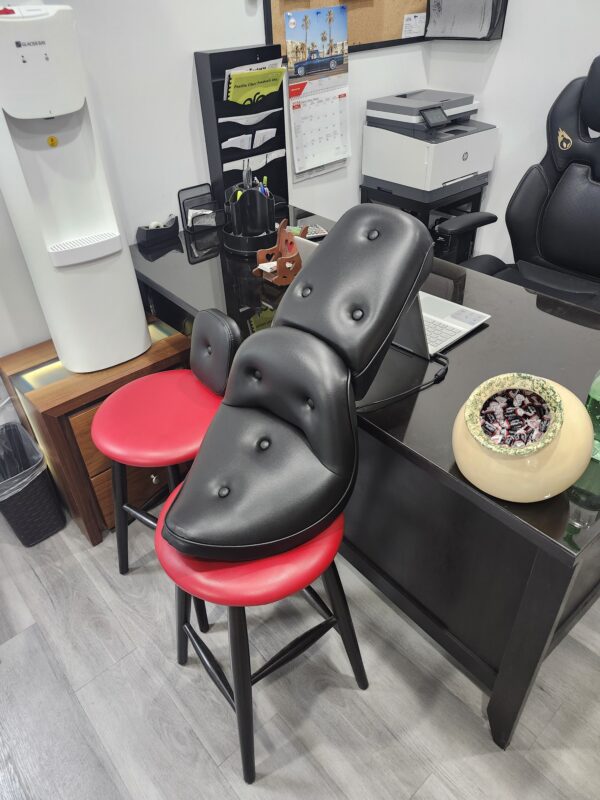
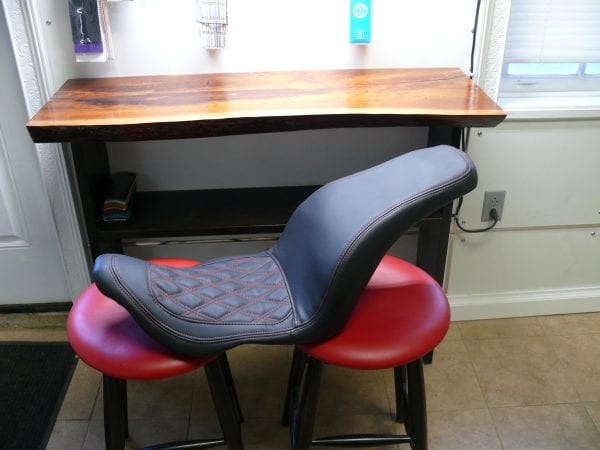
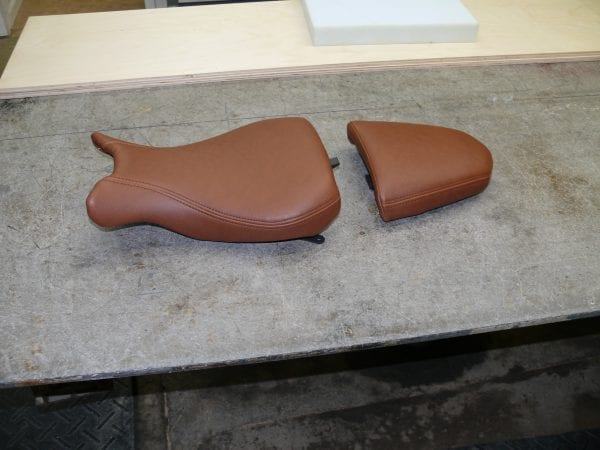
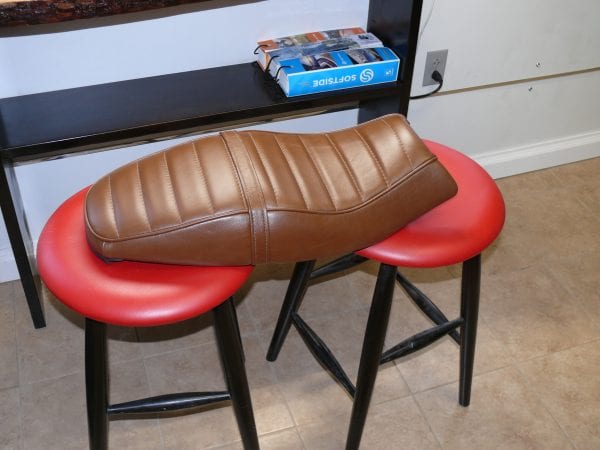
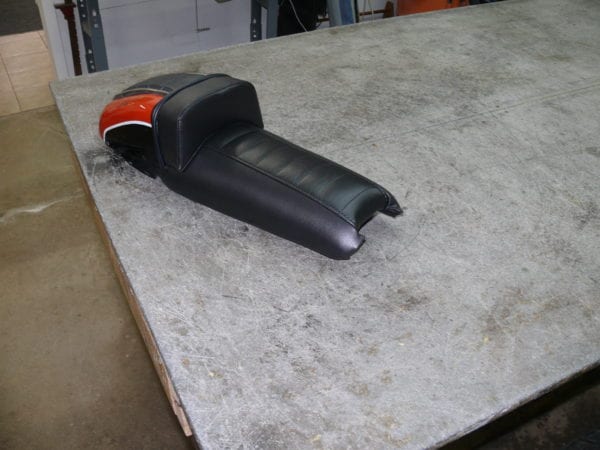
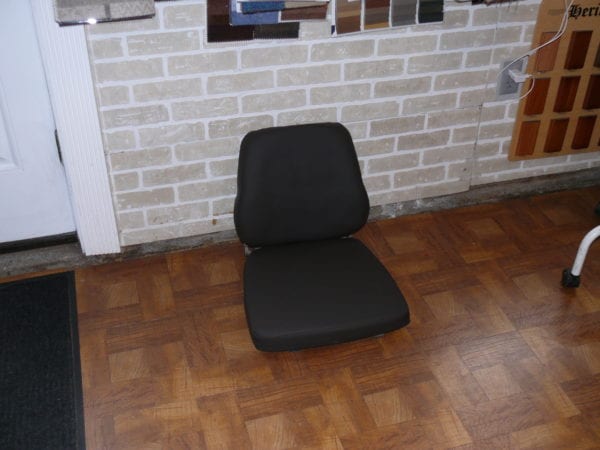
These golf cart seats needed new upholstery.
- Project: Motorcycle Seat
- Category: Motorcycle Upholstery
Our Task
Using vinyl material we provided a complete re-upholstery service.


These golf cart seats needed new upholstery.
Using vinyl material we provided a complete re-upholstery service.
A golf cart seat lives a harder life than almost any car seat that rolls through our shop. It bakes in open sun for hours at a stretch, rides through sprinkler spray and morning dew, carries wet towels and sandy shoes, and then does the whole routine again the next day. A car at least keeps its upholstery behind glass and under a roof. A cart gets a canopy, if it is lucky.
So when the vinyl splits along a seam or peels back at a corner, it does not mean the cart was cheaply built. It means the covering finally lost a long fight with ultraviolet light. Owners hang onto their carts for decades, especially in neighborhoods where the cart works as the second family vehicle, and a seat rebuild is usually the single upgrade that makes an older cart feel factory fresh again.
Sunlight does most of the damage. Vinyl stays soft because of plasticizers blended into the sheet, and UV radiation slowly breaks them down. As they leach away, the surface turns stiff and chalky, and the first cold morning or one hard sit opens a crack. Heat speeds everything along. A bench sitting in July sun reaches temperatures that would genuinely surprise you, and every heat cycle pulls a little more flexibility out of the cover.
Water attacks from the other side. Rain and irrigation spray work through needle holes and staple lines into the cushion below. Ordinary open cell foam drinks it up like a sponge, and a seat that never fully dries starts growing mildew from the inside out. That is where black spotting and a musty smell come from. No amount of scrubbing the surface cures it, because the problem lives underneath the cover.
Then there is plain friction. Riders slide on and off a cart bench far more often than they do a car seat, usually with sunscreen on their skin. Sunscreen and body oils are surprisingly harsh on vinyl topcoats, which is why the outer edge of the bottom cushion is nearly always the first spot to wear through.
Golf cart seats are refreshingly simple compared to automotive buckets. Most are a molded plastic or plywood base, a slab of foam, and a vinyl cover stretched over the assembly and stapled around the underside. There are no coil springs to retie, no listing channels, no wiring harnesses. The bottom cushion and the backrest are separate pieces that unbolt from the cart frame in a few minutes with basic tools.
That simplicity is exactly why material quality carries the whole job. A base with rot or cracks will not hold a staple. Foam that has collapsed leaves the new cover loose no matter how carefully it was sewn. And a vinyl that was never formulated for outdoor duty will repeat the original failure on roughly the original schedule. When a set of cart seats lands on our bench, all three layers get judged separately, and each one either earns its place or gets replaced.
Hardware rounds out the picture. Hinge plates on flip up bottoms, armrest caps, grab bar mounts, and the little plastic feet that keep a cushion from rocking all pass through our hands during a rebuild. Rear facing jump seats and aftermarket seat kits follow the same anatomy with a few extra bolts. If a bracket is bent or a hinge has torn loose from the plywood, the rebuild is the moment to fix it, not after the new cover is stretched and stapled.
Everything starts with a teardown. We pull every old staple rather than shooting new ones over rust, then inspect the base for cracks, soft spots, and broken mounting points. Plastic bases usually survive fine. Plywood bases sometimes need a section replaced and sealed before they can grip fasteners again, and catching that early is far better than discovering it after the new cover is on.
The old cover becomes the pattern. Even a shrunken, cracked cover still shows where the seams belong, and we adjust from there for fit and style. Pleat count, contrast piping, two tone panels, a monogram stitched into the backrest, all of it gets settled before a blade touches new material. It is the same auto upholstery discipline we bring to cars and trucks, scaled down to a simpler seat. The approach carries across every outdoor and work seat we build, including the tractor seat we upholstered and repaired and the bench from a 1950 GMC work truck we recovered.
Fresh foam goes on next, wrapped in a thin moisture barrier so any water that sneaks past a seam cannot soak into the cushion. The new cover is sewn with UV stable polyester thread, because ordinary nylon thread rots in sunlight years before good vinyl gives up. Then the cover is stretched from the center outward so tension stays even and the pleats run straight, and the underside is fastened with stainless staples that will not rust and let go.
Anyone curious about the labor hiding inside a job like this can read our breakdown of what goes into reupholstering a car seat. A cart bench is simpler than a car bucket, but every one of those steps still happens on a smaller stage.
Marine grade vinyl is our default recommendation for carts, and the reasons are practical. Its UV inhibitors are blended through the material rather than coated on top, it carries antimicrobial treatment that resists mildew, and it stays flexible in cold weather instead of cracking. Expanded marine vinyl adds a thin foam backing of its own, which lets seams lie flat, softens the feel, and shrugs off scuffs from golf spikes and shoe soles.
Color deserves more thought outdoors than it gets in a car. Dark covers look sharp against bright body panels but run hot in summer sun, hot enough to make you hover before sitting. Lighter tones stay cooler and show their fading later. Texture matters too, since a light grain hides fine scratches that would show plainly on a smooth face.
Some carts deserve a period approach instead of a modern one. Vintage carts from the fifties and sixties have a devoted following, and clubs like the Antique Automobile Club of America welcome them alongside antique cars at their shows. For those projects we match original colors and pleat patterns so the cart reads correct for its year. And for a sense of how far a full period interior can go, our story on the 1959 Ford Fairlane interior rebuild shows the same thinking applied to a car.
Shade is the cheapest protection there is. A cart parked under a roof, a carport, or even a simple cover will roughly double the life of its upholstery compared to one that lives in the open. If covered parking is not an option, park nose toward the sun so the seat backs shade the cushions for part of the day. Small habit, real difference.
Rinse the seats with mild soap and water every few weeks, more often during sunscreen season. Skip harsh solvents, bleach mixes, and abrasive pads, which strip the protective topcoat and age vinyl faster than the sun does. A water based UV protectant applied a few times a year helps too, but avoid glossy silicone dressings that leave seats slick and pull dust out of the air.
Watch the small stuff too. A cart that lives near a pool sees chlorine on skin and towels, which dulls vinyl over time, so a quick freshwater rinse after pool days is worth the thirty seconds. Bird droppings are acidic and etch the topcoat if they sit. A bungee strapped cooler will polish a shiny spot into a cushion over a single season. None of these ruin a seat quickly, but all of them add up over the years.
Finally, let wet seats dry before snapping on a storage cover. Trapping moisture under fabric is exactly how mildew gets its start, even with barrier wrapped foam underneath.
Just the seats, in most cases. The bottom and backrest unbolt easily, and plenty of customers drop off cushions alone. If the hardware is stubborn or you would rather not wrestle with it, bring the cart over and we will pull them here.
Absolutely. We stock sample cards across dozens of marine vinyl colors and can build two tone panels, contrast stitching, piping, and embroidered initials or logos. Bring the cart or a good daylight photo and we will match against physical samples rather than a screen.
Most cart seat sets are finished within days once materials are in hand. Every job is quoted individually after we inspect the bases and foam, since hidden rot or a collapsed cushion changes the work involved, and we confirm timing along with the quote.
If your cart seats are cracked, faded, or just plain boring, we would love to fix that. Send photos through our free online estimate form or call 717-383-6917. And if you are in the area, come take a tour of our shop and see the work up close before you commit to anything.
 Get a Free Quote!