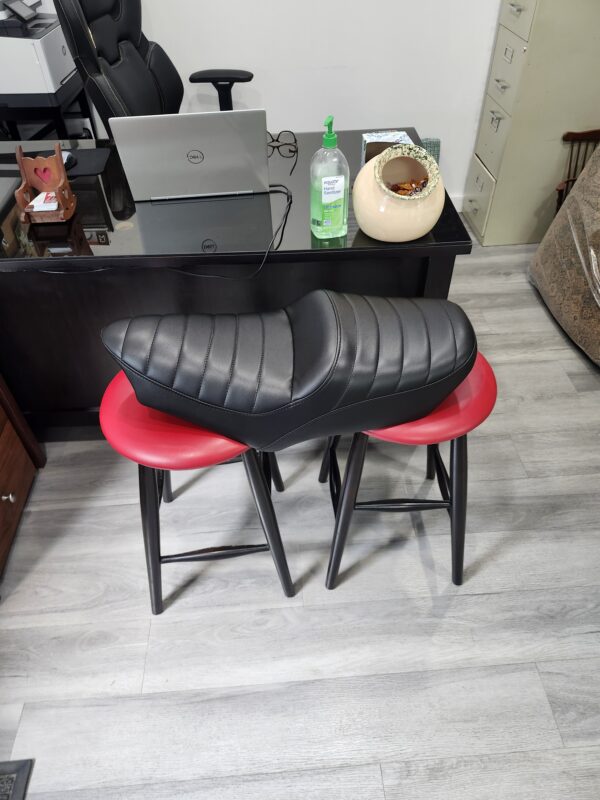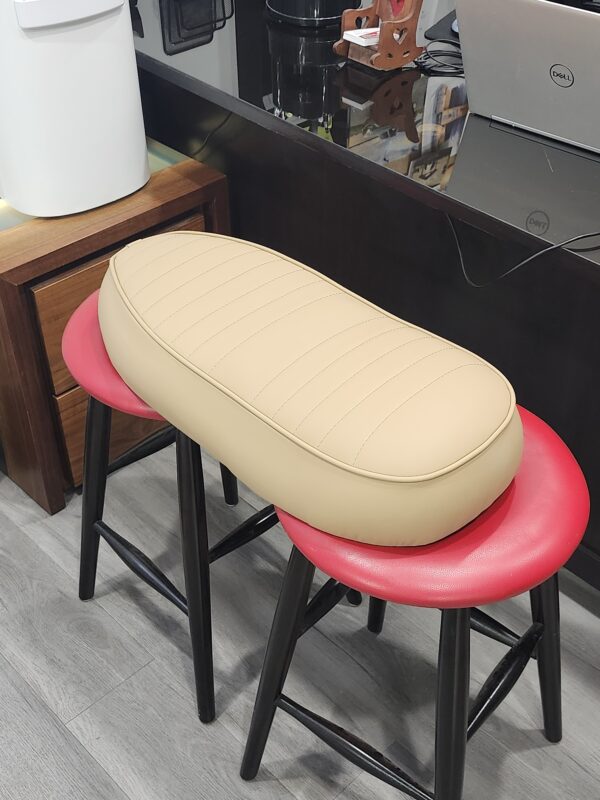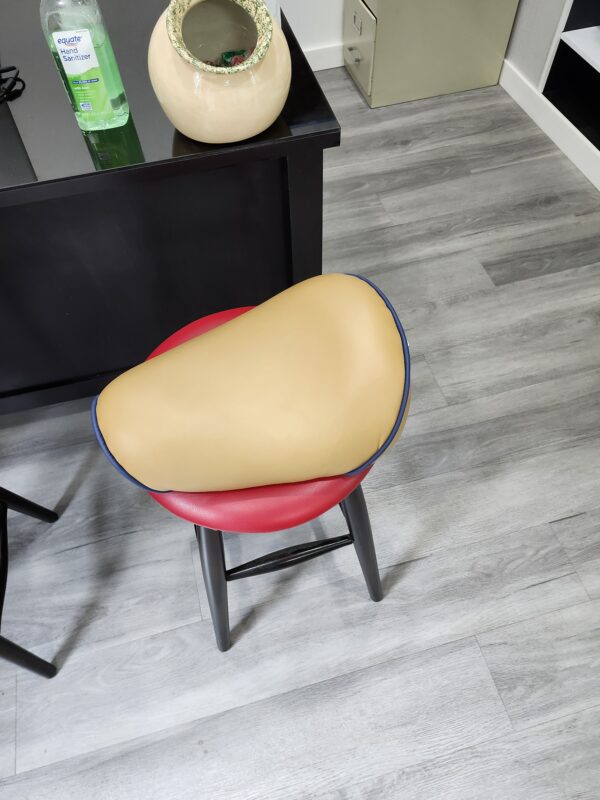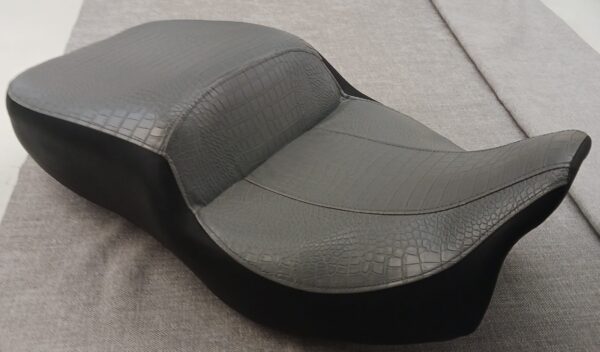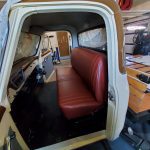



Project Details. reupholstery seat.
- Project: Upholstery motorcycle seat.
- Category: Motorcycle Upholstery
Our Task
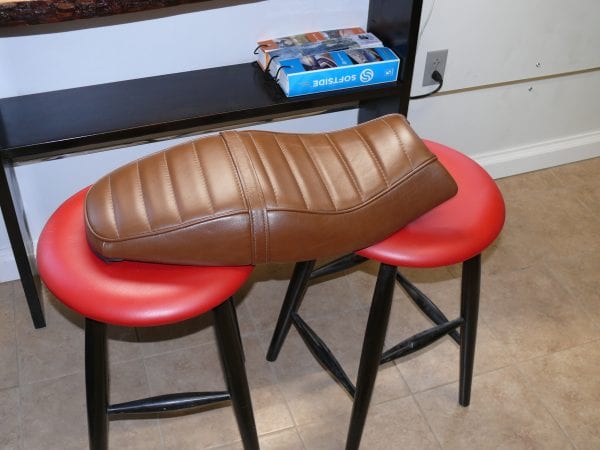
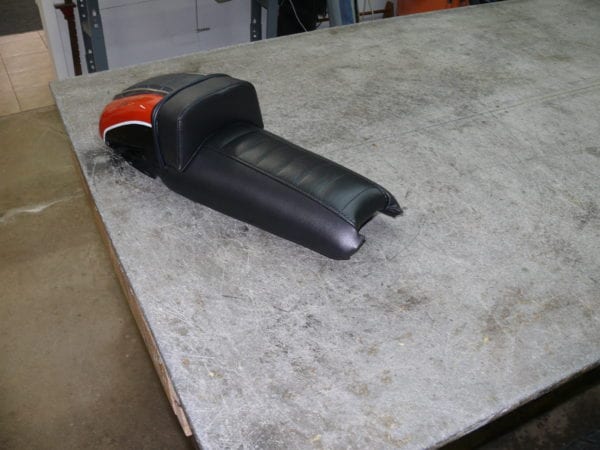
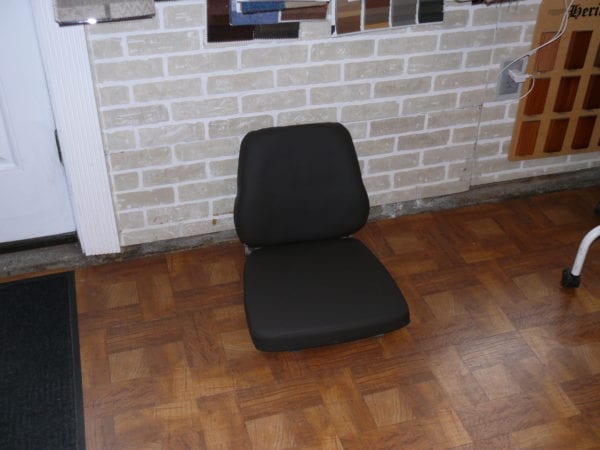
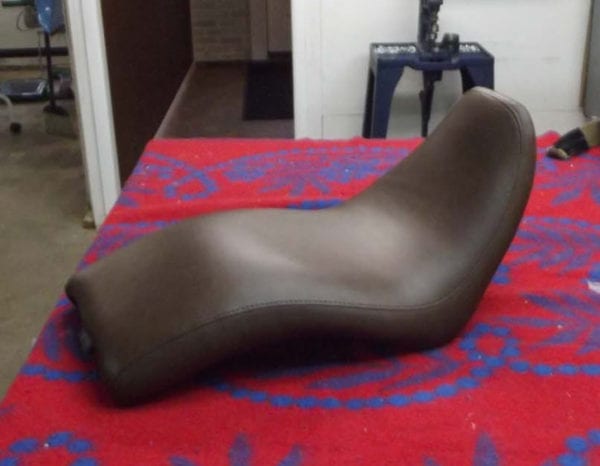
Upholstery motorcycle seat.



Upholstery motorcycle seat.
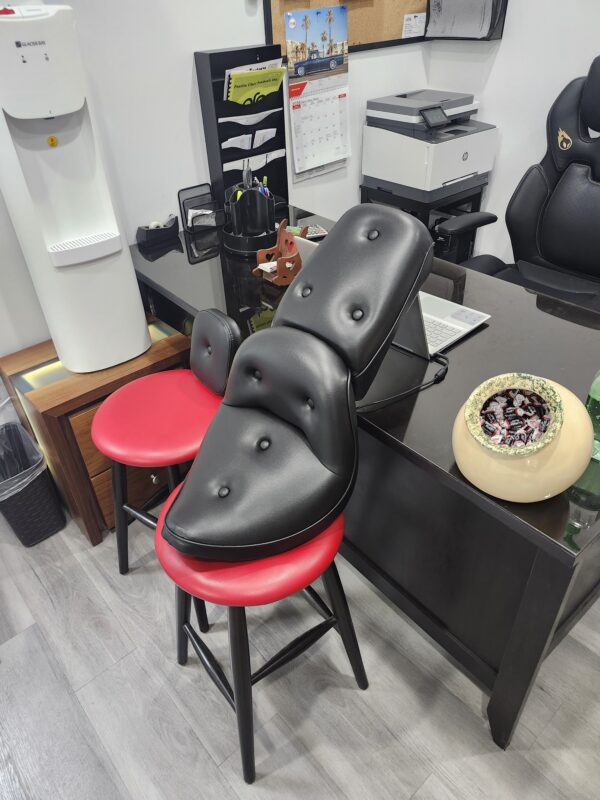
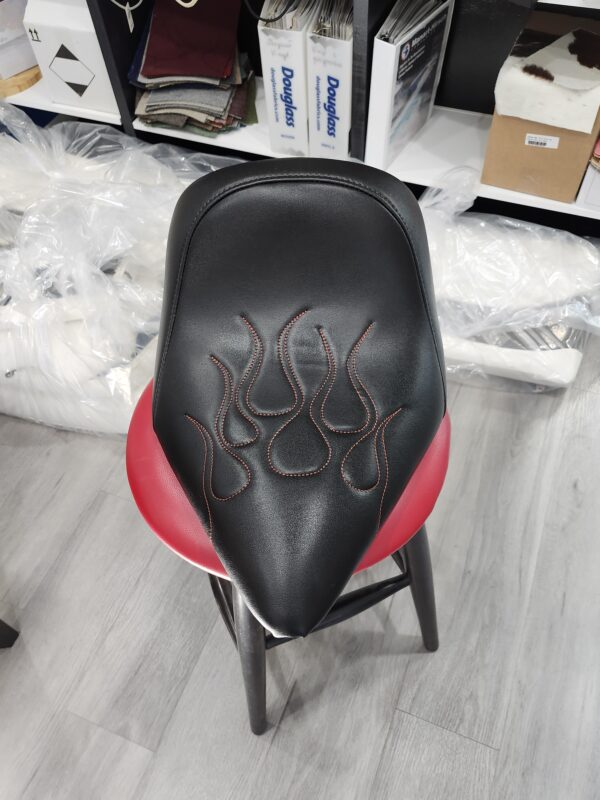
A rider touches a motorcycle in exactly three places: grips, pegs, and saddle. Two of those are hardware store problems. The third one is ours. A black leather motorcycle seat is the piece of the bike that carries you, shapes how long you can ride, and shows every mile it has taken, which is why riders get more attached to a good saddle than to almost any other part.
When a seat lands on our bench, it is usually one of two stories. Either the cover finally cracked through after years of sun and rain, or the seat never fit its rider in the first place and forty five minutes in the saddle feels like penance. Both stories end the same way here, with the seat stripped to the pan and built back better.
No other seat in our shop lives fully outdoors while being sat on. A sofa never sees rain. A car seat sees sun through glass, which is bad enough, but a saddle takes direct UV, direct water, road grit, gas splash, and the constant flex of a rider shifting weight through every corner. Then it gets parked in the sun at a hundred and forty degrees surface temperature.
That means the material has to be chosen like riding gear, not like furniture. It also means the seat is small enough that there is nowhere to hide a lazy seam. On the 1972 Chevy leather bench seat we rebuilt, a slightly wandering stitch line would sit a yard from anyone’s eyes. On a saddle, every stitch is inspected from two feet away by a person who cleans their bike with a toothbrush. We build accordingly.
Every saddle is a sandwich. The pan is the foundation, steel on older bikes, molded plastic or fiberglass on newer ones. Steel pans rust where trapped moisture sits between foam and metal, and plastic pans crack at mounting points. We repair or reinforce the pan first because nothing built on a bad foundation lasts.
The foam is the personality of the seat. Factory foam is a compromise shaped for an average rider who does not exist. As foam ages it loses its rebound, so the rider sinks through to the pan, and that is the moment a comfortable bike becomes a chiropractor referral. Good saddle foam is firm, high density stock that we sculpt by hand, shaving here, building up there, until it fits the actual human being who rides the actual bike.
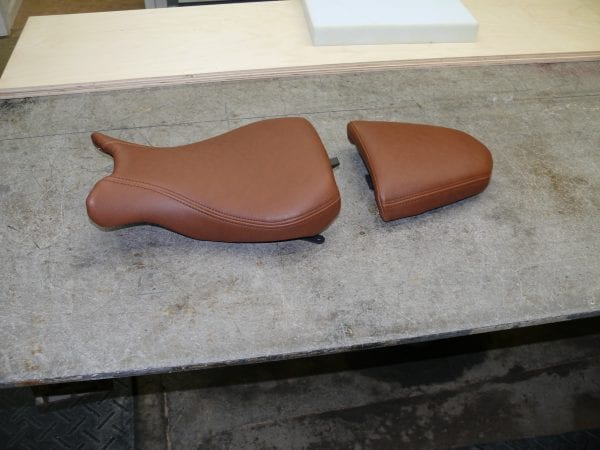
Two up riding changes the math. A passenger pillion carries weight on a smaller footprint, so we firm it up more than the rider’s section, and we keep a step or a gentle slope between the two zones so nobody slides forward under braking. Some riders ask about gel inserts, and we will fit them where they earn their place, though a properly sculpted high density foam does most of what riders hope the gel will do.
The hide is the handshake. Leather breathes, grips a rider’s jeans just enough, and molds to the foam beneath it over the first thousand miles until the seat is genuinely yours. Vinyl has its place in the rain, but it never develops character. Leather earns it.
The pattern is familiar. First the sheen dulls and the black starts reading gray in sunlight, which is the finish wearing thin. Then fine cracks appear where the rider’s weight creases the leather, usually at the nose and the corners. Water starts wicking through those cracks into the foam, the foam holds it like a sponge, and from underneath, moisture and rot attack the leather and the pan at once.
By the time the cover splits open, the damage below is usually worse than the damage on top. A seat that gets to us at the dull and creased stage is a straightforward job. A seat that arrives split, soaked, and rusty needs the full treatment. Either way it can be saved, but earlier is always easier.
Stitching tells its own story. When the top threads look furry and start snapping at the nose of the seat, UV has done its work on the thread even if the hide is sound, and resewing a good cover early is a small job that heads off a much bigger one.
Teardown tells us the truth. Cover off, foam off, pan inspected, rust or cracks handled. Then the foam work starts, and this is where a rider’s input matters most. Tell us where you go numb, how far you sit from the bars, whether you ride solo or two up. We shape the foam to those answers, and if the factory shape was right for you, we preserve it exactly. Knowing what to keep is half the craft.
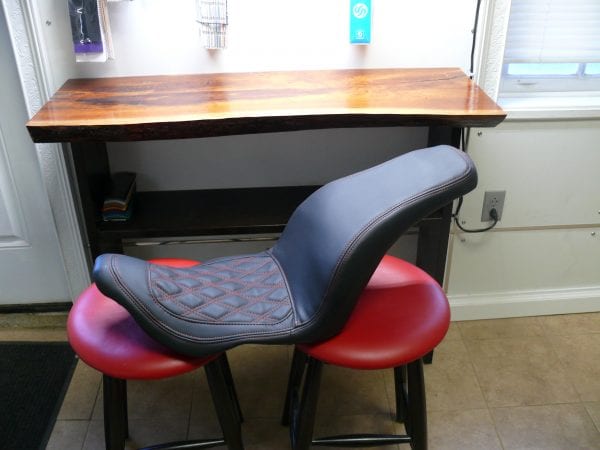
Cutting the leather comes next. We lay patterns on the hide the same way we do for cars and furniture, working around scars and range marks, choosing the tight, consistent grain from the back and butt of the hide for the panels that stretch hardest. Seams are the make or break detail on a saddle. We sew with heavy bonded thread, double stitching the stress lines, and we place seams off the crown of the seat wherever the design allows so water has no straight path down into the foam.
Pulling a finished cover over sculpted foam takes controlled tension in every direction, and thick hides do not forgive underpowered equipment. The machines we run are heavy walking foot units built for exactly this, the same gear that let us tackle the BMW dune buggy roof and seat project, which mixed thick material, odd shapes, and outdoor duty in one job. The principles are the ones we teach in our step by step chair reupholstery guide, applied with three times the muscle.
Two black hides can look identical on a shelf and age completely differently. Pure aniline leather is dyed through with no protective pigment, gorgeous and terrible for a motorcycle, since it drinks water and fades fast. Pigmented leather wears a tough painted finish, great against weather but plasticky under hand. For saddles we usually land on semi aniline or lightly pigmented top grain around 3 to 4 ounces, thick enough to take abrasion, finished enough to shed a rain shower, alive enough to break in beautifully.
What we avoid is corrected grain bargain leather that has been sanded and stamped, and anything bonded, which is scrap fiber glued to a sheet and has no business near a motorcycle. If you want to see how different builds and finishes come out in the real world, our leather work gallery shows saddles, seats, and panels side by side. And if the bike lives outside year round, we will say so plainly: consider vinyl, and read our car seat reupholstery article to see how we think through material tradeoffs on vehicles generally.
Keep it simple and regular. Wipe the seat down after wet or dusty rides, clean it with a mild leather cleaner every month or two in riding season, and condition it two or three times a year, lightly, since oversoftened leather stretches and bags. Park in shade when you can, or throw a cover over the saddle, because UV does more cumulative damage than rain ever will.
Heat deserves respect too. A saddle parked over a hot engine and exhaust bakes from below as well as above, which is one reason the foam nearest the pan ages fastest. If your bike runs hot, mention it when we talk. We can layer a heat tolerant barrier above the pan that buys the foam years.
None of this is folklore. Institutions that keep leather objects alive for centuries, like the Smithsonian Museum Conservation Institute, come back to the same fundamentals: gentle cleaning, controlled light exposure, and moderation with dressings and oils. If it is good enough for museum saddlery, it is good enough for your Saturday bike.
No. A properly finished saddle leather sheds a shower without drama. Wipe it dry when you park, let it air out, and condition it a little sooner than usual. What kills leather is staying wet, not getting wet.
Absolutely, and honestly that is our favorite kind of saddle work. We reshape the foam for your height, weight, and riding position, then build the new cover to the new shape. The bike looks stock. Your back knows better.
Gray usually means UV wear and dried out finish. Shade, covers, and regular conditioning slow it dramatically. Once fading sets in, we can often re dye and refinish the leather rather than replace it, if the hide underneath is still sound.
If your saddle is cracked, faded, or just plain wrong for your body, this is what our motorcycle upholstery service exists for. Send photos through the free online estimate page or call 717-383-6917, and let us build you a seat worth the ride.
 Get a Free Quote!