


Project Details
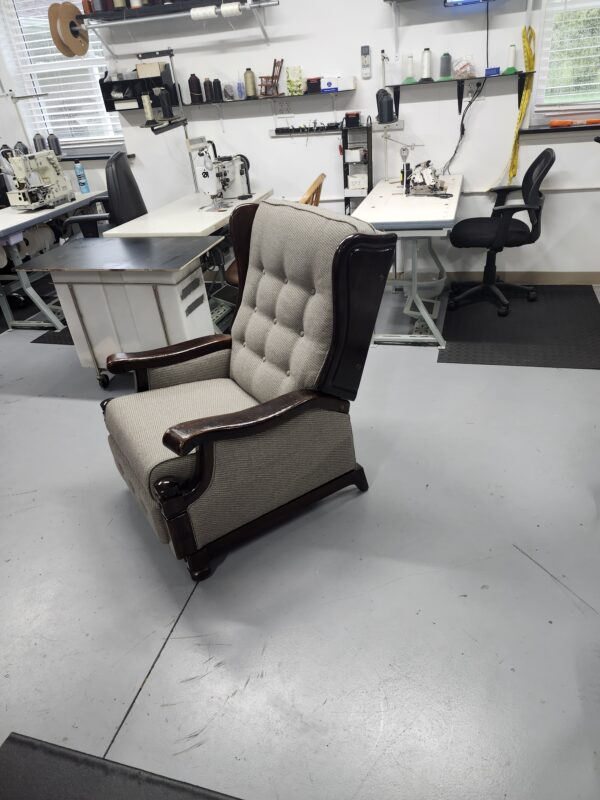
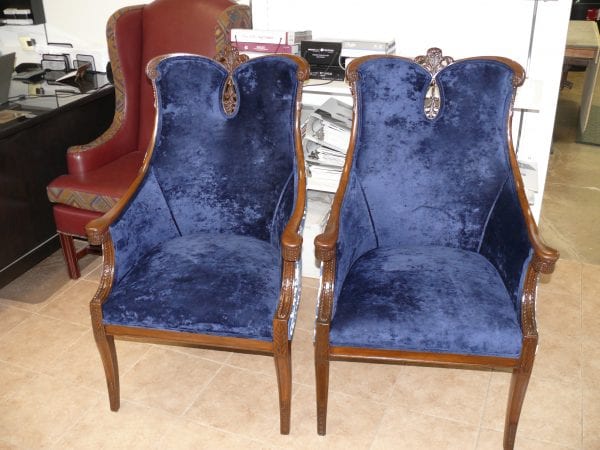
This wing-backed classic needed new upholstery.
- Project: Reupholstery and Repair
- Category: Furniture Upholstery
Our Task
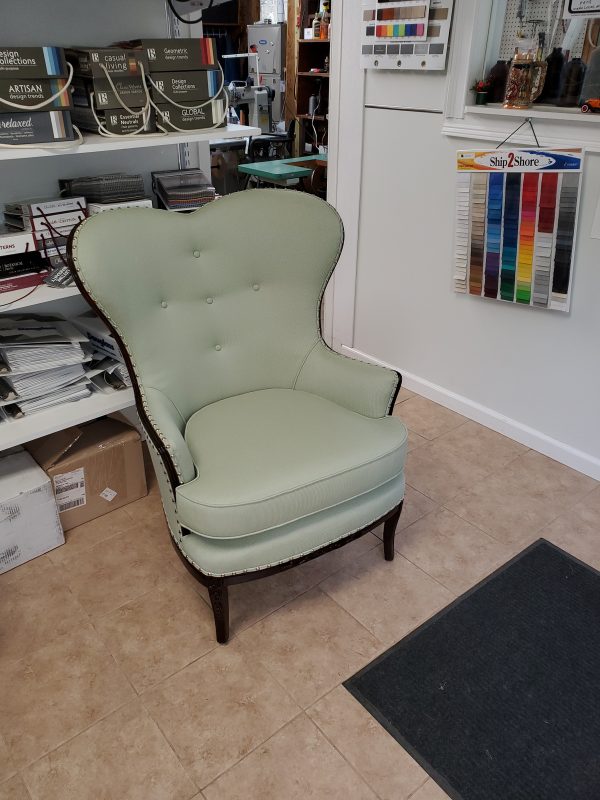
We renovated this wing-backed chair into a luxurious crown seat using leather upholstery.



This wing-backed classic needed new upholstery.
We renovated this wing-backed chair into a luxurious crown seat using leather upholstery.
Some seating is furniture, and some seating is a statement. A crown seat falls squarely in the second camp. With its tall, shaped back, generous proportions, and details that ask to be noticed, this is the piece that owns whatever room it sits in. When an owner brings one to us for leather upholstery, they are not looking for a quick recover. They want the piece dressed the way it deserves, and leather is the material that does it.
People hang onto seats like this because nothing in a showroom replaces them. The shape is distinctive, the frame is usually far heavier than modern production allows, and somewhere along the line the piece became part of the household’s identity. Our job is making sure the leather work lives up to the frame under it.
Anybody can stretch a piece of material over foam. Luxury leather work is a different sport, and the difference starts before the first cut. A hide is not a bolt of fabric. It has a shape, a grain that changes from the backbone to the belly, and a scattering of scars, brands, and insect bites collected during the animal’s life. Laying out panels means reading the whole hide and placing every visible surface on clean, consistent grain while steering the stretchy belly leather away from spots that need to hold their shape.
Then comes the sewing. Fine leather work leans on French seams and careful double-stitching, seams that lie flat, carry load, and look intentional from two feet away. On a crown seat with curves and a shaped back, panels have to be eased around compound bends without puckering, which is where a shop earns its keep. Add covered buttons pulled deep for tufting, hand-set nail trim, and welt cord that runs true around every curve, and you begin to see why this kind of work cannot be rushed. If you are ever in the area, you are welcome to tour our shop and watch some of it happening.
The single biggest decision on a project like this is the leather itself, and the label vocabulary confuses almost everyone. Here is the plain version. Aniline leather is dyed all the way through with no surface coating, so you see and feel pure hide. It is the most beautiful option and the most vulnerable one, since spills and sunlight reach the leather directly. Semi-aniline adds a whisper-thin protective finish, keeping most of the natural character while buying real resistance to stains and fading. Pigmented leather carries an opaque finish coat, making it the most durable and uniform, though it trades away some of that buttery hand.
Below all of those sits the grade question. Top-grain leather keeps the hide’s strong outer layer and is what quality work is built from. Corrected grain has been sanded and embossed to hide blemishes, which is acceptable for hard-use pieces but loses natural character. Splits are the weaker under-layers, and bonded leather is shredded scrap glued to a backing. Bonded is the one we refuse to put on a piece worth keeping, because the surface film separates from the backing within a few years and no product on earth glues it back. For a showpiece like a crown seat, our usual recommendation lands on semi-aniline top-grain: the character of fine leather with enough armor for real life.
Quality leather does something almost no other upholstery material does: it improves for a long while before it declines. The surface burnishes where hands rest, the color deepens subtly, and the hide molds to its use. That is patina, and it is the reason people fall in love with leather furniture.
It helps to understand why hide behaves this way. Leather is a network of natural fibers held supple by oils and by the tanning that preserved it. As long as those oils stay put, the fibers slide against each other and the material flexes without complaint. Let the oils migrate out, through heat, sun, or plain time, and the fibers begin to break instead of bend. That is the difference between patina and damage in one sentence: patina is the surface recording use, damage is the structure giving up. One is worth waiting years for, the other is worth five minutes of conditioning to prevent.
The decline side is preventable, which is the part owners need to hear. Sunlight fades dyes and dries the hide. Heat from radiators and vents pulls the oils out until the surface stiffens and cracks. Body oils build up on headrest and arm areas and slowly break down finishes. And neglect, plain and simple, lets a supple hide turn brittle years before its time. The line between a crown seat that looks aristocratic at thirty and one that looks abandoned at ten is mostly maintenance, not luck.
One more practical note before the build: a tall statement piece is hungry for material. Hides are sold by the whole skin, not by the yard, and a shaped high back with matching panels can consume a surprising amount of one once you subtract the scarred and stretchy zones we refuse to put on show surfaces. We plan the entire cut before ordering so the piece comes out of matched hides rather than leftovers, which is one of those invisible decisions that decides whether the finished seat looks composed or cobbled.
A crown seat project starts with inspection and honest talk about what stays and what goes. Heavy old frames usually need nothing more than joint regluing, and original details like carved show-wood get protected through the whole process. Then the old cover comes off panel by panel, each piece labeled and saved as a pattern, because the old cover is the most accurate map of the chair that exists.
Padding gets rebuilt to the profile the piece was born with. On a tall shaped back that often means layering firm foundation material with softer top layers so the silhouette reads crisp but the sit stays inviting. Tufting, if the design calls for it, gets laid out geometrically before a single button is pulled, because a drifting diamond pattern will haunt you from across the room. Buttons are covered in the same hide and pulled to even depth, one by one.
Then the leather goes on: fitted, eased, and fastened with the patience that separates this trade from production work. We finished the leather ottoman we wrapped with the same approach, and the burgundy leather wingback with nail trim shows what hand-set decorative nails add when they are spaced by eye rather than by machine. Work like this is why we argue that restoring a great piece beats replacing it, a case we lay out fully in our post on the benefits of choosing furniture restoration. More examples in every finish and color live in our leather work gallery, and the same craftsmanship carries through everything our furniture upholstery service touches.
Aftercare for a piece like this is simple but not optional. Dust it weekly with a soft dry cloth. Wipe spills immediately with a barely damp cloth and nothing else, since household cleaners strip leather finishes. Condition the hide two or three times a year with a product made for your leather type, and keep the piece out of direct sun and at least a few feet from any heat source. Humidity swings matter too, and Pennsylvania serves up plenty of them, so a reasonably stable indoor climate does the leather a favor. The American Institute for Conservation publishes excellent guidance on caring for treasured objects, and their core advice matches ours: gentle routine care prevents the damage that heroic intervention has to fix.
One note for households with mixed materials: the routine above is for leather. If the companion pieces in your room are vinyl, the care rules differ enough to matter, and our guide to cleaning vinyl upholstery covers that side of the street.
For a daily-use family seat, usually yes. Pure aniline shows every spill and sunbeam, which is part of its charm but a real commitment. Semi-aniline gives you most of the same beauty with meaningful protection, and that is where we point most owners.
Within reason, absolutely. We work from physical samples in your home lighting rather than photos, because leather color shifts dramatically under different light. Exact matches to aged leather are rare, so we usually aim for a deliberate companion tone rather than a near-miss twin.
Properly anchored buttons should stay put for decades. Ours are tied off to the frame or foundation rather than just knotted into foam, which is the shortcut that causes the popped buttons you see on factory furniture. If one ever does let go, it is a straightforward repair.
If you have a crown seat, a throne chair, or any piece with presence that deserves fine leather, let us look at it. Every project is quoted individually after inspection, because hides, finishes, and frames all vary. Start with our free online estimate or call the shop directly at 717-383-6917. We will help you pick a hide the frame deserves.
 Get a Free Quote!