


Project Details
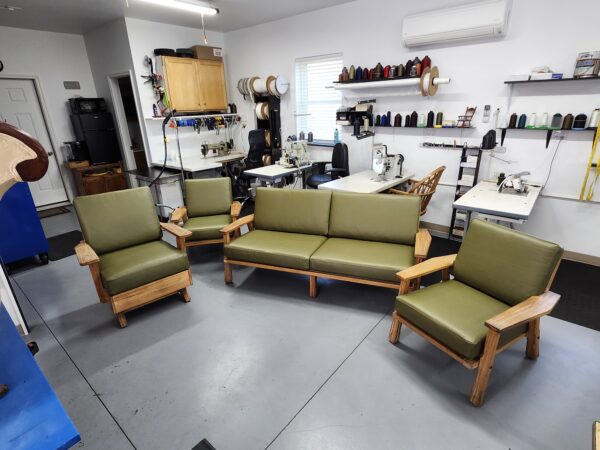
Complete set of cushion for antique outdoor furniture
- Project:
- Category
Our Task
Complete set of cushion for antique outdoor furniture



Complete set of cushion for antique outdoor furniture
Our Task
Complete set of cushion for antique outdoor furniture
Antique porch and garden furniture is a small miracle of survival. Cast iron settees, wrought steel gliders, and woven wicker chairs from generations back are still standing on Pennsylvania porches while patio sets from a decade ago sit at the curb. The frames were simply built better. What never survives is the soft part, which is why owners come to us with a beautiful old frame under one arm and a flattened, sun bleached cushion under the other, asking if we can make the set comfortable again.
We can, and it is one of our favorite kinds of work. A custom cushion set turns an heirloom frame back into furniture people actually use instead of a decoration nobody sits on. The trick is building cushions that honor the old lines while using materials the original maker would have traded a week’s wages for.
The furniture itself earned its long life. Cast iron pieces were poured thick, wrought pieces were riveted or forge welded, and the woven and slatted seats were shaped with a person’s actual posture in mind. Many of these frames carry graceful curves, scrolled arms, fan backs, barrel shapes, that modern flat pack patio furniture cannot copy, and those curves are exactly what makes cushion work interesting. A rectangle off a store shelf will never sit right on a fan backed iron settee.
Original cushions, when they existed at all, were cotton batting in canvas ticking. Charming, and doomed. Cotton soaks up rain, dries slowly, and feeds mildew, which is why nearly every antique outdoor piece we see arrives cushionless. There is no preservation debate to have here, unlike the judgment calls we make inside on original horsehair. With outdoor soft goods, building new with modern materials is the respectful choice, and it is what lets the frame keep doing its job.
Everything that ages upholstery indoors happens outside at triple speed. Ultraviolet light fades and weakens fibers within a couple of seasons if the fabric is not solution dyed. Rain finds its way into any cushion eventually, and once ordinary foam soaks it up, the water sits inside for days, breeding mildew and that swampy smell. Temperature swings from July porch heat to January freeze crack cheap vinyls and break down glued seams. Even the birds and the pine sap get a vote.
The failures we see follow the same order almost every time. Color goes first, then the thread rots and seams split, then the fill collapses into a pancake that holds water like a sponge. By that point most cushions are compost. None of this is bad luck. It is what happens when indoor construction gets sent outside, and the fix is to build for the porch from the first stitch.
With no surviving original to pattern from, we start at the frame. Each seat and back gets templated on the actual piece, following the curves so the finished cushion nests into the iron or wicker instead of perching on top. Ties or straps get positioned where the frame offers anchor points, because a cushion that stays put is the difference between furniture and a lawn game every windy afternoon.
Inside, we spec fills that assume they will get wet. Quick drain open cell foam lets rain pass straight through and dry out fast, closed cell foam refuses water entirely for pieces that live uncovered, and polyester cluster fill suits soft back pillows under a roofed porch. Covers are sewn with UV stable bonded thread, seams are built to shed rather than cup water, and zippers go in so covers can come off for washing. The sewing standards are the same ones behind our indoor furniture upholstery service, just aimed at a rougher climate. Volume work taught us plenty here too, since the seat pads for the cafeteria renovation we upholstered for Luther Acres in Lititz had to survive daily institutional use, which is its own kind of weather.
Construction details make or break outdoor work, so we sweat them. Welt cord along the edges sharpens the look and armors the seams where cushions rub the frame. Zippers go on the downhill side so they never sit in pooled water, boxing height is matched to the frame’s proportions rather than a stock thickness, and a slight crown across each seat sheds rain instead of collecting it. Ties are sewn into the seams, not tacked on afterward, because tacked on ties are always the first thing to leave for a new life somewhere across the yard.
Wicker and woven frames get one extra consideration: breathability from below. We leave the cushion undersides in a mesh or open weave material so air moves through the seat from underneath, letting the whole assembly dry from both faces. It is invisible once everything is in place, and it roughly doubles how fast a soaked cushion comes back.
Solution dyed acrylics are the gold standard for outdoor cushions. The color runs through the fiber instead of sitting on the surface, so they shrug off years of sun, and they come in a huge range of colors and stripes that suit antique frames beautifully. Marine grade vinyl is the wipe clean workhorse for pieces that see food, sunscreen, and pool water, and keeping it fresh takes five minutes with our vinyl cleaning walkthrough. Real leather, much as we love it, belongs indoors or on a fully covered porch at most. Rain and direct sun will stiffen even well tanned hides, and responsible tanneries, the kind benchmarked by the Leather Working Group, would tell you the same thing about their best product.
That said, the leather bench in our shop informs everything, including canvas work. Pattern layout, seam engineering, and welt discipline come straight from hide work like the leather love seat we brought back, and you can see that shared DNA across our leather work gallery. On an antique frame we also weigh period character: a tailored box cushion with welt cord in a muted stripe reads right on a Victorian iron settee, while a bright modern print can make the same piece look costumed. We steer owners toward covers that flatter the metalwork instead of fighting it.
Even weatherproof cushions appreciate a little help. Stand them on edge after a hard rain so gravity drains the fill faster, and give them a covered spot or a deck box for the winter, since months of freeze and thaw age materials more than a whole summer of use. Brush off pollen and debris before they grind in, wash removable covers once or twice a season, and rotate cushions so sun exposure evens out across the set.
One more habit worth building: check the frame each spring while the cushions are still in storage. Look for new rust blooms on iron, loose rivets on gliders, and lifting paint that will stain fabric once the season starts. A wire brush and a dab of rust converter in April protects the cushions all summer, because rust stains are among the few marks that even washable covers do not forgive.
The payoff for this small effort is long. A properly built set on a hundred year old frame will outlast several rounds of store bought patio furniture, which is the whole argument we made in our post on why restoration beats replacement. The frame already proved it can last a century. The cushions just have to keep up.
Yes, if we build them for it with solution dyed fabric and drainable fill. They will handle rain and sun through the season without fuss. We still suggest winter storage under cover, because there is no reason to spend their lifespan on months when nobody is sitting outside anyway.
It depends on exposure. Uncovered pieces get quick dry foam that drains and airs out, or closed cell foam that never absorbs water. Covered porch pieces can go softer, with wrapped foam or cluster fiber backs. We match the fill to where the furniture actually lives, not to a one size formula.
It is the reason to come to us instead of buying off the shelf. We template every seat and back on your actual frame, curves, fans, barrels and all, so the cushions fit like they were born there. Odd shapes are Tuesday around here.
If a fine old set of porch furniture is waiting on cushions worth its history, bring us a frame or a few photos. We will template, talk materials, and build a set that lets the family sit where the last three generations sat. Request a quote online or call the shop at 717-383-6917, and come see the work in person any time, our door is open for a shop tour.
 Get a Free Quote!