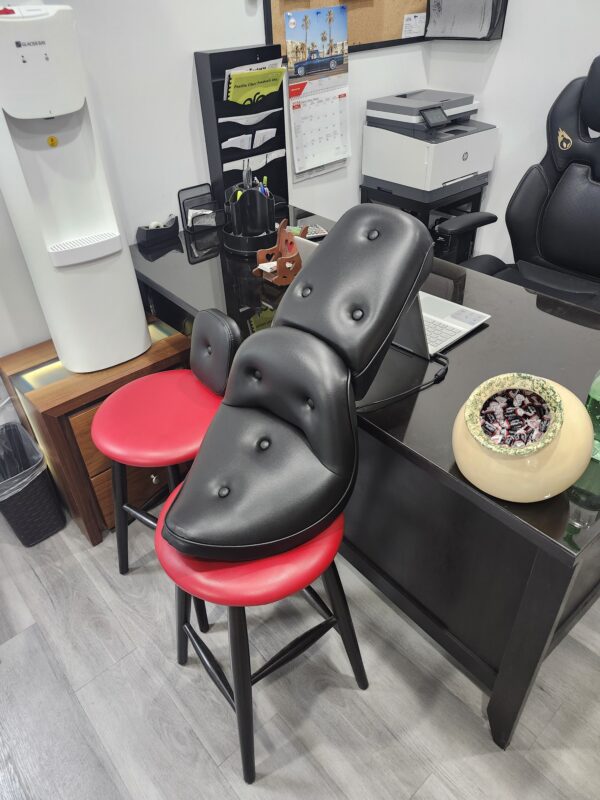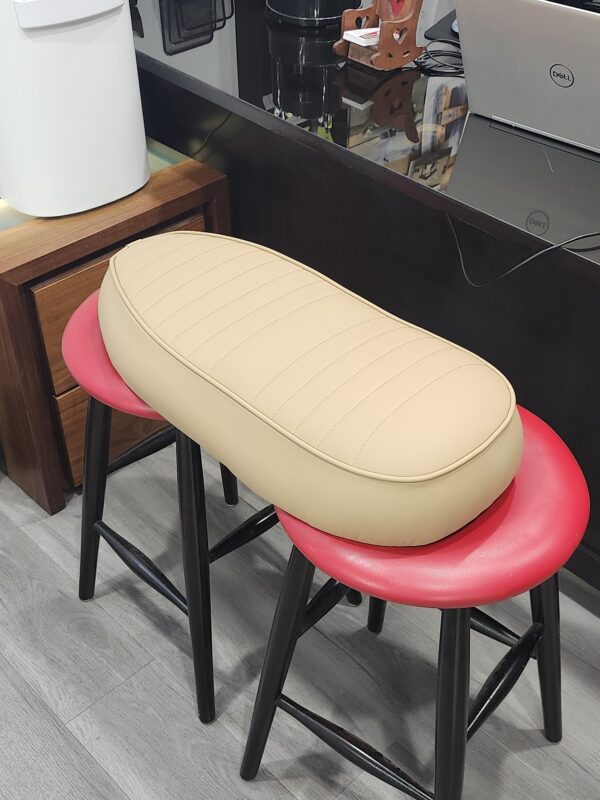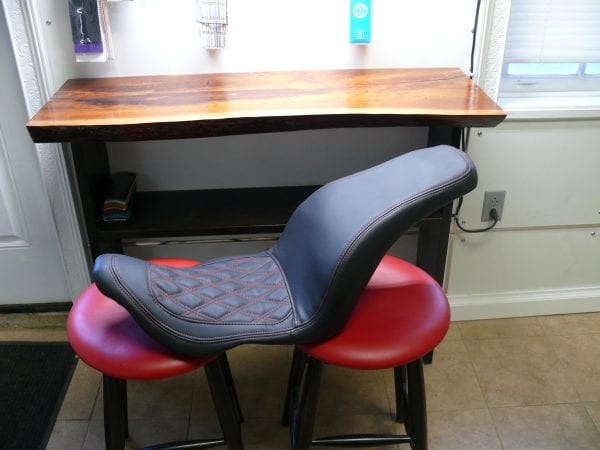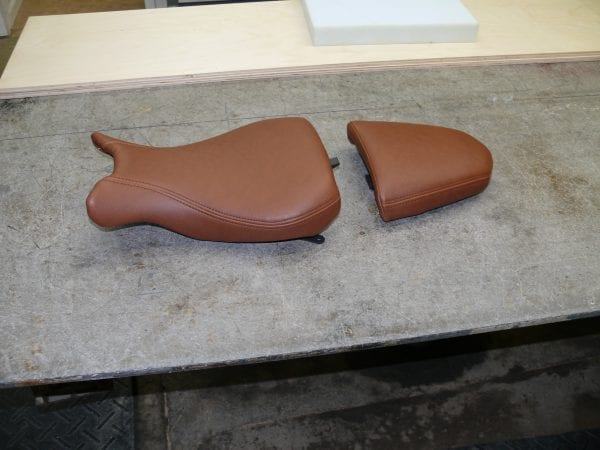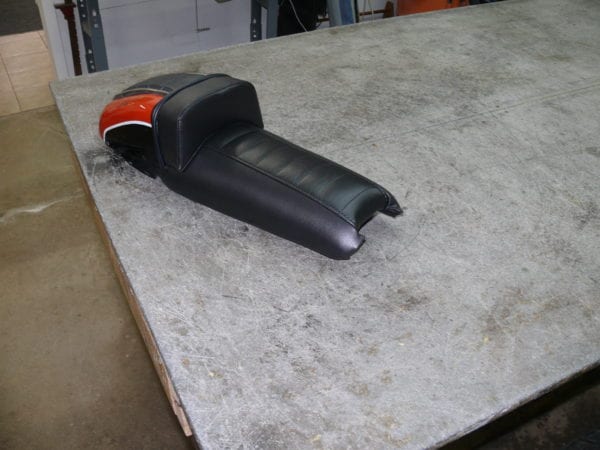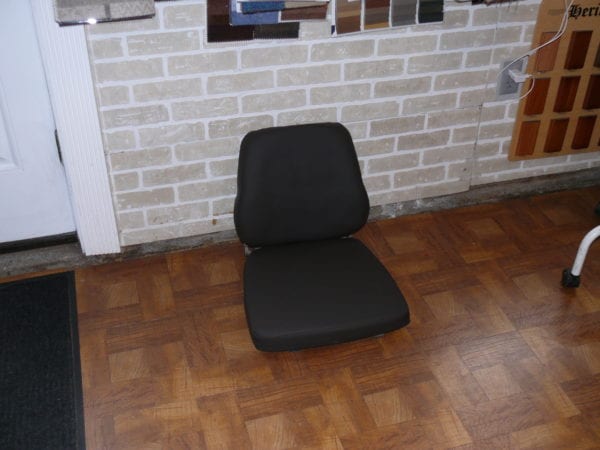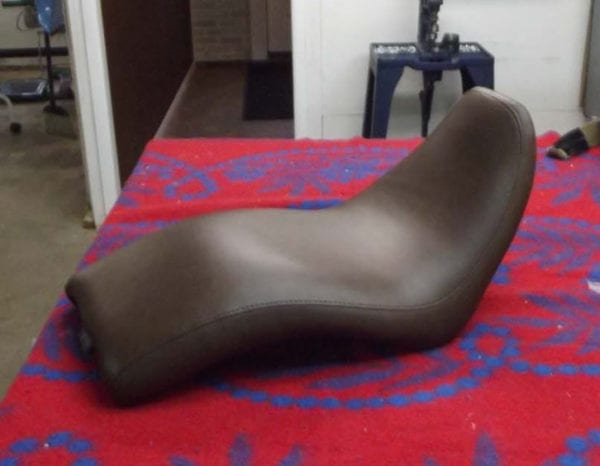



Project Details. reupholstery seat.
- Project: Upholstery Custom leather motorcycle seat.
- Category: Motorcycle Upholstery
Our Task
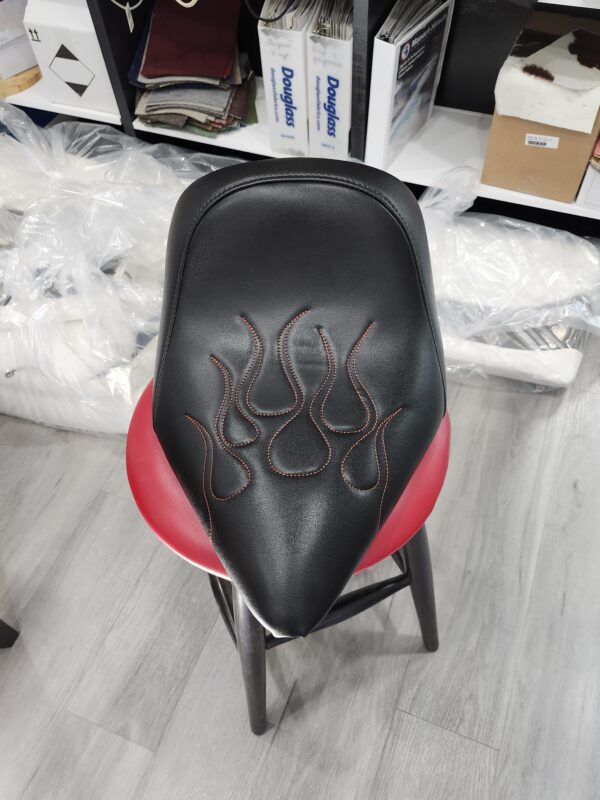
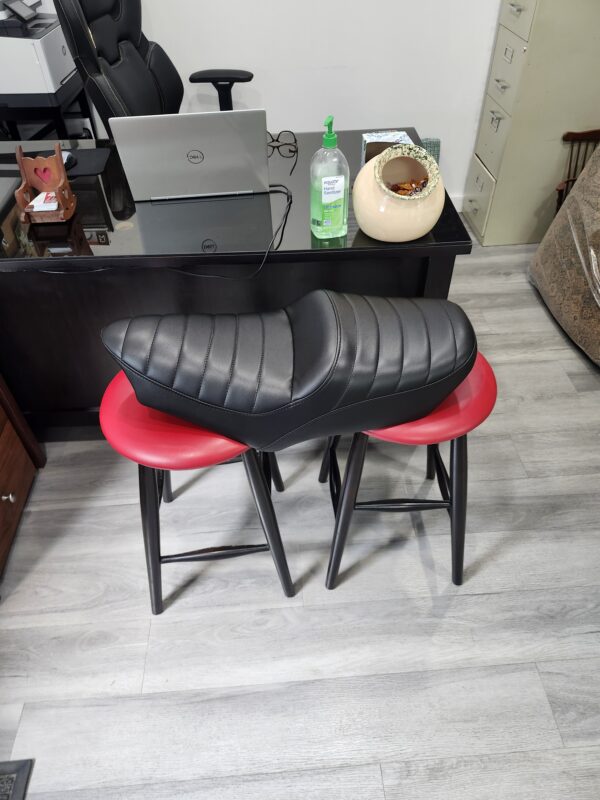
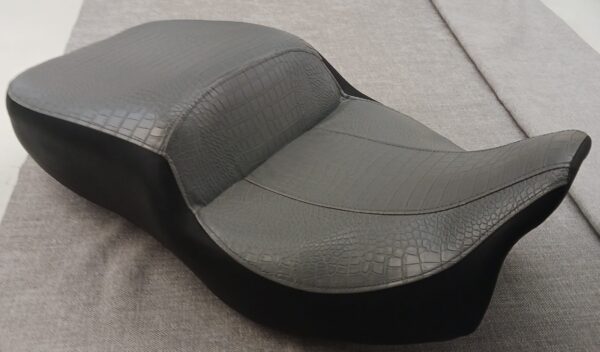
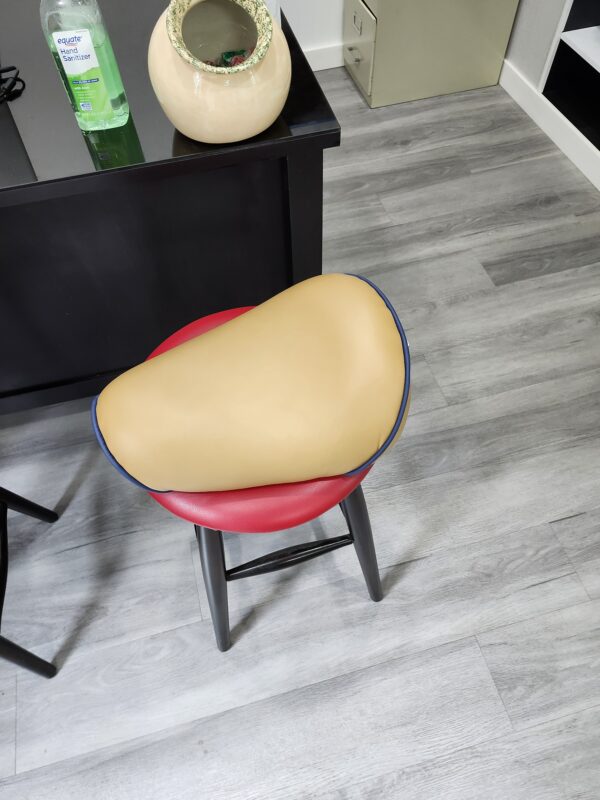
Custom leather motorcycle seat.



Custom leather motorcycle seat.
A motorcycle seat is the only upholstery we build that gets rained on at seventy miles an hour. It also gets sat on for six hours straight, baked on asphalt outside a diner, and judged by strangers at every red light. No sofa lives a life like that. So when a rider asks us for a custom leather saddle, brown and broken in looking from the first day, we take it as seriously as any full interior, because that one small piece of upholstery works harder than anything else we sew.
Riders come to us for two reasons, and usually both at once. The stock seat hurts, and the stock seat is boring. A custom leather seat fixes the first problem with foam shaped to an actual human and the second with a hide and stitch pattern nobody else at the meetup will be sitting on. That combination is what keeps saddle work on our benches year round.
Everything on a motorcycle seat happens in a space smaller than a sofa cushion, which means every flaw is at eye level and every curve is compound. The foundation is the pan, a steel or molded base that bolts to the frame and gives the whole seat its footprint. On top of that goes the foam, and over the foam a cover that has to stretch in two directions at once without a single honest straightaway anywhere on it.
Furniture forgives. A wrinkle on the back of a recliner hides in the shadows for years. A wrinkle on a saddle sits in the sun at tank height, six inches from every gas station conversation. Get all of that right in a package barely two feet long and you understand why saddle makers were the aristocrats of the leather trades for centuries. That standard is why we enjoy this work. It keeps the shop’s hands sharp for everything else, the same way the small leather jobs across our bench feed skills back into big ones. Our overview of different types of furniture restoration services shows the household side of the same craft, and the crossover runs in both directions.
Factory seats are shaped for a statistically average rider who does not exist. Custom foam starts with real questions. How tall are you, how far do you ride before something goes numb, do you sit back on the highway or up on the tank in town, and is there a passenger in this seat’s future? The answers decide where the foam gets firmer, where it gets relieved, and whether the seat should hold you in one pocket or let you move around on long days.
We build the shape in layers, denser foam at the base for support that lasts, softer material up top where hip bones actually land, and we shape it with knives and abrasives the way a carver works, checking against the pan and the rider’s numbers as we go. A saddle that looks sculpted but rides like a park bench is a failure in our book, no matter how pretty the leather turns out.
Passenger comfort gets engineered rather than assumed. A pillion pad that looks like an afterthought usually rides like one, so when two up travel is part of the plan, we shape the rear section with the same care, balance the foam densities so the passenger does not slide forward under braking, and keep the step between rider and passenger sections deliberate instead of accidental.
Height matters too. Shaving foam can bring a shorter rider closer to flat footing at stops, and adding foam can save a tall rider’s knees. There is real geometry hiding in that cushion, which is why this work sits at the heart of our motorcycle upholstery service rather than off to the side of it.
Leather arrives flat and a saddle is anything but, so the cover is where the craft shows. A hide stretches along the belly line and resists across the back, and we lay out the pattern so the stretch lands where the seat needs it. Some shapes want a single panel worked and stretched over the nose until it lies like paint. Others want seams placed deliberately, turning a necessity into a design line down the spine of the seat.
Edges get skived thin by hand so they roll under the pan without bulk, and every seam is sewn with bonded thread sized for the abuse, then sealed against weather. Where a rider wants visible detail, we can lay in pleats, gathered sections, or contrast stitching, but each one is engineered to shed water rather than pool it. On a motorcycle, decoration that traps rain is decoration that rots.
Brown hides deserve a special word. Unlike black, brown leather shows its depth, darkening where hands and seat bones burnish it, lightening subtly across high spots. Riders pick brown precisely because it ages in public, like a baseball glove that tells on its owner. We pick hides for that future, with dye penetration and finish that will develop character instead of just wearing out. You can trace that aging on an antique leather recliner we brought back, whose hide spent decades earning the look riders want on day one.
Saddle leather runs heavier than furniture leather, and grade matters more outdoors than anywhere else. We use top grain hides with the surface fibers intact, because that dense outer layer is the seat’s armor against rain, friction, and sun. Waxed and oiled finishes shrug off a surprise shower and feed the leather as they wear in. What we refuse is bonded leather in any form, since shredded scrap on a fabric backing peels like sunburn the first season it spends outdoors.
Weight matters as much as grade. We favor hides in the heavier ounce ranges for saddles, thick enough to armor the foam and take a hard stretch without going papery, yet supple enough to follow the pan’s curves without fighting the fit at every corner.
Not every bike or every rider is a real leather match, and we say so honestly. A commuter parked outside all day, every day, may be better served by a top tier synthetic, and our post on faux leather as an upholstery material lays out that case without romance. For riders who want to handle the options side by side, our fabrics and leather upholstery page shows what we stock, and our leather work gallery shows where those hides ended up.
Leather outdoors lives or dies by routine. Wipe the seat down after wet rides, let it dry in the shade rather than propped in the sun, and condition it several times a season with a product made for saddlery, applied thin. Park with the seat shaded or covered when you can, because ultraviolet light is patient and undefeated. A little paste wax on the exposed pan edges and hardware while you are at it keeps rust from ever getting a start at the staple line.
The science behind that advice is settled. Researchers at the Smithsonian Museum Conservation Institute study how leather and other organic materials degrade, and the same culprits top every list: light, heat, moisture cycling, and neglect. A museum controls those with climate systems. A rider controls them with a seat cover, a shaded parking spot, and ten minutes of care a month. Same principle, different tools.
Winter storage is where good seats go bad. A breathable cover in a dry space beats a plastic bag in a damp shed every time, because trapped condensation molds leather and rusts the pan underneath it while you are not looking.
Give it a few hundred miles. The foam settles into its working shape and the hide molds to you specifically, which is the entire point of custom work. A seat that feels perfectly soft in the first five minutes is usually a seat that will be shapeless in two summers.
Ride home and do not panic. A properly finished and conditioned hide sheds a normal soaking, and your job is just to wipe it down and let it dry slowly in the shade. What kills leather is repeated soak and bake cycles with no care in between, not one honest thunderstorm.
Usually, yes. We can open the cover, rework the foam for comfort or height, and close it back up with the same lines it had, or duplicate the look in fresh hide if the old cover is too far gone. We did exactly that kind of sympathetic work on a motorcycle seat restoration in brown, keeping the character while renewing everything underneath.
If your saddle is due for foam that fits and leather with a future, request a quote or call the shop at 717-383-6917. Bring the bike or just the seat, tell us where it hurts after an hour on the road, and we will build the fix you sit on for the next hundred thousand miles.
 Get a Free Quote!