


Project Details
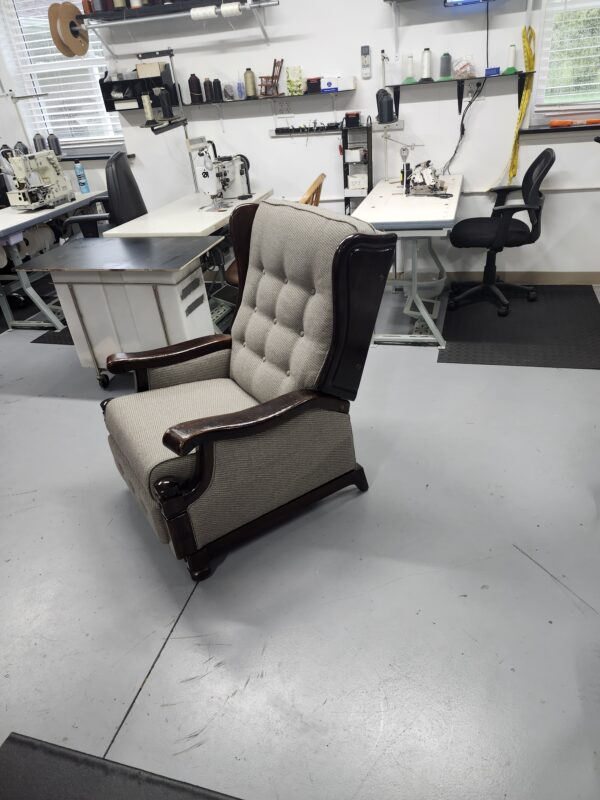
Antique leather recliner
- Project: Custome Leather
- Category: Leather Works



Antique leather recliner
An antique leather recliner is two machines in one chair. Up top it is upholstery, hide and padding and hand set trim. Down below it is engineering, a linkage of iron and steel and stubborn springs that has been tilting somebody backward since before most of us were born. When one of these comes into the shop, half the conversation is about leather and the other half sounds like we are restoring a piece of farm equipment.
These chairs get handed down more than almost anything else we see. There is usually a person attached to the memory of it, somebody who read the paper in it or fell asleep in it every Sunday. Nobody brings us an old recliner because they need a chair. They bring it because they need that chair. Our job is to make it safe, comfortable, and handsome enough for the next fifty years of naps.
Early reclining chairs were clever contraptions. Long before the big lever operated models of the mid century, makers were building chairs with ratcheting backs, sliding seats, and spring balanced frames, some patented back in the Victorian era. The mechanism on an old recliner is usually stout iron or steel, riveted and pinned rather than bolted, and built with the assumption that someone would maintain it the way you maintain anything mechanical.
Above the mechanism sits traditional chairmaking. Hardwood frame, doweled and glued joints, coil springs tied by hand across the seat, and padding built up in layers of hair and cotton under the leather. The two systems share bolts and screws, which means they age each other. A loose mechanism racks the frame. A loose frame twists the mechanism. By the time an owner notices either problem, the chair usually has both.
The leather on these old pieces is often better raw material than most furniture wears today, thick top grain hide that has simply been starved of care for a few decades. That matters when we get to the biggest question these chairs raise, which is what to keep.
The failure list on an antique recliner is predictable once you have opened enough of them. Here is what we find, roughly in order of frequency:
None of these kills the chair. A cracked hide can be replaced, springs can be retied, and an iron linkage from that era can almost always be cleaned, repaired, and made smooth again. The one thing we genuinely worry about is a previous repair done badly, like joints strapped with steel brackets or a mechanism welded solid so the chair no longer reclines at all. Even those are usually recoverable, just with more hours on the bench.
This is the judgment call that separates recliner work from ordinary reupholstery, and we do not take it lightly. Original leather carries the patina and the history, so if it is intact, supple enough to survive handling, and mostly whole, we lean hard toward saving it. That route means careful cleaning, conditioning, color touch up where the finish has worn, and repairing the padding from underneath so the old hide is disturbed as little as possible. The American Institute for Conservation offers plain language guidance on caring for your treasures, and their core principle is ours too: do the least that accomplishes the goal, and keep original material where it can honestly serve.
But leather is not sentimental, and once it has cracked through the grain it will keep cracking no matter what anyone rubs into it. When the hide is torn at every flex point, we recommend replacement and we say so plainly. Even then, preservation has a role. We save the old leather as our cutting pattern, match the new hide to the original weight and color, and keep details like nail trim spacing and seam placement true to what the maker did. The chair keeps its face. It just gets new skin.
The mechanism gets the same philosophy. Original iron stays, cleaned and lubricated, with worn pins replaced. Our shop is set up for this, and honestly the metal work is a big part of why recliners land here. The heavy stitching machines and frame equipment on our machinery page get help from a workbench that looks more like a garage than a sewing room, and that combination is exactly what a chair like this needs.
Every recliner project starts with an inspection and an individual quote after we have seen the piece, because no two of these chairs have lived the same life. Then the chair comes apart in the right order, mechanism unbolted and set aside, covers pulled and labeled, padding assessed layer by layer.
Frame first. Joints get taken down, cleaned of old glue, and reglued with clamps until the frame is rigid again. Springs get retied across the seat and, on many of these chairs, in the reclining back as well. The mechanism gets stripped, degreased, repaired, and tested through its travel a few hundred times before it earns its way back under the chair. Then padding is rebuilt to the original profile, and the leather goes on, whether that is the conditioned original or new hide cut from the saved patterns. The general shape of this process will feel familiar if you have read our walkthrough on how to reupholster a chair. The recliner version is our full furniture upholstery process with a mechanical act added in the middle.
The same discipline shows up across the shop in different costumes. The frame and spring work here is a cousin of what we put into the leather Flexsteel sofa we rebuilt, and shaping hide around a moving, hardworking object is the whole game on projects like the custom brown leather motorcycle seat we built. Furniture, sofa, or saddle, leather rewards the same patience.
When replacement is the right call, the new leather should look like it could have been there all along. That usually means a top grain hide in a waxy or lightly pigmented finish, in the deep tobacco, chestnut, and oxblood family these chairs were born wearing. High gloss finishes and fashion colors make an old recliner look like it is wearing a costume. A slightly distressed finish, on the other hand, settles in fast and picks up honest patina the way the original did.
Thickness matters more on a recliner than on a stationary chair, because the leather flexes at the hinge points every time the chair opens. We spec hides heavy enough to take that flexing but supple enough to fold at the seat crease without fighting the mechanism. And since the arms take the worst of the wear on any recliner, we cut those panels from the densest part of the hide. Costs on materials like this vary enough that we walk through options at quote time, the same way our article on what goes into redoing a car seat focuses on the factors instead of one number.
Once the chair comes home, park it kindly. Out of direct sunlight, a few feet from any radiator or heat vent, and on a rug if the floor is slick, since these chairs walk when they recline. Condition the leather twice a year, paying attention to the headrest and arms. Once a year, tip the chair and put a drop of light machine oil on the mechanism pivots, then work it through its range. Sixty seconds of oil is the difference between a chair that glides and a chair that groans.
Winter is the enemy here in Pennsylvania. Months of furnace air dry leather from the surface in, so a humidifier in the room earns its keep. And teach the household the one rule every recliner owner learns eventually: sit, then recline. Flopping into an already open recliner is how mechanisms bend and frames loosen.
Almost always fixable. Sticking usually means dried grease, a bent link, or a worn pivot pin, all of which we repair on the bench. Antique mechanisms were made of generous steel and iron, and they respond well to proper cleaning and new pins. A chair is very rarely done because of its mechanism.
Usually, yes. Odor lives mostly in the padding, not the leather or frame, so replacing the stuffing during the rebuild removes the source rather than masking it. The hide itself gets cleaned and conditioned, which takes care of the rest. The chair keeps its memory without keeping its atmosphere.
For museum grade pieces, originality matters and we will tell you if your chair is one of them. For the vast majority of family recliners, the value is in use and in the story, and worn out leather serves neither. Done properly, with original details respected and the old material saved, reupholstery is stewardship, not damage.
If there is a tired old recliner in your family that everyone loves and nobody sits in anymore, let us look at it. Browse our leather work gallery to see what restored hide looks like, then send photos through our free online estimates page or call 717-383-6917. We will tell you what can be saved, what should be replaced, and how to get that chair back on nap duty.
 Get a Free Quote!