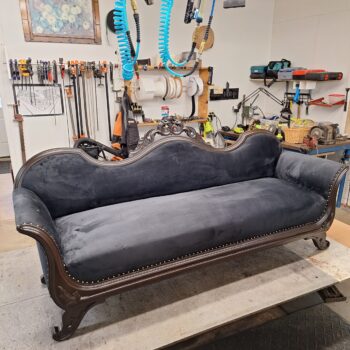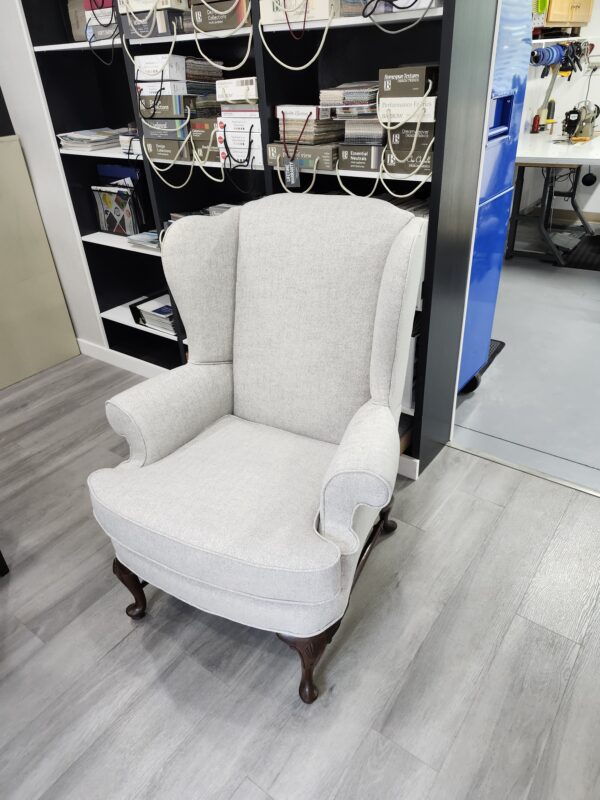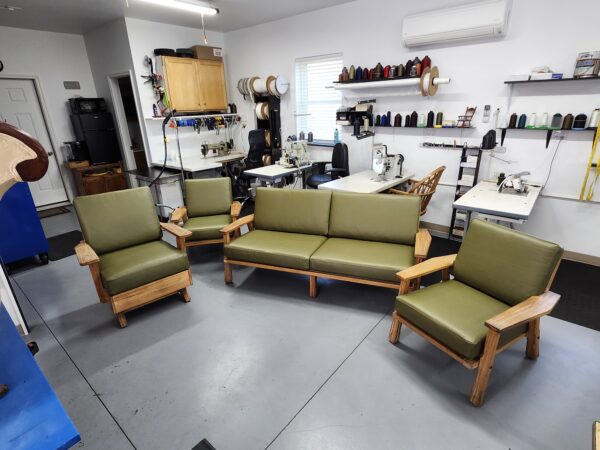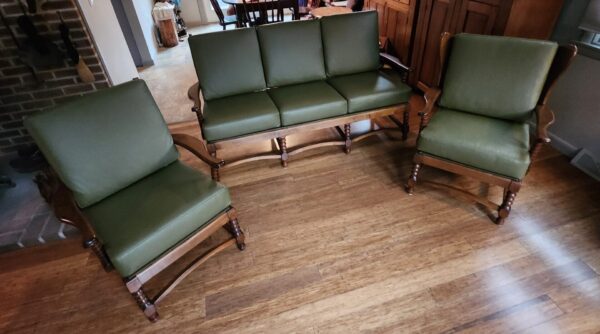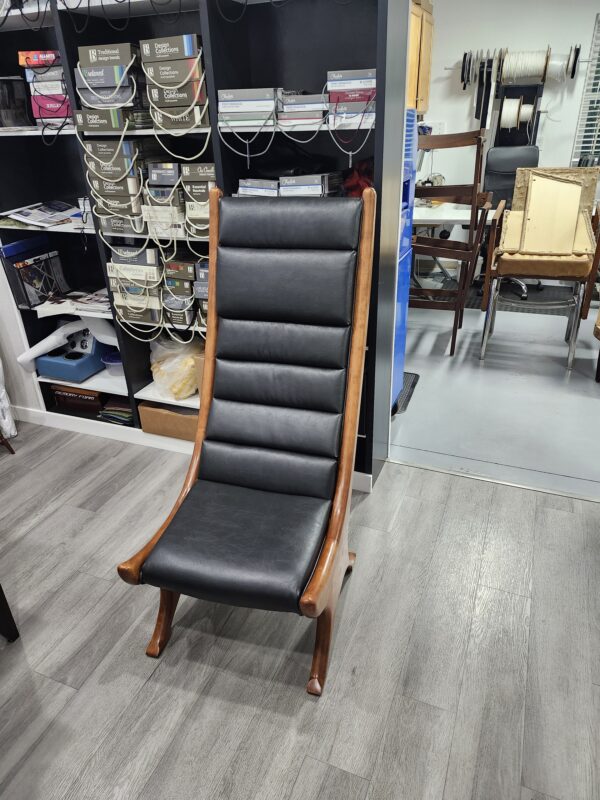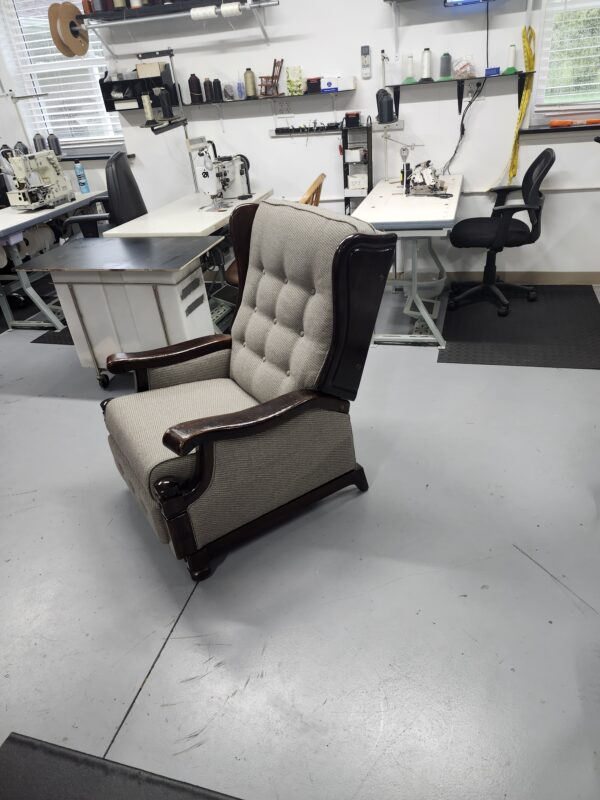



Project Details. Time: 25 hours
- Project: Completely Reupholstery Heirloom family sofa
- Category: upholstery



Some sofas are just furniture. Then there is the one that shows up in the background of forty years of holiday photos, the one the kids launched off of during cartoons, the one the dog claimed every winter without asking anyone. When a family carries an heirloom sofa through our door for a complete reupholstery, we understand we are not simply taking in a project. We are being handed a story, along with clear instructions to keep it going.
Nobody brings us a piece like this because they stopped loving it. They bring it in because the seat finally gave out, the leather wore through at the arms, or the sofa passed to a new generation and needs to be ready for a few more decades of birthdays and movie nights. All of those roads end at the same workbench, and we are glad they do, because sofas built in earlier eras are almost always worth the effort.
People sometimes picture reupholstery as stretching a new cover over the old one. A complete job is closer to rebuilding the sofa from the inside out. Everything comes off, down to bare wood. The frame gets inspected and reglued where it needs help. Springs are retied or replaced. Padding is rebuilt layer by layer, and only then does the new leather go on. The sofa comes home looking like itself, just healthier than it has been since the year it was made.
That distinction matters with heirlooms, because a surface fix hides problems instead of solving them. Fresh leather pulled over collapsed padding will telegraph every lump within a year, and a wobbly frame will chew through new material from underneath. If you are weighing a light touch against a full rebuild, our rundown of the different types of furniture restoration services explains where each level of work makes sense.
Time is patient and remarkably consistent. Seat springs stretch and their ties snap, so the middle sags first, right where everyone sat closest to the television. Padding compresses and migrates. On older pieces the stuffing may be horsehair over cotton batting, wonderful materials that still mat down after long service. Frames loosen at the joints as old hide glue crystallizes, and you hear it as a creak every time somebody perches on an arm.
Leather ages in its own particular way. Skin oils darken the spots where heads and hands rest, sunlight fades whichever cushion faces the window, and the finish cracks along the front rail where the backs of legs rub every single day. None of that is a defect. It is mileage, and mileage is exactly the thing a shop like ours knows how to rebuild.
There is also everything a sofa absorbs that nobody sees. Decades of dust settle into the padding, pet hair works below the deck, and the piece slowly takes on the smell of every house it has lived in. A complete teardown is the only honest way to reset all of that, because no amount of surface cleaning reaches what sits under the cover. Families are often surprised that the rebuilt sofa smells new again. It should. Nearly everything inside it except the frame and the springs is new, and what remains has been cleaned within an inch of its life.
Every heirloom piece starts with a slow look. We open the dust cover, check the joints, press the springs, and work out how the original builder assembled the sofa, because the smartest path through a rebuild is usually that same road walked in reverse. Teardown comes next, done carefully so old tacks come out clean and every panel of the old cover survives to serve as a pattern for the new one.
Then the real carpentry and springwork begins. We reglue loose joints, add corner blocks where the frame calls for them, and stretch new webbing. If the sofa has eight way hand tied coil springs, we retie them by hand rather than dropping in a modern spring unit, because that suspension is a huge part of how an older sofa feels when you settle into it. Padding gets rebuilt to the original profile, and we keep original materials wherever they still have life left. Preserving what the first upholsterer did well is part of respecting the piece, and it is a judgment call we make section by section rather than all at once.
Cutting and sewing the new cover is where our furniture upholstery service earns its keep. Welt cords, seams, and pleats go where the original maker put them, and the hides are fitted panel by panel so the grain flows the way it should across the whole piece.
Owners sometimes ask whether they can watch part of the process, and the answer is yes, by all means. Seeing your grandmother’s sofa stripped to its frame is oddly moving. The pencil marks of the original builder are often still on the wood, and once in a while we find coins, letters, or a toy soldier that went missing sometime around Eisenhower. Whatever we find goes into an envelope and comes home with the sofa.
An heirloom sofa deserves top grain leather, and for most families a semi aniline finish is the sweet spot, keeping the natural character of the hide while shrugging off juice boxes and coffee. Bonded leather has no business on a piece you intend to hand down. It is essentially leather dust glued to a fabric backing, and it peels within a few years no matter how gently you treat it. Some households with heavy traffic ask about synthetics instead, and honestly they have improved a great deal. Our note on faux leather as an upholstery material covers where it shines and where it falls short of the real thing.
A sofa this size takes several full hides, so cutting is its own craft. We lay out every panel around brands, scars, and stretch marks so the visible surfaces match in grain and tone. It is the same discipline that carried the 1948 Daimler DE36 we retrimmed, where a single mismatched panel would have ruined the whole cabin, and the same care behind the Polar 21 foot center console seats we built, which have to look right under harsh open daylight. Clients usually start their color hunt on our fabrics and leather upholstery page and then handle physical samples in the shop, because leather chooses differently in person than on a screen.
Leather is skin, and skin likes moderate conditions. Keep the sofa out of direct sunlight if you can, and give it a few feet of distance from radiators, wood stoves, and heat vents, which slowly cook the oils out of a hide. Condition the leather two or three times a year with a product made for furniture, wipe spills promptly with a barely damp cloth, and skip silicone sprays and household cleaners entirely. The Leather Conservation Centre publishes sound guidance on the care of leather objects, and their core advice lines up with what we tell every client: gentle cleaning, stable humidity, and no shortcuts from the cleaning aisle.
Beyond the leather itself, rotate and flip the cushions every month or so to even out wear, and vacuum the crevices a few times a year so grit does not grind away at the finish from inside the seams. Pennsylvania humidity swings hard between January and July, so a humidifier in winter does the frame as much good as it does your own sinuses. Small habits like these are the difference between a restoration that looks fresh for five years and one that looks fresh for twenty five. When you want to see what that standard looks like across hides of every color, our leather work gallery is a fine place to browse.
Very often, yes. Horsehair that is still springy gets cleaned, teased back to loft, and returned to the piece over fresh burlap. It is a better filling than most modern substitutes, and keeping it preserves the sofa’s original sit. We only replace it when it has broken down into dust or suffered moisture damage.
It will feel the way it did when it was new, which surprises people who have only ever known it saggy. We match the original suspension style and padding profile on purpose. If you want the seat slightly firmer or softer than the factory intended, tell us during the assessment and we will build that in.
For a piece with a doweled hardwood frame and hand tied springs, almost always. New sofas at ordinary furniture stores are built around plywood, staples, and foam that softens within a few years. Your grandmother’s frame was built to be recovered every generation, and that was the plan all along. Every piece is quoted individually after we inspect it, so there is never any guesswork.
If a sofa full of family history is waiting under a blanket in your den, let us take a look at it. Send us photos through our free online estimate form or call the shop at 717-383-6917, and we will tell you honestly what the piece needs and what can be saved. The next forty years of holiday photos are worth it.
 Get a Free Quote!