


Project Details
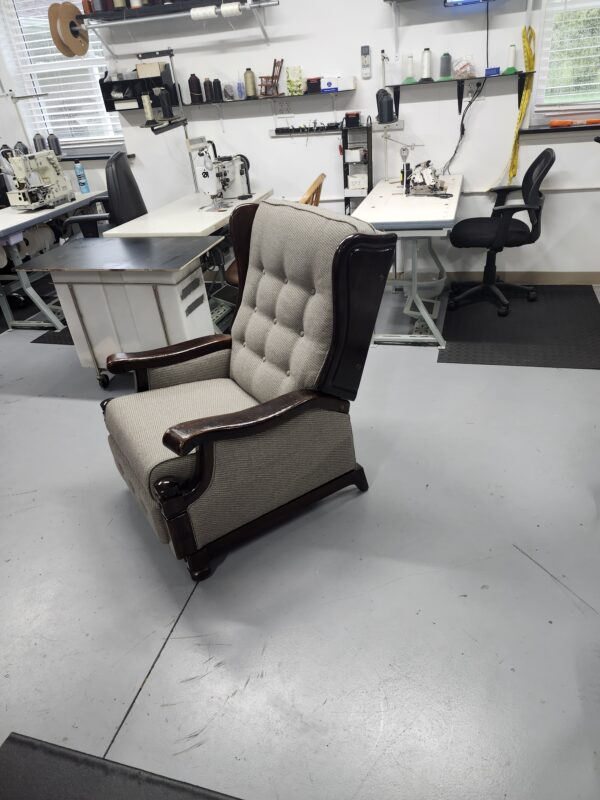
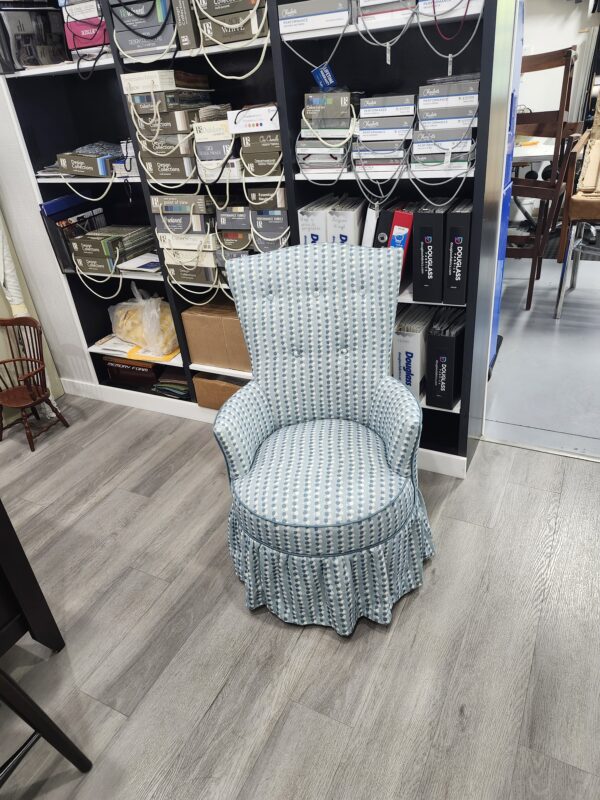
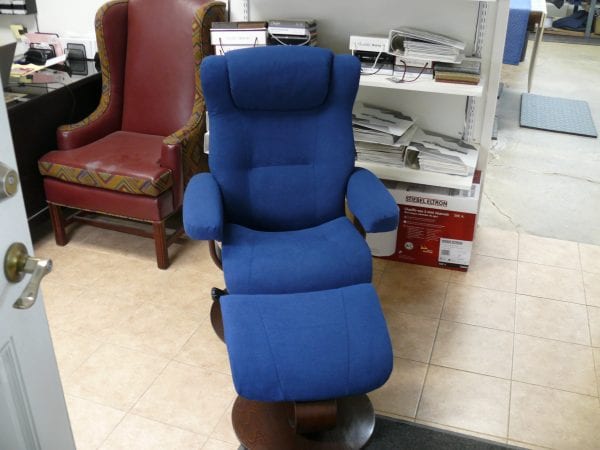
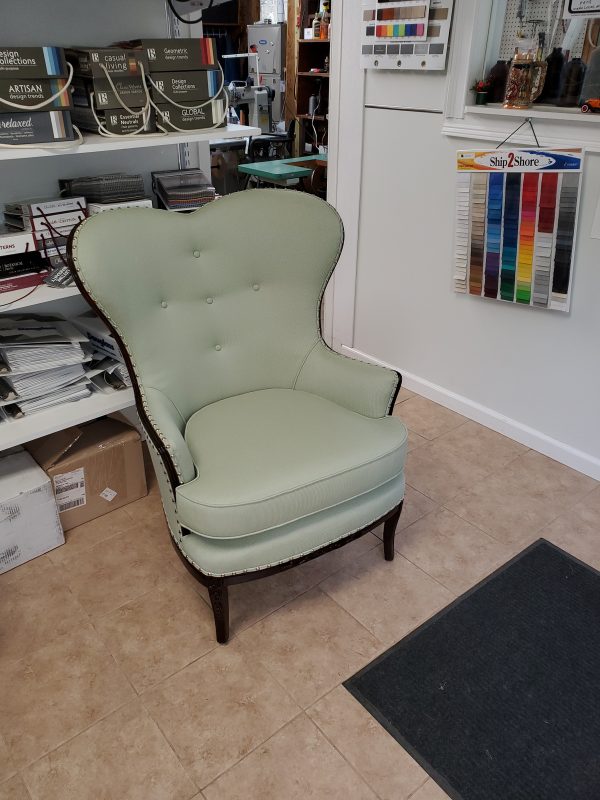
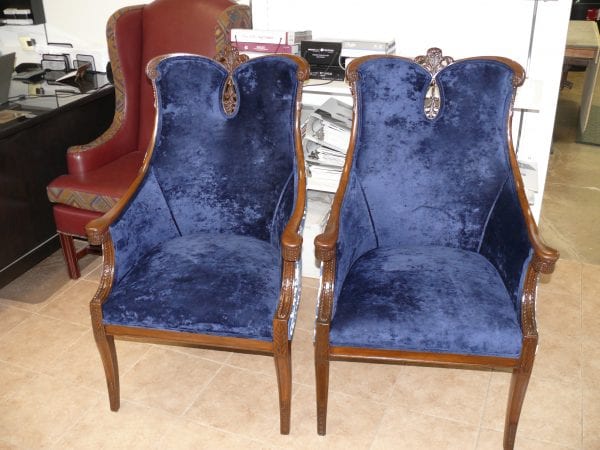
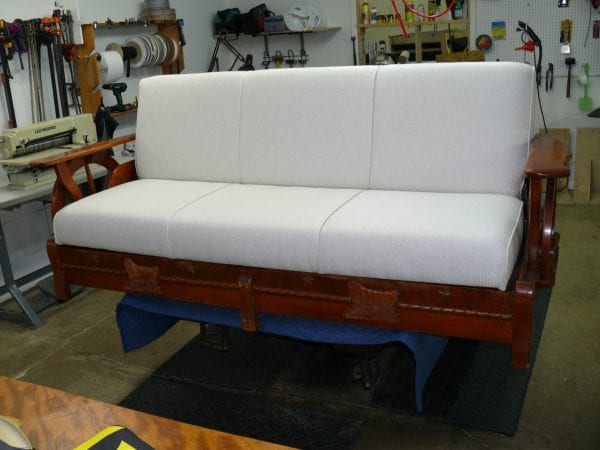
This classic chair needed complete re-upholstery.
- Project: Reupholstery and Repair
- Category: Furniture Upholstery
Our Task
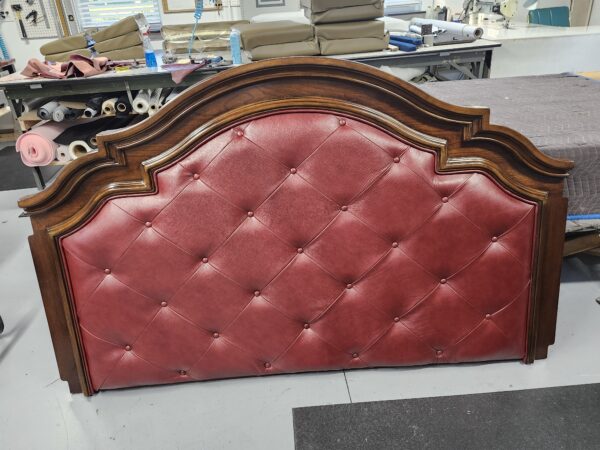
We provided completely new upholstery for this item using fabric.


This classic chair needed complete re-upholstery.
We provided completely new upholstery for this item using fabric.
Some chairs arrive wrapped in moving blankets, carried in by two people like a patient on a stretcher. Before the blanket is even off, the owner is telling us the story: whose living room it sat in, who read in it every evening, who is no longer around to claim it. The chair is furniture. The reason it came to us is not.
Around the shop we call these classic chairs. It is not a formal style name, just shorthand for the solidly built, gracefully shaped chairs that anchored American living rooms for the better part of a century. A custom reupholstery through our antique restoration service is how one goes from tired to permanent, and the word custom is doing more work in that sentence than people expect.
A classic chair usually has three things going for it. A hardwood frame joined the old way, built when lumber was dense and labor was proud. A silhouette that never chased a fad: rolled or squared arms, a comfortable pitch, legs with some grace to them. And enough years of faithful service to prove the first two points beyond argument.
Underneath, the good ones share a build: coil springs on webbing, natural fiber stuffing under cotton, a frame you could lift by one arm without hearing a creak. Factories stopped building most furniture this way decades ago, which is exactly why these chairs are worth opening up and doing right.
They also matter to families out of all proportion to their market value, and we mean that as a compliment. A chair is the most personal furniture in a house. It holds one person at a time, usually the same person for decades, and it keeps the shape of their habits. When someone tells us the chair still feels like their father’s spot, we take the work seriously.
Most owners do not know exactly what they have, and the chair itself will tell you if you know where to look. Start with the legs. Cabriole curves point to eighteenth century influence, usually by way of a twentieth century revival. Heavy turned legs suggest Victorian or Colonial Revival work. Slim tapered legs lean Federal or midcentury, depending on what the rest of the frame is doing.
Backs talk too. A tall back with wings was built for drafty rooms and afternoon naps. A barrel back curves around the sitter like a handshake. A channel or button back tells you the maker had patience and the first owner had a taste for drama. Each takes different padding work, which is why identification is a practical matter for us and not just trivia.
Then the clues underneath: hand cut joints and irregular saw marks whisper real age, while uniform machine work and stamped hardware date a piece to factory production. None of this changes what the chair means to you, but it guides how we restore it, since we match methods and materials to the period.
If styles interest you, an afternoon among the period rooms at Winterthur will teach your eye more than a stack of books. You start recognizing your own chair’s ancestors across the rope lines, which is a strange and pleasant feeling.
Custom reupholstery means the chair comes back yours, not just repaired. Seat firmness is a choice, not an accident: softer for a reading chair, firmer for a chair that helps its owner stand back up. Seat height can shift subtly to fit the person who actually sits there. Welt cord or brass nails, a skirt kept or banished, arm covers or none; these small calls decide whether the chair feels like itself on its best day or like a stranger wearing its clothes.
Custom also reaches beyond the single chair. Families often ask us to build a companion ottoman, cover throw pillows from the leftover yardage, or bring a mismatched second chair into the same fabric so a pair finally looks like a pair. Done at the same time, from the same roll and dye lot, the set matches in a way that can never quite be recreated later.
What custom does not mean is rewriting the frame. We do not carve a Victorian chair into something it never was, and we will say so when a request would fight the chair’s character. Restoration work comes in more flavors than most people realize, and we broke down the different types of furniture restoration services if you want to see where your chair’s needs fall.
The job opens with an inspection and a conversation. We check joints, springs, and padding, listen to what you want the chair to be, and because every chair carries different history in different condition, every piece is quoted individually after inspection.
Teardown comes next, one layer at a time. If the original fabric has sentimental weight we save a clean section for you, pressed and bagged. Families have framed these. One rides in a scrapbook next to a photograph of the grandmother who chose it, which we consider proper use of upholstery.
Then the structural work: joints reglued with traditional hide glue, corner blocks replaced where they have gone missing, springs retied eight ways across the seat, stuffing preserved or renewed depending on its condition. The judgment call is always the same. Keep what is sound and original, replace only what has failed. If you are curious what those layers look like in order, our step by step on how to completely recover a dining chair shows the anatomy on a simple seat.
The cutting and sewing happen in house on the industrial machines on our floor, which is how welts stay even and stripes stay straight. The last day belongs to hand work: final tacking, trim, and the once over where we sit in the chair ourselves. Somebody has to.
The finish work hides in places nobody photographs. A fresh black dust cover goes across the bottom, the underside is tacked as neatly as the top, and pattern motifs land centered on the seat, the back, and each cushion face instead of drifting wherever the scissors happened to fall. Families rarely notice these details consciously. They notice that the chair looks calm, and this is why.
Then comes our favorite part of the whole trade: the reveal. People touch the arm first, almost always, the same spot a parent’s hand wore smooth. More than one customer has needed a minute in the parking lot. We keep tissues by the door and pretend it is for allergies.
Two recent kin to this kind of project: another classic chair that left with new upholstery and refinished show wood, and the antique wicker rocking chair a family trusted us with. Different chairs, same promise.
Fabric is where emotion and practicality negotiate. Some families want the closest possible match to the original, and we can usually get near it with woven reproductions and period style patterns. Others want the chair to join the present, in a color the original owner would never have picked but might have secretly liked.
Our advice is to honor the silhouette, not necessarily the swatch. A classic frame in a well chosen modern weave looks continuous with its own history, and performance fabric means the grandchildren can actually sit in it, which is the point. A chair preserved behind a do not touch rule is a museum piece. These are meant to stay family members.
Place the chair out of direct sunlight and away from heat vents, because light fades cloth and heat dries glue joints. Keep household humidity as steady as you reasonably can. Wood moves with moisture, and old joints prefer calm weather.
Vacuum monthly with a soft brush, flip or rotate loose cushions, and blot spills promptly with a clean white cloth. Once a year, take hold of the arms and rock gently; new looseness caught early is a small repair instead of a rebuild. That is the entire maintenance program. These chairs were built to be lived with, not fussed over.
Not at all. Bring it in or send photos and we will read the frame for you. Style identification changes our methods, never your chair’s welcome.
Keep a piece of it, not the whole cover. Worn fabric no longer protects the stuffing beneath it. We save a clean swatch for the family and give the chair a cover that lets it keep working.
Within the frame’s character, yes. Firmness, cloth, trim, skirt or no skirt are all open questions, and we enjoy them. We will also tell you honestly when a requested change would fight the chair, because our job includes protecting it from fashion.
If a chair in your family is waiting for its second century, request a quote or call 717-383-6917. Bring the story along with the chair. We restore both.
 Get a Free Quote!