


Project Details. Jensen Healey 1973
- Project: antique cars
- Category: Antique& classic car



Most people have never seen a Jensen Healey in the flesh, which is exactly why the owners love them. Built for only a handful of years in the early seventies, this little British roadster carried a twin cam Lotus engine, a low windshield, and the kind of cockpit you drop into rather than sit in. Fewer survive every year, and the ones that do tend to belong to people who know precisely how rare their car is.
Red leather seats in a car like this are not an accessory. They are the interior. In a small open roadster there is no back seat, no console theater, no distraction; there are two seats, a dash, and sky. When those seats crack and fade, the whole car looks tired. When they are right, the car looks worth twice whatever anyone guesses. Rebuilding a pair of them is detailed, satisfying work, and it follows a logic worth explaining.
Strip a seat of this era and you find refreshing honesty. A welded steel frame, light because the whole car was light. Support from a rubber diaphragm or webbing stretched across the frame rather than a heavy spring cage. Molded foam buckets shaped for lateral support that seventies engineers considered sporting, which is to say modest bolsters by modern standards, and a leather or vinyl cover tailored tightly over the whole affair. British sports cars carried a long leather tradition, and even the humbler marques aspired to it, with pleated centers, smooth bolsters, and piping in body color or contrast.
The tight tailoring is the challenge. There is very little padding between the cover and the frame, so the cover itself defines the shape. Any error in cutting or sewing shows up as a wrinkle you can see from ten feet. That is why this work happens on proper equipment; the walking foot machines on our machinery page feed leather evenly through long seams so the pleats come out uniform, stitch for stitch, in hides too heavy for any home machine to handle honestly.
Red is the most demanding color you can put in an open car. Red dyes and pigments absorb ultraviolet light aggressively, and a roadster’s interior takes direct sun in a way no sedan’s ever will. The top goes down, the sun pours in, and the seat tops and bolster crowns bake for hours at a time. Over the years the color shifts toward orange or pink on every upward facing surface while the seat sides, tucked in shadow, stay closer to true. Owners often do not notice how far the fade has gone until they see a photo of the car from twenty years ago.
Ultraviolet light is only half of it. Heat cycles in a parked cockpit dry the oils out of the hide, and dry leather cracks exactly where it flexes, across the seat cushion and up the entry side bolster where the driver slides in over it. Fifty year old foam underneath is usually crumbling at the same time, so the leather flexes more than it should over a collapsing base, which accelerates the cracking. It is a slow spiral, and by 1973 standards these cars are all deep into it unless someone intervened. The same sun bleached the carpets and crazed the dash top too, but leather shows it first because we sit on the evidence every time we drive.
Color is where a Jensen Healey interior job is won or lost. If the original leather is largely sound and simply worn, professional re-dyeing is a real option: the surface is cleaned back, repaired where cracked, and refinished in a color built to match the original. If the seats need new hides, matching means finding the true original red, not the faded memory on the seat tops. We hunt for protected areas, the leather under a seam allowance, the back face of a panel, a section shielded by trim, and match to that. When a customer wants the car’s whole story to line up, we can also match to door cards or trim that will remain original.
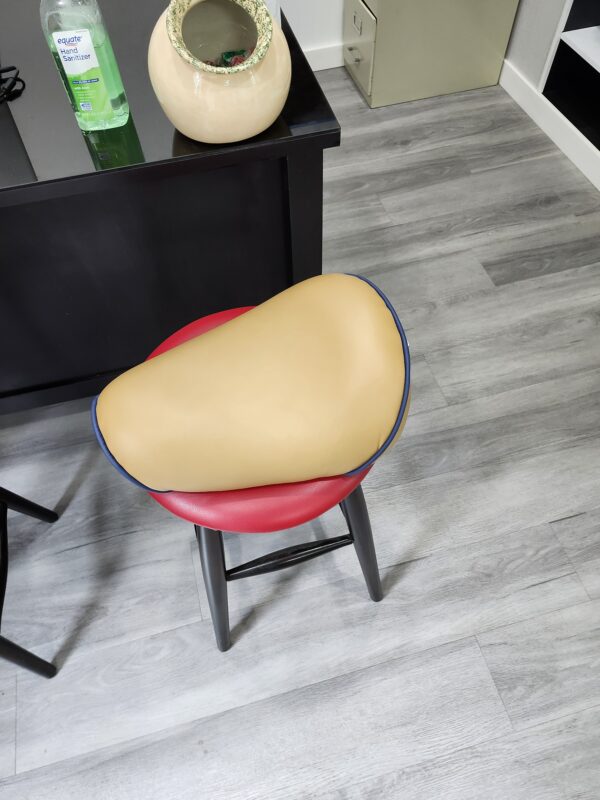
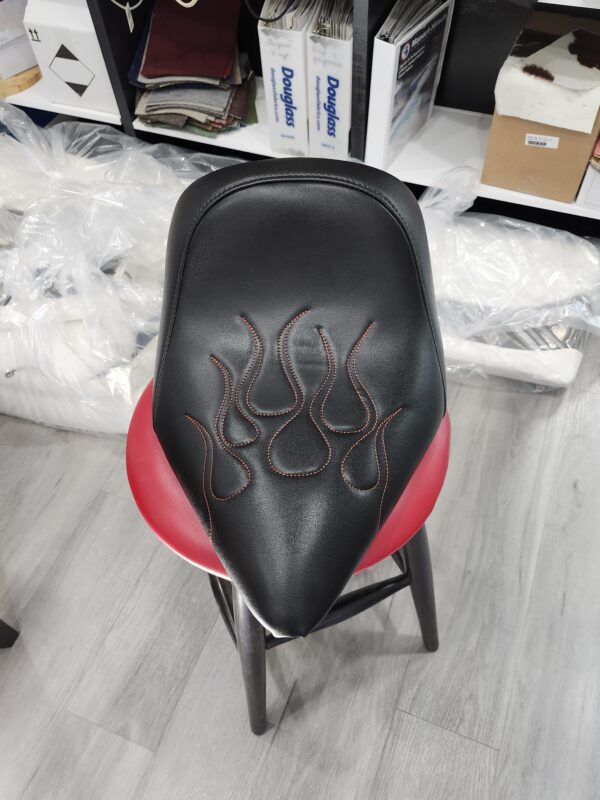
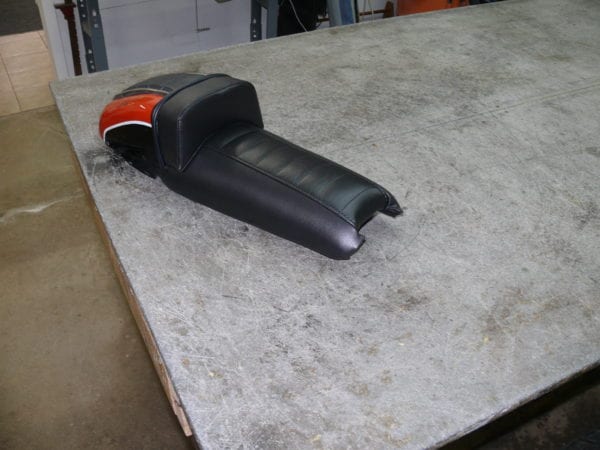
Then the sewing has to honor the era. Piping made in house from the same hide, pleats spaced to the factory rhythm, and seams double stitched where loads concentrate. On leather this thick, seam style is structural, not decorative; a well built French seam lays flat, spreads stress across two stitch lines, and survives decades of sliding entries. These are the same craft decisions that shaped the 1984 police solo saddle seat we rebuilt, a very different vehicle asking the same question: will this stitching still be holding in thirty years?
The seats arrive, and the first hour is inspection and photography. Old covers come off slowly, because every panel becomes a pattern and every factory seam placement gets recorded. The frames are checked for cracked welds and rust, the diaphragm or webbing is renewed, and fresh foam is shaped to the original profile, which restores the seating position the car was designed around. Sit in a rebuilt seat and the steering wheel is suddenly where it belongs again; collapsing foam had been lowering you out of the driving position for years without you noticing.
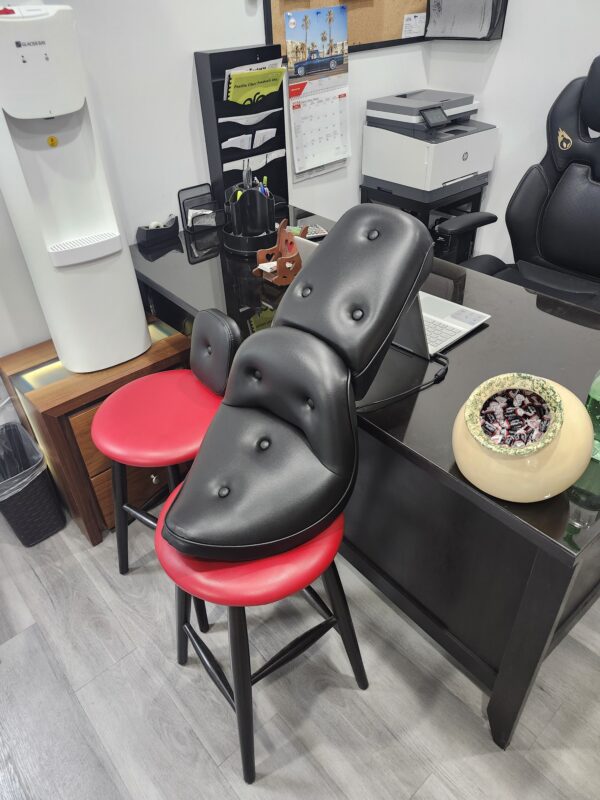
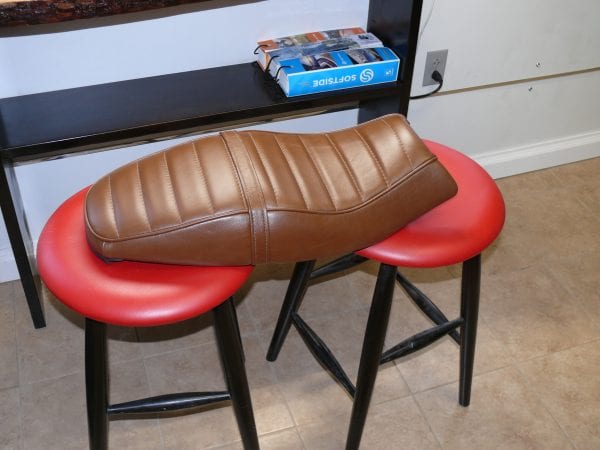
Covers are cut from the matched hides, laid out around the scars and brands every genuine hide carries, sewn, and fitted warm so the leather takes the bucket’s shape without stress marks. That fitting instinct sharpens on every kind of seat; it is how the custom metal bar stool we topped with leather ended up with a surface drum tight enough to bounce a coin on. If you are shipping seats to us or dropping them off, a little preparation makes everything smoother:
One upgrade we quietly recommend for cars that actually get driven: a hidden reinforcement layer inside the driver’s entry bolster. It is invisible once the cover is on, it does not change the seat’s profile by a millimeter, and it spreads the sliding load that destroyed the original leather in the first place. The purists never spot it, and the seat lives years longer for it. Fifty years of hindsight is worth using in the one place nobody can see.
Every project is quoted individually once we have seen the seats, because no two survive their fifty years the same way. If you are curious what shapes that evaluation, we wrote up what goes into reupholstering a car seat, and the short version is: condition of the foundation decides everything. All of it falls under our auto upholstery service, from single seats to complete interiors.
New red leather in a roadster needs an owner on its side. Park in shade when you can and use a cockpit cover or sunshade when you cannot; blocking ultraviolet light is worth more than any conditioner. Condition the leather two or three times a season with a quality product free of silicone, and wipe dust off with a barely damp cloth so grit does not grind into the finish. Garage the car dry, since trapped humidity attacks stitching and promotes mildew. The American Institute for Conservation offers sensible, non commercial advice on protecting the things you treasure, and its leather care principles apply to a car interior just as well as to a library chair.
And drive the car. Leather that flexes regularly and gets conditioned stays supple far longer than leather that sits. These seats were sewn to be sat in.
We can get close enough that only the smell gives it away. Matching works from protected, unfaded areas of the original hide or trim, and we approve the match against your car’s remaining original pieces before cutting. If nothing unfaded survives, we match to period references and the customer’s judgment, in daylight, not under shop lights.
Completely normal for the era. Seventies foams oxidize and return to dust on schedule, and it is not a sign the seats were abused. New foam shaped to the original profile is standard in a proper rebuild, and it transforms how the car drives, because your seating position comes back up to where the factory set it.
Both are defensible. Correct leather is the soul of a British roadster and rewards the small care it asks. A quality automotive vinyl shrugs off sun and rain for owners who drive hard and park outside. Some owners split the difference with leather seating faces and vinyl backs, which is a period honest trick; the fitting logic is the same one in our walkthrough on how to reupholster a chair: put the best material where the body touches.
If your Jensen Healey, or any rare roadster, is hiding cracked seats under a blanket, send photos through our free online estimate form or call 717-383-6917. Look through our leather work gallery to see how these projects finish, then let us put the red back in your cockpit.
 Get a Free Quote!