


Project Details
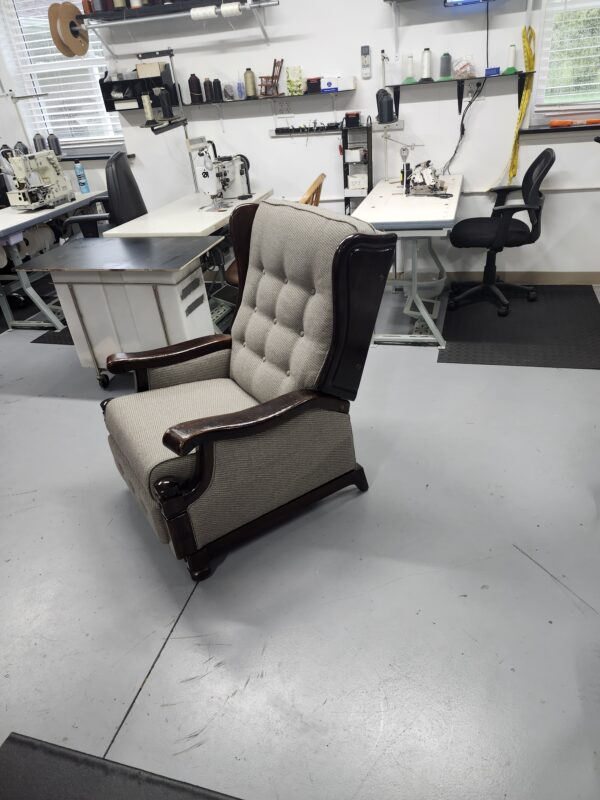
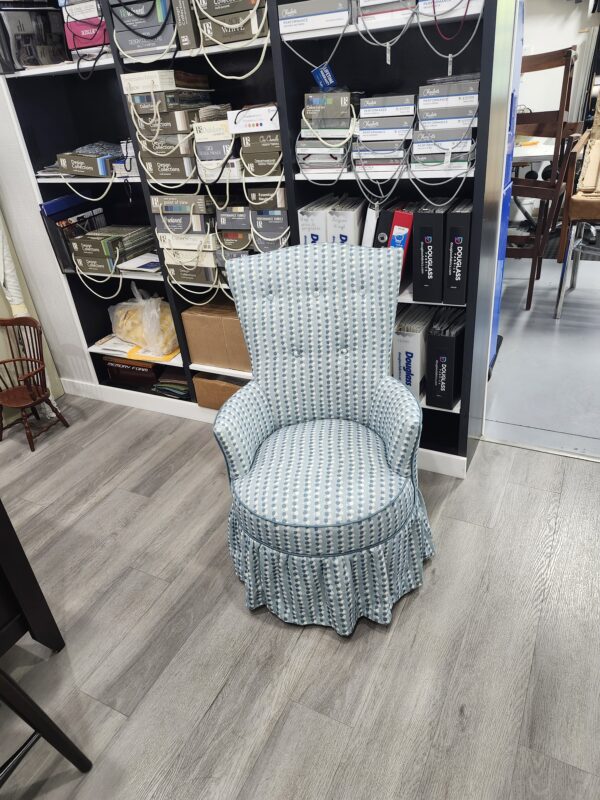
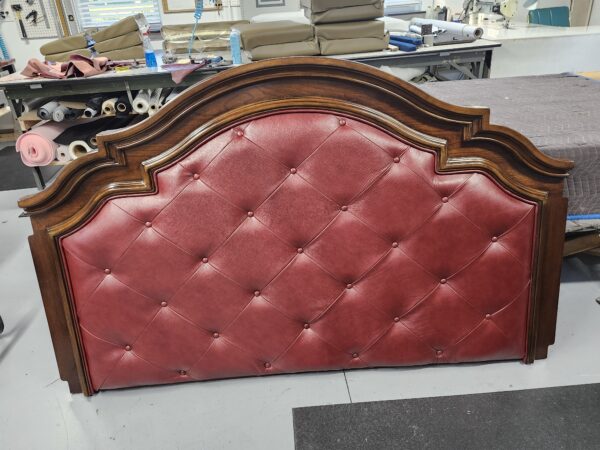
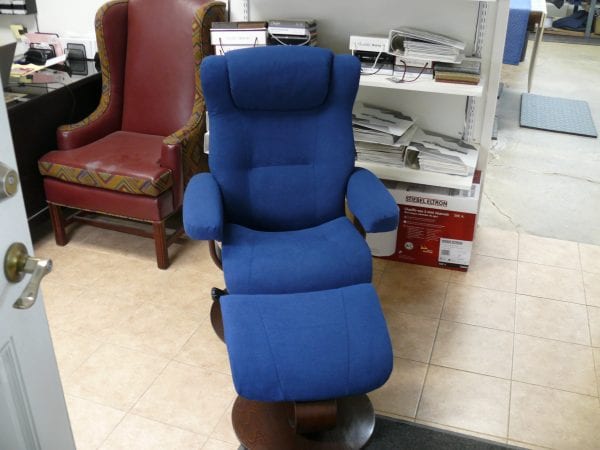
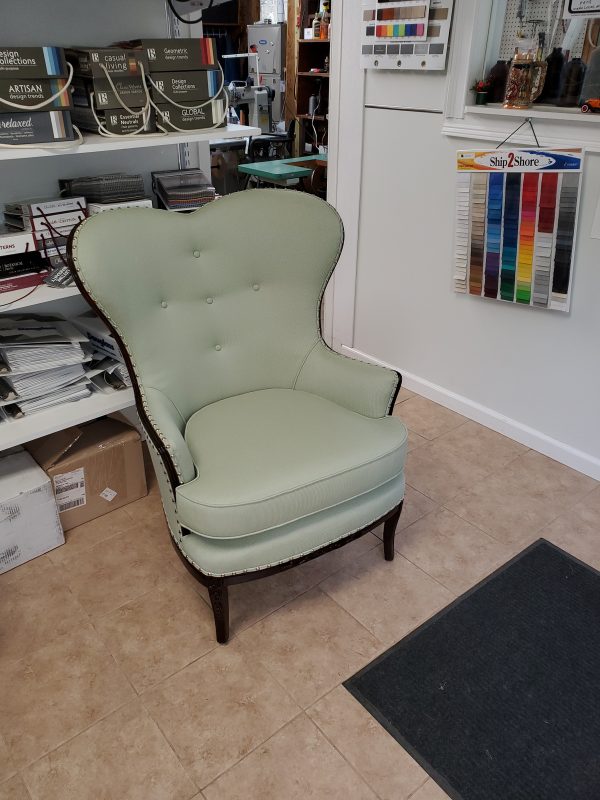
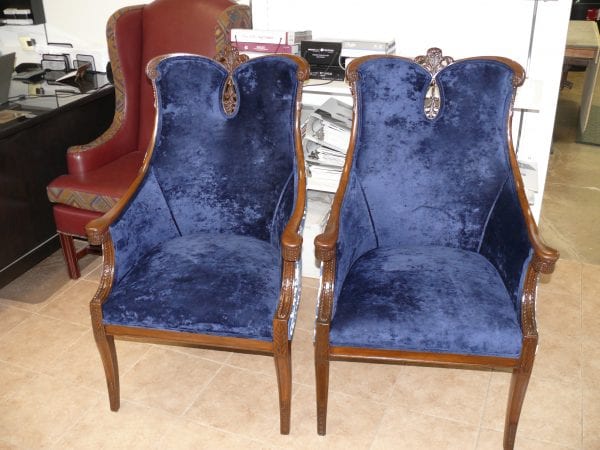
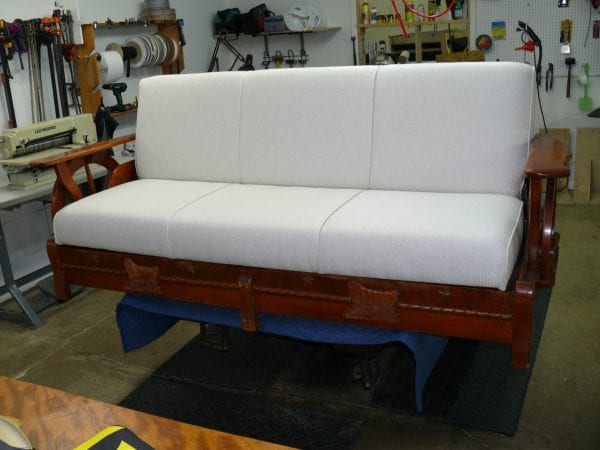
A channel back chair needed complete re-upholstery.
- Project: Reupholstery and Repair
- Category: Furniture Upholstery
Our Task
We put on new upholstery on the chair and refinished the wooden leg and arm.



A channel back chair needed complete re-upholstery.
We put on new upholstery on the chair and refinished the wooden leg and arm.
Run your hand down the back of a channel back chair and you can feel the whole idea at once: soft vertical flutes, each one a little cushion of its own, marching evenly from one side of the frame to the other. When the channels are full and crisp, the chair looks tailored and sits like a hug. When they have collapsed, the whole piece looks tired in a way that no amount of fluffing from the outside can fix.
Owners hold onto these chairs for good reason. Most were built between the 1920s and the 1950s, when frames were still hardwood and seats were still sprung by hand, and their curved silhouettes fit rooms that modern boxy furniture never quite suits. A complete re upholstery gives a chair like this everything back: the structure, the comfort, and those disciplined, elegant flutes.
Channeling is not decoration for its own sake. A wide, curved chair back is hard to pad evenly, because loose stuffing wants to slump toward the bottom and the sides. Dividing the back into vertical pockets solves that. Each channel holds its own measured charge of stuffing, so the padding stays where the maker put it, and the seams between channels let the cover flex around the curve without wrinkling. The stripes of light and shadow the flutes create are the bonus that made the style fashionable in parlors and hotel lobbies alike.
Channeling should not be confused with tufting, its buttoned cousin. Tufting pulls the cover tight at dozens of points and works best on deep, diamond patterned backs. Channels run free from bottom to top with nothing interrupting them, which gives a softer sit and a cleaner, more vertical line. Plenty of chairs from the period combine a channeled back with a sprung seat and rolled arms, and that combination is exactly what usually arrives at our door.
Strip the cover off a traditional channel back and you will find honest handwork. Each channel is a sewn pocket, built from the face fabric and a muslin or burlap backing, stitched in parallel lines and stuffed with cotton batting, horsehair, or a blend of the two. The upholsterer measured the back, decided how many channels the width could carry, and added fullness to each pocket so it would crown outward instead of lying flat. Then the whole fluted assembly was stretched over the frame as one piece, aligned dead straight, and tacked home.
That geometry is less forgiving than it sounds. Channels that vary in width by even a small amount read as crooked from across the room. Pockets stuffed unevenly give the back a lumpy, wavy face. This is genuinely skilled work, and it is why a channel back rebuilt properly looks factory sharp while a rushed one never quite does.
The style also has cousins worth knowing about. Barrel back chairs wrap their channels around a curved shell so the flutes fan slightly as they rise. Fan backs widen each channel toward the top on purpose, which takes even more careful pattern drafting. A few makers ran their channels horizontally across the back for a banded look. The construction logic is identical in every version, which means the restoration logic is too, and we approach each one by measuring what the original maker actually did rather than assuming a standard layout.
Time attacks the channels from the inside. Cotton batting compresses and migrates downward, so the flutes go hollow at shoulder height and pot bellied near the seat. Seams between channels take the strain every time someone settles in, and old thread eventually gives, letting neighboring pockets bleed into each other. Sunlight cooks the face fabric until it splits right along the fold lines, which are always the weakest points.
Below the back, the usual suspects do their usual work. Seat springs stretch their ties and drift out of line, webbing lets go tack by tack, and the frame joints loosen as old glue crystallizes. A complete re upholstery exists precisely because these problems arrive together. Recovering just the outside of a chair with a failing interior is like painting a house with a leaking roof.
Every job in our antique restoration line starts the same way: a careful inspection, after which each piece is quoted individually, because the interior condition of two identical looking chairs can be worlds apart. Then we document before we demolish. The original channel count, the width of each flute, the depth of crown, the way the maker turned the fabric at the top rail: all of it gets recorded, in the same spirit that the American Institute for Conservation urges owners and restorers to preserve the evidence a piece carries in its construction.
Teardown follows, layer by layer, then frame and foundation work: joints reglued and clamped, new jute webbing stretched drum tight, springs retied by hand and covered in fresh burlap. Where the original stuffing is clean, resilient horsehair, we card it and reuse it, keeping as much of the chair’s original material as its condition allows. That judgment, what to save and what to renew, is the heart of doing this well, and it is the same philosophy we laid out in our article on how heritage furniture is restored while maintaining its quality.
Then the channels are born again. We draft the pattern from our measurements, sew the new pockets, and fill each one to the same measured fullness, regulating the stuffing by hand until every flute crowns identically. The finished back goes onto the frame as one aligned unit, followed by the seat, the arms, the outside panels, and the finishing details of welt cord and blind stitching. We recently gave another antique channel back chair the full treatment, and setting those flutes straight is still the most satisfying hour in the shop.
Channels put special demands on cloth. The fabric folds along every seam, so it needs a weave that takes a crease gracefully without cracking or wearing prematurely at the fold. Solids are the classic choice because the flutes themselves are the pattern, and velvet is the king of the style, deepening every channel with shadow. Small allover textures work nicely too. Stripes and large motifs are risky, since any mismatch across seams shouts, though a confident stripe run dead straight down each channel can be spectacular when the math works out.
Plan on more yardage than a smooth back chair needs, because every pocket consumes extra width for its fullness. We calculate exact yardage during the estimate so nothing is wasted. And if you are deciding between fabrics for very different rooms, the practical rules we shared in our guide on how to reupholster a chair apply here doubled, since a channel back is a chair you recover once in a generation, not on a whim.
Keep the chair out of strong direct sun, which is what split the last cover along its folds. Smooth the channels upward with a flat hand every week or so, the way you would plump a pillow, to keep the stuffing riding high. Vacuum along the seams with a brush attachment, because those valleys collect dust first. Keep pets’ claws and the sharp corners of vacuum heads away from the folds, and the new cover will hold its tailored look for decades.
Occasionally, if the face fabric is still strong, we can open the back and recharge the pockets with fresh stuffing. In practice, by the time the flutes have collapsed, the fabric has usually weakened along the folds too, and new stuffing behind fragile cloth just speeds the splitting. We will tell you plainly which case yours is.
In a complete job, everything comes back to standard: webbing, springs, edge roll, padding, and cover. The back and seat age together, and rebuilding one atop the other’s failure wastes the work. This is the same complete approach we bring to sets, like the antique dining room chairs we restored as a group, where every piece has to sit and look the same.
Technically yes, and occasionally a chair benefits from it, but we usually advise keeping the original count. The maker sized the flutes to the frame’s proportions, and changing them alters the chair’s character. When a back was badly modified in a past recovery, we will restore the original layout instead.
Beyond antiques, this same handwork goes into everything our furniture upholstery service touches, from modern sofas to dining sets. If your channel back chair has gone soft and shapeless, start with our free online estimate or call 717-383-6917, and we will put the discipline back in its flutes.
 Get a Free Quote!