


Project Details
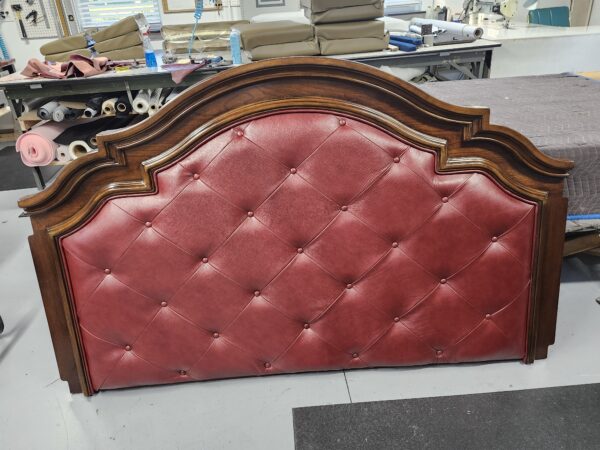
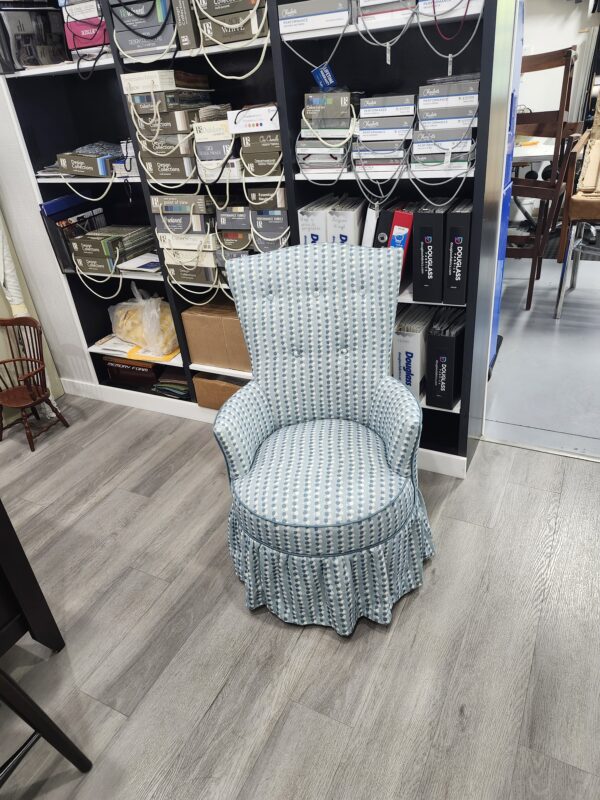
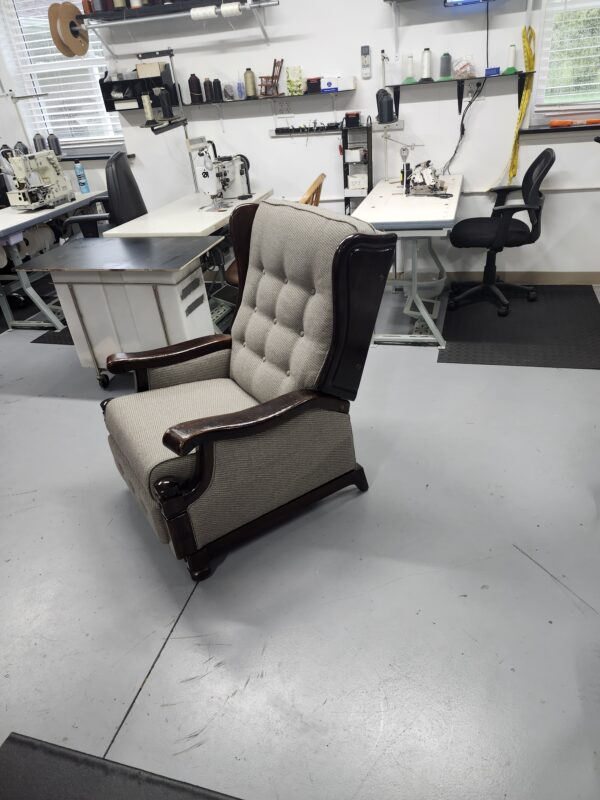
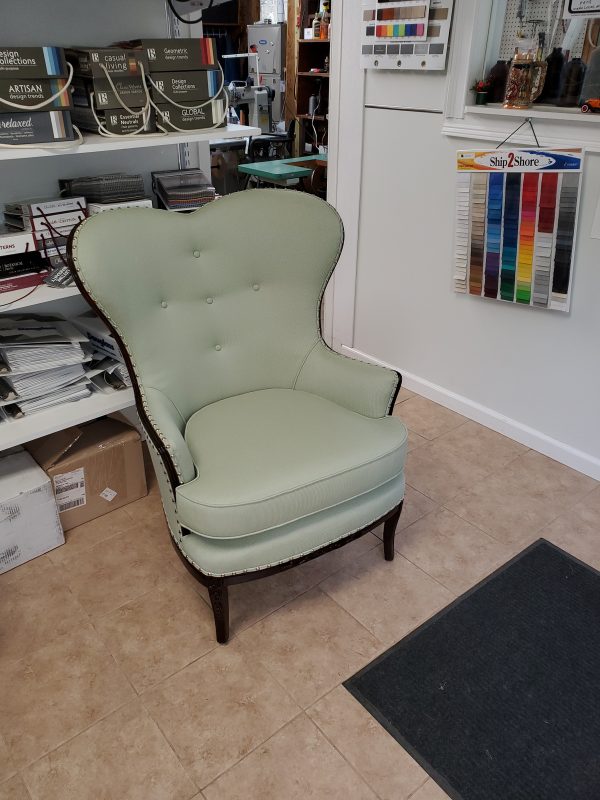
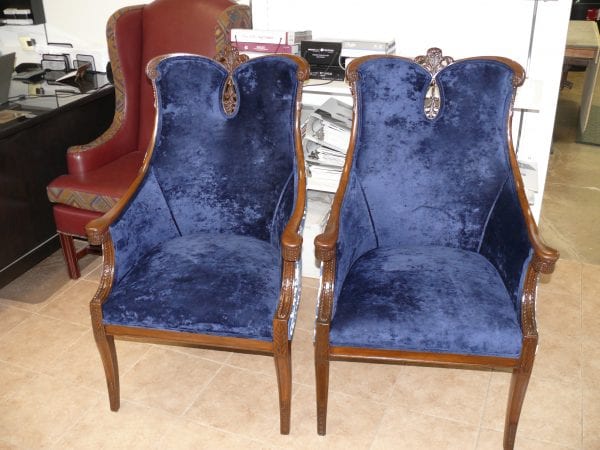
A channel back chair needed complete re-upholstery.
- Project: Reupholstery and Repair
- Category: Furniture Upholstery
Our Task
We put on new upholstery on the chair and refinished the wooden leg and arm.



A channel back chair needed complete re-upholstery.
We put on new upholstery on the chair and refinished the wooden leg and arm.
The comfort of an antique channel back chair is mostly invisible. Everyone notices the fluted back, those graceful vertical ribs that give the style its name, but nobody sits on the flutes. The part of the chair that carries you, night after night, is a hidden machine of webbing, coil springs, and hand tied twine buried under the seat. When an old channel back starts to disappoint, the trouble almost always starts down there, in the dark.
These chairs earned their place in living rooms for decades, and the ones that survive tend to be the well built ones. Restoring one is less about making it pretty again, though we certainly do that, and more about rebuilding the unseen foundation so the prettiness has something honest to rest on.
Turn a traditional chair upside down and peel back the dust cover, and you will find strips of jute webbing woven across the seat opening like a basket. That webbing is the floor of the whole system. Steel coil springs stand on it, stitched to the jute at their bases, one spring for roughly every hand’s width of seat. Each coil is then tied with heavy twine to its neighbors and to the frame, front to back, side to side, and across both diagonals. Upholsterers call it eight way hand tying, and it is what makes a set of independent springs behave like a single, even, breathing surface.
Over the springs goes burlap, then stuffing, classically horsehair with cotton batting above it, then muslin, then the show fabric. A stitched edge roll along the front rail keeps the seat’s nose firm and stops the stuffing from crawling forward. Every layer has a job, and the system as a whole was engineered to be opened up and renewed. That serviceability is the quiet genius of old furniture, and it is the reason a chair from the 1930s can be made structurally new inside while staying exactly itself outside.
It is worth pausing on why hand tying beats the alternatives. Later factory furniture replaced coils with zigzag wire or drop in spring units because they are fast to install, not because they sit better. A properly tied coil seat flexes deeper, recovers flatter, and spreads weight more evenly than any shortcut, and it can be tuned: tied firmer for a formal chair, softer for a lounge. When your chair was built, that tuning was part of the job, and putting it back is part of ours.
The channeled back plays by gentler rules than the seat. Its pockets of stuffing carry the weight of a leaning shoulder, not a landing body, so it typically ages by slowly going hollow rather than by breaking. The seat takes the real punishment. Every time someone sits down, the springs compress, the twine ties stretch, and the webbing takes a shock. Multiply that by a few decades and the failure sequence is predictable: ties fray and snap, freed springs tilt and wander, the webbing sags toward the floor, and the once level seat develops a crater that pulls the whole chair’s posture down with it. The back only looks worse then because the foundation beneath it has sunk.
Your chair will tell you, if you listen. A creak or a metallic squeak on sitting means dry ties are sawing against spring steel. A soft clunk means a spring has broken loose and is knocking its neighbors. Sit in the chair and feel where your weight settles: if you roll toward the middle or the back corner, the tying no longer holds the coils in line. Look underneath for webbing that hangs in loops, or a dust cover that bulges like a full sail. A gritty shower of brown dust when you pat the seat is old jute and stuffing breaking down.
Water leaves its own signature: rusted coils, tide marks on burlap, a musty smell that never airs out. Basement floods bring us more chairs than any other single accident, and owners are usually surprised by the verdict. We wrote up the honest answer to whether flood damaged furniture can be restored, and for spring built chairs it is usually yes: the soft interior is replaceable by design, and the hardwood frame, once dried slowly and reglued, shrugs the episode off.
When a channel back comes into our antique restoration queue, the work begins with an inspection and an individual quote based on what we actually find inside, never a guess from across the counter. Teardown follows, down to the bare frame when the job calls for it. Joints get cleaned and reglued. Then the foundation goes back in the old order: new jute webbing stretched tight and tacked in a woven pattern, the springs set and stitched, and hours of hand tying until every coil stands straight and compresses in unison.
Here is where judgment earns its keep. Coil springs are usually sound even when everything around them has failed, so we clean and reuse the originals whenever they test true, keeping that much more of the chair authentic. Horsehair stuffing in good condition gets carded and returned. What we will not do is quietly swap the sprung seat for a slab of foam, a shortcut that changes how the chair sits and erases its character from the inside. Institutions such as the Smithsonian Museum Conservation Institute study historic furniture precisely because original materials and methods carry information worth keeping, and we take the same view at the workbench. The eight way tying we do on these chairs is the same technique we put into a Victorian sofa we brought back, just scaled to a single seat instead of three.
With the foundation live again, the back’s channels are refilled and trued, the padding is rebuilt in hair and cotton, and the chair is ready for its new cover.
A channel back from the mid twentieth century wore mohair, velvet, frieze, or a sturdy woven wool in its first life, and any of those still suit it beautifully. Modern performance velvets give the same depth with far better stain resistance, which matters if the chair is returning to active duty rather than a formal corner. Leather is possible on some frames, though it asks for careful judgment on a fluted back, since hides fold differently than cloth. Our fabrics and leather upholstery page covers the ranges we carry, and we will pull samples that respect both the period and your actual household. We faced the same balancing act on the boa back chairs we upholstered, where the curves dictated half the fabric shortlist before color even came up.
A freshly tied seat will outlast every fabric you put over it if it is treated fairly. Sit down rather than dropping down, and teach the kids that the chair is not a trampoline, because impact is what snaps ties. Keep the chair off damp concrete floors and away from radiators, since both extremes shorten the life of jute and twine. Vacuum the seat and the channel seams monthly, rotate the chair’s position occasionally so sunlight cannot bleach one arm, and have small upholstery wounds repaired early, before an open seam invites bigger trouble. The same habits apply to every sprung piece in the house, right down to the dining set, which is why our walkthrough on how to completely recover a dining chair reads like a smaller cousin of this article.
It is the sound of dry twine and steel rubbing, and it means the tying is on borrowed time. The squeak itself hurts nothing, but it is the earliest warning you will get before ties start snapping and the seat goes crooked. Bringing the chair in at the squeak stage keeps the rebuild simpler.
We keep them whenever they pass inspection, which is most of the time. Old coil springs were made of excellent steel, and a cleaned original spring retied by hand behaves exactly as the maker intended. We replace only coils that are rusted through, bent, or broken, and we match the originals’ height and gauge when we do.
We can, after we verify the seat honestly. Sometimes the back’s channels have thinned while the foundation still tests sound, and a partial restoration makes sense. More often a deflated back and a tired seat arrive together, and doing them in one visit costs the chair less disruption than two separate surgeries a year apart.
If your channel back chair squeaks, sags, or simply deserves better than it is getting, request a quote or call 717-383-6917. We will open it up, show you exactly what the years have done, and rebuild it from the webbing up so it carries your family for another generation.
 Get a Free Quote!