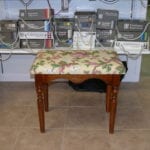



Project Details Reupholstery 2 Leather ottoman with storage. Denver color 2555
- Project: Reupholstery
- Category: Furniture Upholstery
Our Task
Leather ottoman with storage.


Leather ottoman with storage.
A leather ottoman with storage inside is one of the hardest working pieces of furniture in any living room. It is a footrest at six in the evening, a coffee table when company comes, a toy chest or blanket box the rest of the week, and occasionally an extra seat. All of that use lands on one hinged lid and four corners of leather, which is why these ottomans wear out faster than the sofas they sit beside.
When an owner brings one to us, the leather is usually cracked along the lid edge, the hinges have chewed their screw holes loose, and the lid padding has flattened into something closer to a cutting board than a cushion. None of that is fatal. An ottoman built around a solid box is one of the most rewarding things we restore, because every part of it can be renewed.
Under the leather, a storage ottoman is really a small piece of casework. The base is a box, ideally framed in solid wood or heavy plywood with glued and screwed corners, and the quality of that box decides everything else. A well built box holds its shape when someone sits on the lid edge. A flimsy one racks out of square, and then the lid never closes cleanly again.
The lid is its own little construction project. It carries a platform, a foam or fiber crown that gives the top its shape, sometimes tufting buttons pulled through to sculpt the surface, and the leather stretched and stapled over the whole assembly. Underneath, a hinge system ties lid to box. We see everything from long piano hinges, which spread the load and last the longest, to pairs of small butt hinges, to lift mechanisms with springs. The hinge choice matters more than most owners realize, because the hinge is the one moving part on the whole piece.
Then there is the leather itself. Furniture leather ranges from full grain hides that develop a rich patina over decades, through corrected and pigmented leathers that resist stains but can crack as their surface coating ages, to bonded products that are frankly not leather at all and rarely survive ten years on a working ottoman. Identifying what an ottoman is wearing is step one in deciding how to bring it back.
Leather fails at its flex points. On a storage ottoman that means the lid edge, where the material bends slightly every single time the lid opens, and the corners, where upholstery tension is highest. Skin oils, dry air, and sunlight all pull moisture out of the hide, and dry leather cracks instead of flexing. Once the surface splits, the damage only travels.
The hardware fails from leverage. People open the lid by one corner, kids stand on it, and the screws holding the hinges work back and forth in their holes until the wood around them gives up. A sagging, misaligned lid is almost always a hardware and wood problem, not a leather problem.
The interior has its own troubles. Storage compartments trap humidity, especially when blankets go in slightly damp, and a musty smell means moisture has been living in the box. In worse cases, an ottoman that sat through a wet basement needs the same triage we describe in our article on whether flood damaged furniture can be restored. The short version: wood and frames often survive a soaking, but padding and lining usually need to be replaced outright.
Here is what we look for when an owner asks whether their ottoman is due for the shop:
Two or more of those and the piece is ready for real attention.
The job begins with inspection, and the answer to the cost question is always the same: every piece is quoted individually after we have opened it up and seen the condition of the box, the lid, and the hide. Then comes teardown. The old leather comes off in panels that serve as patterns, the lid is stripped to its platform, and the hardware comes out so we can assess the wood underneath.
Structural work follows. Chewed screw holes get drilled, plugged with hardwood, and redrilled so the new hinges bite into fresh material. Racked boxes are reglued and squared. If the original hinge system was undersized for how the family actually uses the piece, we will suggest an upgrade, usually to a piano hinge or a soft close mechanism, and this is where the restoration versus preservation judgment comes in. On a piece with historic value we keep original hardware wherever it can be made sound, because original fittings are part of the object’s story. On a hardworking family ottoman, longevity wins and better hardware goes in. The furniture holdings of the Victoria and Albert Museum furniture collection are full of upholstered pieces whose value lives partly in their original mounts and fittings, and that lesson shapes how carefully we weigh what gets replaced.
Next the lid is rebuilt with new foam cut to a generous crown, wrapped so the leather has something soft to shape over. New leather is cut from the old patterns, seamed, fitted, and pulled by hand so the tension is even at every corner. Tufting, if the original had it, is redone with fresh buttons covered in the same hide. The interior gets a new lining, and the base gets a clean dust cover and fresh glides.
This is the same layered approach we bring to full antique restoration work on chairs and sofas, scaled to a smaller box. If you are curious how ottoman work compares with other kinds of jobs, our overview of the different types of furniture restoration services lays out where reupholstery ends and structural restoration begins.
Choosing the new hide is the most consequential decision on the whole project. Full grain and top grain aniline leathers look and age the best, developing character with every year, but they show scratches and drink up spills. Protected and semi aniline leathers carry a light finish that shrugs off pets, feet, and juice cups while still feeling like leather. For an ottoman that will live as a footrest and toy box, we usually steer owners toward a protected top grain hide in a mid weight, thick enough to wear well but supple enough to upholster cleanly around the lid radius.
Color deserves a moment of thought too. An ottoman usually sits against a sofa rather than matching it, so a complementary tone, a deep saddle against a gray sofa or a charcoal against cream, tends to look intentional rather than accidental. We keep hide samples in the shop, and owners are always welcome to come handle them in person. Our shop tour page shows what you will find when you visit.
Leather aftercare is simple but not optional. Condition the hide once or twice a year with a quality leather conditioner so it keeps its flexibility, and wipe up spills promptly with a barely damp cloth. Keep the ottoman out of direct sunlight, which fades and dries leather faster than anything else in a home, and give it a few feet of distance from heating vents and radiators for the same reason.
For the storage compartment, make it a habit to store only fully dry textiles inside and crack the lid open now and then to let the interior breathe. If the lid starts to drift out of alignment, tighten the hinge screws early. Five minutes with a screwdriver prevents the slow ovaling of screw holes that ruins the wood.
Sometimes, if the base leather is genuinely sound and the color can be matched. Hides vary between tanneries and dye lots, so a partial recover works best with darker colors and worn in finishes. We will tell you honestly whether a match will look right or whether a full recover is the smarter path.
The covering is not worth saving, but the piece underneath often is. If the box and lid are solidly built, we strip the failed material completely and rebuild with real hide or a durable fabric. You keep the size and function you like and lose the peeling for good.
Often, yes. If the frame is a hollow box with adequate rails, we can build a hinged lid, install hardware, and line the interior. It is a rewarding upgrade on a piece you already love, and it is the kind of custom work, like the antique ottoman we brought back to life or the arm bench restoration we completed, that we enjoy most.
If your ottoman is cracked, sagging, or simply overdue, request a quote and attach a few photos, or call the shop at 717-383-6917. We will tell you exactly what it needs and nothing it does not.
 Get a Free Quote!