


Project Details
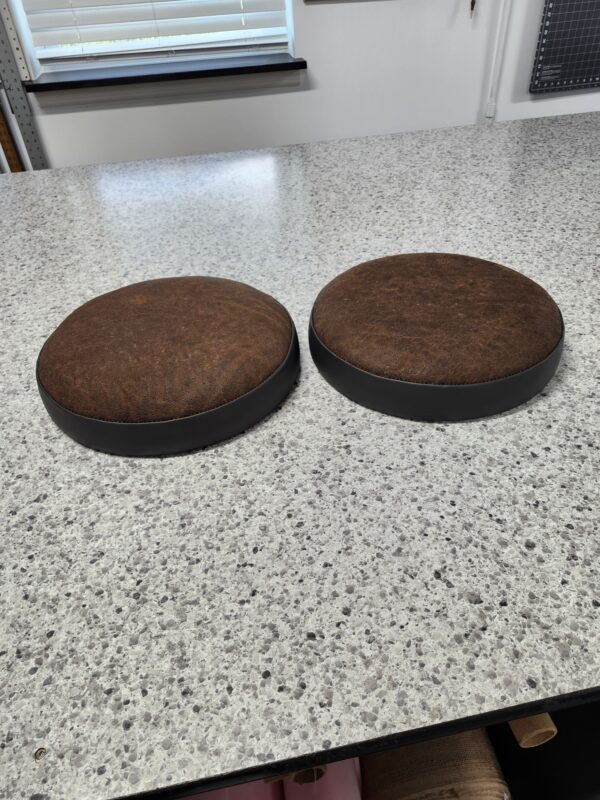
leather panel for gun cabinet
- Project: Custome Leather
- Category: Leather Works



leather panel for gun cabinet
Not everything that comes through our door has cushions. Every so often the job is a flat one, and one of the more interesting flat jobs we take on is a leather panel for a gun cabinet. No springs, no piping, no seat to sink into. Just a clean expanse of hide that has to lie perfectly flat, fit perfectly square, and protect what rests against it for decades.
Owners of good gun cabinets tend to be caretakers by nature. The cabinet usually came from a father or grandfather, or was bought to hold firearms that did. When the old lining wears through or the back panel starts flaking, they want it done right, not patched with whatever a craft store sells. That instinct is correct, and here is why.
Cabinet makers lined gun cabinets with leather long before anyone marketed the idea. The material is firm enough that a barrel resting against it will not dent it the way it would foam, and gentle enough that a hand rubbed stock finish will not get scratched the way it would against bare wood. Leather also does not shed lint the way felt does, which matters when the surfaces near your firearms should stay clean.
There is a quieter reason too. A vegetable tanned or properly finished hide is chemically calm. It sits there, decade after decade, without off gassing the plasticizers that make some synthetic linings sticky and reactive over time. Old cabinets sometimes teach this lesson the hard way, with vinyl linings that fused to whatever leaned against them through one hot summer too many.
And then there is the look. Open a cabinet with a deep brown leather back panel and brass hardware and the whole thing reads like a library. Open one with a shredded liner and it reads like a locker. The panel is a small part of the cabinet and most of its personality.
Panels fail differently than seats. Nobody sits on them, so the wear comes from other directions. Contact wear shows up as polished tracks and dents where barrels and butt plates rest in the same spots for years. Dry air, especially in a house with forced hot air heat, slowly pulls the moisture and oils out of the hide until it stiffens, curls at the edges, and cracks.
Adhesive failure is the most common death, though. Many older panels were glued with hide glue or early contact cements that give up after enough humidity swings, and the leather starts to bubble and lift off its backing board. Once a panel bubbles, every touch flexes the loose spot and the cracking accelerates. Sunlight through a glass cabinet door finishes the job, fading the leather unevenly wherever the shadows of the contents did not protect it.
If your panel is lifting, curling, or flaking colored dust onto your stocks, the lining is done. The good news is that a panel is one of the most rebuildable things in the furniture world, and the cabinet around it almost always has plenty of life left. That is the heart of the argument in our post on the benefits of choosing furniture restoration: when the bones are good, you renew the surface instead of replacing the piece.
A leather panel looks simple, which is exactly why it is unforgiving. On a padded seat, small layout errors disappear into curves. On a flat panel behind glass, every flaw sits in plain view forever. So the process is mostly preparation.
We start by pulling the old panel and saving it as a pattern, noting how it was fastened and where the contact points fall. The backing board gets inspected, flattened or replaced if it has warped, and sealed so it will not wick moisture into the new hide from behind. Then we cut. A hide is a map of the animal’s life, with brands, scars, bug bites, and stretch marks scattered across it, and a big unbroken panel has to come from the cleanest real estate on that map. We lay out around every flaw, keep the grain running the direction the design wants, and cut with room to wrap.
Mounting is where experience pays. The leather is bonded to the board with modern adhesives that stay flexible, worked from the center out so no air stays trapped, then wrapped and secured on the back side. Edges get skived thin so the wrap lies flat, and corners get folded the way a good bookbinder folds them, tight and square with no bulk. If the design calls for stitched borders, padded backing, or decorative nails, that work happens on the same benches where we do furniture upholstery every day, with the same machines. Visitors on a shop tour are usually surprised that the flat work and the overstuffed work share the same tools. They do. The leather does not care what shape it is going onto.
The same panel skills carry across the whole shop, for what it is worth. Laying out clean hide sections is how we approached a luxury tufted button chair and ottoman set, and getting leather to lie flat and stay put is half the battle on automotive door panels like the ones in the 1934 Chrysler hot rod we upholstered. A gun cabinet panel is those same disciplines, minus the springs.
Seating leather and casework leather want different virtues. For a panel we generally reach for a firmer temper hide than we would put on a sofa, because drape is not the goal, flatness is. Full grain and top grain hides are worth it here since the surface will be inspected up close for the next forty years. Bonded leather has no business in a cabinet. It is leather dust glued to a fabric scrim, it delaminates with time and dry air, and a cabinet interior is dry air’s favorite room.
Finish depends on the cabinet’s life. A pigmented finish shrugs off handling and gun oil better. A semi aniline finish shows more natural character and suits a display cabinet that gets opened gently. Color should be pulled from the wood, usually a shade deeper than the case so the contents stand forward. We will also tell you honestly when leather is the wrong answer. A working cabinet that sees solvent spray and constant handling might be better served by a quality vinyl, which cleans up the way we describe in our guide on how to clean vinyl upholstery. Most heirloom cabinets deserve hide, but the choice should be made with open eyes, and every project here is quoted individually once we have seen the piece.
A leather panel asks very little, but the little matters. Keep the cabinet out of direct sun, and away from radiators and heat runs. Aim for steady moderate humidity in the room, which your wood stocks will thank you for as much as the leather does. Dust the panel with a dry or barely damp cloth a few times a year, and condition it lightly about once a year with a product made for finished leather, keeping the conditioner off any suede or rough surfaces.
Watch the chemistry. Gun oils and solvents that drip and sit will darken and soften a finished hide, so wipe them promptly. The Leather Conservation Centre makes the point that most damage to historic leather comes from well meaning treatment with the wrong products, and the same is true in a cabinet. Skip the saddle soaps and household polishes. Boring, gentle, and infrequent is the winning routine.
A properly tanned, finished, and fully dried hide will not. The horror stories come from chrome tanned leathers kept damp, or from guns stored in leather cases without air circulation, where trapped moisture does the damage. An open cabinet with a leather back panel is a different situation entirely, and it has protected fine firearms for well over a century.
Yes. We bring hide samples to the cabinet or have you bring a door to the shop, and we match undertone in natural light. A deep chestnut against walnut, a warm oxblood against cherry, a near black against oak with brass. Getting that pairing right is most of the visual magic.
All the time. Desktop inserts, trunk linings, humidor exteriors, display case backs, valet trays, even wall panels. If it is flat and deserves leather, it is our kind of flat. Browse our leather work gallery and you will see the range.
If your cabinet’s lining is lifting, cracking, or just embarrassing the wood around it, send us a few photos through our free online estimates page or call 717-383-6917. We will tell you what the panel needs, what hide suits it, and how to make the inside of that cabinet worthy of what it holds.
 Get a Free Quote!