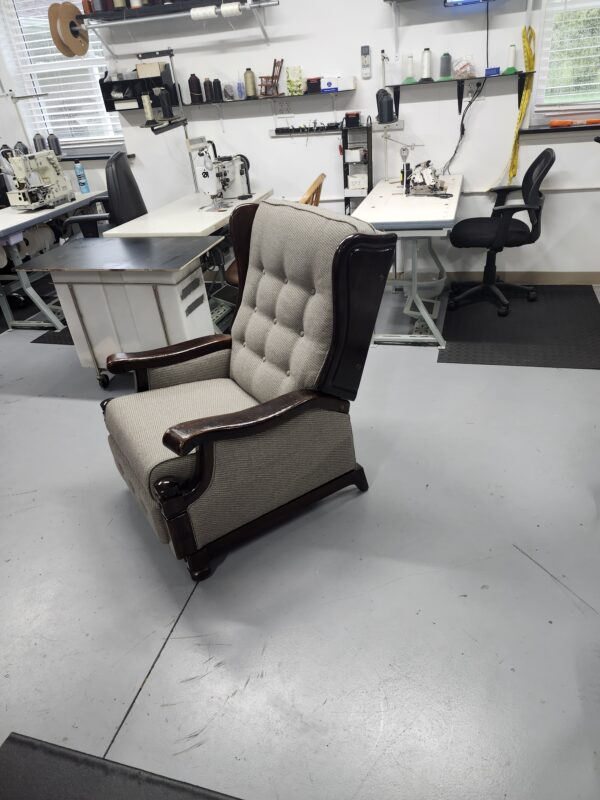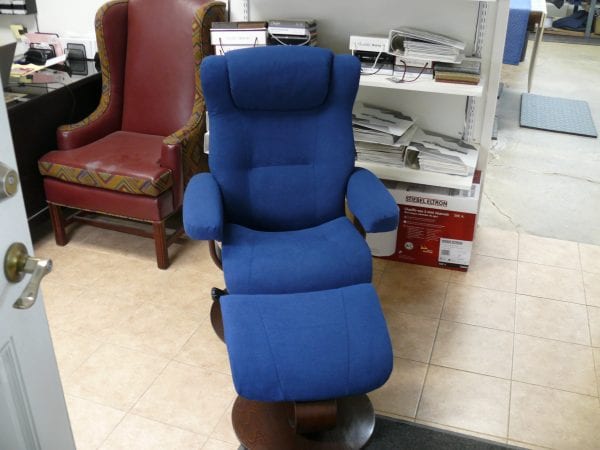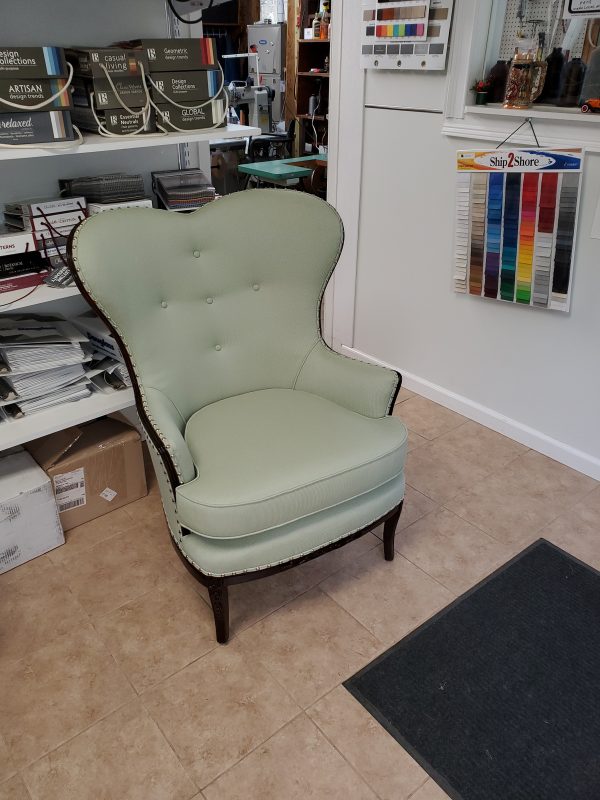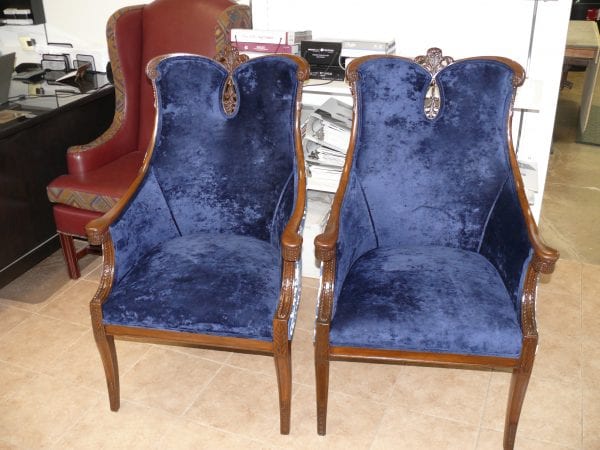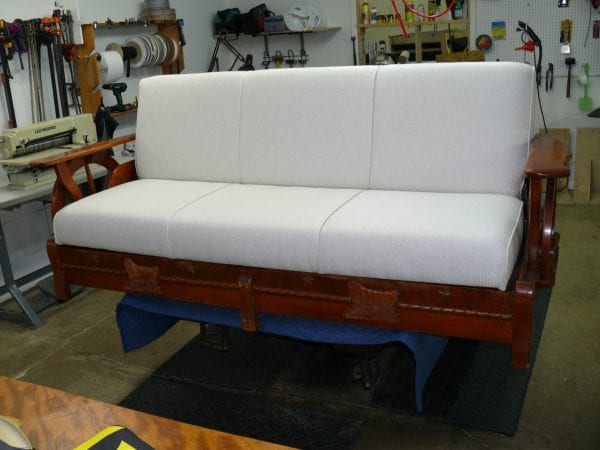



Project Details. leather classic chair wooden arm and wood lag
- Project: Upholstery for Furniture
- Category: Furniture Upholstery, Leather
Our Task
Completely reupholster with high-quality leather and refinish wood

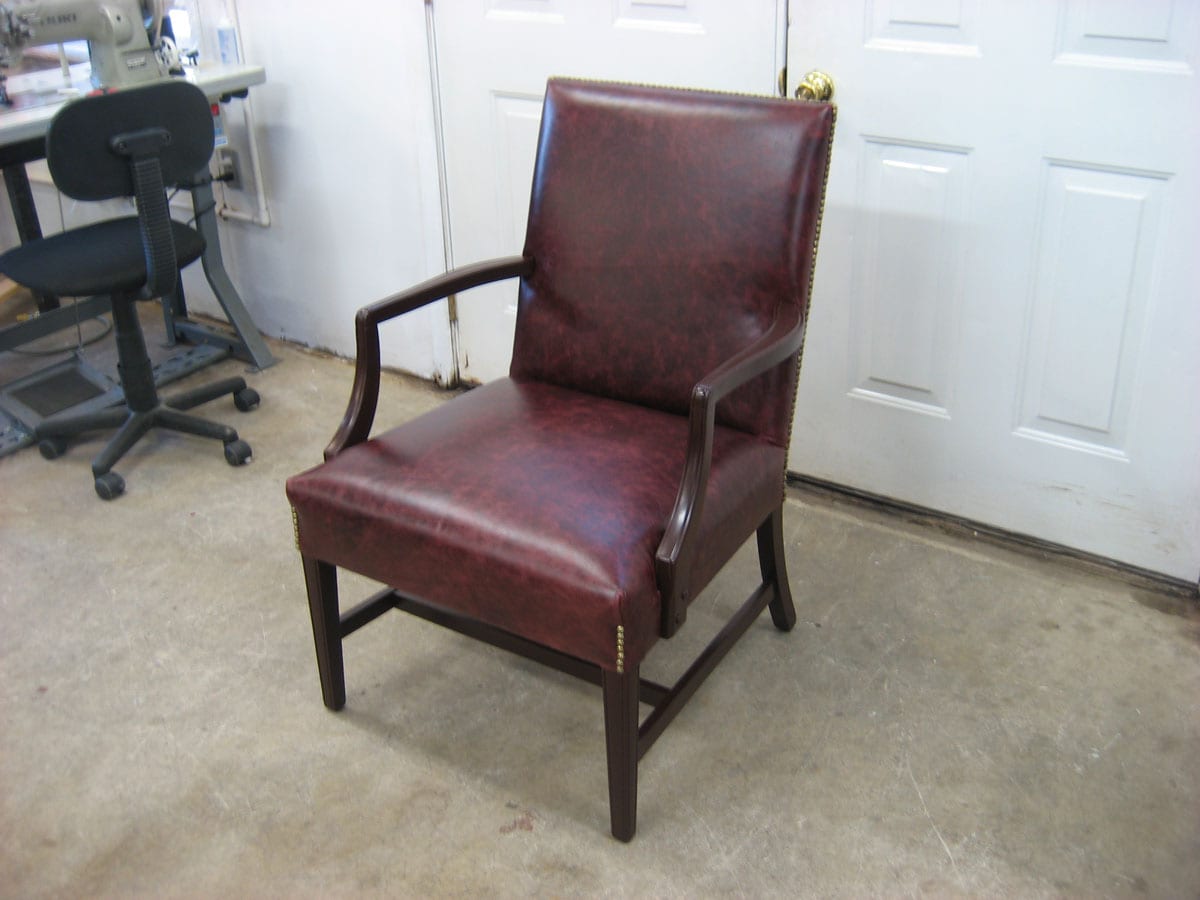
Completely reupholster with high-quality leather and refinish wood
Every house has a throne, even if nobody calls it that. It is the buttoned leather chair in the corner with the ottoman parked in front of it, the seat everyone gravitates to and one person actually owns. When a luxury tufted leather chair and ottoman set arrives at the shop, we treat it as what it is, a matched team that has to leave here matched again.
That last part is harder than it sounds. A chair and its ottoman share a life but not a workload. One holds a whole person, the other holds two feet and the occasional dinner tray. Rebuild them without thinking about that, and in five years they will look like strangers. Rebuild them right, and they will age in step for decades.
The single biggest decision on a set like this is the hide, and the label rarely tells the truth in a useful way. Top grain leather keeps the outer layer of the hide, the part with the tight fibers and natural grain, and it is what a chair meant to last decades should wear. Corrected grain has that surface sanded down and an artificial grain stamped back on, which hides flaws but also removes the strongest fibers. Split leather comes from the lower layers of the hide, looser and weaker, usually dressed up with heavy coatings.
And then there is bonded leather, which deserves its own sentence of warning. It is ground up leather scrap glued to a fabric backing with a printed face, and on a piece that flexes, it peels like old wallpaper. Half the tufted chairs that come to us looking leprous, with the surface flaking off in sheets, turn out to be bonded. There is no repairing that material. The honest fix is replacement with real hide, and it is a one time fix.
Where the hide comes from matters as well. We buy from tanneries with real standards, and if you want to go down that rabbit hole, the Leather Working Group audits and rates tanneries worldwide on how responsibly they produce leather. Good tanning is not just an ethics question. Well tanned hides take dye evenly, resist drying out, and hold a button pull without tearing.
Give a chair and ottoman ten or fifteen years and they start telling different stories. The chair develops a shine on the arms, a slump in the seat, and stretched pleats where the sitter lands. The ottoman collects heel scuffs and, if it doubled as a coffee table, ring marks. Meanwhile whichever piece sits closer to the window fades faster, and suddenly your matched set is two related colors instead of one.
Underneath, the chair works harder and wears out sooner. Its springs carry real weight all evening while the ottoman coasts. The padding under a tufted seat compresses around every button point, flattening the diamonds from below. Twine ages in both pieces at the same rate though, so buttons tend to start popping on chair and ottoman around the same birthday.
People often assume a set this far gone needs everything replaced, and sometimes it does, but there is a whole menu between cleaning and full recovery. We sketched that spectrum in our rundown of the types of furniture restoration services, and a tufted pair frequently lands in the middle: new leather on the chair seat, conditioning everywhere else, springs retied, and the ottoman recovered fully so the two match again. Every set is different, which is why each one is quoted individually after inspection rather than off a menu.
The cardinal rule in our shop: a matched set is one job, never two. All the leather for both pieces gets ordered together, from the same dye lot, and whenever possible cut from the same hides. Leather is a natural product, and two hides in the same color ordered months apart can differ enough to see across a living room. Cutting the pair together is the only guarantee they leave here as twins.
The work itself follows the sequence any serious furniture upholstery job does. Teardown with photos, so the tufting layout is documented. Frame repairs with proper glue and clamps, never screws through old joints. Springs retied to bring the chair’s seat back to its original height, with the ottoman set to match it, because a rebuilt pair should meet at the height the designer intended. Fresh padding shaped to hold the diamond depth, then layout, punching, sewing, and the slow satisfying business of setting buttons and folding pleats until both pieces carry the same crisp pattern.
The preservation question comes up on the older sets. If the padding is horsehair and still springy, it stays, and we tell you so, because material like that is better than what money buys today. If the frame carries maker’s marks or original label paper, we photograph and protect them. The goal is a set your grandchildren argue over, not a new set wearing an old name.
Clients are welcome to sit with us while we choose their leather, and it is an education in itself. A full hide is big, and maybe two thirds of it is furniture grade on a good day. We chalk around the brands, the fence scars, the soft belly edges, and the stretch marks, then puzzle the pattern pieces into what remains. Seat panels and ottoman tops come from the firm back and butt of the hide where the fibers are densest. Pleated areas get the supplest sections, since they have to fold. Outside backs and skirts can use the rest.
Finish is the other half of the choice. Aniline drinks dye all the way through and looks the most natural, semi aniline adds a whisper of protection, and pigmented finishes wear a topcoat of color that stands up to real family life. For a hardworking chair we usually recommend the middle path. You can handle samples from all three on our fabrics and leather upholstery page or in person at the shop.
Some folks ask whether a quality synthetic could cover the ottoman, since it takes the shoe traffic. It is a reasonable thought, and we wrote up where synthetics genuinely shine in our post on faux leather as an upholstery material. On a matched luxury set, though, our advice is almost always to keep both pieces in the same hide. Real leather and imitation leather age in different directions, and a pair that matches on delivery day will not match on its fifth anniversary.
Aftercare for a pair has one extra trick beyond the usual leather rules: treat both pieces identically, no matter how differently they are used. Condition them the same weekend twice a year. Keep them the same distance from windows, or rotate their positions annually so sun exposure evens out. Dust the pleats with a soft brush so grit does not grind in the folds.
Beyond that, the standard wisdom applies. No direct sun, no parking against a radiator, no silicone spray polishes, and wipe spills promptly with a barely damp cloth. In a Pennsylvania winter, when the furnace runs for months, a room humidifier does more for leather than any product in a bottle. Dry air stiffens hide, and stiff hide cracks in the pleats first, right where you cannot see it starting.
Sometimes, and we will be straight with you about the odds. Re dyeing a faded piece to match its partner works best on aniline leathers and gets chancier with heavy pigmented finishes. When a match by dye is not realistic, recovering the ottoman in hide matched to the chair’s current color, not its original color, is the reliable route.
Top grain, semi aniline or pigmented, in a mid tone color that hides life’s small accidents. Save the pale full aniline hides for showpieces. A daily chair earns its patina, and the right hide makes that patina an upgrade instead of damage. It is the same logic that guided the sturdy hides we chose for the 1969 A.M.X. seats we rebuilt, where the material had to look sharp and take abuse.
Yes. Mechanical bases, swivels, and reclining hardware come apart, get cleaned and repaired, and go back under the new upholstery. We gave exactly that treatment to an antique leather recliner that came through the shop, and the mechanism left working smoother than it had in years.
If your throne and its footman have drifted apart, we can reunite them. Have a look at our leather work gallery to see what a properly matched set looks like, then request a quote or call us at 717-383-6917. Bring photos of both pieces, and we will map out the path back to matching.
 Get a Free Quote!