


Project Details
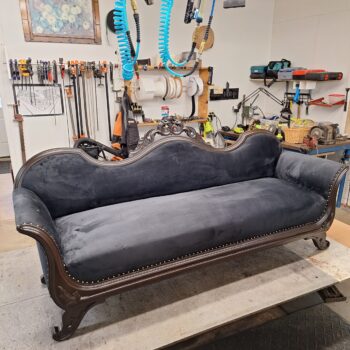
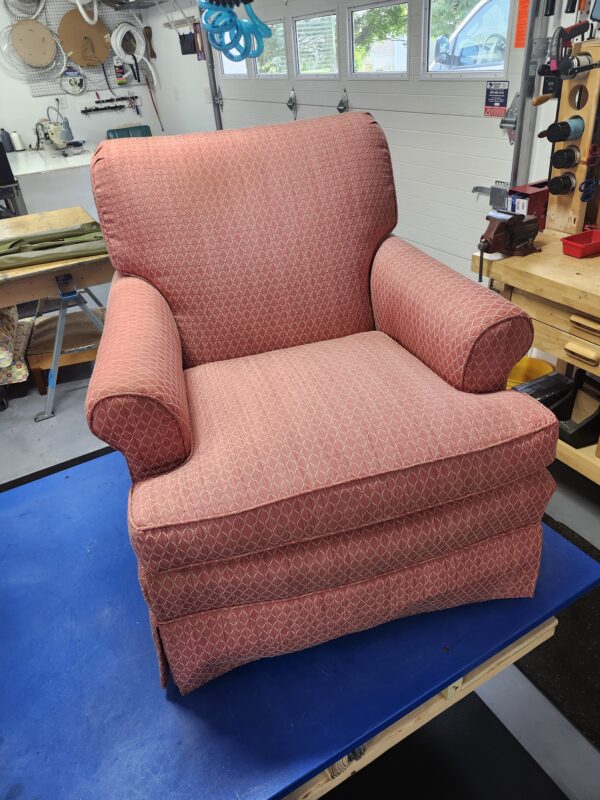
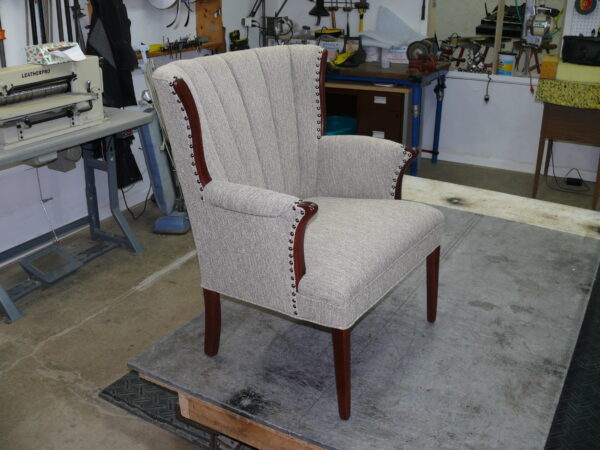
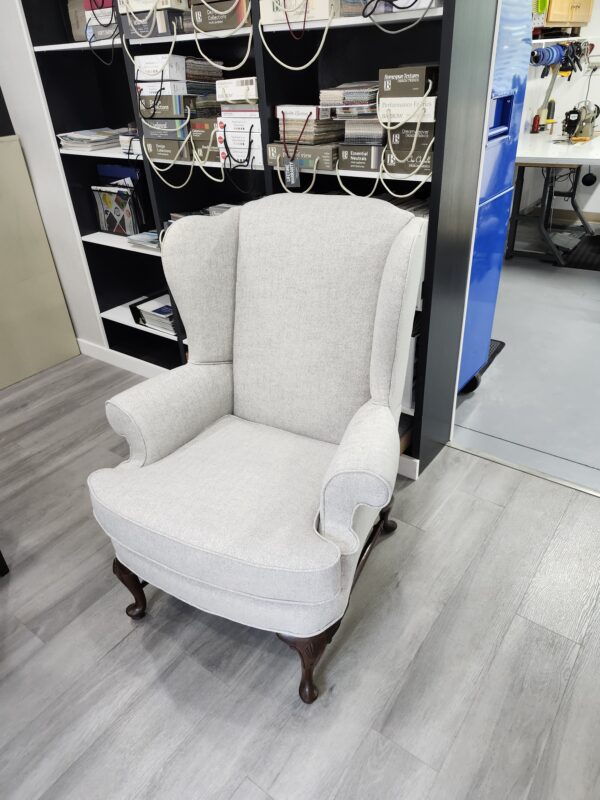
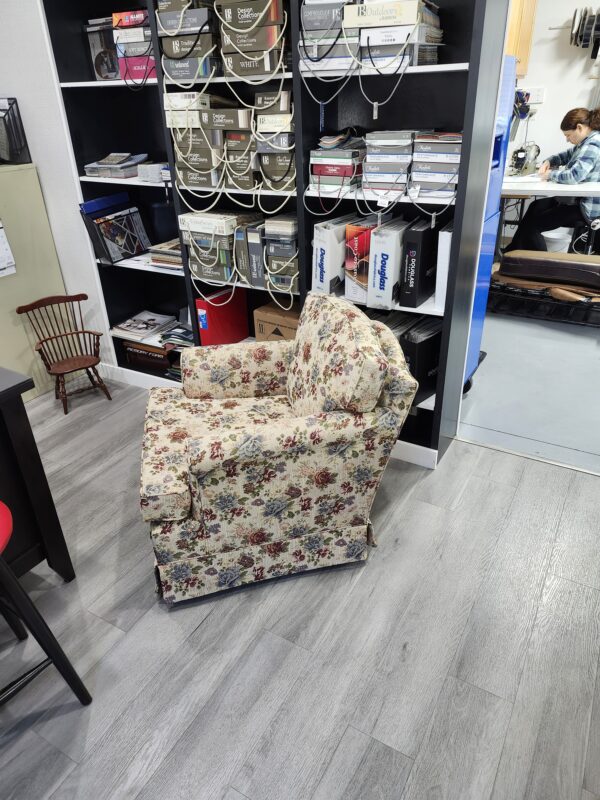
Club chair
- Project: Reupholstery and Repair
- Category: Furniture Upholstery
Our Task
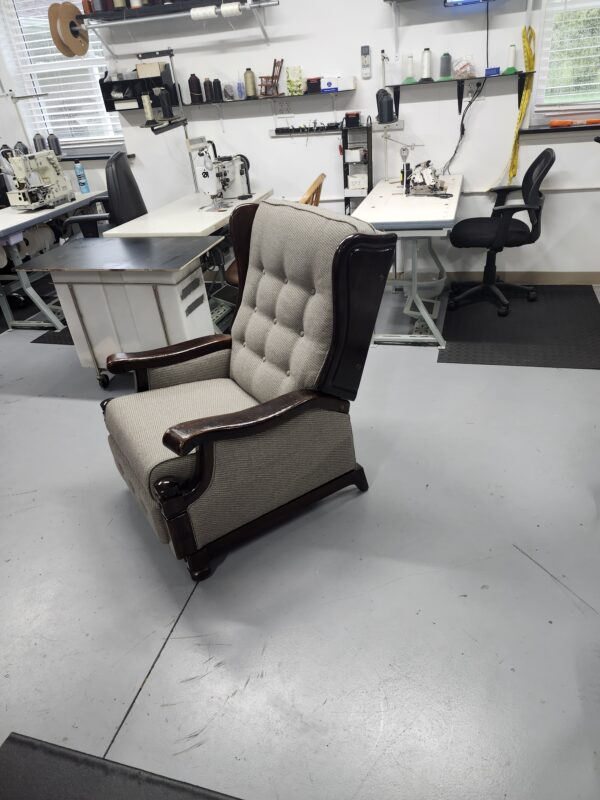
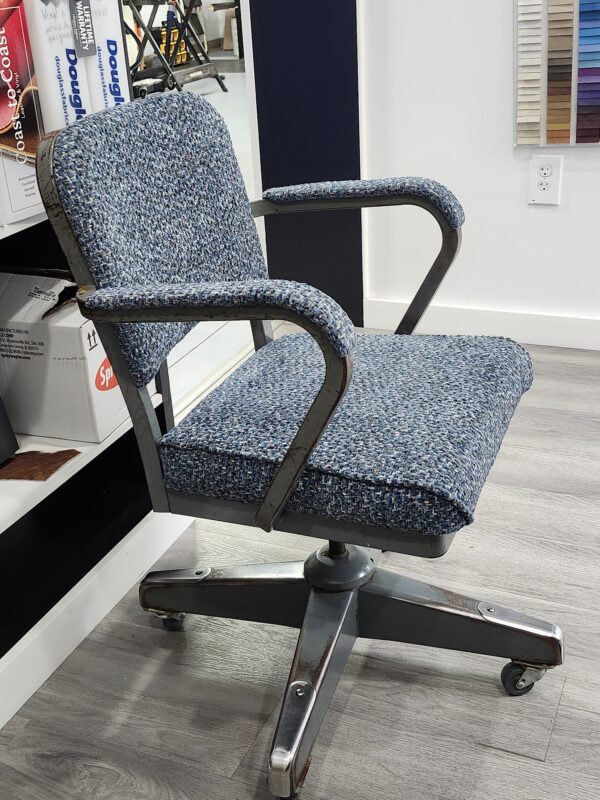
Reupholstery with Crypton fabric



Club chair
Reupholstery with Crypton fabric
A good club chair never begs for attention. It sits low and wide in the corner of the room, sure of itself, and waits for you to give up on the day and sink into it. Add a matching ottoman and you have the most fought over seat in the house. When a set like this arrives at our shop, it usually comes with a warning from the owner: this is where Dad read the paper for thirty years, so treat it kindly.
We do. Club chairs earn that loyalty honestly. They were built as sitting machines, not decorations, and the people who own them tend to keep them until the springs are poking through. That is usually the point where someone finds us, and it is almost never too late.
The club chair as we know it took shape in France in the 1920s, where makers called it the fauteuil confortable, the comfortable armchair. The name tells you everything about the design brief. Low seat, deep cushion, arms high enough to hold a book or a glass, and enough width that nobody sits in one politely. English gentlemen’s clubs adopted the form, wrapped it in leather, and gave it the name that stuck.
American factories picked up the pattern through the thirties and forties, and by mid century nearly every furniture maker offered some version. That means the club chair in your den could be a French original, an English import, or a solid American copy. Each is worth saving. The construction underneath is what separates the eras, and that is where we spend most of our time.
The heart of a traditional club chair is its spring system. The best examples carry coil springs tied by hand in the eight way pattern: each spring lashed to its neighbors and to the frame with Italian twine running front to back, side to side, and across both diagonals. Done right, the whole seat moves as one surface. Done right, it also outlives the person who tied it, which is why we still find crisp, original hand tied work in chairs pushing a hundred years old.
Above the springs sits burlap, then the stuffing. Period chairs use horsehair or a hair and cotton blend, sometimes with a layer of cotton felt smoothed over the top. The frame below is hardwood, usually maple or birch, joined with dowels and corner blocks and glued with hide glue. Every one of those materials was chosen because it could be repaired, which is the single biggest difference between an old club chair and anything sold today.
Time attacks a club chair from the bottom up. The webbing or spring anchors let go first, so the seat starts to sag toward the floor even though the springs themselves are fine. Owners feel the chair getting lower every year and assume the whole thing is shot. Usually it is just the foundation asking for new jute and fresh twine.
Next comes the stuffing. Horsehair compresses and shifts, arms lose their crown, and the front edge of the seat goes soft where legs rub against it. Leather dries and cracks across the seat and arm tops, or fabric wears through at the same spots. The ottoman often looks worse than the chair because feet are harder on upholstery than backsides are. The frame is normally the last thing to complain, though a chair that has been dragged across floors for decades may have a loose corner block or a cracked dowel joint waiting quietly under the dust cover.
Every project in our antique restoration service starts the same way: we inspect before we promise. We flip the chair, open the dust cover, and read what previous decades and previous repairmen have done. Then we talk with you about what stays and what goes. That preservation call matters. Original hand tied springs in good shape get retied, not replaced. Original horsehair that is clean and springy gets carded, refreshed, and returned to the chair. We replace only what has actually failed, because the old materials are usually better than their modern substitutes.
Teardown comes next, one layer at a time, with photos so the chair goes back together exactly as it came apart. Frame joints get tested, reglued with fresh hide glue where needed, and clamped square. The spring platform is rebuilt, new burlap goes on, stuffing is rebuilt to the original profile, and a muslin undercover locks the shape before the final fabric or leather ever touches the chair. The ottoman gets the same treatment so the pair age together instead of drifting apart.
The last stage is the slow one: cutting, fitting, and sewing the cover, setting the welt cords, and finishing the details that make a club chair look like a club chair. If you are curious what that quality standard involves across different piece types, we wrote about how heritage furniture is restored without losing its quality, and the same thinking applies here.
Leather is the classic answer for a club chair, and for good reason. It wears in instead of wearing out, it takes on a shine where hands and elbows land, and it looks better at year twenty than year two. A full grain aniline hide gives you that vintage patina over time. A protected leather gives you easier cleanup in a house with kids and dogs. Both are honest choices.
Fabric opens different doors. A dense wool or a heavy linen blend can soften the club silhouette for a bedroom or study, and mohair velvet is period correct for many French examples. We keep hundreds of samples on hand, and you can browse the range on our fabrics and leather page before you visit. The right answer depends on how the chair will live, not just how it will look. The Smithsonian Museum Conservation Institute publishes careful guidance on how upholstery materials age, and their research at the Smithsonian Museum Conservation Institute is part of why we lean toward natural fibers and traditional methods on period pieces.
One more note on character. A club chair does not have to match its room. We have covered them in everything from tobacco leather to bold stripes, and the striped work on the wooden leg bar chair we dressed in red stripe fabric shows how much personality a strong pattern can carry.
A restored club chair asks very little. Keep it out of direct sun, because ultraviolet light fades fabric and dries leather faster than anything else in your house. Keep it a few feet from radiators and heat vents for the same reason. Leather likes a wipe with a barely damp cloth and a proper conditioner once or twice a year, applied thin. Fabric likes a monthly pass with the upholstery brush on your vacuum, which keeps grit from sawing at the fibers every time someone sits down.
Rotate nothing, flip nothing? Not quite. If the seat cushion is loose, flip it every few weeks so both sides share the work. Blot spills immediately instead of scrubbing. And if a spring ever thumps or a joint clicks, call us early. Small repairs stay small when they are not ignored. The economics of that habit are laid out in our piece on why restoring good furniture beats replacing it, and club chairs are the clearest case we know.
Almost always. Surface cracking can sometimes be cleaned, conditioned, and stabilized if you love the patina. When the hide has torn through or gone brittle across the seat, we replace the leather while keeping the original stuffing and springs wherever they are sound. The chair keeps its bones and gets new skin.
We strongly recommend it. Dye lots vary between hide shipments and fabric runs, so a cover ordered a year later rarely matches perfectly. Doing the pair together also means the padding firmness matches, which matters more than most people expect when their feet are on one piece and their back is on the other.
A complete rebuild with frame work, spring retying, fresh stuffing, and a new cover is measured in weeks, not days, and material lead times can add to that. We give you a realistic schedule after inspection and we hold to it. Every piece is quoted individually once we have seen what is under the cover.
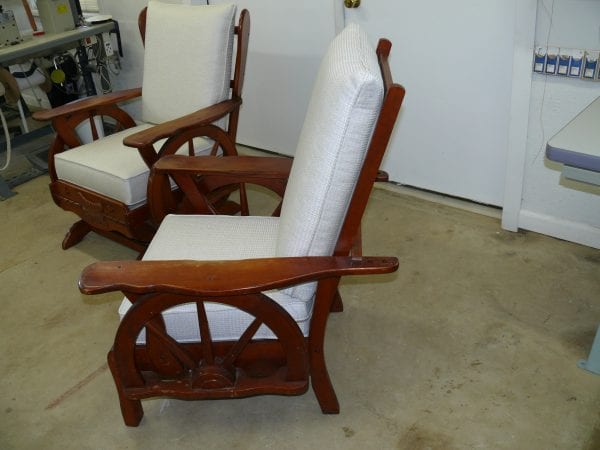
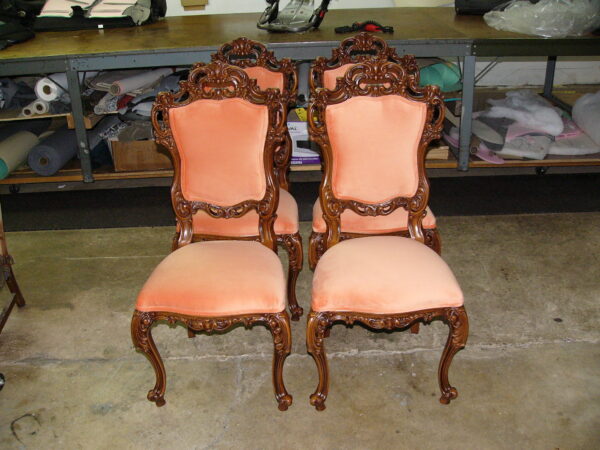
If your club chair has gone soft, crooked, or threadbare, we would like to meet it. Pairs and sets are welcome too; projects like the two Colonial style chairs we brought back side by side are some of our favorite work. Send photos through our free online estimate form or call us at 717-383-6917 and tell us the chair’s story. We will help you write the next chapter of it.
 Get a Free Quote!