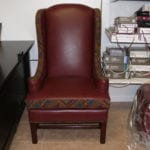



Project Details
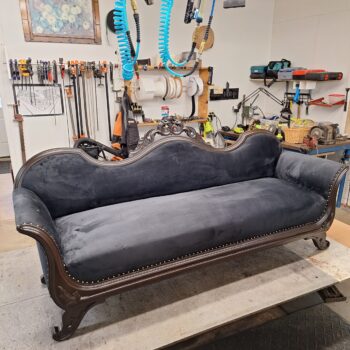
Antique sofa.
- Project: Completely re-upholstery antique sofa .
- Category: Reupholstery



Antique sofa.
Every family with an antique sofa has a rule about it, and the rule is usually some version of do not touch. It sits in the front room like a guest who never leaves, admired from a distance, sat on twice a year. That is a shame, because the people who built these sofas built them to be used hard for a lifetime, and the reason yours has survived a century is precisely that it was built to survive sitting.
When an antique sofa arrives at our shop, our job is to close the gap between the museum piece in the parlor and the sofa your great grandparents actually flopped onto after church. That means understanding what is inside it, deciding what deserves to stay original, and rebuilding the rest with methods the original maker would recognize. Here is how we think it through.
An antique sofa is a layered machine, and almost none of it is visible. Start at the bottom: a hardwood frame, usually maple, birch, or walnut, joined with mortise and tenon joints or hardwood dowels, reinforced with glued corner blocks. The joints were assembled with hot hide glue, which sounds primitive and is actually brilliant. Hide glue is reversible with heat and moisture, which means a joint can be taken apart, cleaned, and reglued a hundred years later without destroying the wood. Modern furniture assembled with staples and cyanoacrylate offers no such courtesy.
Above the frame, jute webbing is stretched across the seat like a woven trampoline. Coil springs sit on that webbing, each one hand tied with twine in as many as eight directions, which is where the phrase eight way hand tied comes from. Over the springs go burlap, then stuffing, which in a genuine antique means curled horsehair, sometimes mixed with hog hair or Spanish moss, then cotton batting to smooth it, then muslin to hold the shape, and finally the show cover, whether that is damask, mohair, or leather. Ten materials, one seat, and each layer has a job.
The failure sequence in an old sofa is remarkably consistent. The show cover dies first, worn through on the seat and arms, faded across the back if it lived near a window. Then the stuffing compacts and migrates, leaving hollows where people sat and ridges where they did not. The twine holding the springs dries out and snaps, and the springs begin to lean and groan. The jute webbing sags toward the floor, sometimes visibly through the dust cover underneath. Last of all, the hide glue in the frame joints crystallizes with age and dryness, and the whole sofa starts to rock and squeak like an old ship.
None of these failures is fatal, and that is the point worth repeating. Fabric, stuffing, twine, and webbing are all consumable materials, the way tires are consumable on a car. The frame is the sofa. If the frame is sound, or repairable, everything else can be renewed. If you are weighing whether the work is worthwhile, our post on the benefits of choosing furniture restoration walks through the case for saving a piece instead of replacing it, and an antique makes that case better than anything built this decade.
This is the judgment call at the heart of every antique project, and we take it seriously. Restoration and conservation are not the same thing. If a sofa is a rare, documented, museum grade piece, the right answer may be to stabilize it and change as little as possible, because original upholstery, even ruined original upholstery, carries historical evidence. For leather covered antiques especially, the research published by the Leather Conservation Centre is the standard we point people toward when a piece deserves a conservator rather than an upholsterer. We will tell you honestly if we think your sofa is in that category.
Most antique sofas are not museum pieces. They are good, honest family furniture, and for those the goal is faithful restoration: keep everything original that still works, renew what has been used up, and use period appropriate methods throughout. In practice that often means the horsehair stays. Old horsehair can be pulled, cleaned, and re carded, and it is better stuffing than almost anything made today. Springs in good steel get retied rather than replaced. The frame gets reglued with methods that keep it repairable for the next century. What leaves is what was always meant to be replaced: webbing, twine, burlap, batting, and the cover itself.
Work starts with a slow inspection and a lot of photographs. Then comes teardown, one layer at a time, with notes on how every layer was attached, because the sofa itself is the only instruction manual that exists. Tack holes tell us where the original upholsterer worked. The old cover panels come off carefully and become our cutting patterns. With the piece stripped, frame joints are opened where needed, cleaned of dead glue, reglued, and clamped. New webbing goes on with proper tension, springs are tied by hand the eight way, and the stuffing is rebuilt to the original profile over fresh burlap.
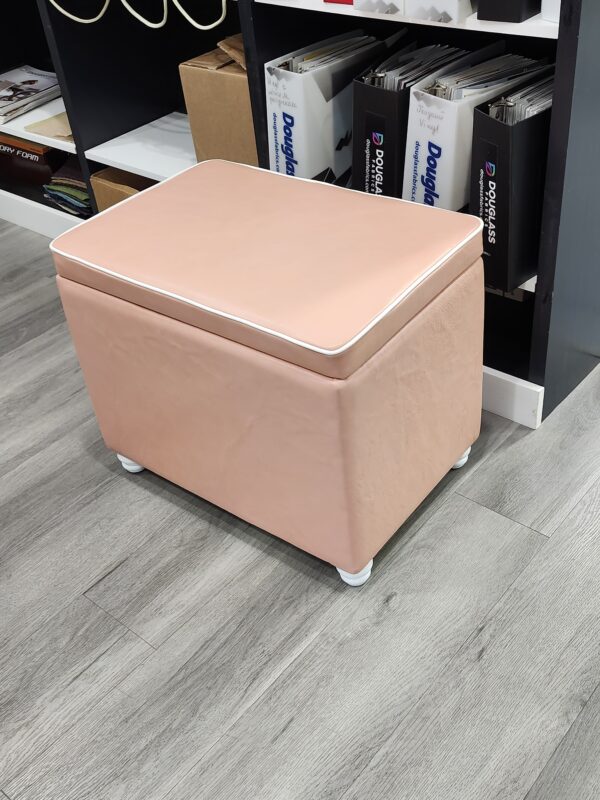
Then the cover goes on, and this is where hand skills show. Antique sofas are full of curves, scrolls, and tight pleats that no machine can negotiate alone. Welt cord is made in house, corners are folded the old way, and trim is applied to match the period. It is the same care we bring to smaller leather jobs, like the ottoman we wrapped in new leather, scaled up to eight feet of sofa. If you would like to watch this kind of work in progress, you are welcome to tour our shop. Seeing a sofa stripped to its springs explains more in five minutes than any article can.
Choosing the new cover is where history and daily life negotiate. If you want the sofa period correct, we look at what its era actually used: woven horsehair cloth, mohair, damask, needlepoint, or leather on certain styles. If the sofa is going back into daily service, modern performance fabrics and protected top grain leathers give you the period look with far more forgiveness. There is no wrong answer, only an honest conversation about how the piece will live.
Leather deserves a special word here. A tufted or channeled antique sofa in full grain leather is a stunning thing, and leather was a legitimate period choice for many styles. Hides have to be cut around scars and brands, seams fall differently than they do in fabric, and the tailoring is slower, but the result outlasts any textile. Our furniture upholstery service covers both directions, and every antique is quoted individually after inspection because no two arrive with the same needs. The leather skills, by the way, are the same ones we use on vehicles; the seats of a 1966 Volvo Amazon we upholstered demanded exactly the same respect for original patterns that an antique sofa does. You can see the whole spread of that work in our leather work gallery.
One practical note: some families put antiques into truly heavy service, hallway benches, mudroom seating, pieces that catch boots and dogs. For those, upholstery grade vinyl is a defensible modern choice, and our guide on how to clean vinyl upholstery shows why: maintenance is a damp cloth instead of a ritual.
An antique that just left the shop needs three things from you: stable humidity, distance from heat and sun, and gentle regular cleaning. Pennsylvania seasons swing from muggy summers to furnace dried winters, and that cycle is what slowly kills glue joints and dries out leather and hair stuffing. Keep the sofa away from radiators and vents, off the sunniest wall, and vacuum it monthly with a soft brush. Rotate loose cushions if it has them. If the new cover is leather, condition it a few times a year. That is the entire regimen, and a sofa that gets it will not need us again for decades.
Flip it over and look underneath. Hand tied coil springs, jute webbing, irregular hand driven tacks, and rough sawn frame lumber all point to age. Horsehair stuffing is a strong sign. Perfectly uniform staples, foam blocks, and cardboard panels point to later manufacture or a previous reupholstery, which is common and not a disqualifier. We can usually date a piece within a couple of decades once it is open.
For rare, documented pieces with original upholstery, possibly, which is why we flag those for conservation instead. For the vast majority of family antiques, the original cover is long gone already, and quality restoration with period methods maintains or improves what the piece is worth. Bad restoration, foam and staples over hand tied springs, is what genuinely hurts value.
Usually yes, and we prefer to. Horsehair that is dry and intact gets cleaned, teased back to loft, and reused right where it was. It breathes better than foam, holds shape longer, and it is original to your sofa. If moisture or pests have ruined it, we replace it with new hair or a suitable natural substitute rather than foam.
If there is an antique sofa in your house that everyone loves and no one is allowed to sit on, send photos through our free online estimate form or call 717-383-6917 and tell us its story. We will tell you what is under that cover, what deserves saving, and what it will take to put the sofa back to work.
 Get a Free Quote!