


Project Details
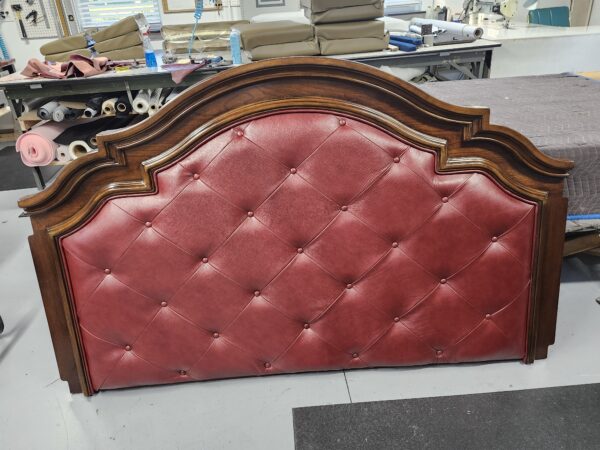
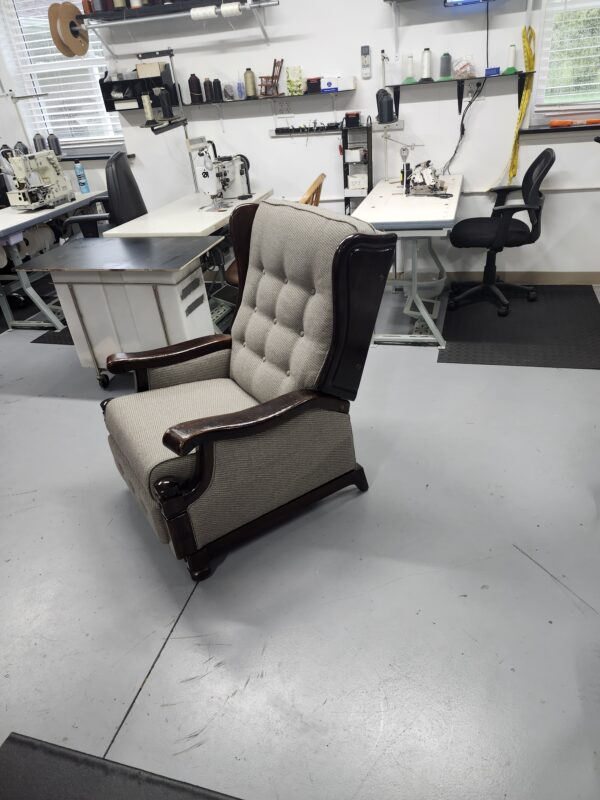
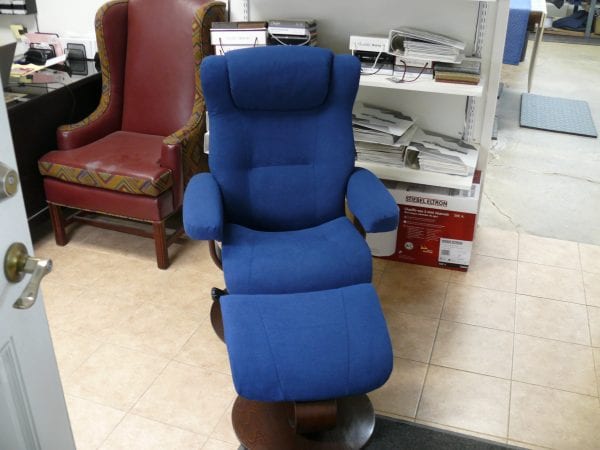
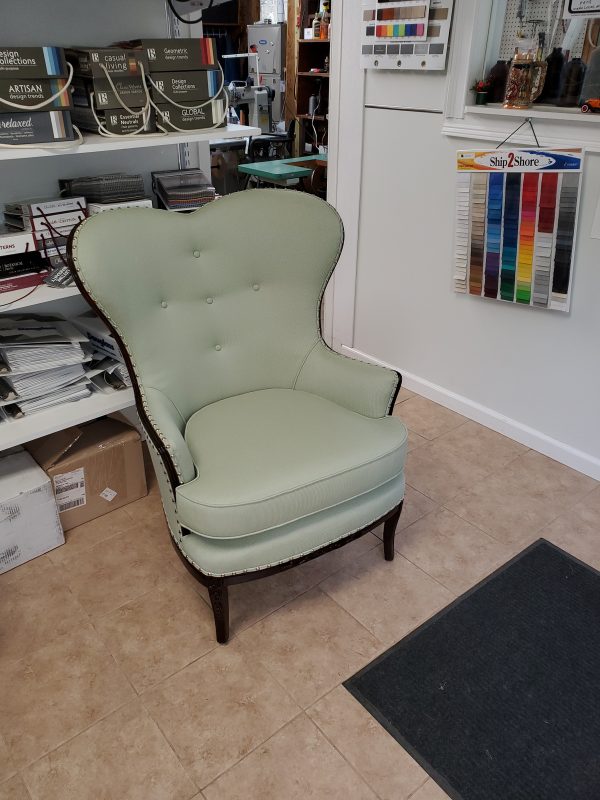
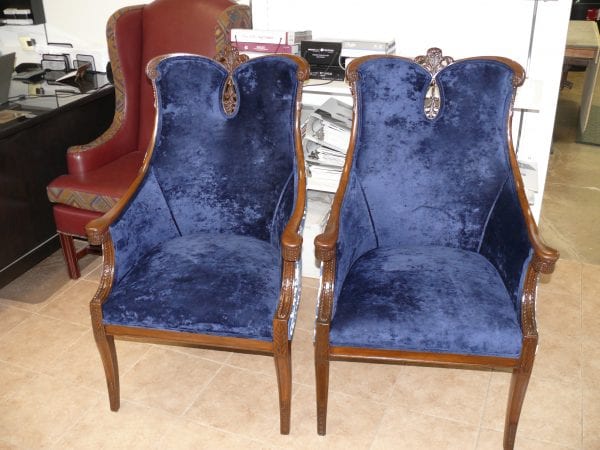
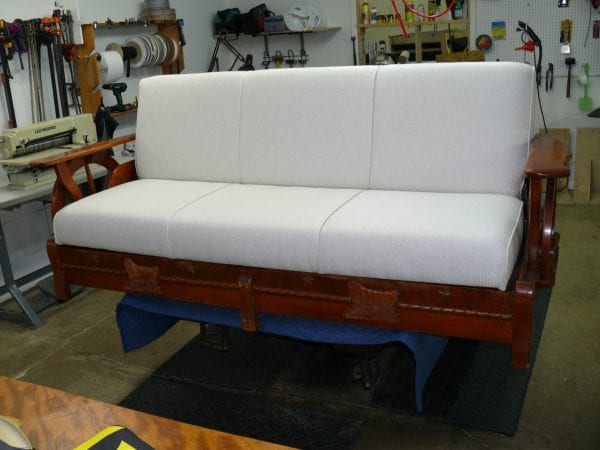
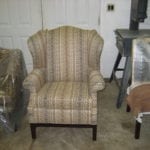
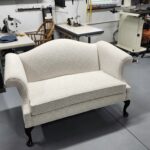
This Chippendale style furniture piece was in great need of new upholstery.
- Project: Reupholstery and Repair
- Category: Furniture Upholstery
Our Task
We completely provided new upholstery with diamond-shaped rafting


This Chippendale style furniture piece was in great need of new upholstery.
We completely provided new upholstery with diamond-shaped rafting
Chippendale is one of the few furniture names civilians recognize on sight, even if they could not quite say why. The ball and claw foot, the carved mahogany, the square confidence of a Marlborough leg: the style carries an authority that three centuries of changing fashion have not managed to dent. A loveseat in this manner is the piece in the house nobody is allowed to put their feet on, and also the one everybody quietly wants to sit in.
Owners hold onto Chippendale style seating because it feels permanent, and structurally it usually is. But the upholstery riding on that carved frame is mortal like any other, and a two seat sofa concentrates wear in ways owners rarely suspect. Here is what these pieces look like from the workbench side.
Thomas Chippendale was a London cabinetmaker whose 1754 pattern book, The Gentleman and Cabinet Maker’s Director, became the most influential furniture publication of its century. He did not build most of the furniture that bears his name; he published the designs that everyone else built, in England, in Philadelphia, in every workshop that owned a copy. The vocabulary is instantly readable: cabriole legs with ball and claw feet or straight Marlborough legs, carved shells and acanthus leaves, and generous mahogany show wood framing the upholstered sections.
Nearly every Chippendale loveseat we see is a revival piece, made between the 1880s and the 1960s, when American makers produced the style in enormous quantity and often to a very high standard. That is not a demotion. A well built revival frame in mahogany with traditional joinery is a genuinely fine object. Sorting out who built what, and when, is exactly the territory of groups like the Furniture History Society, whose scholarship keeps the record straight on the style and its long afterlife.
A loveseat has a structural problem a chair does not: span. Its front and back rails run twice the distance between supports, flexing under two sitters, and every flex works the joints at the corners. Meanwhile the suspension carries doubled and unevenly placed weight, so the springs under the favorite seat lean and drop years before their neighbors do.
When a piece like this arrives, our assessment starts with a short list:
Ten minutes with the piece tells us most of this. The rest reveals itself at teardown, which is why every piece is quoted individually after inspection rather than guessed at over the phone.
Teardown on a loveseat is archaeology with a tack puller. We strip the layers in order, photographing as we go, because the stratigraphy tells us how the piece was built and how faithfully to rebuild it. Frame repairs come first: joints opened, cleaned, reglued with hide glue and clamped square, cracked rails splinted or replaced in matching hardwood. This is the heart of antique furniture restoration as we practice it: save everything that still serves, renew everything that has failed, and leave the piece more honest than we found it.
Then come suspension and padding, which get their own section below because on a piece like this they have earned it. Then muslin, then the show cover, then the trim details where fabric meets carved wood, the double welt and gimp work that separates careful shops from commercial ones. The same sequence, scaled and adapted, carried the antique club chair we brought back, and a version of it applies even when the patient is young, like the Uhuru Design Bandholz chair we upholstered. Old or new, the order of operations does not change. Readers who want the full owner’s view of the process can follow our step by step look at reupholstering a chair.
The suspension under a traditional loveseat is a small marvel. Coil springs sit in rows on stretched jute webbing, each spring stitched to the webbing at its base, and then the whole field is tied by hand: front to back, side to side, and across both diagonals, so that every spring is held from eight directions at once. Done right, the ties hold each coil in slight compression, so the seat pushes back the moment you touch it and returns to a level plane the moment you stand.
Eight way hand tying is slow, which is why factories abandoned it, and durable, which is why we have not. When we retie a seat we use fresh spring twine, set the crown to match the original profile, and lock every knot so the failure of one tie cannot unravel its neighbors. A seat tied this way will outlast the fabric on it, usually by decades.
Above the springs goes the traditional stack: burlap, stitched edge rolls guarding the rail line, hair or fiber stuffing, cotton batting, muslin. Where the design calls for loose seat cushions, we build those to specification as well; our cushion services run from feather and down to high resilience foam cores wrapped for a period correct crown.
Chippendale frames historically wore damasks, silks, wool moreens, and later velvets and brocades. The strong period move is a damask in a single deep color, which lets the carving do the talking. The practical modern move is a woven jacquard or performance blend that keeps the period pattern language with several times the wear rating. Both are right; the choice is about how the piece lives in your house.
Because show wood frames the upholstery on these pieces, the fabric meets the mahogany at an exposed edge finished with double welt or gimp. Color there matters more than people expect: trim matched to the fabric recedes and lets the wood shine, while a contrast trim draws a line around every curve. We make up samples against your frame before anyone commits. And if you are still weighing restoration against replacement, our note on why owners choose professional furniture restoration lays out the case from the furniture’s point of view.
Mahogany and carving ask for a little more thought than plain upholstery, but not much more work. Keep the piece out of direct sunlight, which bleaches both fabric and finish, and away from heat vents and radiators, which cook the moisture out of old wood and open joints all over again. Steady, moderate indoor humidity is the single kindest thing you can do for a carved frame; it is the seasonal swings, not any one dry week, that do the damage.
Dust the carving with a soft natural bristle brush rather than a cloth, because cloth snags on crisp carving and rounds it over one fiber at a time. A quality paste wax on the show wood once a year is plenty; skip the silicone spray polishes, which build up and complicate any future finish work. On the upholstery side, vacuum gently each month, rotate loose cushions if the design has them, and deal with spills by blotting, never scrubbing.
And sit on it. A restored loveseat is not a museum barrier rope situation; the eight way tied seat is built for daily service, and even wear from normal use is healthier for the upholstery than one end doing all the work while the other end holds a decorative pillow.
Look underneath and inside. Period pieces show hand cut joinery, irregular saw marks, and materials consistent with the eighteenth century, while revivals show circular saw marks, dowels, and factory uniformity. True period examples are rare, and a good revival is well worth restoring. We will tell you which you have when we see it.
Not at all. These frames have typically been recovered several times already, and fabric is the wardrobe, not the body. Preservation lives in the frame, the springs, the stuffing, and the finish. Choose a fabric you love; the loveseat has changed clothes before.
Yes, and that is a common and sensible scope. We conserve the finish as found, protect the show wood throughout the job, and confine the work to the upholstered elements. If structural trouble turns up hiding under the cover, we stop and talk with you before going further.
If a carved loveseat in your family is sitting on borrowed time, start with a free online estimate, or call 717-383-6917 and describe what you have. You will get a plain answer about condition, options, and schedule, and the mahogany will thank you for it.
 Get a Free Quote!