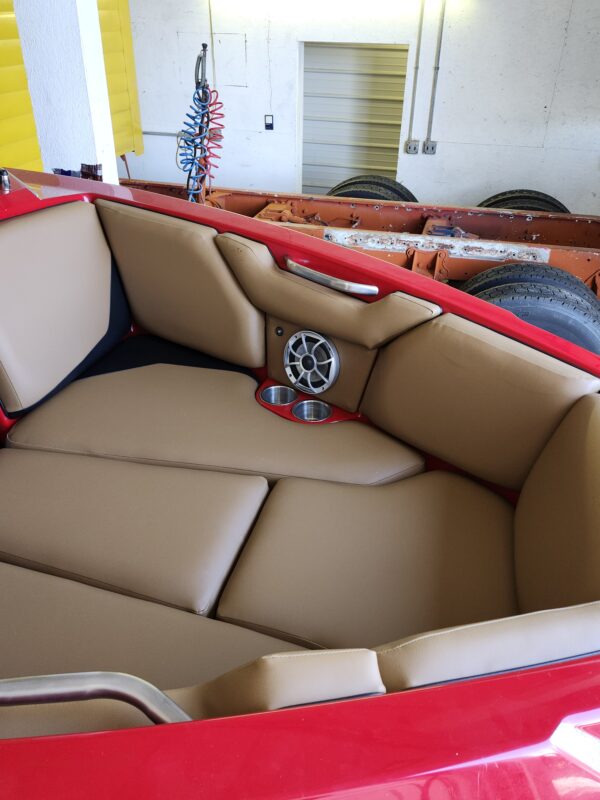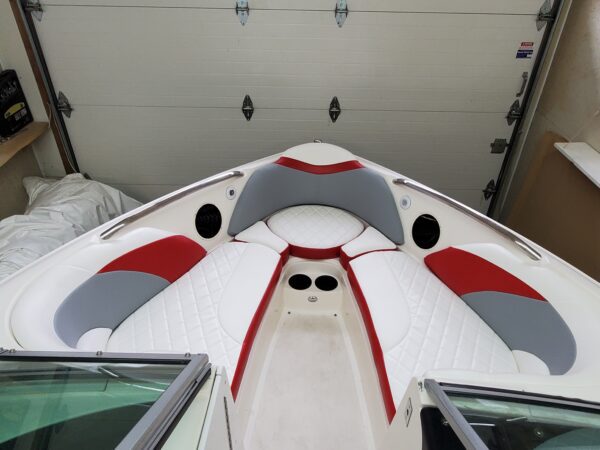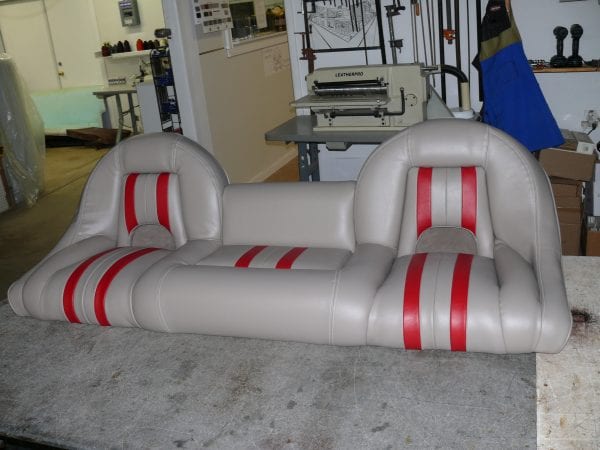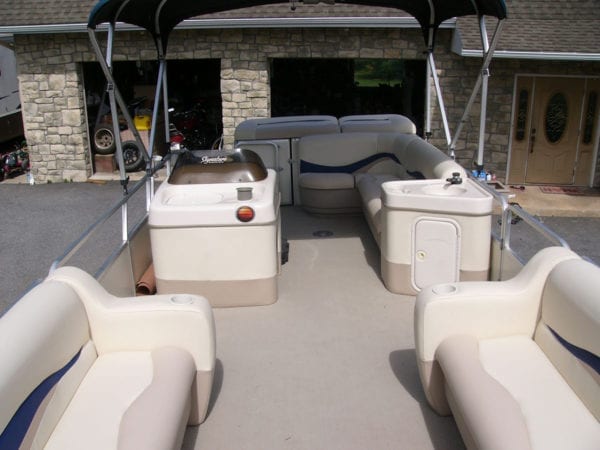



Project Detail. Upholstery Polar 21′ center console
- Project: Boat Reupholstery
- Category: Boat Upholstery



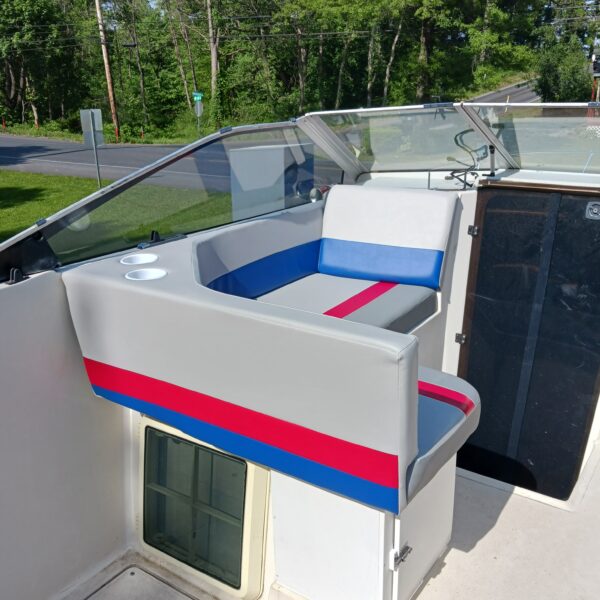
The helm seating on a Polar 21 foot center console works harder than any piece of furniture we ever touch. It bakes under July sun, takes spray on every run, gets ground into by wet swim trunks and sandy sneakers, and then spends the whole winter under shrink wrap where the air never really dries out. No recliner in anyone’s living room could survive a single season of that treatment.
And yet owners love these boats the way other people love a family sofa. A center console that has carried kids, coolers, and ten years of fishing trips is not something you sell off just because the seat skins cracked and the foam went soft. You fix it. Our job is to fix it so it holds up longer than it did the first time around.
Folks sometimes assume upholstery is upholstery, and the core skills do carry over. The patterning discipline we lean on when a family heirloom sofa gets completely reupholstered is the same discipline we bring to a helm bench or a leaning post. Measure honestly, cut generously, sew tight, fit tighter.
But the materials list flips upside down the moment salt water enters the picture. Stainless steel staples instead of plain steel, because plain steel rusts and bleeds brown stains through white vinyl in one season. Marine grade plywood or composite board instead of furniture ply, because ordinary ply delaminates the first time it stays damp for a week. Thread that shrugs off ultraviolet light instead of standard polyester, which quietly rots in the sun while the panels around it still look fine.
Foam changes too. Indoors we pick whatever density gives the right feel. On the water, foam has to either keep moisture out entirely or let it drain straight through and dry fast. Get that wrong and the cushion turns into a sponge that never quite stops smelling like low tide.
This is the world our marine upholstery service lives in. Same sewing machines, completely different rulebook.
Ultraviolet light is the number one killer on an open boat. It chalks the surface, fades the color, and makes the material brittle enough that a knee or a cooler corner finally tears it. The stitching usually gives up first. If your seams are splitting while the panels between them still look decent, that is classic thread rot, and it is the boat’s way of telling you the rest is not far behind.
Salt does its damage more quietly. Salt crystals are abrasive, so every slide across the seat works like fine sandpaper. Salt also holds moisture against the surface and against every staple and screw underneath, which is how a seat base ends up crumbly at the corners even though the top still looks presentable.
Then comes winter. A shrink wrapped boat with no ventilation is a greenhouse. Trapped moisture condenses every night, mildew finds the foam, and by April the cushions smell musty and the vinyl has black spotting in the seams. We open up seats every spring where the cover survived the winter fine but everything under it needs to be rebuilt.
Every project starts with an honest inspection, because every piece is quoted individually after we see what is actually there. We pull a corner, check the base board, squeeze the foam, and look at how the factory fastened everything. Boat builders work fast on the seating, and we often find shortcuts worth correcting rather than copying.
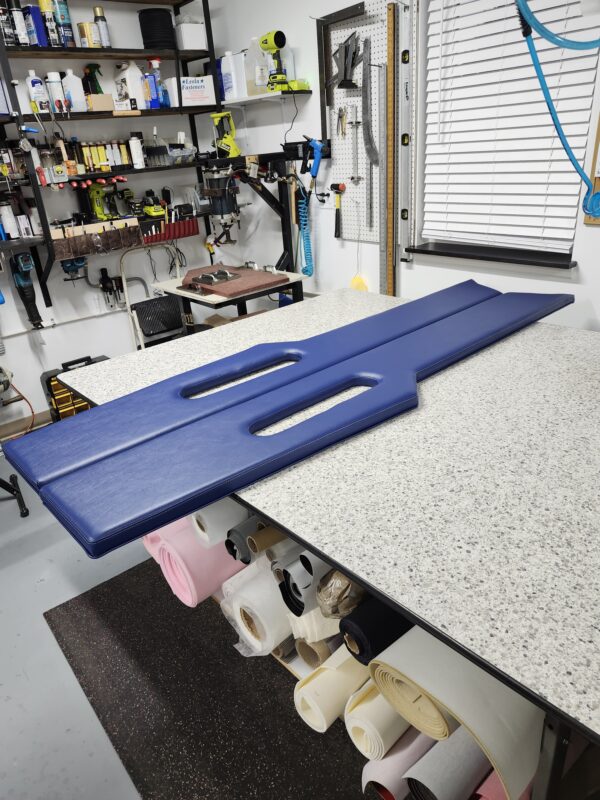
Teardown comes next. Every staple comes out, and the old skins become our patterns. Where a base board is rotten, we cut a new one from marine ply and seal every edge, or switch to composite board that simply cannot rot. Hinges, latches, and grab rails get evaluated one at a time. Good stainless hardware earns its place back on the boat, and that is a judgment call we make piece by piece rather than replacing everything out of habit.
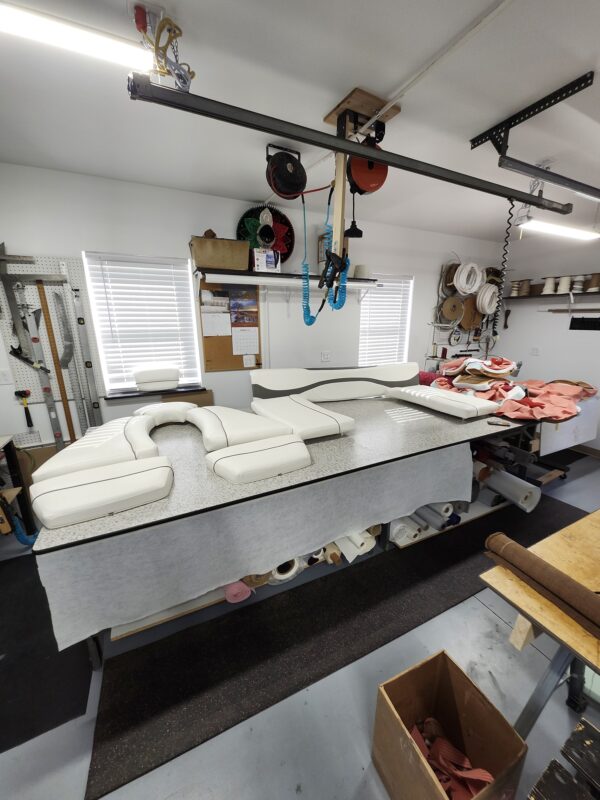
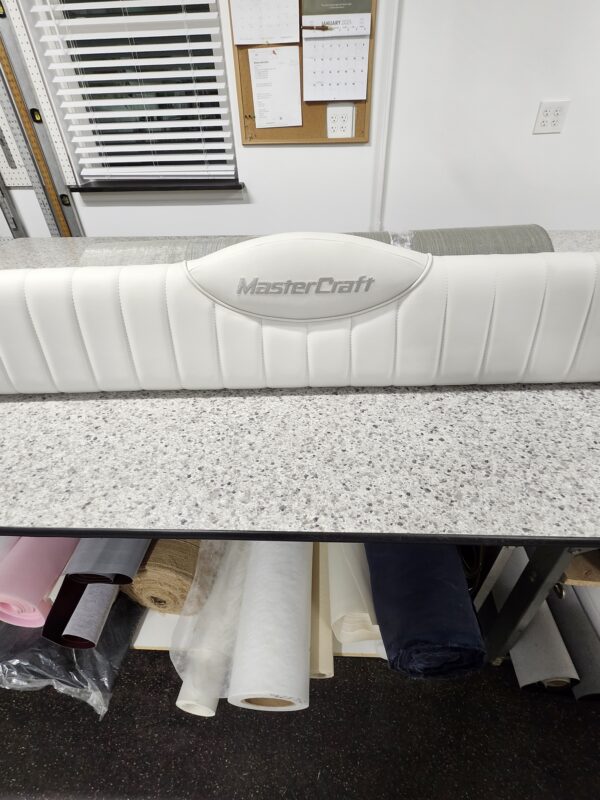
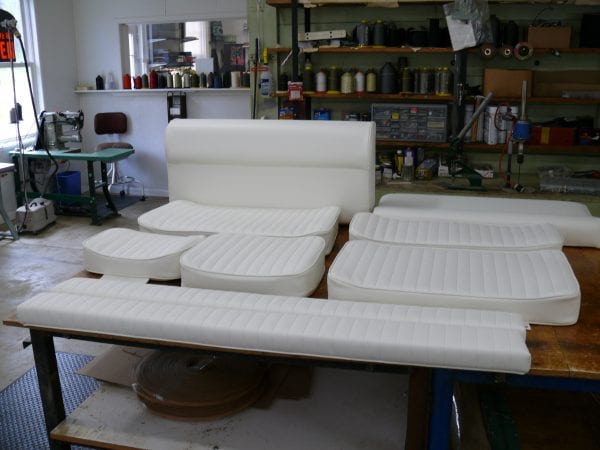
New foam goes in as a stack, not a single slab. A firm base layer carries the weight, a drainage friendly layer lets water find its way out, and a softer top layer keeps the ride comfortable on a long day. Skins get sewn with UV stable thread and fitted drum tight, because marine materials relax in the heat and a cover that looks snug in the shop can look baggy in August if you do not plan for it. If you are curious about the equipment that pulls heavy marine work through a needle, take a quick tour of our shop and you will see it is a different animal than a home machine.
Seam construction gets special thought on marine work. A plain joined seam leaves needle holes pointing at the sky, and every needle hole is a tiny funnel. So on panels that face weather we favor topstitched seams that lay the needle holes over to one side, with the allowances bound inside so they cannot wick. Zippers and snaps get the same scrutiny. Plastic coil zippers outlast metal ones around salt, and every snap stud goes in with a backing that spreads the load, because a snap that tears out takes a chunk of the panel with it.
Owners ask us about real leather at the helm because nothing else feels like it. Here is the honest version. Unprotected aniline leather has no business on an open deck, since it drinks water like a paper towel and the sun will two tone it by Labor Day. The hides we would put in the 1952 Chevy Deluxe we retrimmed would not last a summer at a console with no top.
Pigmented and heavily finished leathers are a different story. Under a T top, with covers used faithfully, a good protected hide can live a long and handsome life on a boat. We look for leather from tanneries audited through the Leather Working Group, because a hide tanned with proper process control resists moisture and keeps its flexibility far longer than bargain material. And bonded leather, which is really just leather dust glued to a backing, should never see a dock. It delaminates the moment humidity gets involved.
For the pieces that take green water and wet gear, premium marine vinyl is usually the smarter call, and modern vinyl mimics leather grain well enough that guests will not know the difference. Plenty of our boats run leather where it stays covered and vinyl where it gets soaked. You can see both approaches side by side in our leather work gallery.
The routine is simple and it works. Rinse the seating with fresh water after salt trips, wash with mild soap now and then, and skip the harsh solvent cleaners that strip the protective top coat. We wrote up the full method in our guide to cleaning vinyl upholstery, and the same gentle logic applies to finished leather with a light conditioner added a couple of times a year.
Before winter, give the seats one afternoon of attention:
That hour of effort is the best insurance a boat owner has. The argument we make about why restoring good furniture beats replacing it goes double on the water, because factory replacement skins for older hulls mostly do not exist. Care for what you have, and rebuild it properly when the time comes.
Only the right leather in the right spot. A protected, marine finished hide under a T top with faithful cover use can do well. Raw or lightly finished leather in full sun and spray will fade, stiffen, and crack, and we will talk you out of it every time.
It is common, but it is not healthy. It means water is getting past the cover and the foam inside has no drainage path. Waterlogged foam breaks down fast and grows mildew. A rebuild with a proper foam stack and drainage solves it for good.
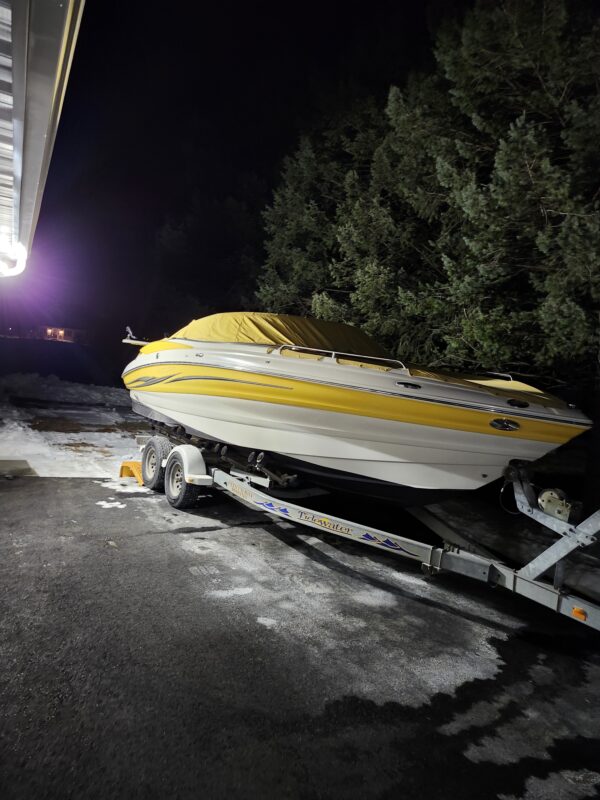
Usually not. Most center console seating unbolts, so many owners bring us the seats, the leaning post, or the console cushions by themselves. For built in pieces, we can pattern off the boat on its trailer. Call and we will figure out the easiest path.
If the helm seat on your Polar is cracked, flat, or smells like last season, let us look at it before another summer bakes it worse. Send a few photos through our free online estimates page or call 717-383-6917, and we will tell you exactly what the seat needs and what can be saved.
 Get a Free Quote!