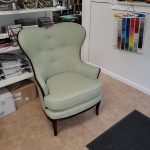



Project Details Antique chairs
- Project: Upholstery New Furniture
- Category: Furniture Upholstery



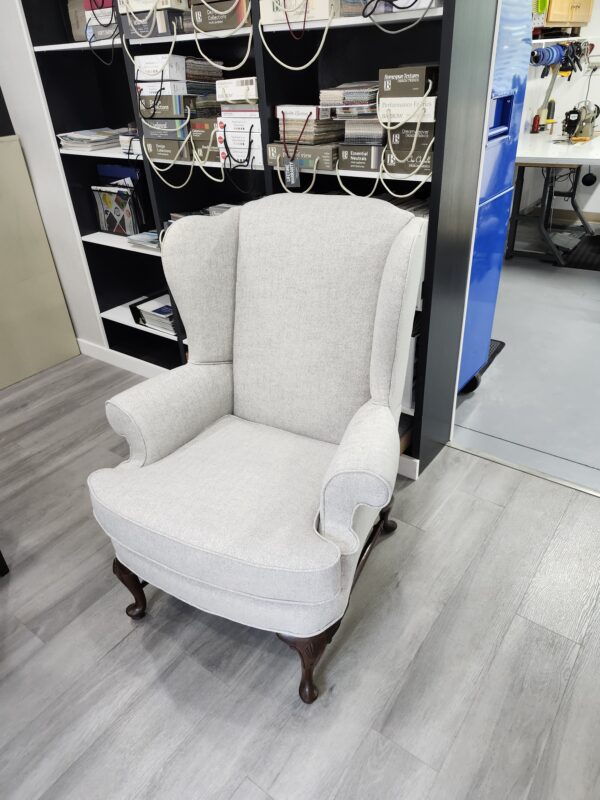
It takes a certain courage to own a white chair. Dark upholstery forgives and forgets. Light upholstery remembers every cup of coffee that ever wobbled, every newspaper that left its ink behind, every afternoon of direct sun. And yet people keep choosing pale fabric on antique chairs, and they are right to, because nothing else shows off carved wood, graceful lines, and fine tailoring quite the way a light ground does.
An antique chair with a white or cream back is usually the dressiest thing in its room, the piece that gets photographed when company is coming. When one arrives at our shop with a dingy, threadbare, or water marked back, the owner’s question is always some version of the same thing. Can it be bright again without losing what makes it old? It can, and the path there runs through both careful structural work and a very deliberate conversation about cloth.
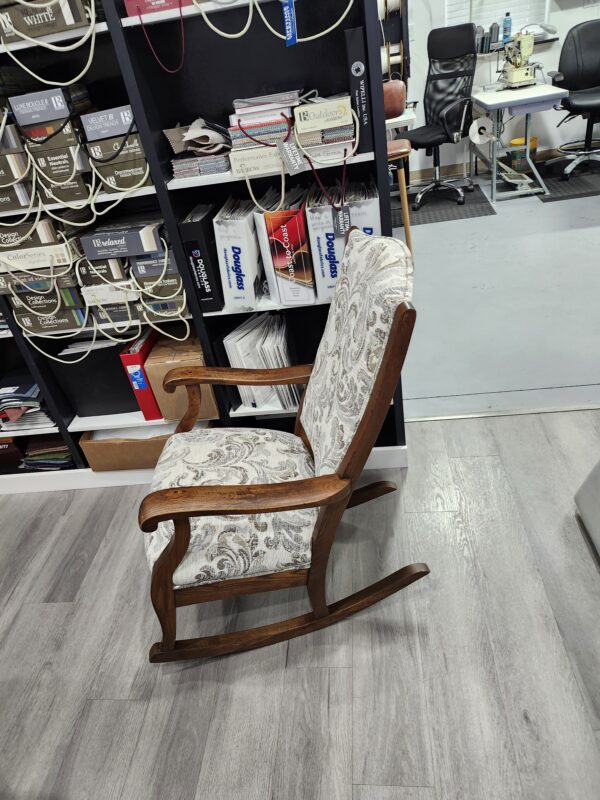
Light upholstery has been a status statement for centuries, precisely because it was hard to keep. Pale silks and damasks dressed French and English parlor chairs whose owners had staff to worry about the stains. Victorian and Edwardian parlor pieces carried cream brocades against walnut and mahogany show wood frames, where the contrast between dark polished wood and light cloth did the decorating all by itself. Painted and gilded frames took the idea further, pairing ivory fabric with white enamel or gold leaf.
That contrast is the reason the formula endures. A light back panel behaves like a canvas, throwing every carved flower, fluted post, and swept arm of the frame into sharp relief. It also exposes the upholsterer completely. On a dark tweed, a wandering seam can hide. On a smooth ivory cloth, every seam, weld, and pleat is on parade, which is why light chairs have always been where upholstery workmanship gets judged.
By the time a pale chair looks tired on the outside, there is usually a story underneath. Light fabric shows surface grime early, but the structural aging below follows the same script as any antique seat. Webbing stretches and lets the springs drop. Twine ties dry out and snap, so coil springs lean and creak. Horsehair and cotton stuffing compress and shift, leaving hollows where shoulders and elbows landed for decades. The chair does not just look worn. It sits worn.
Water is a special villain for light upholstery, because it leaves rings and tide marks that no amount of surface cleaning will erase, and it often soaks into the padding where it breeds mustiness. Owners are frequently surprised to learn that even seriously soaked pieces are rarely lost causes. We walked through the rescue process in our article on restoring flood damaged furniture, and the short version is that stuffing can be replaced and frames dried and repaired, so a stained cover is a doorway to renewal rather than a death sentence.
Sunlight does its quieter damage too. Ultraviolet light weakens fibers long before it visibly yellows them, which is why an old white cover often tears like paper during removal even where it still looked presentable. The material science behind fading and fiber breakdown is genuinely fascinating, and the Smithsonian Museum Conservation Institute has published extensively on how textiles age and how museums slow the process. We borrow that thinking on a domestic scale for every light colored piece we rebuild.
Our antique restoration process for a chair like this begins with an honest assessment in strong light, because pale fabric hides nothing and neither should we. We note the frame’s condition, test every joint, and probe the padding to learn what era of materials we are dealing with. Then teardown proceeds layer by layer, with the old cover lifted off carefully to serve as a cutting pattern for the new one.
Structure comes before beauty. Loose joints are cleaned and reglued, springs are retied or replaced, and the foundation of webbing and burlap is renewed. Here we make the preservation judgment piece by piece. Original hair stuffing in good health stays, because it is part of the chair’s authenticity and it sits like nothing modern. Anything degraded, contaminated, or water marked goes, because sealing yesterday’s mildew under tomorrow’s ivory damask helps no one. The padding is then rebuilt to the original profile, the new cover is cut, sewn, and fitted, and the tailoring gets fussed over until the seams sit straight and the welt runs true. The same sequence scales down to simpler seats, as we showed in our walkthrough of how to completely recover a dining chair, but a formal back chair simply allows no shortcuts.
One detail separates professional work on pale chairs from everything else: what goes directly under the cover. Dark burlap, aged hair, and old stains can shadow through a light cloth the way a dark shirt shows through a white blouse. So beneath ivory fabric we always build a clean barrier, fresh cotton batting over a muslin or ticking liner, which keeps the interior invisible and stops any migration of old material into the new cover. It adds a step nobody will ever see, which is precisely the point.
Now the fun part, and the part where the last few decades have changed everything. There was a time when choosing white upholstery meant accepting fragility. Modern textile engineering has ended that bargain. Performance weaves now come in whites, ivories, creams, and oyster tones that can be scrubbed with soap and water, resist staining outright, and stand up to tens of thousands of double rubs. Solution dyed fibers carry their color all the way through, so even determined scrubbing does not wear the shade away.
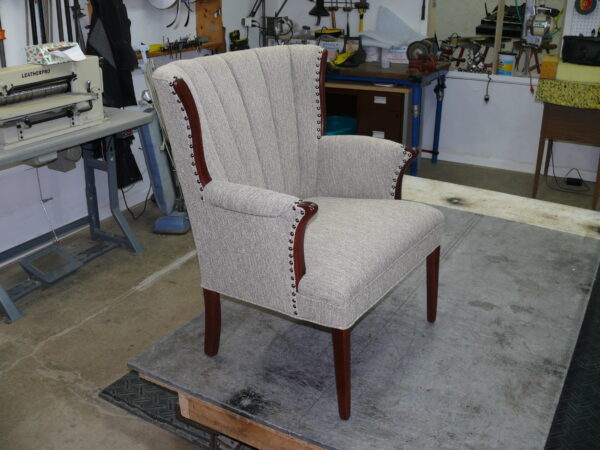
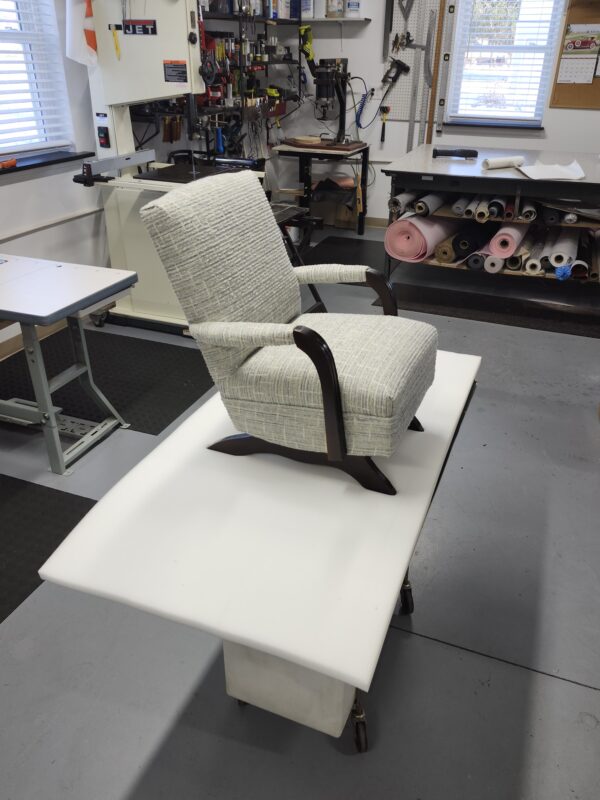
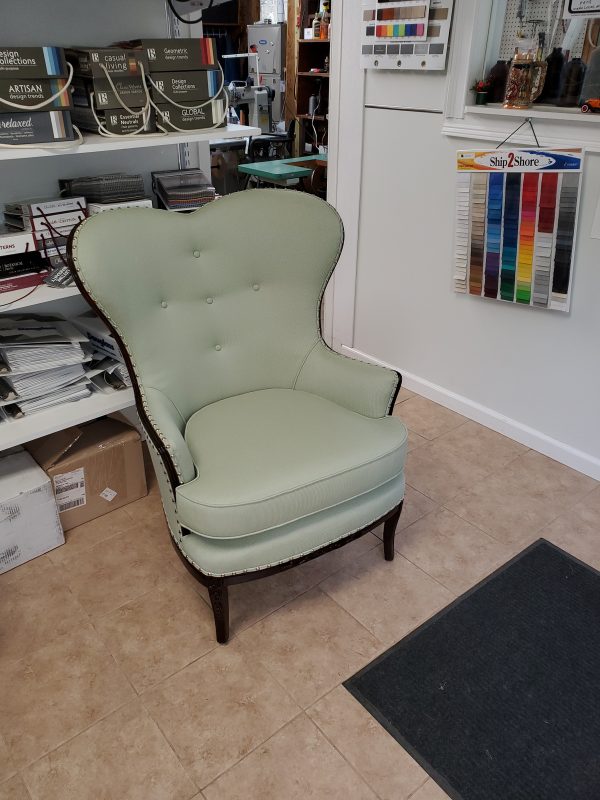
The craft is in choosing a white that still looks like it belongs on an antique. Dead bright optical whites tend to read as plastic against old wood. Slightly warm ivories and soft chalk tones flatter aged finishes and gilding far better. Texture matters just as much. A subtle slub or a fine matte weave hides minor life far better than a smooth sateen, while still photographing as white. For traditional purists, cottons and linens remain available with stain treatments that would have seemed like sorcery a generation ago. Our fabrics and leather page shows the range we work with, and we always encourage owners of light chairs to take samples home and live with them for a week, in morning and evening light, before committing.
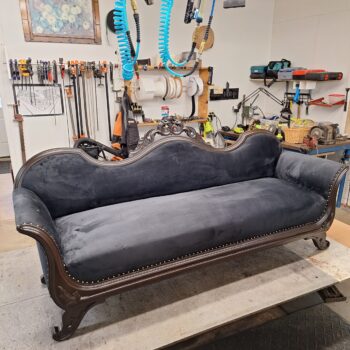
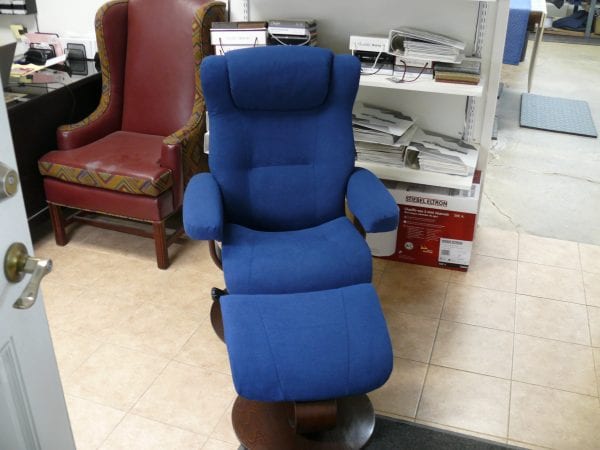
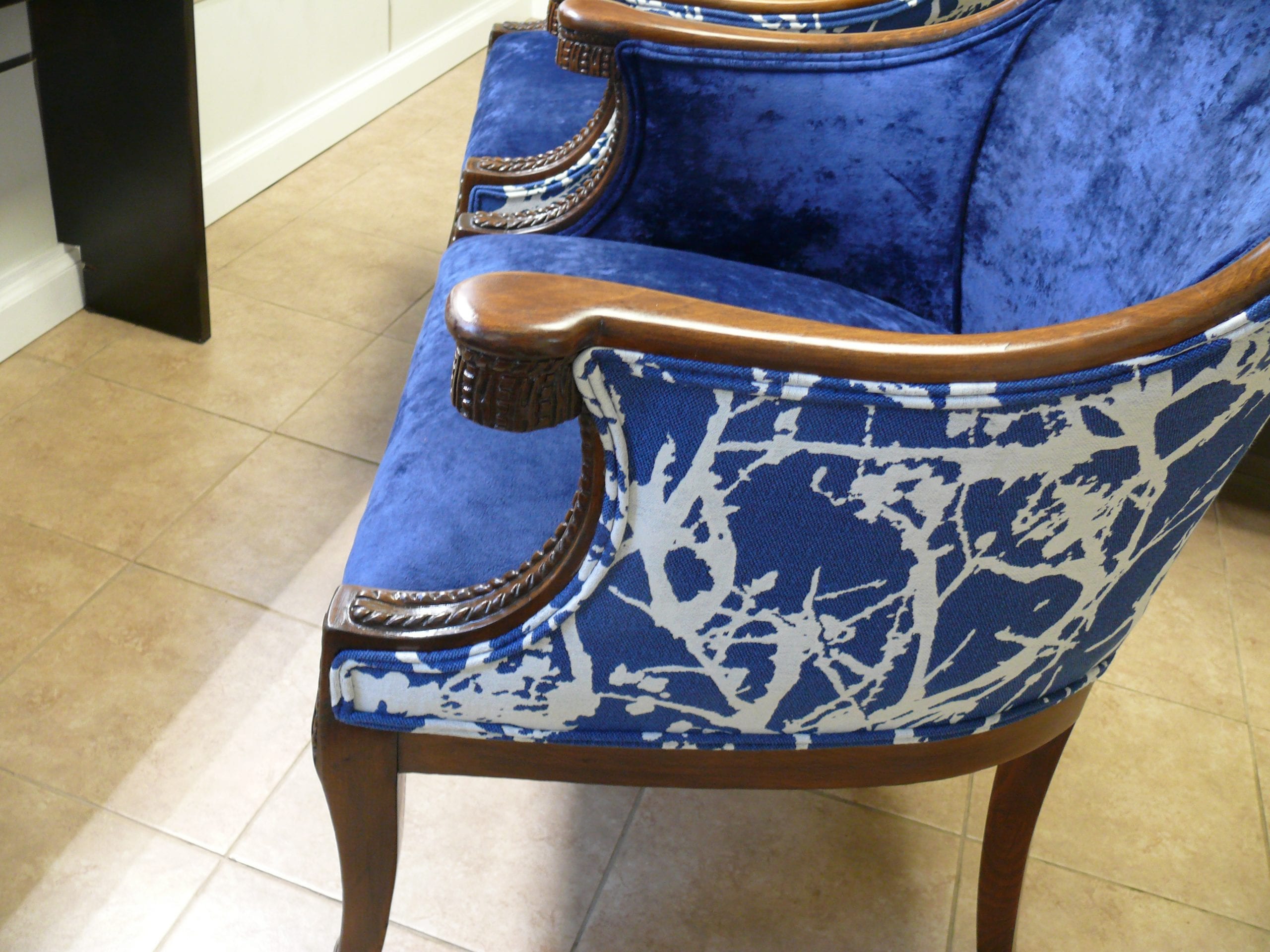
Color context is worth a thought too. We have paired pale chairs against deep backdrops in many projects, and the effect works in both directions. A room with saturated pieces, like the blue mid century chairs we recovered, gains calm from one light chair, while an ivory chair gains drama beside something rich and dark like the Victorian sofa we brought back. White is not just a color choice. It is a casting decision for the whole room.
A restored light chair stays beautiful through habit, not heroics. Vacuum it every few weeks with a clean brush attachment, because dust is what slowly turns white into gray. Blot spills instantly with a white cloth, never a dyed one, and work from the edge of a spot inward so it cannot spread. Keep the chair out of direct sun, or rotate it seasonally if the room allows no other spot. Ask denim wearers to be slightly merciful, since indigo dye transfer is the sneakiest enemy pale upholstery has.
Once or twice a year, a professional cleaning appropriate to the fiber resets the clock. And if the chair lives a formal life, simply using it a little less casually does more than any product. Light upholstery kept clean from day one stays bright for decades. Light upholstery cleaned only after it looks bad is always fighting uphill.
Not anymore, if the fabric is chosen for the job. Modern performance whites are engineered for exactly that household and clean up better than many dark traditional cloths. We will be honest with you about which samples can take the abuse and which belong in a quieter room.
Sometimes, and we will always tell you when cleaning is the smarter move. The limit is usually fiber strength rather than dirt. If the cloth has been weakened by sun and age, aggressive cleaning can finish it off, and replacement becomes the honest recommendation.
We dry the frame properly, treat any mildew, and repair or reinforce any joints the moisture loosened before a single layer goes back on. Stains in hidden wood are cosmetic history and can stay. Softness, rot, or active mold cannot, and we deal with them then and there.
If your pale beauty has gone gray, dingy, or saggy, we would love to see it. Send us a quote request with a few photos, or call 717-383-6917 and tell us what you are looking at. Every chair is inspected and quoted individually, and bringing a white chair back to full brightness remains one of the most gratifying transformations we get to deliver.
 Get a Free Quote!