


Project Details
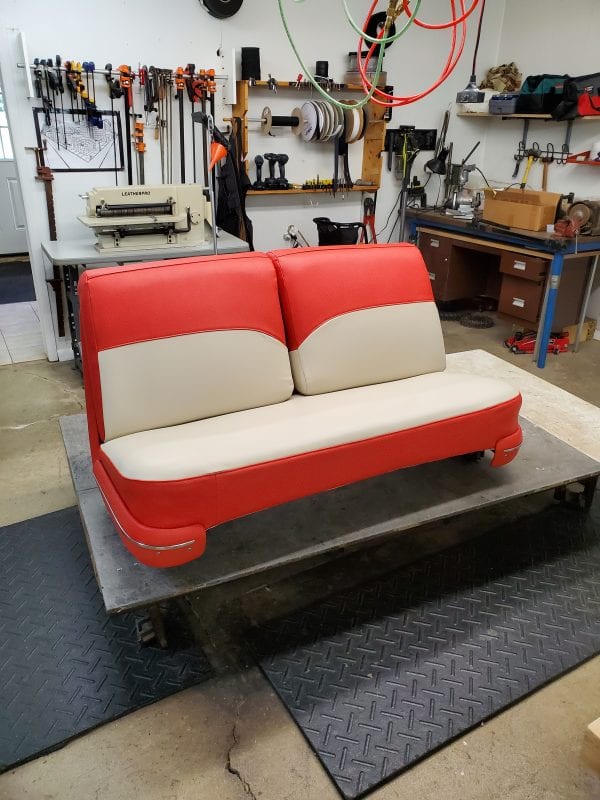
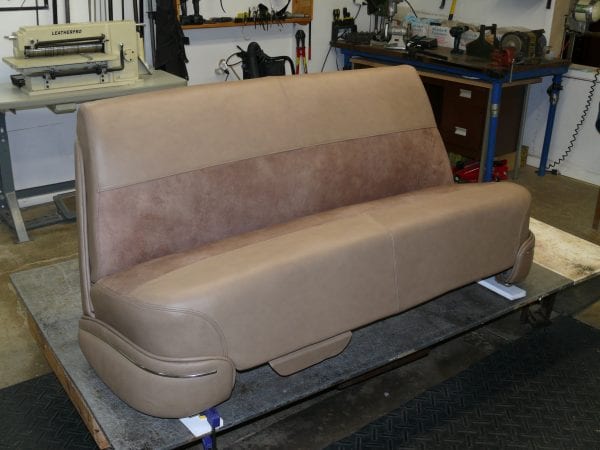
1967 Sunbean Custom Saet Reupholstery.
- Project: Classic Auto
- Category: Auto Upholstery
Our Task
After applying Alex’s upholstery skill seats were brought to life.


1967 Sunbean Custom Saet Reupholstery.
After applying Alex’s upholstery skill seats were brought to life.
Most people in Pennsylvania have never seen a Sunbeam Imp in the metal, and the few who have usually cannot stop talking about it. Here was a rear engined coupe built in Scotland, powered by a little aluminum engine with racing bloodlines, shipped across the ocean to fight the Beetle with cleverness instead of a marketing machine. It lost that fight, which is exactly why the survivors matter so much now.
When a 1967 Imp comes to us, we treat it like the rarity it is. Nobody prints an interior kit catalog for these cars. Every seat, door card, and cushion has to be studied, patterned, and rebuilt by hand, and that is precisely the kind of work our auto upholstery service was built around.
The Imp was engineered light because it had to be. The little 875 cc engine sat in the tail, the spare and luggage went up front, and everything in between was chosen with a scale sitting next to the drafting table. The front seats ride on slim tubular steel frames with rubber webbing stretched across them rather than a heavy coil spring base. Padding was thin foam, sometimes rubberized hair on earlier cars, and the covers were the tightly grained British vinyl of the day, stitched into simple, narrow flutes.
The party trick lived out back. The rear window opened like a hatch and the rear seatback folded flat, turning the little coupe into a cargo hauler years before anyone said the word hatchback out loud. That folding seat carries hinges and latch points the factory never imagined would still be working six decades later, plus a bottom cushion built to be walked on by groceries, dogs, and toolboxes.
A quick note for anyone puzzling over the badge: in Britain this car was sold as the Hillman Imp, and the Sunbeam name went on export versions bound for markets like ours. Same bones, different jewelry. Knowing that helps when you are hunting period photos of interiors, because most of the surviving reference material wears the Hillman badge.
Door panels are flat fiberboard cards wrapped in vinyl and hung on spring clips. Honest, simple construction. It rewards careful restoration and punishes shortcuts, because in a cabin this small there is nowhere for sloppy work to hide.
Heat is the quiet enemy in a rear engined car. The engine lives right behind and below the rear cargo floor, and years of heat cycles bake the rear cushion foam until it crumbles like stale cake. We have opened seats that looked fine from the outside and found nothing inside but orange dust and good intentions.
Up front, the rubber webbing stretches, hardens, and finally cracks. Owners describe the sensation as sitting in the car instead of on the seat, and they are not wrong. The vinyl goes brittle along the top seams where sun pours through all that glass, and the cotton thread the factory used lets go long before the material around it does.
Fiberboard door cards drink up moisture and warp into potato chips. Carpets and headliners were never generous on an economy car to begin with, so they rarely survive at all. None of this is a scandal. It is simply what sixty years do to materials that were specified for a ten year working life.
There is one more thing we find in nearly every unrestored Imp: the previous fixes. Seat bottoms propped up with plywood, webbing replaced by a crisscross of baling wire, household carpet trimmed to shape with kitchen scissors. We never mock these repairs. Each one is proof that somebody loved the car enough to keep it going with whatever the garage offered. Our job is to retire them with honor.
Every project starts with an inspection and a long round of photographs, and every piece is quoted individually once we have seen what we are dealing with. If you want to understand why we refuse to guess numbers over the phone, our article on what determines car seat reupholstery cost walks through the variables, and an Imp checks nearly every box on that list.
Teardown is slow on purpose. The original covers come off stitch by stitch because they are very likely the only pattern left in existence. We label every panel, record every seam allowance, and keep the old covers on the shelf until the finished interior has been approved and delivered. That same pattern discipline shows up in everything we handle, from a golf cart seat restoration to a full size sedan, but on a car this rare it stops being a habit and becomes an obligation.
Frames get inspected at every weld and joint, then cleaned and treated before anything soft goes near them. The rubber webbing is replaced with fresh material of matching stretch, the foam is cut and shaped by hand to the factory profile, and the sewing happens on a walking foot machine with bonded polyester thread that will outlast both of us.
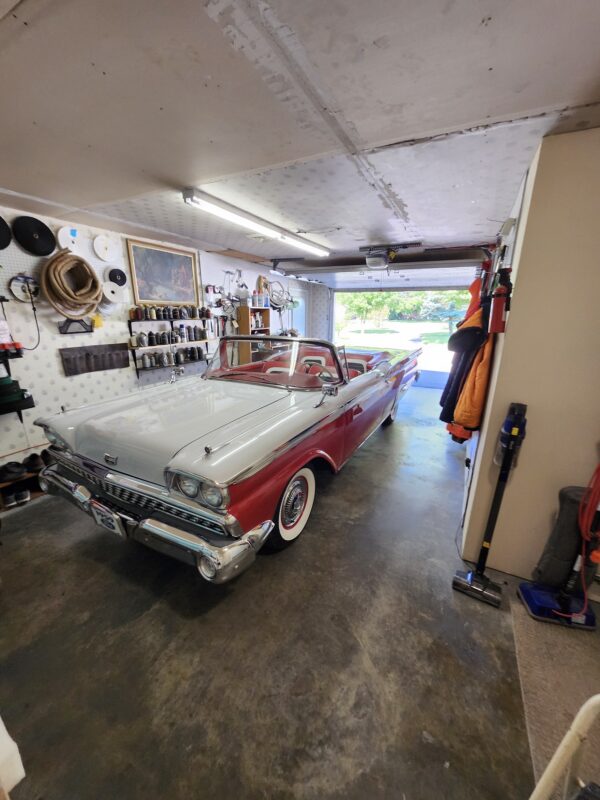
Preservation questions come up constantly on a car this uncommon. If a badge, a trim strip, or a section of original material is still sound, we would rather clean it and keep it than replace it. Original trim is the best documentation an Imp can carry, and once it leaves the car it never truly comes back. We took the same view in our 1959 Ford Fairlane interior story: replace what has failed, respect what has not.
Door cards get the same care as the seats. We use the warped originals as templates, cut fresh moisture resistant board, transfer the clips and hardware, and wrap the new cards so grain and seam lines agree with the upholstery beside them. Small panels, big difference. A crisp set of door cards straightens the whole cabin the way a pressed collar straightens a suit.
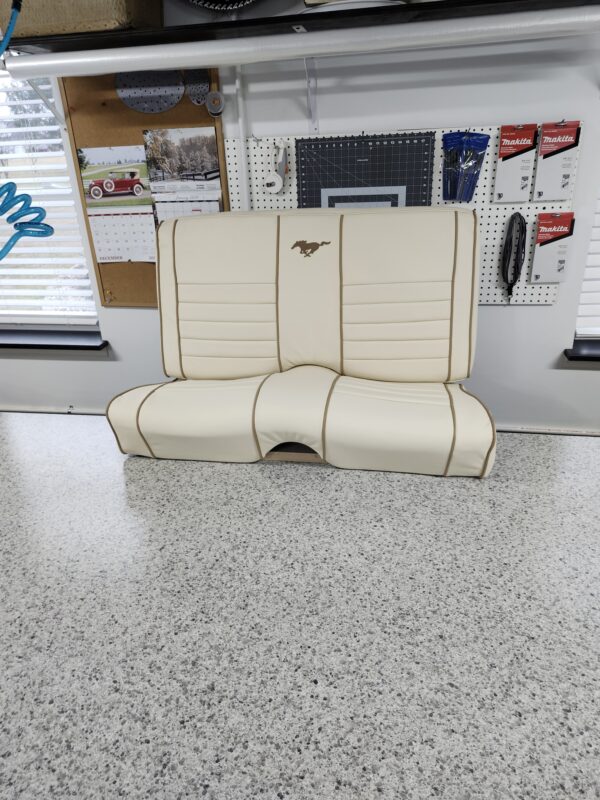
The specialty aftermarket represented by SEMA has produced reproduction interiors for Mustangs, Camaros, and Beetles by the container load. The Imp never made that list, so material selection is wide open. That is a burden and a gift at the same time.
For owners chasing the original look, we source thin, tightly grained vinyls that read correctly next to period photographs, and we match the flute spacing stitch for stitch. For owners who actually drive their Imp, modern automotive vinyl brings far better UV stability, and for a car that lives outdoors we will happily borrow from the playbook we use in marine upholstery, where sun and moisture are the entire job description.
Color deserves real thought in a cabin this size, because you see all of it at once. Period Imps wore cheerful, slightly odd combinations, and we encourage owners to lean into that character rather than sand it off. The contrast with modern work is striking, too. When we handled the 2006 Audi A6 leather seat project, half the challenge was the electronics living inside the seats. On an Imp, the whole challenge is craft.
All that rear glass acts like a greenhouse over the back seat, so shade is the single best gift you can give a fresh interior. A simple cover over the cargo deck when the car sits, or better yet a spot in the garage, will add years to the vinyl before you ever open a bottle of protectant.
Clean with mild soap and water, never harsh solvents, and condition the vinyl a couple of times a year with a water based protectant rather than glossy silicone dressings. Watch storage humidity too, because fresh fiberboard door cards will warp all over again in a damp garage.
One more Imp specific tip: after a long drive, crack the windows or pop the rear hatch for a few minutes. Letting the engine heat vent out instead of soaking into the rear cushion is a small habit that pays off for decades. Heat that leaves the car cannot cook the foam.
Yes. The hinges and catches are simple hardware, and we rebuild the cushion so it folds flat and carries cargo weight the way the factory intended. If the hardware itself is damaged, we repair or fabricate around it rather than freezing the seat in place.
Usually it is the rubber webbing underneath, which stretches and cracks with age. The tubular frames themselves are sturdy and almost always reusable. New webbing and fresh foam bring back the firm, upright feel these cars had when new.
Seats and door cards can come in on their own, and plenty of owners of rare imports do exactly that. If the job includes carpet or a headliner, having the car in the shop lets us fit everything properly the first time.
If there is a tired Imp hiding in your garage, we would genuinely like to meet it. Start with our free online estimate, send a few photos, or call 717-383-6917 and tell us what you have. Rare little cars deserve a shop that takes them seriously.
 Get a Free Quote!