


Project Details
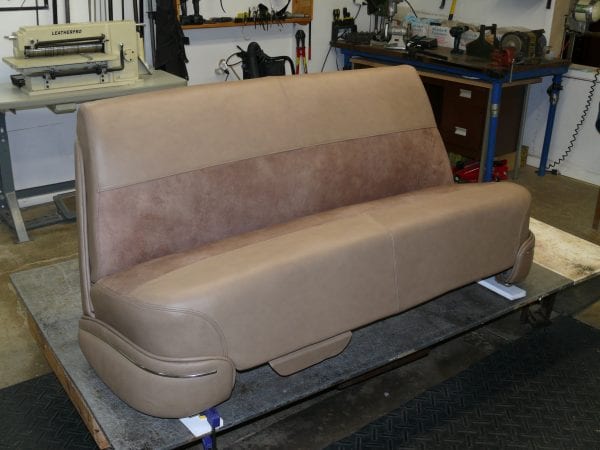
A 1969 AMC Javelin needed new upholstery for its front bucket and back seats.
- Project: Classic Car
- Category: Auto Upholstery
Our Task
We completely restored the seats using vinyl, but made sure to keep its original design.



A 1969 AMC Javelin needed new upholstery for its front bucket and back seats.
We completely restored the seats using vinyl, but made sure to keep its original design.
AMC built the Javelin to go toe to toe with the Mustang, and they did it on a fraction of Ford’s budget. The 1969 cars sit in the sweet spot of the first generation: long hood, fastback roofline, and a cabin that AMC deliberately dressed a step above its price class. People who own one today did not trip over it at a gas station. They went looking for it, because a Javelin has never been the kind of car you see twice in the same week.
That rarity is charming right up until the upholstery gives out. Mustang owners flip open a catalog and order seat covers by part number. Javelin owners discover that the aftermarket mostly shrugged at AMC. So when one of these comes into our shop, the worn original interior is not trash to us. It is the blueprint, and very often the only blueprint left in existence.
The base cars got vinyl bucket seats with clean, simple pleating, and the SST trim brought richer grain patterns, nicer door panels, and extra brightwork. AMC molded the seat foam over steel spring bases, hung the covers with hog rings and listing wires, and stretched the vinyl tight enough that the pleats read as crisp parallel lines from ten feet away. The buckets themselves are thin shell designs typical of the muscle era, light and low, shaped to hold a driver through a corner better than any bench ever could.
Door panels were molded substrates wrapped in vinyl skins, with applied trim and integrated armrests. The dash pad, headliner, kick panels, and rear side panels all carried coordinated grain and color, and that coordination is what made the cabin feel dressed rather than assembled. Replace one element with something close but not quite right, and the whole room notices.
There is also a structural honesty to these interiors that we admire. Nothing is hidden behind plastic cladding. The stitching is doing real work, the foam is shaping the seat rather than just softening it, and every fastener is reachable if you know where to look. That makes a Javelin rewarding to restore properly and unforgiving of shortcuts.
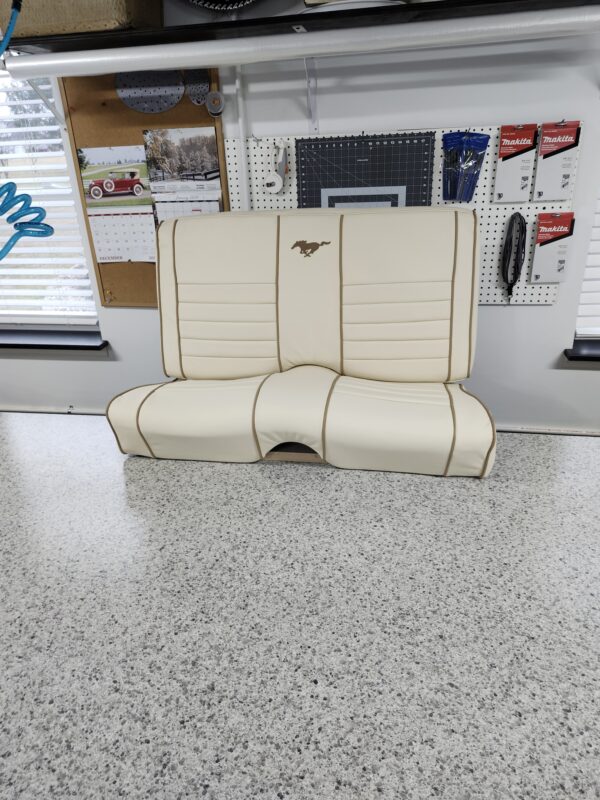
Here is the honest difference between retrimming a Javelin and retrimming a car from a bigger nameplate. For the 1967 Mustang seats and door panels we upholstered, reproduction covers existed from multiple suppliers, so part of the job was simply choosing well. For AMC products, we usually build the covers ourselves from scratch. Every seam of the original gets photographed in place, then the old cover comes apart stitch by stitch. Each panel is labeled, pressed flat, and traced, and we add back the seam allowances, listing pockets, and gather points that the factory sewers worked from.
We learned the value of that patience on cars even scarcer than AMCs. The 1967 Sunbeam Imp we reupholstered had almost no aftermarket support at all, and it proved the point: as long as the original cover survives in one piece, even shredded, the pattern inside it can be brought back. The scissors only come out after the camera has done its work.
Pattern making is also where the character of the car gets preserved. The width of a pleat, the angle where an insert meets a bolster, the way a seam rolls over the top of the seatback, those choices are what make a 1969 AMC cabin look like 1969 and not like a generic street rod interior. We measure them, we do not guess at them.
Sun is the first villain. Vinyl loses its plasticizers over the years, turns stiff, and splits right along the top of the seatback where the UV hits hardest. The molded foam underneath crumbles into orange dust, so the pleats collapse and the cushion loses its profile even where the cover still looks passable. Below the foam, the burlap over the springs rots through and lets the padding sink into the spring bay, which is why so many of these seats feel like sitting in a hammock.
Door panels warp when moisture sneaks past dried out window fuzzies, swelling the substrate until it pulls away from its clips. Headliners sag as their foam backing gives up. Armrest pads split at the corners because that is where elbows have landed since the Nixon administration.
None of this reflects badly on the car or on how it was kept. It is simply what fifty plus years do to materials that were engineered for a ten year service life. The frames and springs underneath are usually honest steel, and honest steel we can always work with.
Every project starts with an inspection, because no two survivors arrive in the same condition, and each piece is priced individually only after we have seen what is really there. If you are curious what we weigh during that first look, we wrote up what actually goes into reupholstering a car seat, and the same thinking applies to a Javelin bucket.
From there the interior comes out and the seats get stripped to bare frames. Frames are cleaned, welded where cracked, and refinished so rust never gets a second chance under fresh foam. Springs are re-tied or replaced, new burlap and padding go over them, and fresh molded foam brings back the correct 1969 profile instead of the melted one the car arrived with.
The covers are sewn on our walking foot machines, which feed the top and bottom layers of material together so pleats stay parallel across thick seams instead of creeping. You can see the machinery we run if you like knowing what your seats are built on. This is also where the preservation call gets made. Original trim emblems, seat hinges, chrome buttons, and date coded hardware are cleaned and reinstalled whenever they can be saved, because those little pieces are the car’s paperwork in metal form.
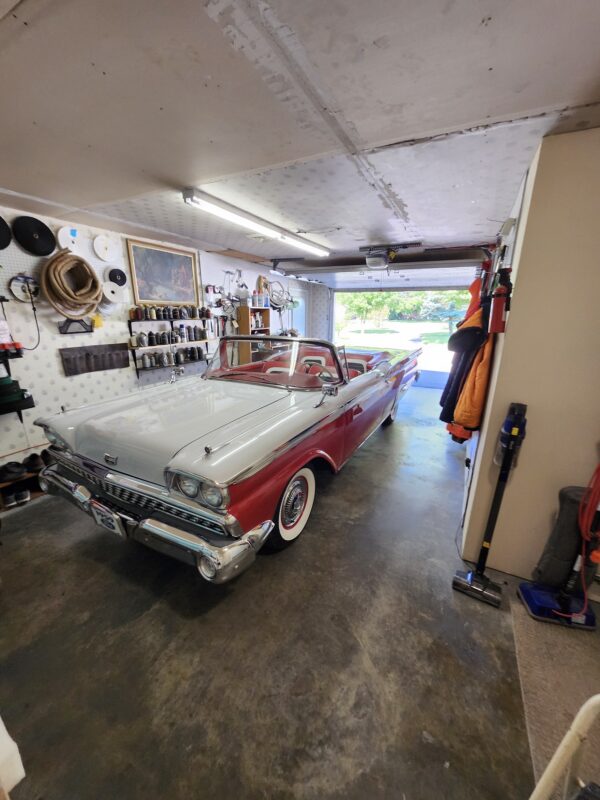
For a sense of how a complete cabin comes together panel by panel, our 1959 Ford Fairlane interior write up walks through the same discipline applied to a very different automobile.
Modern vinyl is flatly better than anything AMC could buy at the time. The grains are deeper, the UV stability is dramatically improved, and the colors hold for decades instead of summers. Our job is to select a modern material that reads correct for the year, which means matching grain scale and sheen, not just chasing a color chip. For upgrade interiors we can source basketweave and houndstooth style cloths that carry the period feel without the period fragility.
The real judgment call is about the car’s life. A trailered show car can wear materials chosen purely for correctness, right down to stitch count. A weekend driver deserves slightly firmer modern foam and a vinyl that shrugs off sunscreen, denim dye, and seatbelt buckles. If the car will be judged, the Antique Automobile Club of America publishes judging standards that reward period correct choices, and we build to that bar whenever an owner asks for it.
Thread matters too, and it is the detail most people never think about. We sew with bonded nylon or polyester sized for the material, because original style cotton thread is usually the first thing to rot in a car that lives outdoors even part time.
Park out of the sun when you can, crack the windows on hot days, and keep a shade in the windshield, because heat cycles are harder on vinyl than miles are. Clean with mild soap and water rather than glossy protectants, since many of those products attract dust and leave the surface slick enough to slide you around in corners.
Give new foam a few weeks to settle before judging the fit. Covers are cut to look right after they break in, not on delivery day. And if the car sleeps through winter, leave the interior dry and ventilated. Trapped humidity in a sealed garage does more quiet damage than a whole summer of Sunday drives.
Almost always. A torn cover still holds its seam geometry, and that geometry is what we need. We take patterns from the intact panels and rebuild the damaged ones by symmetry from the other side of the seat. Bring us everything, including the loose pieces rattling around the trunk.
No, it is your car. Plenty of owners want the factory look to the stitch, and plenty want the factory pattern in a color AMC never offered. We will tell you honestly which changes are reversible and which ones affect the car’s originality before you commit to anything.
Yes, and it happens all the time. We keep records and material references from the first phase so the second phase matches exactly, even if a year passes in between. Buying enough material up front for both phases is the surest way to guarantee a dye lot match.
If your Javelin’s cabin is tired, our auto upholstery service was built for exactly this kind of car: rare, loved, and worth doing right. Send photos through our free online estimates page or call 717-383-6917, and we will tell you what we see, what we would save, and how we would bring the rest of it back.
 Get a Free Quote!