


Project Details
- 1968 Ford Torino GT.
- Category: Auto Upholstery
Our Task
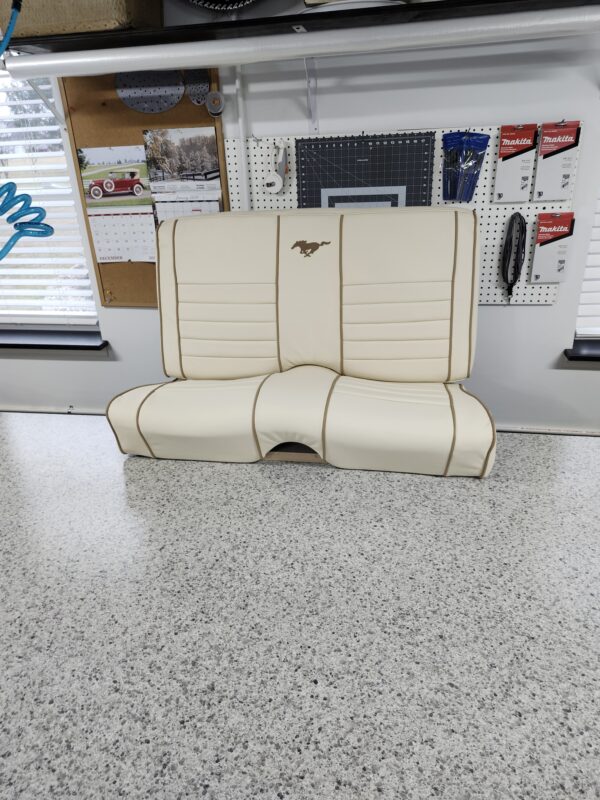
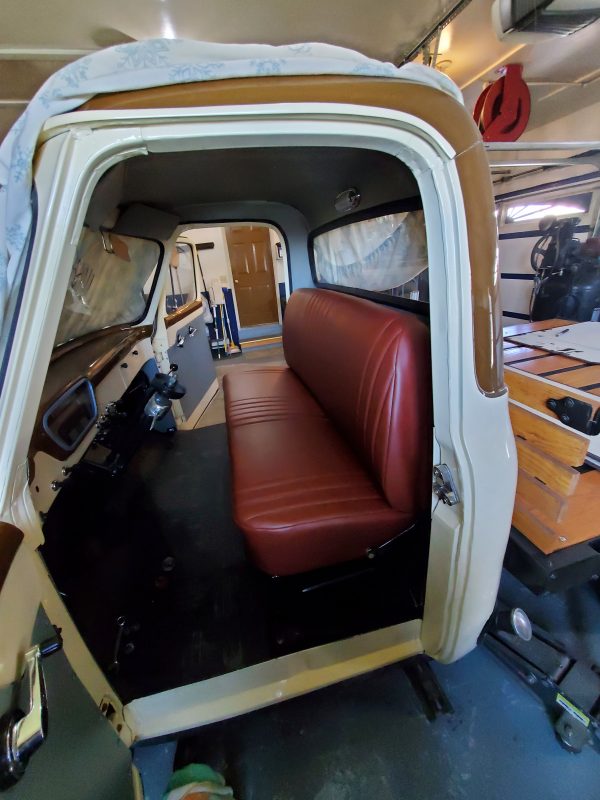
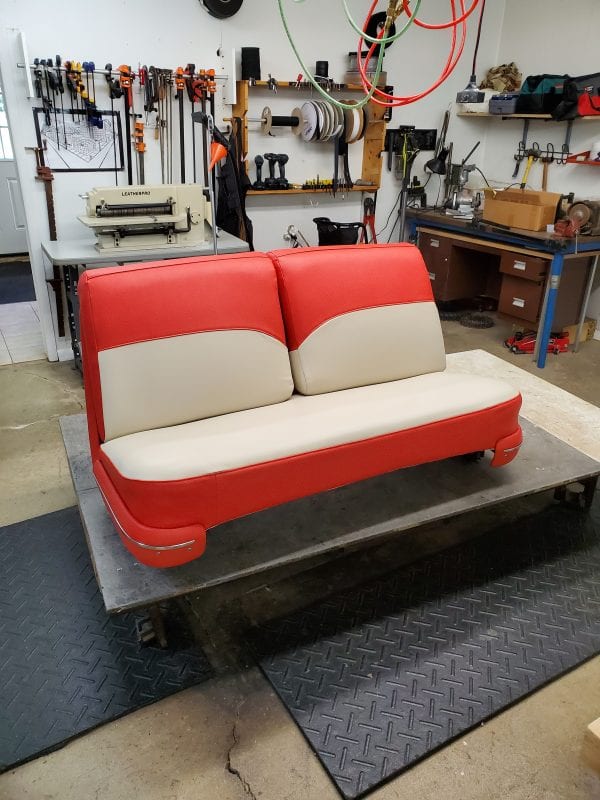
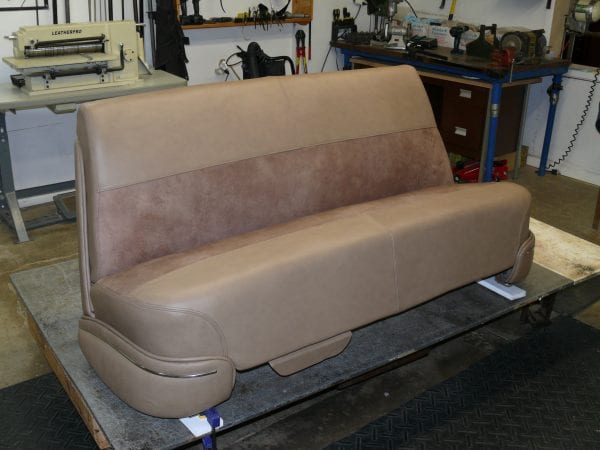
1968 Ford Torino GT.this seat leather, the request by the customer



1968 Ford Torino GT.this seat leather, the request by the customer
In 1968 Ford took its mid size Fairlane, gave the top trim a new name, and aimed it straight at the muscle car crowd. The Torino GT arrived with long fastback glass, stripes, and an interior meant to convince the buyer he was getting something better than a warmed over family car. Buckets were on the option sheet, pleated vinyl everywhere, and the whole cabin had a swagger the badge demanded.
Nearly six decades on, those interiors are the part of the car time treats worst. Paint gets redone, engines get rebuilt, but seats sag quietly until one day the driver realizes he is sitting on the frame. That is usually the day our phone rings, and it is a call we like getting.
The first year Torino cabin was a step up from the plain Fairlane in all the visible ways: brighter trim, GT badging, and covers sewn with clean pleated inserts in the vinyl grains of the day. Bench seats were the standard play, with bucket seats and a console available for buyers who wanted the sporty look to continue inside.
Under the skin, though, this was proven Detroit seat building, the same fundamental recipe used across the industry. That is good news for owners, because it means the construction is fully understood, fully rebuildable, and honest about what it needs. Nothing in a Torino seat is mysterious. It is all just buried.
GT buyers could also point at the order sheet and keep adding, which is why no two of these cars feel quite alike inside today. Sorting out what your car actually left the factory with, from trim tags and the surviving original pieces, is one of the quiet services a good interior shop provides before a single seam gets opened.
Strip a cover off one of these seats and you find a layered system. A stamped steel frame carries the spring deck, rows of sinuous wire springs clipped to the frame and tied to each other so the whole field of wire moves as one. Over the springs goes a layer of burlap to spread the load, then the bun, the shaped pad of foam and padding that gives the seat its profile.
The cover is not simply stretched over all this. It is anchored from within. Listing wires slide into channels sewn on the underside of the cover, and hog rings clamp those wires down through the bun to the springs, pulling the pleats into their crisp rows and giving the surface its sculpted look. Every dip and crease you see on a factory seat is a wire and a ring you cannot see doing its job underneath.
That inner anchoring is why seat work is its own trade. Getting a cover on is easy. Getting the contours to land exactly where the factory put them takes an understanding of everything below the surface, which is why the craft matters as much on a golf cart as on a muscle car. The pattern and anchoring discipline we used on a vinyl golf cart reupholstery project is the same one a Torino demands, just scaled up and judged harder.
Springs rarely break, but their clips loosen and their ties let go, and a spring deck that no longer moves together feels lumpy and tired. Burlap rots to lace, letting the bun sag into the springs, and the bun itself dries out, crushes flat where the driver sat, and sheds crumbs into the carpet through every seam.
Up top, sun through that enormous fastback glass does to vinyl what it does to everything: fades it, dries it, and opens the seams along the piping where the material is stressed hardest. Rear package trays and seat tops go first. The driver’s outer bolster follows, worn through by years of sliding entries.
The pattern matters when you plan a restoration. An interior that looks merely faded usually hides structural fatigue below, and a cover replacement alone over dead foam and loose springs is money spent on a seat that still feels wrong. When we inspect, we grade all three layers, not just the one you can see.
The rest of the cabin keeps pace with the seats. Door panel tops warp and lift in the sun, headliners sag as their backing lets go, and armrest pads split on the same schedule as the bolsters. None of that changes the plan. It simply argues for treating the interior as one project, even when the work happens in stages spread across a few winters.
We begin the way museum people do. The Smithsonian Museum Conservation Institute preaches documentation before treatment, and we run a garage version of the same doctrine: photographs of every surface, notes on trim and fasteners, and old covers kept intact as reference until the job is signed off.
Teardown exposes the spring decks, which get reclipped, retied, and squared up on the frame. New burlap goes over the wire, new buns are built or fitted to the original profile, and then the covers go on with fresh listing wires and a patient session of hog ringing until the pleats sit military straight. Steam relaxes the vinyl into its final shape, and the difference between close and correct is usually one more round of adjusting rings nobody will ever see.
Originality gets its vote throughout. Sound trim, emblems, and seat hardware are cleaned and reused, and if an original rear cover is genuinely healthy we will say so rather than sell you its replacement. The bones of this craft are the same ones in our beginner guide on how to reupholster a chair, but a GT interior is the varsity version, where the tolerances shrink and the judges carry flashlights.
Reproduction covers exist for these cars, and the good ones are very good, with correct grains and pleat counts. For a car built to be judged, that is the path, and we fit those covers with the care they need to look factory rather than merely new. For drivers, modern vinyls carry UV inhibitors 1968 never dreamed of, and modern foam buns hold their shape through years of actual use.
Owners planning long highway miles sometimes go further, asking for firmer bolsters or an extra touch of lumbar shape hidden inside the stock silhouette. Done right, the seat still photographs original and simply feels better than it ever did. It is the same conversation we have around modern trucks, like the 2016 Ford F150 we reupholstered in leather, approached from the opposite direction: there the material changes and the engineering stays, here the engineering is refreshed and the look stays.
Color matching is its own small science on these cars. Factory shades varied between suppliers and have faded unevenly ever since, so we match against a hidden, unfaded section of the original trim rather than a catalog swatch, and we check the candidate material in sunlight before committing to it. An interior that matches in the shop and clashes in the driveway helps nobody.
Convertible Torinos deserve one extra note. A drop top interior lives half outdoors, so we borrow materials and thread choices from our marine upholstery work, where sun and weather set the rules. The look stays period. The chemistry underneath gets an upgrade.
Vinyl care is blessedly simple, which is half the reason Detroit loved the stuff. Mild soap, soft brush, rinse, done. We laid out the full routine in our guide on how to clean vinyl upholstery, and the whole ritual takes less time than wiping down the engine bay before a show.
Sun is the enemy worth planning around. A windshield shade at every stop, a light colored towel over the package tray on long summer parking days, and garage storage whenever possible will keep the pleats crisp for decades. Skip the glossy dressings, which attract dust and can wick into stitch holes, and let the material’s own sheen do the talking.
They fit the way a good suit fits off the rack, which is to say almost. The difference between installed and tailored is the fitting work underneath: fresh buns, tight springs, correct listing wire placement, and steam. That last ten percent is where the factory look lives.
Sit in the car and rock gently side to side. Clunks, creaks, or a feeling of settling into a hole mean the deck has loosened. A seat that looks plump but sits hollow is telling you the springs and ties below the foam need attention.
Yes. We rebuild the donor buckets to your car’s correct trim, matching grain, color, and pleat pattern so the swap reads factory. Bring the console conversation too, since covering everything in one pass keeps the match perfect.
If your Torino, or any muscle era Ford, is riding on tired seats, our auto upholstery service is ready when you are. Request a quote or call 717-383-6917, and let us put the swagger back where the badge promised it would be.
 Get a Free Quote!